

Thriving with Dual-Sport Athletes, Brandywine Claims 1st Girls Track Regional Title
By
Scott Hassinger
Special for MHSAA.com
June 17, 2026
NILES – Just a few days after the 2025 girls track & field season had ended at Niles Brandywine, Terry Borr and his coaching staff were already looking forward to the start of the 2026 campaign.
 "We had done a really good job at the 2025 Regional meet with the team finishing third. Our only goal that day was simply to qualify as many kids as we could for the state meet," Borr said.
Impressed with the effort put forth at last season’s meet by his Bobcats, Borr and his assistants used that as strong motivation for their athletes to attain high goals this spring.
"As a coaching staff we got together, talked things over and put some things in place with our No. 1 goal this spring being to win a Regional championship," Borr recalled.
Borr knew that wouldn't be an easy task at Brandywine, which like most small schools, must share several athletes with other spring sports teams. Out of 13 athletes on his 2026 track & field roster, eight were dual-sport participants.
Freshman Grace Colbert, junior Lily Gill, senior Karleigh Byrd and sophomore Alison Murray also played tennis.
"I managed to balance both tennis and track by prioritizing both as much as possible,” Byrd said. “Whether that was fitting in both practices and even matches and meets in the same day, that was easy to do because both my coaches are very understanding about each sport and my dedication to both programs.”
Freshman Hailey Smith also competed in softball, and freshmen Laila Wogatzke and Aubrey Burt are soccer players as well.
 "We don't have a lot of practice time with some of these girls. But a lot of them are all just quality athletes and that helped us out a great deal,” Terry Borr said. “Five of these girls have broken over six school records here over the last three years.”
Borr also credits the strong contributions of his assistant coaches Brian McNamara (distance runners), Becky Shafer (throws) and Jeff Miller (hurdles).
"Brian has really worked well with our distance runners. Jeff is our football coach and he worked this spring with some of our hurdlers. Becky does a great job with our throwers too," Borr said.
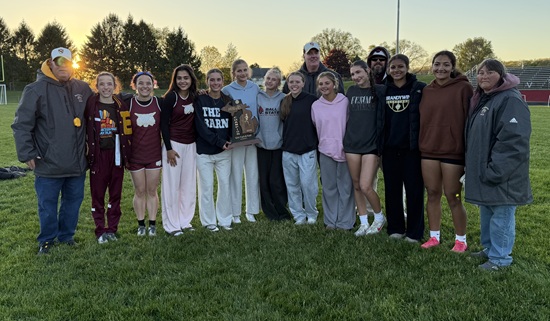
Despite being spread so thin with limited practice time for nearly half the squad, Brandywine accomplished its preseason goal of winning the first Regional championship in girls track. The Bobcats placed first with 97 points to claim the Division 3 Regional at Bangor.
Brandywine scored points in 13 of 17 events to take the top spot and edge Red Arrow (a cooperative of Three Oaks River Valley and New Buffalo) by three points.
"Almost everybody on our team scored for us in the Regional. It really was a team effort,” Borr noted. “A couple weeks before the meet we had the Red Arrow team beating us by three points. So we figured out where we could put kids in different events so we could gain the maximum amount of points.”
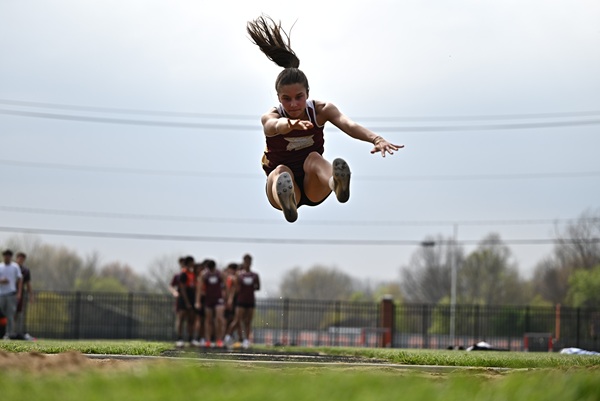
Brandywine junior Mackenna Price was the Regional long jump champion (15-10¼).
"I think what makes me such a good competitor in the long jump is my confidence and ability to set my mind to any distance I believe in. My athleticism helps me by allowing me to push myself to be the best athlete I can be," Price said.
She teamed with Allison Kline, Byrd and freshman Zaya Price for third in the 1,600 relay. She also placed eighth in the 800.
"Makenna's desire to work hard, get better, and improving her speed down the runway all make her a good long jumper. Now she's just working more on the technical aspects to keep improving," Borr said.
 Senior Allison Kline, sophomore Isabella Padron, Burt and freshman Laila Wogatzke took fifth in the 3,200 relay.
Zaya Price earned runner-up in the high jump. Murray placed second for Brandywine in the 1,600 run, fourth in the 3,200 and seventh in the 800.
"This year I succeeded the most in my 1,600. I enjoy that race the most because it takes a lot of mental strength, especially doing multiple events in one day. You really have to push yourself to the limit,” Murray said. “It's fun to watch myself and my mindset as years of running go by. My confidence and positivity are improving.
"I run cross country, and it prepares me well for track because it takes a lot of hard conditioning, like hills, pace workouts, long runs, and more. They are the same kind of workouts that you need to be successful in both sports. Since cross country is a whole 5K, the races in track, like the 800 and 1,600, feel way quicker and easier."
Byrd earned fifth in the 200 and joined Mackenna Price, Zaya Price and junior Lily Gill on the winning 800 relay (1:53.63).
"I think what makes our sprint relays so strong is that we are all so athletic and we have good chemistry. Everyone on our team pushes themselves, and we try our hardest," Zaya Price said.
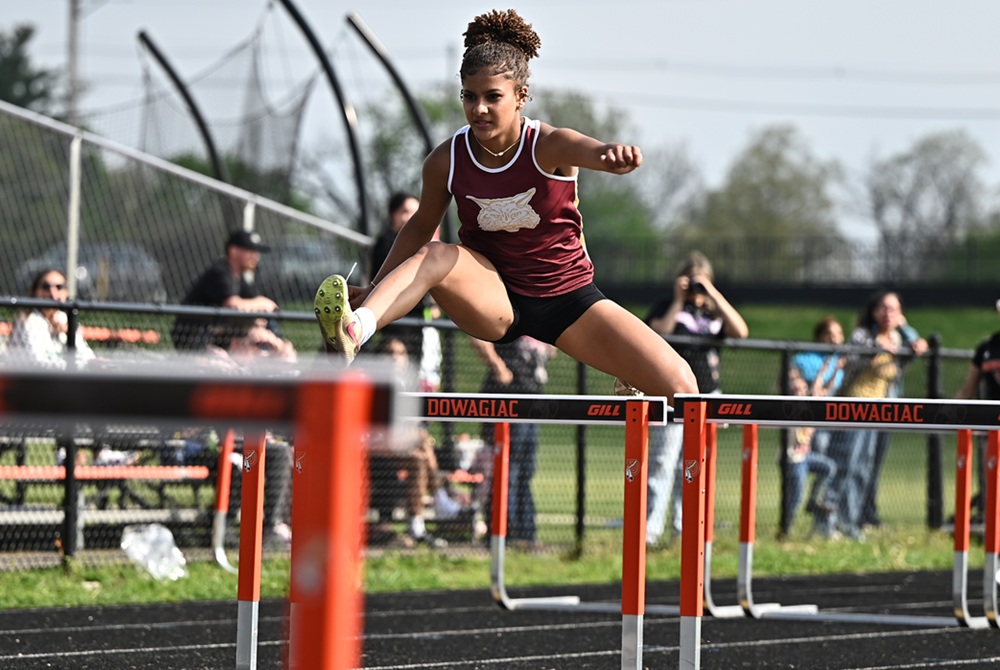
Gill was a Regional champ in the 100-meter hurdles (16.19) and earned second in the 300 hurdles. Colbert took second in the 100 hurdles.
"Lily is a great athlete who has yet to reach her full potential in the hurdles. Her mechanics have improved along with her speed and athleticism. That’s what makes her a great competitor,” Borr said. “We believe that Grace will be an all-stater within the next couple years in the hurdles as well.”
Colbert, Byrd, Zaya Price and Gill swiped second in the 400 relay.
"I enjoy running in the sprint relays because working with a team of really fast girls who work as hard as you is such a fun experience," Byrd said.
Brandywine had two all-state places at the Lower Peninsula Division 3 Finals on May 30 at Kent City. Gill finished sixth in the 100 hurdles, and Zaya Price was sixth in the high jump.
 Scott Hassinger is a contributing sportswriter for Leader Publications and previously served as the sports editor for the Three Rivers Commercial-News from 1994-2022. He can be reached at [email protected] with story ideas for Berrien, Cass, St. Joseph and Branch counties.
PHOTOS (Top) Niles Brandywine junior hurdler Lily Gill attacks a hurdle during one of her races this season. (Middle) Makenna Price sails through the air for Niles Brandywine in the long jump. (Below) The Niles Brandywine girls track & field team and coaching staff pose for a photo with the 2026 Division 3 Regional trophy at Bangor. (Action photos by Tanya Hagen. Team photo provided by the Niles Brandywine athletic department.)
Preview: LP Girls Finals Welcome Back Stars, Hopefuls Ready to Join Them
By
Geoff Kimmerly
MHSAA.com senior editor
June 1, 2023
The MHSAA Lower Peninsula Girls Track & Field Finals have showcased plenty of stars over the years, and Saturday’s meets will celebrate more with returning competitors owning a combined 22 individual championships won over the last three seasons.
But this season’s field also sticks out because of several hopefuls who appear on the verge of greatness as well, many of whom we highlight below.
All four LP Finals will again be contested at Grand Rapids-area schools, with pole vault and long jump beginning at 9 a.m., race semifinals and the 3,200 relay at 10 a.m. and the rest of the running finals starting at noon. Tickets cost $11 and are available digitally only via GoFan.
MHSAA.tv will live-stream all four meets beginning at 10 a.m., viewable with subscription.
Following is a glance at team contenders and individuals to watch in all four divisions:
LP Division 1 at Rockford
Team forecast: After winning three straight LPD1 team titles, Oak Park finished second last season to Detroit Renaissance – which had finished second twice in a row before claiming its first title since 2007. Those two are the likely favorites again, and Renaissance won their Regional matchup two weeks ago 135½-108 as they combined to post the top two times in three relays from all LPD1 Regionals. Oak Park continues to surge with one of the top hurdler groups in recent memory, while Renaissance’s depth in elite sprinters has been unmatched despite graduating one of the all-time greats last spring. All of that said, keep an eye on Ann Arbor Huron too. The River Rats finished third last season, are paced by an elite sprinter and have the potential to pick up points in a variety of events.
Jayla Dace, Detroit Renaissance sophomore: After qualifying in the 200 and running on the winning 800 relay last season, Dace enters this weekend after running the fastest 100 (11.91) and fourth-fastest 200 (24.95) at LPD1 Regionals while also slated to run on two contending relays.
Arianne Olson, Holland West Ottawa senior: Last season’s 3,200 champion and 1,600 runner-up enters with the third-fastest 3,200 (10:48.40) from LPD1 Regionals and also again will run the 1,600 and on a contending relay.
Mackenzie Robinson, Ann Arbor Huron senior: She finished second in the 100 and 200 last season and ran on champion and runner-up relays, and she could be in for an even bigger finish after posting the second-fastest LPD1 Regional 100 (12.11) and 200 (24.74) and running on the third-fastest 400 relay two weeks ago.
Morgan Roundtree, Oak Park junior: Her sophomore-year Finals included a 300 hurdles title and runner-up finishes in the 100 hurdles and 800 relay. She enters this weekend with the fastest LPD1 Regional time in the 300 (41.86), third-fastest in the 100 hurdles (14.14) and running on two contending relays again.
Abigail Russell, Allen Park junior: She swept the throws as a sophomore and could be in line to do the same this weekend with the top LPD1 Regional throw in discus (148-3) by more than 12 feet and the second-farthest shot put (42-5) behind only Howell senior standout Sophie Daugard.
Kamryn Tatum, West Bloomfield freshman: She enters her first Finals having run the fastest 200 (24.70) and 400 (56.08) times in any LPD1 Regional, with those times fast enough to have finished third in those races at last year’s Finals.
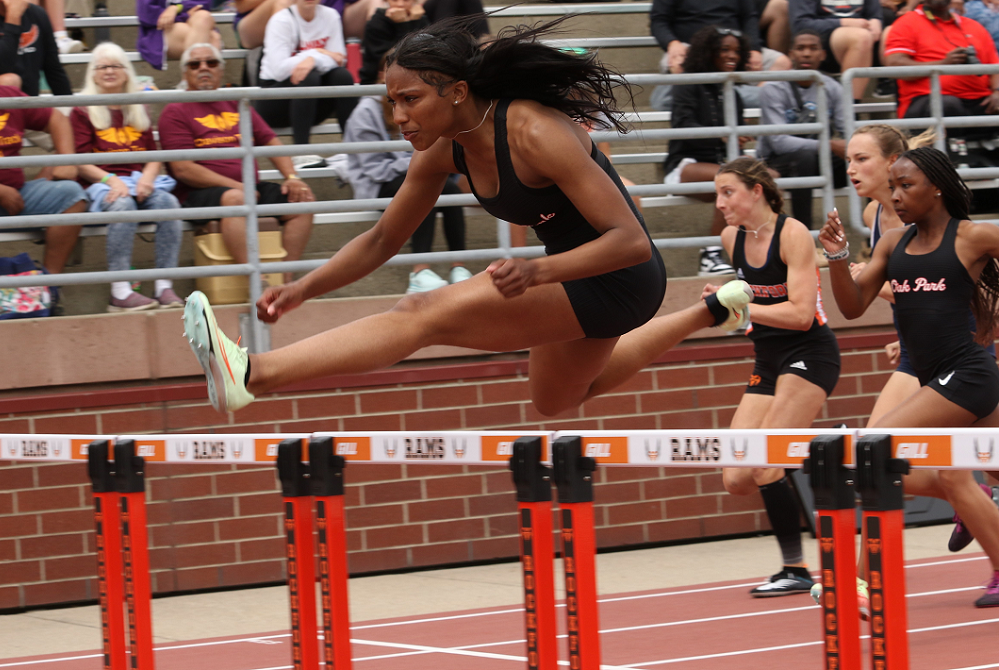
Nonah Waldron, Oak Park senior: She’s finishing a career that’s included the last two 100 hurdles championships and a 300 hurdles title as a sophomore. She enters this weekend with the fastest LPD1 Regional time in the 100 hurdles (13.61), second-fastest to Roundtree in the 300 (42.70) and likely to run on the same two contending relays as that teammate.
LP Division 2 at Ada Forest Hills Eastern
Team forecast: The last five Finals have seen five schools win Division 2 once and three more schools finish second at least once. East Grand Rapids nearly doubled up the field last year, however, and power in distance races and relays could have the Pioneers on track again. New Boston Huron was fourth last season behind the scoring of Elizabeth Anderson and could follow her into contention, and Dearborn Divine Child has qualifiers in all but pole vault and a pair of relays expected to do exceptionally well.
Elizabeth Anderson, New Boston Huron senior: She won the 200 and 400 and was runner-up in the 100 last season to score 28 of her team’s 29 points, and she could take that over 30 this weekend entering with the fastest LPD2 Regional times in the 200 (24.93) and 400 (56.62), the second-fastest in the 100 (12.34) and as part of one of the fasted 1,600 relays.
Camryn Bodine, East Grand Rapids senior: Last season’s 800 champion ran the fastest LPD2 Regional time in that race (2:13.14) two weeks ago by nearly four seconds and will also run on two contending relays after helping hers to first, second and seventh places in 2022.
Janae Hudson, Marysville junior: She could move up substantially after placing third in discus and 10th in shot put last season, coming off the top LPD2 Regional shot put (41-4½) and second-longest discus toss (125-5).
Ella Jenkins, Warren Regina senior: The reigning champion in the 300 hurdles and runner-up in the 100 hurdles ran the fastest LPD2 Regional time in the 100 hurdles (15.14) and second-fastest in the 300 (47.55).
Drew Muller, East Grand Rapids junior: The reigning 1,600 champ and 800 fifth-place finisher – and LPD2 cross country champion in the fall – ran the fastest 1,600 LPD2 Regional time (5:03.32) and fourth-fastest 800 (2:17.88) and will also run on two contending relays after hers finished first and second last year.
Keyanna O’Tey, Sturgis sophomore: She qualified for the 100 in LPD1 as a freshman and could play a starring role Saturday entering with the fastest LPD2 Regional time in the 100 (12.10), second-fastest in the 200 (25.49) and as part of two contending sprint relays.
Natalie VanOtteren, Grand Rapids Christian junior: She finished seventh in the 3,200 and ran on a runner-up relay a year ago and enters this weekend with the fastest LPD2 Regional time in the 3,200 (11:09.76) and second-fastest in the 1,600 (5:07.06).
Jordyn Wright, Tecumseh senior: The reigning pole vault champion by a foot posted the top LPD2 Regional height (11-9) two weeks ago and is expected to run two relays as well.
LP Division 3 at Kent City
Team forecast: Hart and Pewamo-Westphalia both have won two championships over the last five seasons, and Hart was first and P-W second a year ago. Hart again has the mix of sprint, distance, field event and relay standouts to finish first, and P-W has nearly the same amount and variety. But they’ll have company. Lansing Catholic has strong contenders in five races and two relays, Olivet could score big in relays, field events and hurdles; and Onsted could jump up with a handful of potential winners as well.
Ryan Finstrom, Grayling junior: Last season’s discus champion and fourth-place shot put finisher returns this weekend looking for a discus repeat after throwing the fourth-farthest LPD3 Regional toss (119-1).
Addison Hovey, Hart sophomore: She played a big role in last year’s title run with runner-up finishes in high jump and as part of the 400 relay, and she’ll return this weekend with the top LPD3 Regional time in the 100 (12.38) and top high jump (5-3) plus as part of two relays.
Heidi Newhouse, Lawton junior: The reigning high jump champion also finished just outside scoring range in the 400 last season, and she’ll enter this weekend tied for the second-best LPD3 Regional high jump (5-1) and third-fastest 400 (59.76).
Ally Olszewski, Grand Rapids West Catholic senior: She won the pole vault last season by half a foot and her 10-3 LPD3 Regional vault two weeks ago was half a foot better than the field. She also posted the fourth-best LPD3 Regional long jump (15-9½) and will run the 200 and again on the 800 relay after helping the latter to fourth place a year ago.
Madison Osterberg, Jackson Lumen Christi junior: After finishing 800 runner-up and seventh in the 1,600 a year ago, plus running on the runner-up 800 relay, Osterberg enters with the fastest LPD3 Regional times in the 1,600 (4:59.62) and 3,200 (11:01.05), the second-fastest in the 800 (2:16.56), and she will also run on a contending 3,200 relay.
Emmry Ross, Onsted sophomore: Her Finals debut included championships in the 400 and as part of the 1,600 relay and a runner-up finish as part of the 800 relay. She returns with the top LPD3 Regional times in the 400 (57.07) and 800 (2:15.03) and as part of contenders in the 800 and 3,200 relays.
Gloria Stepanovich, Benzie Central senior: The reigning long jump champion will return seeking a repeat after placing second at her Regional but only 1¼ inches off the lead.
LP Division 4 at Hudsonville
Team forecast: A close race came down to just a few points last season, with Muskegon Western Michigan Christian edging 2021 champion Mount Pleasant Sacred Heart by four. This could be close again – but with a different collection of contenders. Fowler, fourth last season, may be back in the mix with elite relays leading the way. Frankfort is back after finishing third and bolsters a strong field events group to go with relay strength. Hillsdale Academy could follow a strong distance group into contention, and Buckley should put up some points with a pair of stars. Portland St. Patrick is another interesting possibility with runners all over the meet and three contending relays.
Molly Brown, Addison sophomore: She had an impressive debut last season with two top-five relay finishes, a 10th in the 100 hurdles and fifth in the 300 hurdles. But this could be even better as she brings in the top LPD4 Regional times in the 100 hurdles (16.03) and 300 hurdles (46.82), the second-fastest in the 100 dash (12.98) and the seventh-best long jump.
Olivia Findlay, Marlette junior: Last season’s runner-up in the high jump and fifth-place finisher in the long jump is a favorite in both with the top LPD4 Regional performances in both at 5-5 and 16-11¾, respectively. She also posted the sixth-fastest 100 hurdles time (17.12) to qualify.
Aiden Harrand, Buckley junior: She’s won the 1,600 the last two seasons, the 800 last year and finished fourth in the 3,200 as well, and was the LPD4 cross country champ in the fall. Her LPD4 Regional times in the 800 (2:19.15), 1,600 (5:06.52) and 3,200 (11:26.04) all topped those lists.
Anna Plum, Mount Pleasant Sacred Heart senior: She’s the reigning champion in the 300 hurdles and was part of winning and runner-up relays as well as a qualifier in the 100 hurdles last season. She could put up plenty of points again entering with the fourth-fastest LPD4 Regional times in the 100 (13.06) and 200 (26.75) and the third-fastest in the 300 hurdles (48.46).
Megan Roberts, Hillsdale Academy senior: After missing last season’s Finals with an injury, Roberts will get another chance to build on a sophomore debut that included a relay championship, two relay runner-up finishes and a sixth place in the 800. She will run on two relays that posted the fastest LPD4 Regional times in their respective races and also the 400 after racing to an LPD4 Regional-best 59.85 two weeks ago.
Natalie Wandrie, Indian River Inland Lakes senior: She finished seventh in the shot put and 11th in the discus last season but could be set for a big finish with the top LPD4 Regional discus toss of 124-3½ and the third-longest shot put (37-3). She’ll also run a relay.
PHOTO Oak Park’s Nonah Waldron leaps a hurdle during last season’s LPD1 Finals. (Click for more from RunMichigan.com.)