

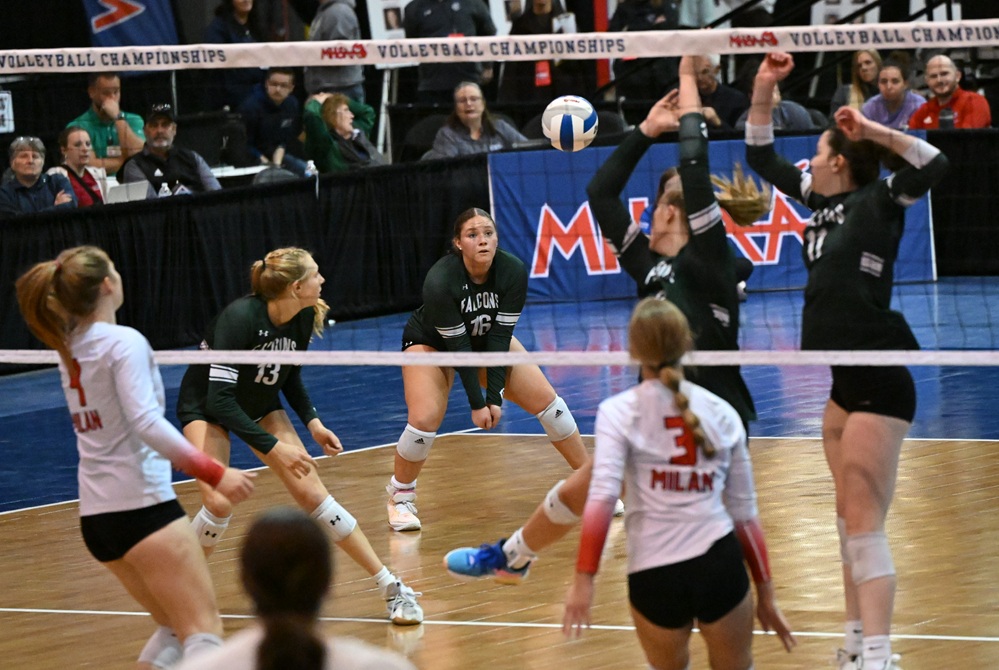
Be the Referee: Illegal Attack
By
Paige Winne
MHSAA Director of Brand Management
November 11, 2026
Be The Referee is a series of short messages designed to help educate people on the rules of different sports, to help them better understand the art of officiating, and to recruit officials.
Below is this week's segment – Illegal Attack - Listen
A volleyball scenario for you today:
A back-row player attacks the ball from in front of the attack line and the ball is higher than the net. Is this allowed?
Sort of.
Simply being a back-row player and contacting the ball higher than the net in front of the attack line is not illegal.
Completing the attack makes it illegal.
An attack is considered complete when the ball either crosses the net completely or is legally contacted by the opponent.
The referee should wait until the attack is completed before making the call.
If this happens, the play is whistled dead for an illegal attack.
Previous 2026-27 editions
Nov. 3: Pass Interference - Listen
Oct. 27: Field Hockey Substitutions - Listen
Oct. 20: Foot Save in Volleyball - Listen
Oct. 13: Soccer Advantage - Listen
Oct. 6: Defensive Holding - Listen
Sept. 29: Minimum Number of Volleyball Players - Listen
Sept 22: Soccer Changes - Listen
Sept: 15: Dead Ball Penalty - Listen
Sept. 8: Libero Ejected - Listen
Sept. 1: Soccer Foul After Shot on Goal - Listen
Aug. 25: Fumble Out of Bounds - Listen
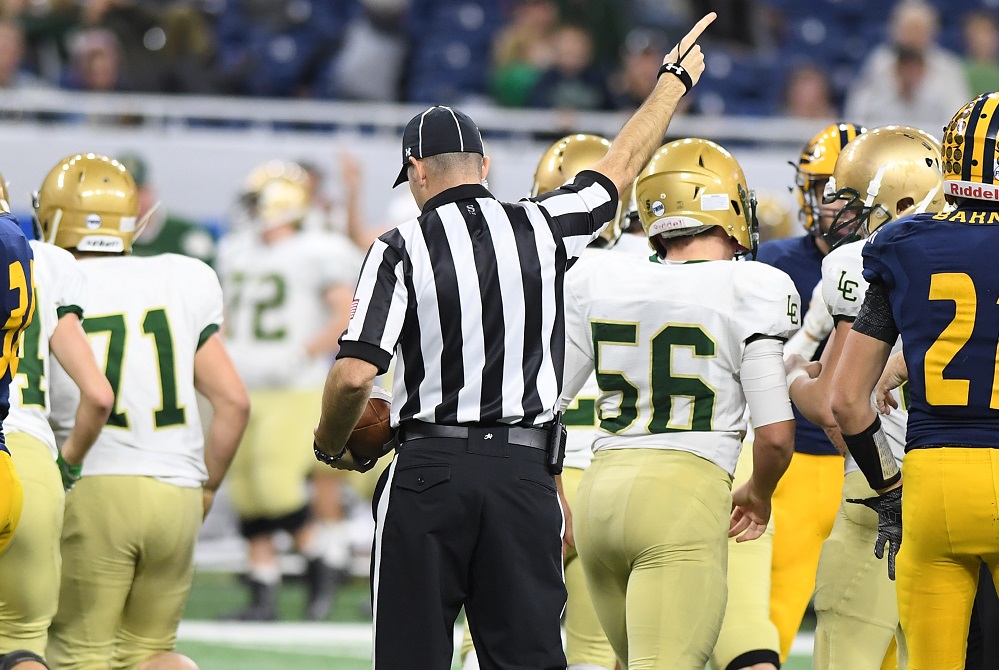
Be the Referee: Pass Interference
By
Geoff Kimmerly
MHSAA.com senior editor
September 2, 2021
This week, MHSAA officials coordinator Sam Davis explains the differences in high school pass interference rules from those at the college and pro levels.
Be The Referee is a series of short messages designed to help educate people on the rules of different sports, to help them better understand the art of officiating, and to recruit officials.
Below is this week's segment – Pass Interference – Listen
One of the big differences between high school football and the college or pro game is how pass interference is called.
In high school, there is no such thing as an “uncatchable” pass. If there is illegal contact by the defender while the ball is in the air, that’s pass interference, no matter where the pass ultimately ends up.
Also – in high school – a defender can “face guard” as long as no contact is made with the receiver. That is not pass interference, even if the defender does not look back for the ball.
Both of those interpretations differ from the college and pro game. Both (of those) levels have an uncatchable exception, and neither allows for face guarding.
Keep that in mind the next time you think you’ve spotted pass interference at the high school level.
Previous editions
Aug. 26: Protocols and Mechanics – Listen