


Be the Referee: Minimum Number of Volleyball Players
By
Paige Winne
MHSAA Director of Brand Management
September 29, 2026
Be The Referee is a series of short messages designed to help educate people on the rules of different sports, to help them better understand the art of officiating, and to recruit officials.
Below is this week's segment – Minimum Number of Volleyball Players - Listen
We’re on the volleyball court today, where the home team starts the match with only six players.
Midway through the first set, one of those six players suffers an ankle injury and can’t continue – leaving the home team with just five players.
What should happen?
Is the home team forced to default the match for not having enough players?
Does the home team just continue playing with five?
Or do they continue playing with five, but with the loss of rally or point every time the player lost to injury’s position rotates to serve?
If you said they can continue playing but lose a rally or point every time the injured player’s position rotates to serve, you are correct!
A minimum of six is needed to start – but you can finish a match with fewer than that.
Previous 2026-27 editions
Sept 22: Soccer Changes - Listen
Sept: 15: Dead Ball Penalty - Listen
Sept. 8: Libero Ejected - Listen
Sept. 1: Soccer Foul After Shot on Goal - Listen
Aug. 25: Fumble Out of Bounds - Listen
Be the Referee: Injured Runner
By
Paige Winne
MHSAA Director of Brand Management
April 21, 2026
Be The Referee is a series of short messages designed to help educate people on the rules of different sports, to help them better understand the art of officiating, and to recruit officials.
Below is this week's segment – Injured Runner - Listen
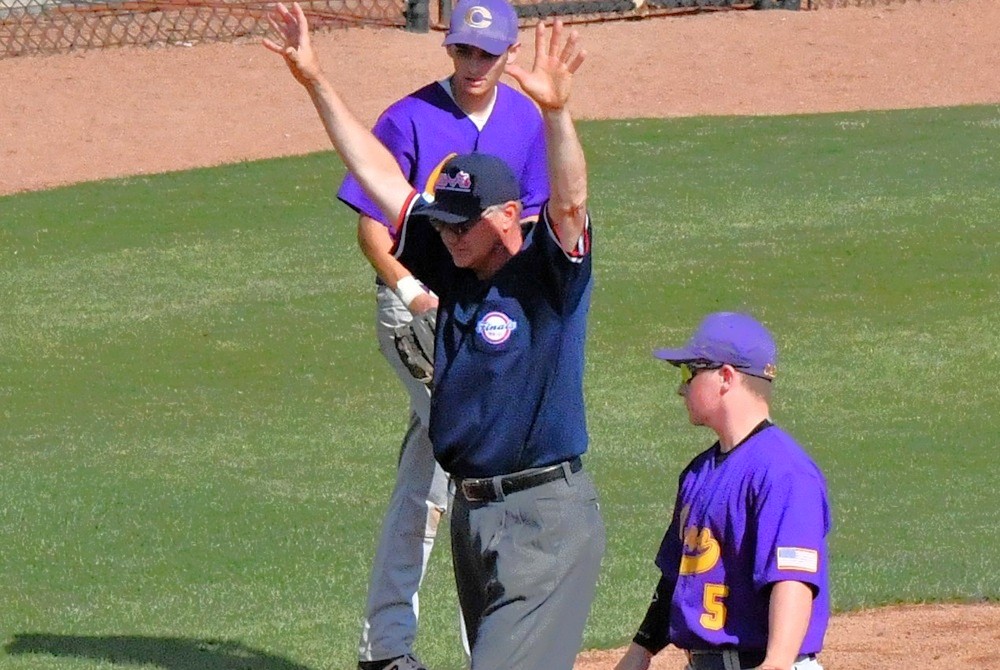
We have a baseball scenario for you today:
Your team is down one in the ninth and you are standing on second base when your teammate hits a mammoth game-winning home run.
You are understandably excited. But – in your excitement of rounding the bases – you trip on third base and tear your Achilles tendon. You are unable to get up and continue to home plate.
The home run hitter stops at second base – unsure of where to go.
Because you are entitled to the next base on a home run, your team is able to bring in a pinch runner for the injured runner, and that person can finish running the bases and cross home plate.
The home run hitter can then continue rounding the bases and score the winning run.
Previous 2025-26 editions
April 14: Officiate Michigan Day - Listen
March 11: Basketball Replay - Listen
March 3: Over the Back - Listen
Feb. 24: Wrestling Out-of-Bounds - Listen
Feb. 17: Backwards Skiing - Listen
Feb. 10: Faking Being Fouled - Listen
Feb. 3: Bowling Pins - Listen
Jan. 27: Ski Gates - Listen
Jan. 20: Cheer Judges - Listen
Jan. 13: Basketball Over the Back - Listen
Jan. 6: Bowling Ball Bounces Out of Gutter - Listen
Dec. 9: Puck on Goal Netting - Listen
Dec. 2: Goaltending vs. Basket Interference - Listen
Nov. 25: Football Finals Instant Replay - Listen
Nov. 18: Volleyball Libero Uniforms - Listen
Nov. 11: Illegal Substitution/Participation - Listen
Nov. 4: Losing a Shoe - Listen
Oct. 28: Unusual Soccer Goals - Listen
Oct. 21: Field Hockey Penalty Stroke - Listen
Oct. 14: Tennis Double Hit - Listen
Oct. 7: Safety in Football - Listen
Sept. 30: Field Hockey Substitution - Listen
Sept 23: Multiple Contacts in Volleyball - Listen
Sept. 16: Soccer Penalty Kick - Listen
Sept. 9: Forward Fumble - Listen
Sept. 2: Field Hockey Basics - Listen
Aug. 26: Golf Ball Bounces Out - Listen