

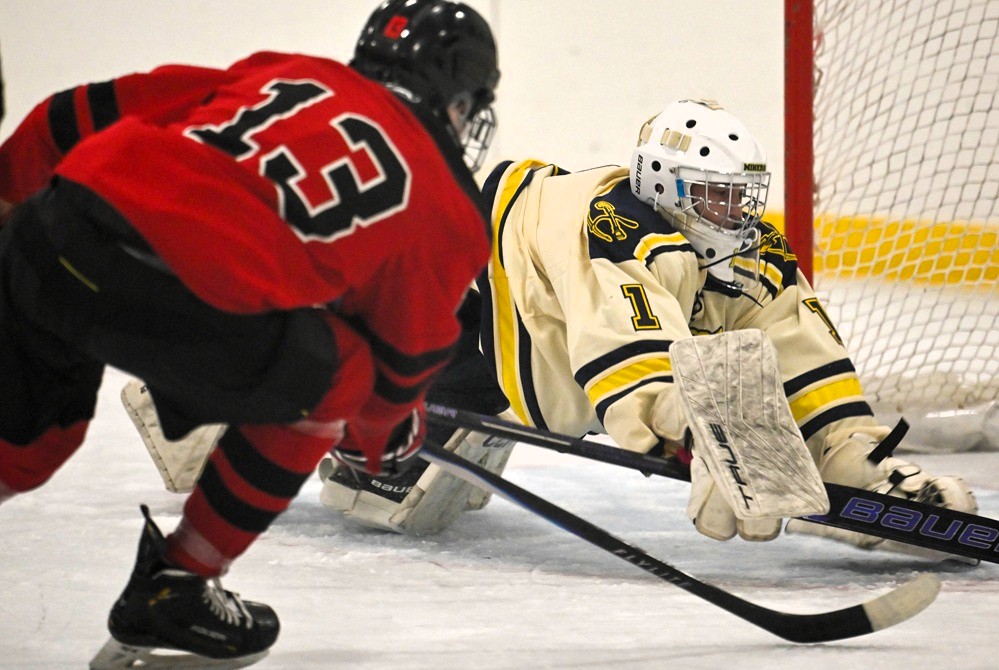
Be the Referee: Puck on Goal Netting
By
Paige Winne
MHSAA Director of Brand Management
December 9, 2025
Be The Referee is a series of short messages designed to help educate people on the rules of different sports, to help them better understand the art of officiating, and to recruit officials.
Below is this week's segment – Puck on Goal Netting - Listen
We’re on the ice today, where after being last touched by Team A, the puck comes to rest on top of the goal netting. What happens?
New this year in high school ice hockey: If a puck is on the top of the goal netting, it’s an immediate stoppage. The puck is considered out of play.
It goes back into play via a faceoff from the nearest faceoff dot in the defending team’s zone.
Why the change from previous years? Because a puck on top of the netting creates too many problematic scenarios to be considered playable – you could have high sticking, closed hand (handling of the puck), goalkeeper contact or player-in-the-goal-crease.
If the puck is on top of the goal netting, blow the whistle and resume with a faceoff.
Previous 2025-26 editions
Dec. 2: Goaltending vs. Basket Interference - Listen
Nov. 25: Football Finals Instant Replay - Listen
Nov. 18: Volleyball Libero Uniforms - Listen
Nov. 11: Illegal Substitution/Participation - Listen
Nov. 4: Losing a Shoe - Listen
Oct. 28: Unusual Soccer Goals - Listen
Oct. 21: Field Hockey Penalty Stroke - Listen
Oct. 14: Tennis Double Hit - Listen
Oct. 7: Safety in Football - Listen
Sept. 30: Field Hockey Substitution - Listen
Sept 23: Multiple Contacts in Volleyball - Listen
Sept. 16: Soccer Penalty Kick - Listen
Sept. 9: Forward Fumble - Listen
Sept. 2: Field Hockey Basics - Listen
Aug. 26: Golf Ball Bounces Out - Listen
PHOTO Marquette's Skyler Blackburn and Negaunee goalie Kurt O'Brien scramble for the puck during a Nov. 8 matchup. (Photo by Randy Ritari.)
What's My Why: Official Cindy Tyzo
June 8, 2026
Cindy Tyzo, West Bloomfield
Tyzo is one of what surely are only a handful of officials who have been registered for two MHSAA-sponsored sports since their first seasons as part of the championship lineup. She's is completing her 33rd year overall after first registering for the inaugural season of competitive cheer in 1993-94, and she also officiated the first season of MHSAA field hockey this past fall.
Tyzo also just completed her eighth season officiating girls lacrosse.
I love officiating because I love working with the young people and providing the opportunity for them to do the sport that they love. Because without officials, there's not game.
“What’s My Why” is a weekly feature telling the stories of MHSAA-registered officials in their own words. If you’re an MHSAA official and would like to share your reason why, please submit a 15 to 45-second video, taken horizontally, to director of officials Sam Davis at [email protected].
Don't miss Officiate Michigan Day 2026, July 25 in Grand Rapids! Check out MHSAA.com/OMD to register and learn more.
What's My Why
June 3: Jeff Spedoske, DeWitt - Watch
June 1: Mike Carrier, Commerce Township - Watch
May 27: Stan Wright, Warren - Watch
May 26: Murray Rose, Zeeland - Watch
May 22: Mike VanLaan, Alto - Watch
May 18: Clint Abbott, Newaygo - Watch