

Watervliet Diamond Teams Shining Heading Into District Weekend
By
Wes Morgan
Special for MHSAA.com
June 3, 2021
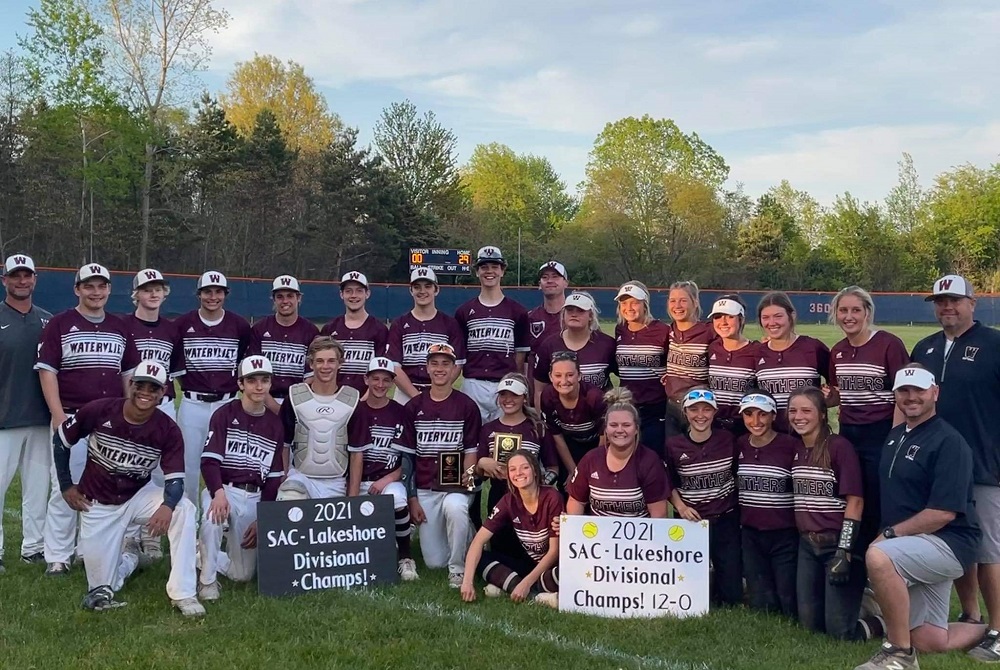
Watervliet took the concept of a banner season to another level this spring as the Panthers posted a pair of perfect seasons in Southwestern Athletic Conference Lakeshore play.
 A baseball team with only three seniors went 12-0 in the division and was matched by a softball squad featuring only one senior that also ripped through that half of the league to a 12-0 mark. It was the first division title for the Panthers in softball since 2006 and was a return to the top spot for the baseball team after a championship in 2018.
For 11th-year head coach Josh Tremblay’s baseball program, which is 19-12 heading into Division 3 District tournament play this weekend, it was a result of great starting pitching from junior right hander Andrew Chisek – who racked up an 11-2 record on the bump with a 1.83 ERA – a do-anything-to-get-on-base mentality and superb defense.
The Panthers have a .783 on-base percentage as a team and boast six players with 25 or more hits. Chisek leads the team with 34 hits, while senior outfielder Josh Reeves sits at 31, sophomore first baseman Bryton Cockrun and sophomore pitcher/infielder Tyson Williams have 27 apiece and both freshman pitcher/infielder Wyatt Epple and junior outfielder Ethan Fish have 25. Chisek and Cockrun are tied with a team-high 22 RBI.
Freshman Chase Tremblay and Williams each earned three wins on the mound and helped contribute to a team ERA of 3.59. Senior Evan Hutchins has been a team anchor behind the plate with only 11 passed balls allowed. Chisek has a team-high 66 strikeouts, and Williams is right behind with 60.
“(Chisek) was one of our better pitchers in 2019, and he had a taste of success that year,” Tremblay said of the year Watervliet made it to the Division 3 Regional Semifinals and lost to Bronson. “He was pretty excited about getting back at things. He has been good there for us. We actually have about eight guys that can pitch, but we’ve been fortunate that we haven’t had to do that deep in our rotation. We knew that would be one of our strengths this year that we would be pretty deep in terms of arms.”
Watervliet has given up just 65 walks all season, which has helped out an already phenomenal defense. But with the bats in their hands, the Panthers buttered their bread by bases on balls (103) and taking shots to the body (41).
“We just try to get on base and be pesky. We just try to bang out base hits, run the bases and try to score some runs,” Tremblay said.
 The Panthers will be pesky for a while with so many players returning next season.
“We’re a really young team, so coming into the year we didn’t really know what we were capable of,” Chisek said. “We figured out we were a really good team, and it has been fun to play with these guys. What clicked for us early on was pitching. All of our pitchers throw strikes, which gives our defense the opportunity to make plays. We started hitting the ball, and that took more pressure off the defense.”
And now their goal is a D3 District title. Watervliet takes on Niles Brandywine on Saturday in the semifinals. The two teams clashed earlier in the year and split a doubleheader.
At 28-5 this year, the Watervliet softball team is riding a 13-game winning streak into the postseason, which begins Friday with a District Semifinal matchup versus Fennville.
In the circle, the Panthers have been anchored by juniors Hannah Hart (11-2) and Haiden Edelberg (14-1). Edelberg has fanned 89 batters with a 2.54 ERA, and Hart has 66 strikeouts with just five walks and a 2.90 ERA.
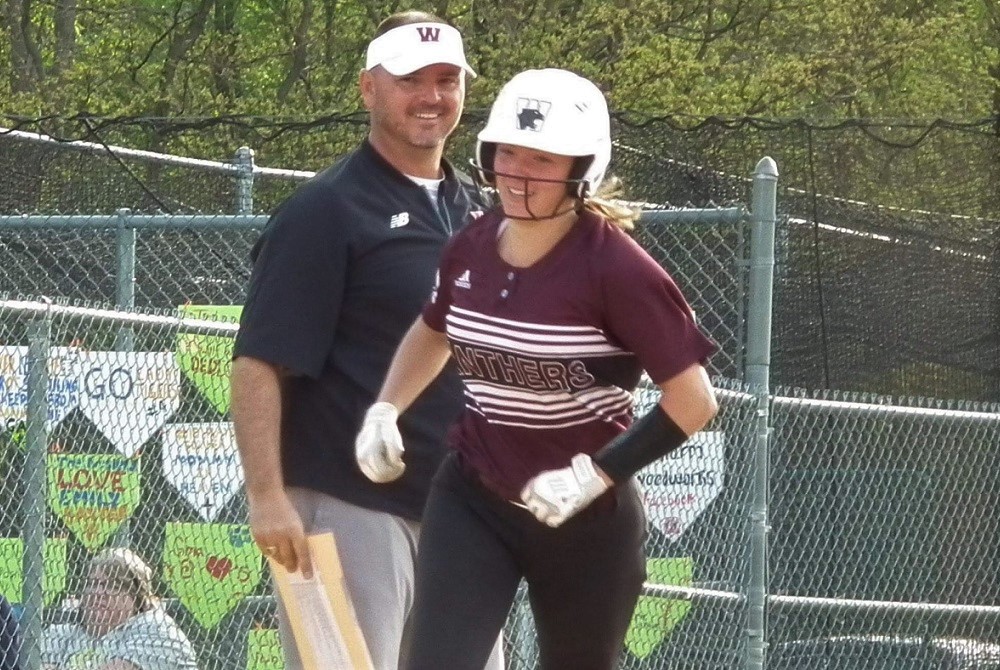
Head coach Tom Golden’s scrappy young squad has used speed as its primary weapon during a historic season. Besides seven home runs, freshman shortstop Grace Chisek has 61 hits and 60 RBI this year, having stretched 11 of those into doubles and eight into triples en route to a .635 batting average.
“We’ve all played together for so many years, and we connect well,” Chisek said. “Our bonds are good, so being young doesn’t really hurt us. We talk about what the pitcher is throwing and adjust. And there’s just a lot of speed on our team.”
Slapper Sammy Dietz, a sophomore third baseman, also has registered 61 hits with 19 RBI and a team-high 58 stolen bases in the leadoff spot, while freshman Abby Whorton, an outfielder and catcher, has 47 hits with 16 doubles, eight triples, four homers and 52 RBI.
“Our defense is pretty solid because we have athletes, but we’ve had to put up some runs,” Golden said. “Making good choices at the plate, swinging at good pitches and finding a way to get on — not necessarily by just hitting the ball, but by having quality at-bats.
“With our speed, a routine groundball becomes something pretty exciting because we get out of the box pretty quick.”
Rival Coloma has been Watervliet’s biggest hurdle “over the last four or five years,” Golden explained. The Panthers swept Coloma this season, and they will square off again if both teams advance to the District Final as expected.
“They won state a few years ago and have been the top dog,” Golden said. “We finally beat them for the first time since 2016 to win a (SAC) divisional title. That was definitely one of our goals, and we took care of business.
“That’s the thing about this group, is that it doesn’t really matter who we play. We’re a young team with only one senior, but we have a lot of young talent that has played a lot of softball. They just really enjoy going out to play.”
 Wes Morgan has reported for the Kalamazoo Gazette, ESPN and ESPNChicago.com, 247Sports and Blue & Gold Illustrated over the last 12 years and is the publisher of JoeInsider.com. He can be reached at [email protected] with story ideas for Berrien, Cass, St. Joseph and Branch counties.
PHOTOS: (Top)The Panthers baseball and softball teams celebrate their matching SAC Lakeshore championships this spring. (Middle) Watervliet’s Grace Chisek rounds third base on the way home for a softball team bringing a 28-5 record into this weekend. (Photos courtesy of the Watervliet athletic department.)
Marathon, Redemption Make Franklin's 1986 Softball Run Eternally Unforgettable
By
Ron Pesch
MHSAA historian
May 14, 2026
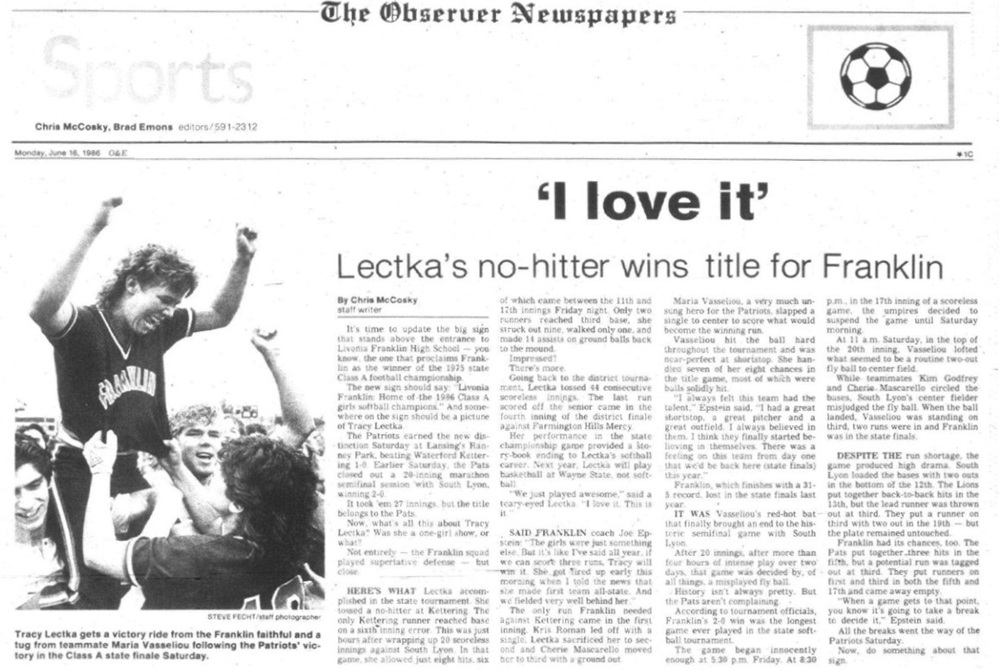
Tracy Lectka is celebrating a victory.
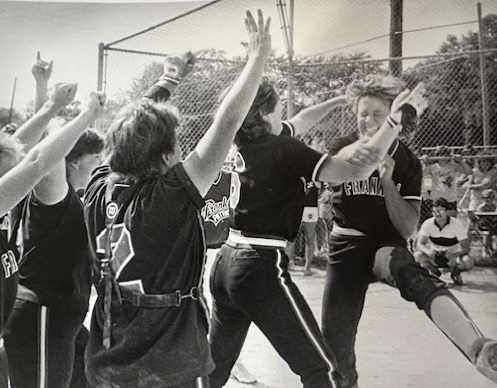
In Steve Fecht’s image found on the front page of the June 1986 Observer newspaper’s sports section, she is riding on the shoulders of ecstatic Livonia Franklin fans. Lectka’s arms are raised, and teammate Maria Vasseliou grabs at her jersey. The shot radiates the postgame celebration that came with the Patriots’ 1986 MHSAA Class A softball state championship – an honor that had slipped away a year previous.
Just as powerful is a photograph from the Observer’s Dan Dean from the 1985 run to the title game. Within, Lectka’s father Ron embraced his daughter, comforting the pain of what might have been.
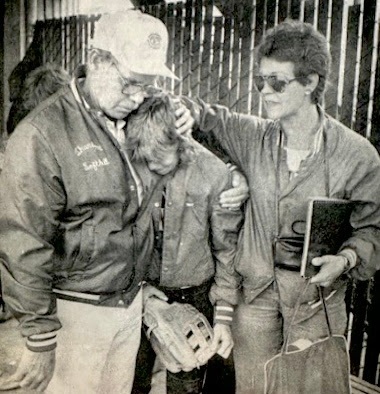 “My Dad was a huge part of my life and taught me everything I knew,” recalled Tracy. “He coached girls softball for Redford Thurston for years. … That was the most hits and runs I had given up all year. That picture speaks volumes to say the least.
“The woman next to me was our outfielder Cherie Mascarello’s mom. She was a huge supporter of the team. Never missed a game, like my mom.”
The Spring of 1985
In just his second year of coaching Livonia Franklin, Joe Epstein had built confidence among his players stressing focus and fundamentals. Lectka, a junior, emerged as an outstanding pitcher, and Epstein featured her constantly as she tossed more than 200 innings. Among Franklin’s victories were three over cross-town rival Livonia Stevenson and the state’s top pitcher, all-state senior Lisa Bokovoy. Franklin finished fourth in the Michigan High School Softball Coaches Association (MHSSCA) weekly Class A regular-season rankings.
During the tournament, Lectka tossed three consecutive four-hit shutouts, but, according to Observer staff writer Brad Emons, “was roughed up for 11 hits” in a 5-0 loss to Mount Clemens L’Anse Creuse North in the 1985 state title game. Played at Lansing’s Ranney Park, North’s star pitcher – right-hander Chris Harms (21-5) – twirled her sixth shutout of the tournament. During that Saturday lockdown, she had allowed seven hits but was “tough in pressure situations.” The Patriots had loaded the bases in the second and fifth innings but could not score.
“We just didn’t hit in the clutch,” Epstein told the Observer, “and they made it count when they had people on.”
North, 22-6 on the year, had opened the season among the state’s top-ranked teams. Harms earned second team all-state honors from MHSSCA, while Lectka was an honorable mention all-state selection. She finished the season with a 22-3 mark.
With an impressive 25-4 record, and one of the state’s top pitchers returning the following spring, Epstein vowed the team would be back.
A Shot at Redemption
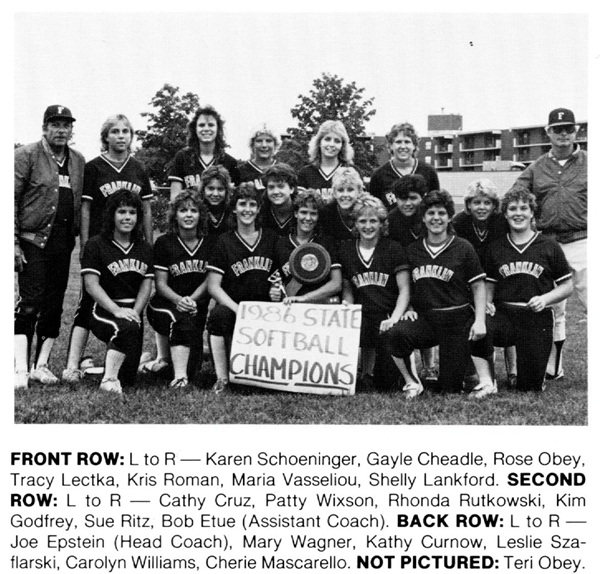
With Lectka – one of three seniors – and top players Vasseliou, Cherie Mascarello, Rose Obey, Sue Ritz, Patty Wixson and Karen Schoeninger, the team was the MHSSCA’s Class A preseason favorite entering 1986. That quickly changed within the rankings when the Patriots lost their second game, 12-3, to Walled Lake Central, then dropped a double header to Garden City. A year earlier, Franklin had defeated the Cougars three times, including in a 21-inning pitching duel between Lectka and sophomore Shelly Malone, which Franklin won 1–0.
 After some experimenting with the lineup, Epstein was able to right the ship. From there, things progressed with relative ease, as his team dropped just two more games against quality opponents, splitting a double header with Westland John Glenn, then dropping one of three games with a solid Plymouth Salem squad, a conference rival. The Patriots finished the regular season fifth in the final Class A rankings and eased their way through the District. They shut out both John Glenn and Belleville in the Regional to earn a trip back to Lansing for the final rounds.
Speaking just prior to their MHSAA Semifinal game with South Lyon, Coach Epstein was asked by the Observer about his squad’s chances.
The Lions, one of nine teams earning honorable mention in the MHSSCA’s rankings, were led by junior ace Andrea Nelson. They had trounced Salem, 19-4, beneath sweltering heat in their District Final. Following that win, Franklin upset fourth-ranked East Kentwood and then downed Lansing Eastern to continue the postseason run.
“I feel confident that if we beat South Lyon, we can go all the way,” said Epstein, “and I don’t go on a limb very often. … I understand there were a bunch of walks and errors (in Salem’s game with the Lions). I’ve seen some good teams have bad days.”
On the opposite side of the Class A bracket stood Waterford Kettering, a scrappy unranked squad Franklin had beat, “in an invitational tournament, 10-5,” and Grosse Pointe South, which, behind the pitching of University of Michigan-bound Lynn Vismara, had shocked both top-ranked Utica Ford and No. 2-ranked Fraser in Regional play.
“(We’re) a better hitting team than last year,” said Epstein, convinced strong pitching from other teams would not deter his crew from their quest. “And I’ve got some other kids who can swing the bat.”
Epstein’s belief would be severely tested.
The Marathon
“The game began innocently enough at 5:30 p.m.,” wrote the Observer’s Chris McCosky about Franklin’s battle with the Lions. “At 8:30 p.m. in the 17th inning, it was still scoreless. Despite the run shortage, the game (had) produced high drama. South Lyon loaded the bases with two outs in the bottom of the 12th. The Lions put together back-to-back hits in the 13th, but the lead runner was thrown out at third …
“Franklin had its chances, too,” continued McCosky. “The Pats put together three hits in the fifth, but a potential run was tagged out at third. They put runners on first and third in both the fifth and 17th and came away empty.”
 Drew Sharp, writing for the Detroit Free Press, covered what happened next.
“… Amid growing darkness at Michigan State, the umpires asked South Lyon coach Jeff Gale and Franklin coach Joe Epstein whether they wanted to continue playing at nearby Ranney Park, which (had) lights or wait until 10 a.m. Saturday.”
Epstein stated he had three players scheduled to take the ACT college entrance exam the next morning and requested the game be moved and continued. Gale wanted to wait. Because the coaches couldn’t come to a solution, the umpires were put on the spot. While the choice wasn’t an easy one, they decided play would resume at MSU in the morning.
Earlier in the day, Kettering sophomore Julie Vachon ripped a long line drive just beyond the reach of the left fielder for a game-winning grand slam, sealing a 4-3 comeback win over Grosse Pointe South.
Title Time
Come daylight, all three test-takers were ready, having skipped their scheduled appointment back home. With two outs in the top of the 20th inning, Vasseliou, the Patriots’ junior shortstop. tripled in a pair of runs to end the deadlock, sealing a 2-0 victory and sending Franklin back to the title game played later in the day at Ranney.
The Lansing State Journal’s Tom Gantert beautifully summarized the Patriots’ weekend in the paper’s Sunday edition. “Livonia Franklin High softball pitcher Tracy Lectka doesn’t ask much from her teammates. Just that they score …”
Kettering’s Vachon allowed two walks, struck out a pair, and gave up just three hits during the championship game. But Vasseliou, again facing two outs, drove in Kris Roman who had led off the first inning with a single. That gave the Patriots a 1-0 lead they would not increase or relinquish.
 Lectka notched just a single strikeout, but, defensively, her teammates were nearly perfect. Outside a single error, her infield scooped up everything it faced from the Captains. Only three balls tossed by the senior left the infield during the title game. She finished the day with a no-hitter, extending her streak of scoreless innings allowed to 44. Franklin ended the season with a 31-5 record and the school’s second MHSAA state championship in any sport. Ten years previous, the Patriots had won the 1975 Class A football trophy.
“‘We played awesome. I love it,” a teary-eyed Lectka told the Observer. “This is it.” It was her final game on the diamond. A year earlier, she had accepted a college scholarship to play basketball – not softball – at Wayne State.
Soon after, Sports Illustrated visited the family to snap a photo of Tracy for publication in their weekly sidebar, “Faces in the Crowd.” Over 35 years later, in mid-September 2023, the softball squad, along with that football team, were inducted into Franklin’s inaugural Athletics Hall of Fame.
Epstein, who had passed away in 2012, was also honored individually that evening. He had taught in the Detroit Public Schools from 1957 to 1966 before moving to Franklin. A long-time physical education teacher, he also led Franklin’s softball team to a runner-up finish in 1990. His wife Linda joined three others to cut the honorary ribbon for the Hall.
The induction celebration brought back wonderful memories. But it was noted that a few of the team’s achievements during their runs to the Finals were missing from the MHSAA state record book.
Happily, that has now been corrected.
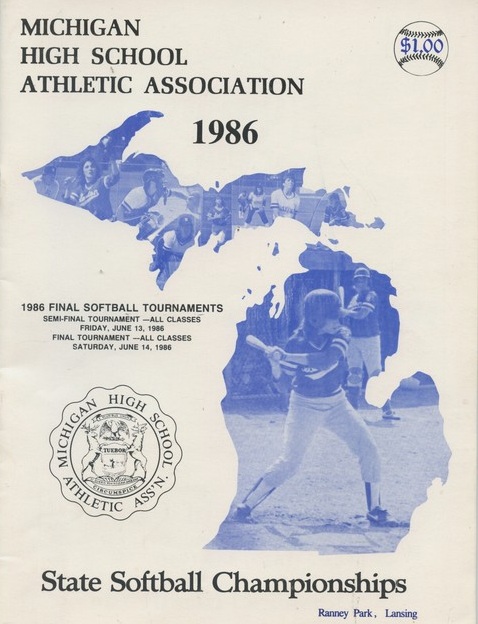
PHOTOS (Top) The Observer reported on Livonia Franklin’s 1986 Class A championship, including a memorable photo. (2) Ron Lectka, far left, comforts his daughter Tracy after her team’s 1985 title game loss. (3) The cover of the 1986 MHSAA Softball Finals program sets the scene for the weekend to come. (4) The Patriots celebrate. (5) Franklin poses for a team photo after the 1986 win. (Photos gathered by Ron Pesch from Observer archives and Tracy Lectka.)