

Flights, Flexibility, Fun & New Friends All Parts of Beaver Island's Sports Story
By
Tom Spencer
Special for MHSAA.com
August 27, 2021
Chartered flights and overnight stays for all away games are part of the normal routine for one northern Michigan high school’s student-athletes.
 Opportunities to make lots of new friends always come with the games too.
That’s the norm for Beaver Island athletes representing the Lakers in soccer, volleyball and basketball while competing in the Northern Lights League.
“We fly everywhere, and it is awesome,” says second-year soccer coach Bryan Doughman. “I thoroughly enjoy the travel.
“The biggest challenge is the kids forgetting something, and I am ultimately responsible for ‘How am I going to fix this?’”
Beaver Island is the largest island in Lake Michigan, northwest of Charlevoix in the Lower Peninsula and southeast of Manistique in the U.P. The island is home to 600 year-round residents, with 60 students kindergarten through 12th grade, including 17 in grades 9-12 this school year.
Doughman manages a restaurant on the Island. He is a native of Cincinnati. Coaching the co-ed soccer team has permitted him to make his first trips to the Upper Peninsula and Mackinac Island.
But social aspects provide the most benefit for the student-athletes. The Islanders will make their first trip of the season Sept. 15 to Concord Academy Boyne. As they do at home, the Islanders will play a game Friday afternoon and Saturday morning. The overnight experience is provided by the home school.
 “The kids will be seeing and meeting new friends,” Doughman noted. That’s what they ultimately look forward to … socially with different people.
“We all know the situation of going to work where you interact with the same people over and over again and can’t wait to meet new people,” he continued. “That’s what they kinda go through their whole lives.”
Beaver Island’s girls volleyball team opened its season Aug. 27 with a pair of losses at Maplewood Baptist in Kinross, located in the eastern Upper Peninsula.
The soccer and volleyball teams will open their home seasons Sept. 10 and 11, hosting Hannahville Nah Tah Wahsh, another U.P. opponent.
“The island community enjoys being able to come and cheer on the island teams,” noted second-year volleyball coach Bridget Martin.
The boys and girls basketball teams will go through their seasons this winter similarly. Athletics and social opportunities are a source of satisfaction for Kerry Smith, Beaver Island’s athletic director. She grew up on the Island and competed for the Islanders.
“The best part of being an AD on an island is the great deal of satisfaction I get from watching our kids be able to connect with other kids their age and play a sport and have a great time doing it,” Smith said. “The kids here know what a privilege it is to be able to have a sports program, and they show their appreciation through their outstanding sportsmanship – and that makes me beam with pride!”
Dianna Behl, Beaver Island’s language arts teacher, will take over the girls basketball team this winter. She has served as the school’s Nordic ski club advisor the past four years and has practiced with the basketball team frequently. She was a three-year letter winner at Charlevoix High School.
She’s expects her team to benefit from players taking part in fall sports.
“I am very excited for our season because many of the players are participating in soccer and volleyball, so they should be in great shape for basketball season,” she said. “I hope to build on their solid base.”
Dan Burton will be entering his seventh season as the varsity boys basketball coach. He’s also developing an elementary basketball program and guiding the middle schoolers. He expects to have a middle schooler or two join the high school team to fill out the roster this winter.
 “The best part of coaching is getting these the students an outlet for sports,” said Burton, a business owner on the island. “Otherwise, there’s nothing much else to do in a small town like this.
“Keeping a sports program is the most important thing.”
The soccer team also is relying on middle schoolers as it attempts to find enough players to compete. The co-ed roster is dominated by girls, and the Islanders have only two seniors and one junior on the squad.
“I just hope we can improve a lot on our basics this year,” Doughman said. “I hope to just have fun. The biggest challenge is they’re all first and second-year players, except for a handful.”
Weather is the most difficult challenge of being an island-based sports team, the coaches acknowledged.
“The greatest challenge of coaching an island team is Mother Nature,” Behl said. “The girls practice hard for days and then at the last minute bad weather comes in and the planes aren't flying us out, or our competition in, for the games.
“It is heartbreaking and happens every season,” she continued. “Nonetheless, I am so impressed with how well the girls handle it. It is a life lesson in flexibility, and they are pros.”
Because of those frequent weather changes, spotting the athletic director in the school hallways often is a bad sign.
“The weather is a major frustration and always a factor for us,” Smith said. “On game day, I try not to show my face down in the high school wing because the kids always think I am coming to deliver bad news.”
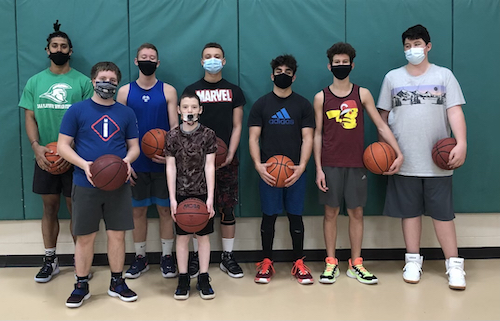 The school often chooses which teams will go on to MHSAA postseason play based on their success in the league. Beaver Island sent its boys basketball team to Districts last season.
The last Beaver Island team to move past the first round of Districts was the volleyball team in 2013. The Islanders beat Mackinaw City and went on to play Engadine before seeing their season come to an end. The school’s best-ever tournament run was by the soccer team in 2005.
“They were District winners; this was the farthest any team has ever gone,” Smith recalled. “It was a huge celebration. The team was greeted by the fire trucks, parents and pretty much the whole community when they flew home that day.”
Beaver Island anticipates sending the boys basketball team to Districts again this year, and possibly the girls basketball team as well.
Mackinac Island is the Islanders’ favorite place to travel, according to coaches’ consensus. That’s the host for the volleyball and soccer Northern Lights Conference tournaments.
“One of our favorites would have to be Mackinac Island because the girls enjoy flying to another island, riding in the horse drawn carriage and the rare treat of getting to go to a Starbucks,” she said.
Mackinac Island will host conference tournaments for soccer Oct. 16 and volleyball Oct. 23.
 Tom Spencer is a longtime MHSAA-registered basketball and soccer official, and former softball and baseball official, and he also has coached in the northern Lower Peninsula area. He previously has written for the Saginaw News, Bay County Sports Page and Midland Daily News. He can be reached at [email protected] with story ideas for Manistee, Wexford, Missaukee, Roscommon, Ogemaw, Iosco, Alcona, Oscoda, Crawford, Kalkaska, Grand Traverse, Benzie, Leelanau, Antrim, Otsego, Montmorency, Alpena, Presque Isle, Cheboygan, Charlevoix and Emmet counties.
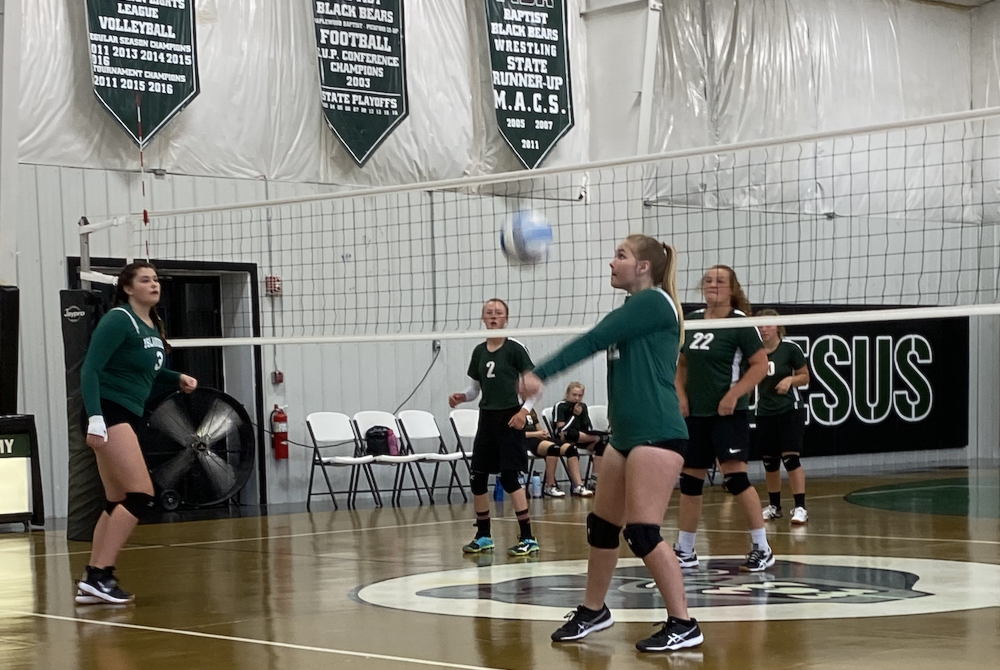
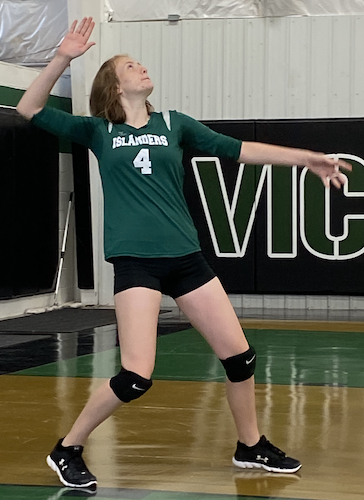
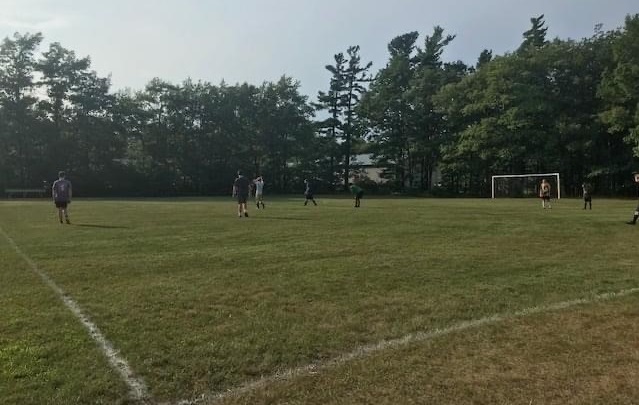
PHOTOS: (Top) Beaver Island's Ella Moon passes during a volleyball match this fall. (2) Olga Burton winds up to serve. (3) Beaver Island plays its lone home soccer game during the 2020 season. (4) The Beaver Island boys basketball team participated in District play this past winter. (Photos courtesy of the Beaver Island athletic department.)
Pilots' Record-Setting Coach Always Eager to Play Role in Helping Students Soar
By
Keith Dunlap
Special for MHSAA.com
November 13, 2025
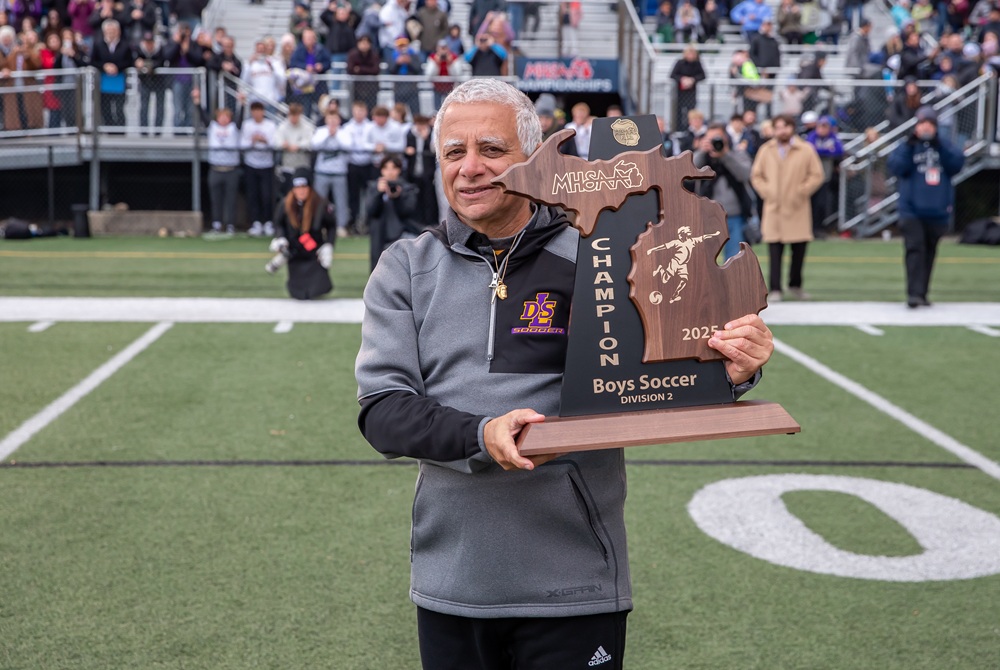
As if they were fans standing outside an arena’s exit waiting for a famous rock star or professional athlete to come out, Warren De La Salle Collegiate students congregated outside a gate at Grand Ledge High School with bated breath.
 Instead of a rock star or athlete, the students had phones up waiting for Thaier Mukhtar, and let him know just how much he was loved.
“Mr. Mukhtar! Mr. Mukhtar!” the students chanted while mobbing him with praise.
Given what he has meant to the school and Michigan high school soccer for nearly four decades, it’s no wonder why the students waited him out.
Mukhtar had just helped lead De La Salle to its seventh Finals championship with a 2-0 win over Hudsonville Unity Christian, and Mukhtar said he was now in elite company with a famous NFL quarterback.
“Everyone was making fun of me because Tom Brady had one more ring than me,” Mukhtar quipped. “Now he doesn’t.”
The Division 2 title was the second straight for De La Salle and finished off a recent stretch full of milestones.
Two seasons ago, Mukhtar became the all-time winningest boys soccer coach in state history when he surpassed Nick Archer of East Lansing by earning his 661st victory.
This year, Mukhtar reached the 600-win mark coaching for De La Salle. That achievement didn’t come with much fanfare, but that was by design and true to form.
“He didn’t celebrate a lot because it’s more about the team,” Pilots senior James Spicuzzi said. “We got him a signed ball, but that was really it. It’s more about the team for him than it is about himself.”
Mukhtar has tried to make that his emphasis since becoming the head coach of De La Salle in 1983 at the age of 23.
The Pilots won their first championship, in Class A, in 1990, and then consecutive titles in 1992 and 1993.
 After sharing the 2000 Division 1 title with Bloomfield Hills Brother Rice and then defeating Brother Rice to win the championship in 2005, De La Salle went on a title drought.
Mukhtar actually left his coaching post at De La Salle in 2011 and coached boys and girls soccer at Fraser from 2012-17 before returning as Pilots coach in 2018.
A social studies teacher at De La Salle for 30 years – a job he still holds – Mukhtar admits his coaching style can rub some the wrong way.
“I’m a demanding coach,” he said. “I’m a perfectionist. I call out every little mistake, and I make sure we work on those mistakes. I don’t care if we win 4-1 or 4-0, but are making mistakes. You’re not going to make those mistakes at the end of the year if you don’t want to send your team home.
“I have people – whether it’s parents or players – look at me like, ‘That guy is crazy. They just won the game.’ It ain’t about winning the damn game. It’s about getting here (to the state final) and not making those mistakes. Not committing the foul. Not being out of position. Not communicating in the back. Different things we harp on over and over again.”
Junior Andrew Corder, who led De La Salle with 38 goals this year, said it’s tough love that players have learned to embrace.
“It’s been kind of hard at times, but he just wants the best for us,” he said. “It’s all worth it.”
Mukhtar said he often thinks about retirement, but then points to something his son told him as a reason to keep running it back.
“Every year it’s a battle with me and my administration and, ‘Am I returning? Am I not returning?’ I say to take it year by year,” Mukhtar said. “My CEO at De La Salle made me guarantee that I give him two years (notice) at least. … I give two and then I always say, ‘Why am I doing this?’ My knee is killing me. But when my son says to me, ‘Dad, the fact that you get nervous and the fact you get excited means that you’re not ready (to retire).’ He said it perfectly, and he’s 100 percent right.”
Which is why Mukhtar is likely to continue coaching for the foreseeable future, and why more student celebrations should be in store.
“I’m still teaching at school when I don’t have to, and I’m still coaching when honestly I’ve done everything I’ve needed to do in my life,” Mukhtar said. “I’m like three wins away from 900 career victories coaching boys and girls. I’m still doing all these things because I feel like I can play a role in their life. It’s not just soccer. I want you to be able to believe in yourself and believe that you can accomplish whatever you work hard for. I teach my students the same thing.”
 Keith Dunlap has served in Detroit-area sports media for more than two decades, including as a sportswriter at the Oakland Press from 2001-16 primarily covering high school sports but also college and professional teams. His bylines also have appeared in USA Today, the Washington Post, the Detroit Free Press, the Houston Chronicle and the Boston Globe. He served as the administrator for the Oakland Activities Association’s website from 2017-2020. Contact him at [email protected] with story ideas for Oakland, Macomb and Wayne counties.
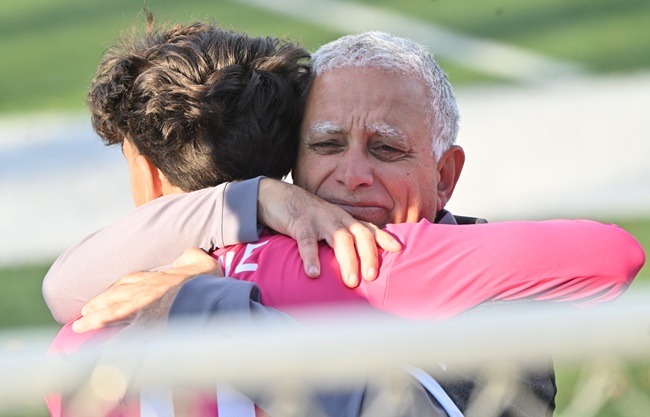
PHOTOS (Top) De La Salle boys soccer coach Thaier Mukhtar holds up his team’s championship trophy after the Pilots clinched the Division 2 title Nov. 1 at Grand Ledge High School. (Middle) Mukhtar embraces keeper Giovanni Vitale after his team’s 2024 championship win.