


Did you see that?
March 12, 2012
Check out our must-know scores and news from March 5-10.
(Click on links for coverage.)
Gymnastics
Where no team has gone before: Grand Ledge indeed accomplished what no team had before Friday by winning its fifth-straight MHSAA team championship. Senior Christine Wilson and junior Sara Peltier then won the Division 1 and 2 individual titles, respectively, on Saturday. (Second Half Team) (Second Half Individual)
Swimming and Diving
Celebratory dip: Saline isn’t the first boys swimming and diving program to win three straight MHSAA championships. But it’s definitely the program of the day after claiming another Division 1 title Saturday and breaking four records -- including two all-division/class records -- in the process. (Second Half)
Hockey
Consider it avenged: There are few better ways to go out than with a championship after falling in the Final the year before. That’s how Bloomfield Hills Brother Rice and super senior Mackenzie MacEachern finished off this season Saturday, beating Grosse Pointe South 4-1 after falling by the same score in the 2011 championship game. (Second Half)
Girls Basketball
Only one can move on: Detroit Martin Luther King won its third and final meeting this season against Detroit Pershing to move on to this week’s Class A Quarterfinals. King had lost to Pershing by five during the regular season, then beat Pershing by three in the Detroit Public School League Final before defeating Pershing again 54-53 on Thursday in a Regional Final. (Mlive.com)
Boys Basketball
Another championship down, two to go: Top-ranked and reigning Class B champion Lansing Sexton eliminated what was perceived heading into the postseason as one of the biggest obstacles standing between the Big Reds and a repeat. They downed No. 4 Lansing Catholic 66-56 in a District Final on Friday to improve to 22-1. (Lansing State Journal)
Editor's note: Did we miss something? Comment below and tell us about it. Is there an event coming up that we should make sure to note? Comment or e-mail [email protected].
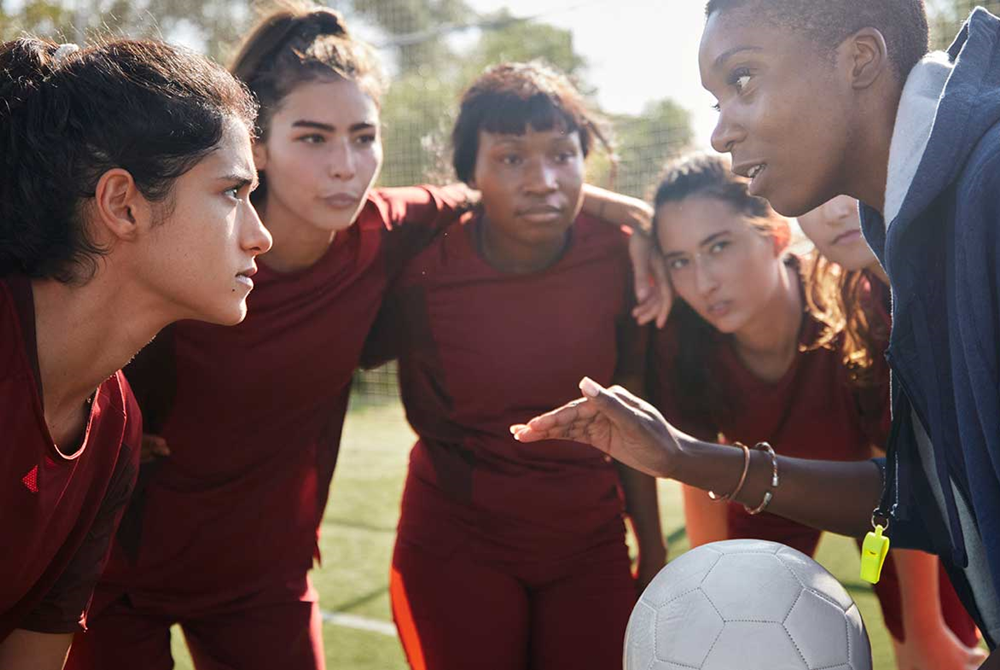
Why Athletes Should See A Sport Psychologist
By
Elizabeth Swanson
Henry Ford Health
January 9, 2024
Whether at the professional or intramural level, there are so many benefits to being an athlete. Participating in a sport teaches communication skills, how to overcome adversity—and regular exercise has so many incredible health effects on the mind and body.
 But that’s not to say athletes don’t have their own set of challenges. Pressures to perform, physical injuries and intense schedules can take a toll on anyone’s mental health, which is where a sport psychologist comes in.
“It’s helpful that a sport psychologist knows the culture of athletics and the typical stressors that athletes face,” says Seth Swary, Ph.D., a sport psychology clinician at the Henry Ford Center for Athletic Medicine. “We’re familiar with the influence the world of athletics can have on someone and how it can affect their well-being.
“Athletes have a whole team around them to help them perform — athletic trainers, nutritionists, etc.— so why shouldn’t they have an expert who is dedicated to supporting their mental health? A sport psychologist acts as a strength-training coach for the mind.”
Mental Health Challenges That Athletes Face & How Sport Psychology Can Help
Athletes often have a built-in support system: teammates and coaches who know what they’re going through and trainers and physicians who can help manage aches and injuries. But still, it’s not always easy. Some of the difficulties that athletes face include:
- Increased attention on body image. Especially if you play a sport that requires revealing outfits — or a sport with increased focus on weight — it might be difficult to maintain a healthy body image. For some, this can lead to an increased risk of developing an eating disorder.
- The pressure to perform. “If you’re an athlete at the college or professional level and play badly during a game, you get roasted on Twitter,” says Dr. Swary. “But even if you’re not in the public eye, there is pressure to perform — from coaches, teammates, family members.”
- Navigating demanding schedules. “I work with many college athletes and their schedules are packed — practicing at least two hours a day, team meetings, traveling to and from games — and then they’re trying to keep up with school,” says Dr. Swary. “It can be stressful.”
- Debilitating physical injuries. The physical demand of sports can also bring about its own set of challenges — especially when injuries occur. “You’re not only dealing with surgery and rehabilitation, but you’re also out of the game for a while,” says Dr. Swary.
- Making career transitions. “I’ve worked with many athletes who are transitioning from one level of athletics to another (for example, middle school to high school, high school to college, college to professional) along with athletes who are transitioning out of their career,” says Dr. Swary. “They wonder how they can leave this sport they’ve been doing their whole lives — some since they were 3 or 4 years old. It can be a huge part of their identity and a tough transition to make. Even more so if it’s an injury that abruptly derails their career. We can provide them with ways to make a smooth, healthy transition.”
That said, nothing “bad” has to happen to benefit from sport psychology. As Dr. Swary says, you don’t see a personal trainer because you’re not strong, you see a personal trainer because you could benefit from being stronger. It’s the same with sport psychology — and it can help improve your performance.
“We have specific skills we work on for performance optimization,” says Dr. Swary. “How do we talk to ourselves? How do we respond in certain situations? How do we stay in the moment when we’re distracted?
“A high school athlete may have had a rough day at school; then they have to refocus and find energy at the end of the day for their game. It can be helpful for any athlete at any time.”
Reviewed by Seth Swary, Ph.D., a sport psychology clinician at the Henry Ford Center for Athletic Medicine.
To learn more about the sport psychology program at Henry Ford or to request an appointment, visit henryford.com/sportpsychology.