


Did you see that? (10/15-10/21)
October 22, 2012
Three MHSAA fall sports came to an end over the weekend, and the tournament for a fourth has begun. Those finishes highlight the non-football best from the week that was Oct. 15-21.
Golf
Rankings play out: The Lower Peninsula girls season came to a close with all four top-ranked teams claiming championships. Plymouth won its first MHSAA title in any sport in Division 1, while Mona Shores became the first Lower Peninsula girls golf team to win four straight by doing so in Division 2. Ada Forest Hills Eastern made it two titles in three seasons by winning Division 3, and Lansing Catholic won its third straight in Division 4. Second Half covered them all. (Division 1) (Division 2) (Division 3) (Division 4)
Tennis
Dynasties continue: Three of four top-ranked teams also won MHSAA Lower Peninsula Boys Tennis Finals over the weekend, with the other champion hardly unfamiliar with first place. Ann Arbor Huron was ranked only No. 3 before winning Division 1 for the third time in five seasons. Midland Dow won its fourth straight Division 2 title and Ann Arbor Greenhills won its fifth straight in Division 4. But the biggest headline goes to Detroit Country Day, which tied Ann Arbor Pioneers’ dominance in 2002 with 39 points in claiming the Division 3 title. Second Half also covered all four of these Finals.(Division 1) (Division 2) (Division 3) (Division 4)
Cross country
One streak ends, another begins: The Upper Peninsula season came to an end with its Finals for three divisions. Calumet’s Tara Kiilunen led her team to the Division 1 girls title by winning the individual championship for the fourth consecutive season. On the boys side, Sault Ste. Marie won its first title in 11 years thanks to the individual Division 1 championship of freshman Parker Scott, who finished this season undefeated. Second Half covered all the races. (Girls Finals) (Boys Finals)
Soccer
Powers emerge in Division 1: Lower Peninsula Districts whittled the number of teams still alive down to 64 – 16 in each of four divisions. And the two toughest Districts to navigate were arguably in Division 1. Top-ranked East Kentwood beat Caledonia 6-0 to win that District, but only after the Falcons knocked out No. 2 Rockford in a semifinal and the Rams did the same to No. 7 Okemos in an opener. Rochester Stoney Creek, ranked No. 4, emerged from a district at Rochester that included No. 9 Utica Eisenhower and honorable mention Troy Athens by beating Rochester Adams 2-1 in the title game – after Adams upset Eisenhower in a semi. (Grand Rapids Press) (Oakland Press)
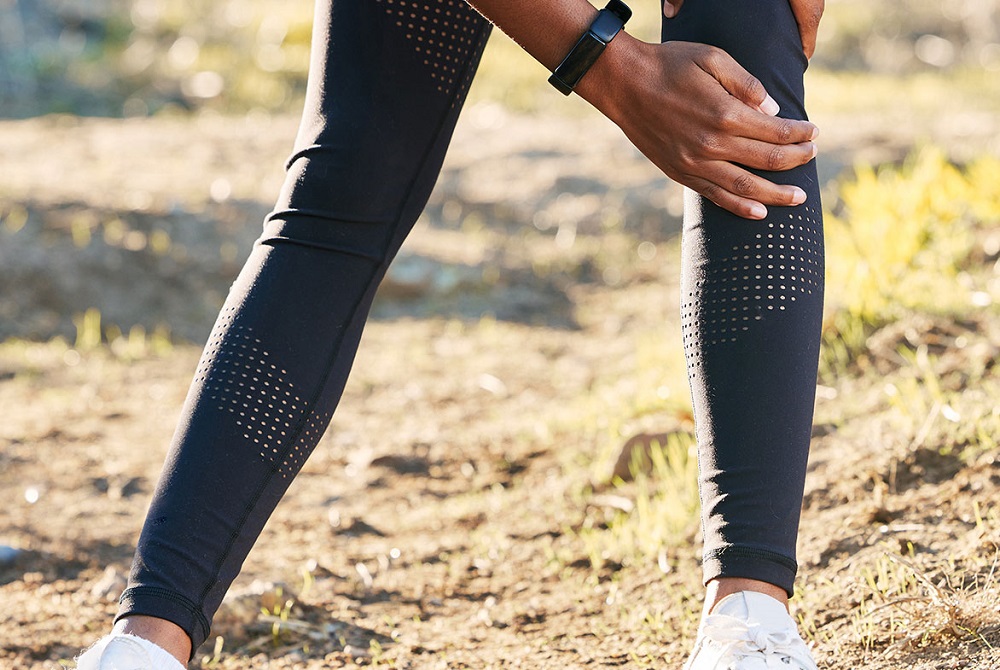
Snap, Crackle & Pop: Why Do My Knees Make Noises - And Should I See a Doctor?
April 5, 2022

Do you ever just go about your daily life and then, seemingly out of nowhere, your knee makes a noise?
You might call it a weird idiosyncrasy and not think twice about it—or you might turn to the Internet to try and find all of the potential issues that might be wrong with your knee.
But if your knee pops or cracks once in a while, it’s usually no cause for concern. After all, joints sometimes make noises, and knees are no exception (especially when you squat or sit down.)
“Infrequent knee pops and cracks are more common in the younger population, says Nancy White, M.D., a sports medicine physician at Henry Ford Health. “When you feel that ‘pop,’ it means your kneecap was pulled a bit outside of where it’s supposed to be, and so it’s correcting itself and getting back into position. You can kind of feel that something moved.”
If, however, pain or swelling accompanies a noisy knee, you should have it evaluated by a sports medicine provider. And if your knee is popping or cracking regularly, that's another sign you should have it checked out.
“If you let it go, your knee could get worse,” says Dr. White. “There are recommendations a doctor can make to prevent this from happening, such as strengthening and flexibility exercises.”
What Is Knee Crepitus?
If your knee sounds like Rice Krispies crackling (or you experience a grinding sensation) it likely means you have knee crepitus, which can signify the beginning of osteoarthritis behind the kneecap.
“Knee crepitus is primarily caused by an issue called patellofemoral dysfunction,” says Dr. White. That sounds like a mouthful, but it means that your knee isn’t tracking straight up and down like it’s supposed to.
“There’s cartilage on the back of your kneecap and on the front part of your thigh, and the cartilage on the front part of your thighbone makes a groove so the kneecap can glide straight up and down in a floating position,” says Dr. White. “If the cartilage is worn down (and inflamed, worn-down cartilage signifies osteoarthritis), the kneecap can’t smoothly glide up and down, causing knee crepitus.”
If you are experiencing knee crepitus, you should see a sports medicine primary care physician, especially if it is accompanied by pain. They can recommend a variety of treatments, such as physical therapy and cortisone injections.
Still not sure if your noisy knees are cause for concern? When in doubt, call your doctor. After all, the sooner your doctor can examine it, the sooner you can prevent an issue from getting worse.
To learn more about your orthopedic condition or to find a provider, visit henryford.com/ortho.
Dr. Nancy White is a sports medicine physician with Henry Ford Health. She sees patients at Henry Ford Medical Center – Novi, and Henry Ford Medical Center – Bloomfield Township.