


Did you see that? (10/15-10/21)
October 22, 2012
Three MHSAA fall sports came to an end over the weekend, and the tournament for a fourth has begun. Those finishes highlight the non-football best from the week that was Oct. 15-21.
Golf
Rankings play out: The Lower Peninsula girls season came to a close with all four top-ranked teams claiming championships. Plymouth won its first MHSAA title in any sport in Division 1, while Mona Shores became the first Lower Peninsula girls golf team to win four straight by doing so in Division 2. Ada Forest Hills Eastern made it two titles in three seasons by winning Division 3, and Lansing Catholic won its third straight in Division 4. Second Half covered them all. (Division 1) (Division 2) (Division 3) (Division 4)
Tennis
Dynasties continue: Three of four top-ranked teams also won MHSAA Lower Peninsula Boys Tennis Finals over the weekend, with the other champion hardly unfamiliar with first place. Ann Arbor Huron was ranked only No. 3 before winning Division 1 for the third time in five seasons. Midland Dow won its fourth straight Division 2 title and Ann Arbor Greenhills won its fifth straight in Division 4. But the biggest headline goes to Detroit Country Day, which tied Ann Arbor Pioneers’ dominance in 2002 with 39 points in claiming the Division 3 title. Second Half also covered all four of these Finals.(Division 1) (Division 2) (Division 3) (Division 4)
Cross country
One streak ends, another begins: The Upper Peninsula season came to an end with its Finals for three divisions. Calumet’s Tara Kiilunen led her team to the Division 1 girls title by winning the individual championship for the fourth consecutive season. On the boys side, Sault Ste. Marie won its first title in 11 years thanks to the individual Division 1 championship of freshman Parker Scott, who finished this season undefeated. Second Half covered all the races. (Girls Finals) (Boys Finals)
Soccer
Powers emerge in Division 1: Lower Peninsula Districts whittled the number of teams still alive down to 64 – 16 in each of four divisions. And the two toughest Districts to navigate were arguably in Division 1. Top-ranked East Kentwood beat Caledonia 6-0 to win that District, but only after the Falcons knocked out No. 2 Rockford in a semifinal and the Rams did the same to No. 7 Okemos in an opener. Rochester Stoney Creek, ranked No. 4, emerged from a district at Rochester that included No. 9 Utica Eisenhower and honorable mention Troy Athens by beating Rochester Adams 2-1 in the title game – after Adams upset Eisenhower in a semi. (Grand Rapids Press) (Oakland Press)
Add Rest Days to Your Workout Routine
June 2, 2020

Henry Ford Health System
Whether you're new to exercise or a seasoned enthusiast, it's tempting to adopt an all-go, no-quit attitude. This is especially common when you're are trying to achieve a fitness goal. Maybe you want to run a 5K, or maybe you have 10 pounds you want to shed before going on vacation.
"Whatever the driver, it's important to remember that scheduling time for rest and rejuvenation is a critical component of any workout regimen," says James Moeller, M.D., a sports medicine specialist at Henry Ford Health System.
Building in Rest Days
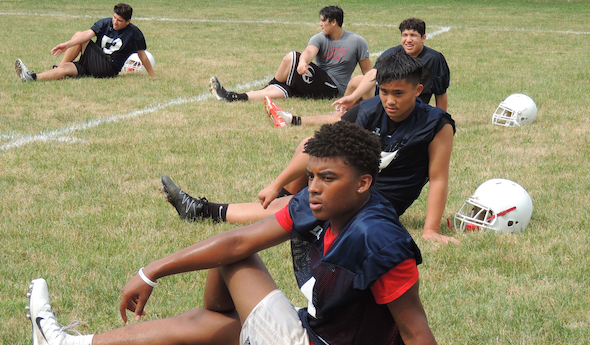
From high-intensity interval training (HIIT) and spin to barre and Zumba, popular workouts increasingly push exercisers to go faster, longer, stronger. This prolonged physical stress can lead to overuse injuries, such as stress fractures, muscle strains and joint pain. Excessive exercise can also lead to hormonal changes, disrupted sleep patterns, decreased immunity and mood swings.
“Working out, especially resistance training, breaks tissues down, causing microscopic damage,” Dr. Moeller says. "Rest days allow your muscles time to rebuild."
So how much rest do you really need? There isn't a one-size-fits-all prescription. Factors like your age, fitness level, the intensity of your workout and the amount of training you do weekly will impact the amount of recovery time you need. But there are some basic guidelines for rest days:
1. Go easy: Rest is a relative term. "It's not just sitting on the couch with an iced tea," says Dr. Moeller. "You may still be exercising on 'rest' days, but at a lower intensity." Maybe you go for a brisk walk or ride your bike to work. Take a yoga class or do some dynamic stretching. The key is to make sure you're not overworking the same body parts.
2. Get sufficient sleep: Sleep is a key component of muscle repair and rebuilding. During sleep, your body’s production of growth hormone increases. Not getting quality shuteye thwarts your body's production of growth hormone and can impact your performance.
3. Give overtaxed muscles a break: You don't need to skip the gym on specific days each week, but you do need to rotate which body parts you're working. The general rule is to give muscles 48 hours to recover after a workout. So it's a good idea to take two to three days off before working the same muscle groups again.
4. Stay hydrated: Make sure to restore lost fluids before, during and after a workout. Dehydration can lead to overheating, headaches and muscle fatigue, among other ailments. You don’t need a sports drink; water is best. "Sports drinks aren't required unless you're getting into very high intensity activity, or exercising for more than one hour at a time," Dr. Moeller says.
5. Pay attention to your body: A lot of people try to work out through pain and fatigue. If there's a heaviness to your movements, or if you feel like your muscles are not responding appropriately to the stress you're providing, take a time out. "It's really about learning to read your body's signals," says Dr. Moeller.
Health authorities and news headlines widely publicize the health benefits of exercise — and the consequences of inactivity. The American Heart Association recommends that adults get at least 150 minutes of moderate-intensity exercise per week, plus strength training two or three days per week. Less discussed are the negative effects of not allowing your body sufficient time to rest.
Getting sufficient rest between workouts is just as important as participating in regular exercise. "Both are part of the total process required to build strength, endurance and muscle mass," Dr. Moeller says.
Want to learn more? Henry Ford Health System sports medicine experts are treating the whole athlete, in a whole new way. From nutrition to neurology, and from injury prevention to treatment of sports-related conditions, they can give your athlete a unique game plan.
Visit henryford.com/sports or call (313) 972-4216 for an appointment within 24 business hours.