


Did you see that? (10/29-11/4)
November 5, 2012
We had champions upon champions upon champions last week, whether they were winners of MHSAA Finals in cross country and soccer, Districts in volleyball or league champs in swimming and diving.
Girls cross country
Favorites make good: Reigning individual champions Erin Finn of West Bloomfield, Julia Bos of Grand Rapids Christian and Kirsten Olling of Breckenridge all repeated Saturday at Michigan International Speedway, with Macomb Lutheran North's Gina Patterson joining the group. Second Half talked to all four. (Division 1) (Division 2) (Division 3) (Division 4)
Boys cross country
Taking two titles: Highland Milford and Concord won both the MHSAA Lower Peninsula team championships in their respective divisions Saturday and also had the top individuals in those races. Second Half provided same-day coverage from every race. (Division 1) (Division 2) (Division 3) (Division 4)
Soccer
Headed west: A year after Detroit-area teams claimed all four MHSAA LP boys soccer championships, Grand Rapids area teams took back three. East Kentwood, Hudsonville Unity Christian and Grand Rapids South Christian won titles, while Hamtramck Freedom International kept one on the east side of the state with its first Finals win. Second Half covered them all. (Division 1) (Division 2) (Division 3) (Division 4)
Volleyball
Hang that banner: Bay City John Glenn won its first volleyball District championship in the 47-year history of the school, beating Essexville-Garber in four sets to claim a Class B title. John Glenn had to come back after dropping the first game. (Bay City Times)
Hang that banner, part II: Three Rivers also won its first volleyball District championship, downing Vicksburg in four games to claim the Class B championship. (Sturgis Journal)
Copper Kings, once again: After finding itself only two points from the District championship in 2011, and then giving up the final five to lose it, Calumet defeated rival Houghton in three games to take back the trophy after two straight Houghton wins. The Copper Kings are ranked No. 4 in Class C. (Houghton Daily Mining Gazette)
West Iron ends near-decade of dominance: Iron River West Iron County had last won a District title in 2002, before nine straight by rival Iron Mountain. But the Wykons knocked out the Mountaineers in a Semifinal and came back from match point to score the final five and beat Ironwood for a Class C championship. (Escanaba Daily News)
Swimming and Diving
Holland still rules: Coming off their first MHSAA championship in 2011, the Dutch continue to roll and piled up seven O-K Green records in winning that league championship meet. Cassie Misiewicz and Holly Morren each set two individual marks. (Holland Sentinel)
Double Dow: Midland Dow won the Saginaw Valley League championship meet with 638 points, more than double that of the runner-up. The title was Dow's seventh straight. (Midland Daily News)
Wrestling
Longtime Napoleon coach steps down: Todd Anderson announced his resignation after running the program since 1990-91. His father Don Anderson started the program in 1967. (Jackson Citizen-Patriot)
Tennis
Forman is Mr. Tennis: Troy senior Brett Forman, the MHSAA Division 1 champion at No. 1 singles as a sophomore and runner-up this fall, was named Mr. Tennis by the Michigan High School Tennis Coaches Association. He finished his career with a 77-8 record. (Oakland Press)
Story of the Week
Kirsten fights on: A little more than a year ago, doctors found cancerous tumors throughout Kirsten Longstreth's body, including multiple in her lungs. But the Beaverton senior had fought back to nearly knock the cancer completely out, and while continuing to play sports including volleyball this fall. (Midland Daily News)
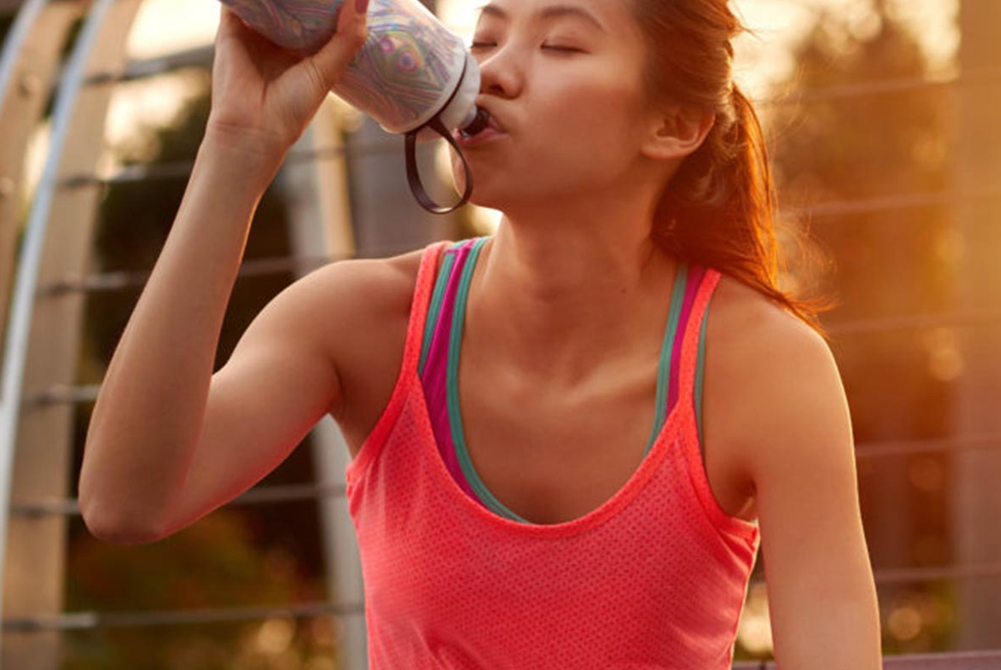
How To Stay Hydrated: 7 Tips For An Active Summer
By
Nick Parkinson, M.Ed., AT, ATC, TSAC-F
Henry Ford Health
June 4, 2024
Not only is water an essential nutrient, it makes up your entire being. We’re 40 to 70 percent water, depending on fitness level and age. And while staying hydrated is always important, it may become more challenging as the weather heats up. Hard-working muscles generate more heat when they’re surrounded by hot air, making it harder for your body to maintain a normal temperature.
 Even a 1 to 2 percent loss of body weight from water can compromise your performance and impact your body’s ability to cool itself. The heart pumps harder, circulation slows and muscles fatigue more quickly. If the loss creeps up to 3 or 4 percent, you’ll be at increased risk of developing heat-related illness and injury, including cramps, heat exhaustion and heat stroke.
Even when you’re not active, your body loses more than a quart of water every day through urine, perspiration, sweat and breath, according to the National Institutes of Health. And most days, it’s more than 2.5 quarts.
The goal, of course, is to replace what’s lost. And with a little planning and preparation, you can during any outdoor activity, no matter what the thermometer says. Here’s how:
- Drink before you’re thirsty. Need to quench your thirst? Chances are you’re already dehydrated. Your best defense against dehydration is drinking water on a consistent basis so you never reach the point of thirst.
- Take frequent water breaks. While you might not want to disrupt your workout for a water break, taking time out for some much-needed liquid nourishment will pay off in the long run. Drink 8 to 10 ounces of water (about one full glass) before starting any activity. Once the games begin, drink another 7 to 10 ounces every 20 to 30 minutes.
- Track your intake. Many people don’t know how much water they should drink daily—or even how much water they’re typically downing. If you’re sipping on a 16-ounce bottle, drink eight of them each day—and even more if you’re exercising heavily.
- Consider an electrolyte drink. Working out for more than an hour? Consider sipping a sports drink—or nibbling on some pretzels or a banana to restore lost electrolytes (minerals in the blood that regulate bodily systems). Your body loses important electrolytes like sodium, potassium and chloride when you sweat. A good sports drink can help you replenish them. Coconut water is a great choice, but there are a slew of healthy, low-sugar options on the market.
- Munch on water-rich produce. Water-packed snacks, including melon, berries, bell peppers and grapes, are all good options. A bonus: All of these foods boast a decent hit of electrolytes, too!
- Step on the scale. Weigh yourself before and after a workout. If the scale shows a loss, replenish it with water (gulp 20 to 24 ounces of water for every pound lost). If you’ve lost 3 percent or more of your body weight, chances are you’re severely dehydrated.
- Watch your urine stream. It may seem gross, but checking your pee is probably the best way to determine whether you’re dehydrated. If it looks like watered down, colored lemonade, you’re probably in the clear. But if it’s a deep yellow or light orange, you’re probably not drinking enough fluids.
Keep in mind that heat exhaustion happens quickly—especially during summer activities. It can easily turn into heat stroke, a dangerous condition that can lead to organ damage, seizures, coma and even death. If you feel dehydrated, dizzy or overheated, get out of the sun, sip some water (slowly) and apply cooling compresses to your head, neck and chest. If your symptoms don’t improve quickly, get to a doctor or call 9-1-1.
Nick Parkinson, M.Ed., AT, ATC, TSAC-F, is the supervisor of athletic training and sports performance at Henry Ford Health. Learn more about Nick.
To find a sports medicine provider at Henry Ford Health, visit henryford.com/athletes or call 313-651-1969.