


Did you see that?
May 21, 2012
Track and field, tennis and lacrosse teams have begun their marches toward MHSAA championships, but a number of sports are making offseason news as well.
Here's our sampling of some of the most intriguing from all over the state last week.
Track and Field
Setting up a showdown: In perhaps the most notable race of last week’s Regionals, Birmingham Seaholm’s Aubrey Wilberding edged Southfield’s Latipha Cross in the 400-meter dash in Division 1 at Farmington. Wilberding ran the race in 56.48 seconds, 19 hundredths of a second faster than Cross, who set an all-Finals record in the race in 2011. Click the link next to each Regional site for results. (MHSAA)
Soccer
Shooting for 67: Lake Fenton sophomore Jordan Newman scored a combined eight goals in the semifinal and championship games of the Genesee Area Conference tournament to lead her team to the championship. She has 54 goals this season – only 13 shy of the MHSAA single-season record with Districts beginning next week. (Tri-County Times) (Flint Journal)
KVA belongs to Kalamazoo Christian: The Kalamazoo Valley Association soccer championship came down to two of the top teams statewide in Division 4 – and No. 2 Kalamazoo Christian edged No. 3 Kalamazoo Hackett Catholic Central 1-0 in the final. The two were flip-flopped in the rankings heading into the game. (Kalamazoo Gazette)
Athletes of the Year
Pinning down a major award: St. Johns wrestler Taylor Massa and Rochester Hills Stoney Creek's Gabby Yurik received the annual Michigan Student-Athlete of the Year Awards from the Detroit Athletic Club, from a group of nominees including Holland's Courtney Bartholomew, Birmingham Marian's Jaynie Pulte, Grosse Pointe Woods University Liggett's Madison Ristovski, Plainwell's Lauren Saar and Charlotte's Raychel Wolever, and Grand Blanc's Zachary Carroll, Saginaw Heritage's Evan Chiplock, Bay City Western's Matt Costello, Lowell's Gabe Dean and Oxford's Prescott Line.
Golf
Plymouth rocks: The Wildcats topped a field that included 17 state-ranked teams in claiming the East Lansing Invitational with a two-round score of 595. The tournament was played at Michigan State University’s Forest Akers West and East. Scroll to the bottom of link for full results. (Michigan Interscholastic Golf Coaches Association)
Tennis
Match points: Five of the top seven ranked teams in Division 2 emerged from two suburban Detroit Regionals to advance to the Division 2 Finals: No. 1 Birmingham Marian, No. 2 Bloomfield Hills Andover, No. 3 Birmingham Seaholm and co-No. 7s Bloomfield Hills Lahser and Farmington Hills Marcy. Click next to each Regional site to see who qualified for their respective Finals. (MHSAA)
Softball
Perfect, again: Breckenridge’s Sam Willman threw her fifth perfect game this season, striking out 18 and 64 for the day as her team won the Montrose Snowball Tournament on Saturday. She also threw a perfect game two days before. (Midland Daily News)
Stacking numbers: Decatur senior pitcher Erika Southworth won her 100th game last week, then notched her 1,000th strikeout two days later. (Kalamazoo Gazette)
Basketball
Detroit mourns coach: Southeastern High girls coach Lisa Blackburn died Saturday at the age of 52. She was a former Detroit Pershing star who went on to play at the University of Detroit. (Detroit News)
Stolz legacy ends: Longtime Okemos boys basketball coach Dan Stolz retired with a record of 428-99 and a winning percentage of .812 in 18 seasons at Okemos and five at Williamston. Stolz took over the Chieftains program from his father Stan, who coached the varsity from 1968-93. (Lansing State Journal)
Wrestling
New coach at St. Johns: The reigning three-time Division 2 MHSAA team champion now will be coached by assistant Derek Phillips, who was promoted last week to take over for the recently-resigned Zane Ballard. (Lansing State Journal)
Media
Longtime editor announces retirement: The state’s print media will wave good-bye to another valuable member when longtime Escanaba Daily Press sports editor Denny Grall retires in two months. He’s been putting pen to paper for 42 years and is especially legendary across the Upper Peninsula. (Escanaba Daily Press)
Editor's note: Did we miss something? Comment below and tell us about it. Is there an event coming up that we should make sure to note? Comment or e-mail [email protected].
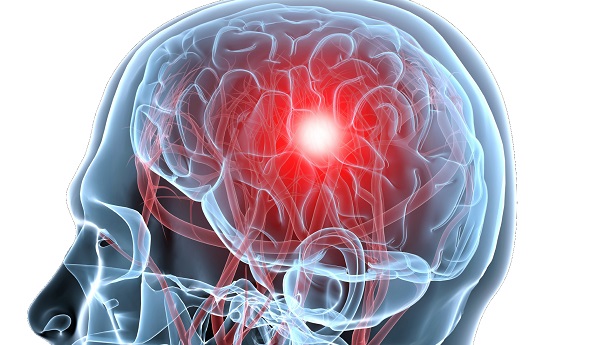
5 Concussion Myths Debunked
November 8, 2022
Awareness about the dangers of concussions is at an all-time high. In response, athletic organizations — from Pop Warner football (a nonprofit program for kids 5 to 16) to USA Hockey — have safe-play protocols in place. But misconceptions about injury — prevention, management and return to play — are still all too common.
 "It's great that parents, coaches and athletes are focused on the potential for concussions, but they also need to be aware of the complexities involved in evaluating, diagnosing and managing concussion," says Jeffrey Kutcher, M.D., a sports neurologist who treats athletes at the Henry Ford Kutcher Clinic for Concussion and Sports Neurology.
The best way to get the knowledge you need? Learn how to separate fact from fiction.
Separating Concussion Fact From Fiction
Here’s the truth behind five common concussion myths:
Myth #1: Concussions are only caused by blows to the head.
Concussions happen in response to force. While they often result from a blow to the head, they can also occur after a hit to the neck, shoulders or anywhere else on the body. To cause brain injury, the force of the impact only needs to cause the head to move rapidly back and forth (think whiplash from a car crash or a spill down the stairs).
Myth #2: Concussions always involve a loss of consciousness.
A very small percentage of all concussions, 10 percent or less, result in a loss of consciousness. For the remaining injuries, parents, coaches and medical providers should watch for additional symptoms such as:
· Confusion
· Balance problems
· Slurred speech
· Physical complaints including headache, nausea and vomiting.
Myth #3: You should keep a person awake overnight after a concussion has occurred.
It's important to observe and interact with a recently concussed person for the first few hours to recognize the potential signs of a more serious injury. However, if they are interacting normally after four hours, it’s okay to let them sleep. If you have any doubts or questions, always err on the side of caution and seek medical attention.
Myth #4: After a concussion, kids should avoid digital media until they feel better.
Unless digital activities or screen time significantly worsen symptoms, there's no reason to avoid them. "You shouldn't force people who have suffered a concussion to rest too much — or deprive them of sensory input — if they are comfortable engaging in activity," Dr. Kutcher says. What’s more, taking away activities that bring a person joy or keep them socially connected could end up prolonging their recovery by creating additional symptoms.
Myth #5: All physical activity should be avoided after a concussion.
It’s important to rest for the first two to three days after a concussion. However, you need to be careful not to rest too much or avoid all activity for too long.
Engaging in physical, mental and social activities can be beneficial. But knowing how much to do and when to take it easy can be difficult. If you have any questions, consult a sports neurologist for specific recommendations.
Ground Rules for Concussion Prevention and Management
When it comes to preventing concussion, common sense offers the greatest impact, Dr. Kutcher notes. He recommends starting with these four tenets:
- Whenever possible, limit the amount of contact in practices and games.
- Wear proper fitting and certified helmets or other head protection whenever appropriate.
- Spread contact drills out over time as much as possible.
- Practice good technique and play by the rules.
Athletes — especially those who play contact sports — should undergo an annual neurological evaluation that includes a comprehensive, focused neurological history and examination. This information provides a critical point of reference for medical professionals.
Knowing the truth about concussions — including what to watch for and what to do if one occurs — is really the best game plan.
Dr. Jeffrey Kutcher is a sports neurologist at the Henry Ford Concussion and Sports Neurology Clinic and the global director of the Kutcher Clinic.
Want to learn more? Henry Ford Health System sports medicine experts are treating the whole athlete, in a whole new way. From nutrition to neurology, and from injury prevention to treatment of sports-related conditions, they can give your athlete a unique game plan.
Visit henryford.com/sports or call (313) 972-4216 for an appointment within 24 business hours.