


Did you see that? (11/5-11/11)
November 13, 2012
Upsets all over the volleyball Regional brackets were among the most stunning highlights from the week’s non-football action across the state.
Volleyball
Upset of the week: In arguably the biggest surprise in any sport last week – football included – Class A honorable mention Grand Rapids Christian downed No. 1 and seemingly unstoppable Richland Gull Lake in five games to claim the Regional title at Portage Northern. The Eagles trailed two games to one before winning the final two. (Grand Rapids Press)
Upset, part II: Unranked Birmingham Seaholm added to its previous elimination of No. 4 Bloomfield Hills Marian by finishing a Class A Regional title by beating No. 2 Clarkston in three games. The Maples didn’t allow the Wolves to score more than 18 points in any of the three games. (Oakland Press)
Vikings sail on: Lakewood, the No. 1 team in Class B, trailed No. 3 Ada Forest Hills Eastern after three games. But the Vikings again finished strong to claim their fourth win over a ranked opponent of this tournament run. (Ionia Sentinel-Standard)
USA, all the way: Unionville-Sebewaing also pulled off a sizable upset, in Class C, claiming its second Regional title ever by defeating No. 2 St. Louis. The Patriots, an honorable mention in the poll, dropped the first game before coming back to win the next three. (Bay City Times)
First-time title: Powered by 6-foot-5 middle Abby Cole, Grand Haven claimed its first Regional title by sweeping Grand Rapids Forest Hills Central in Class A. Cole also was a star on the Buccaneers’ Class A Final basketball championship team last winter. (Grand Haven Tribune)
Swimming and diving
Milan tops in SMISL: Most swimming and diving leagues finished up conference competition two weekends ago. But Milan – an honorable mention in Division 2 – claimed one of the final meet titles, in the Southeasterm Michigan Independent Swimming League. Milan took only two first places, but edged Division 2 honorable mention Temperance Bedford, with Division 3 No. 7 Adrian finishing third and Division 3 No. 8 Tecumseh coming in fourth. (Monroe Evening News)
Soccer
Mr. Soccer is Mr. Lewis: Rockford’s Dewey Lewis was named this season’s Mr. Soccer by the Michigan High School Soccer Coaches Association. Lewis was a four-year varsity player for the Rams, and will play next season at Michigan State. (Grand Rapids Press)
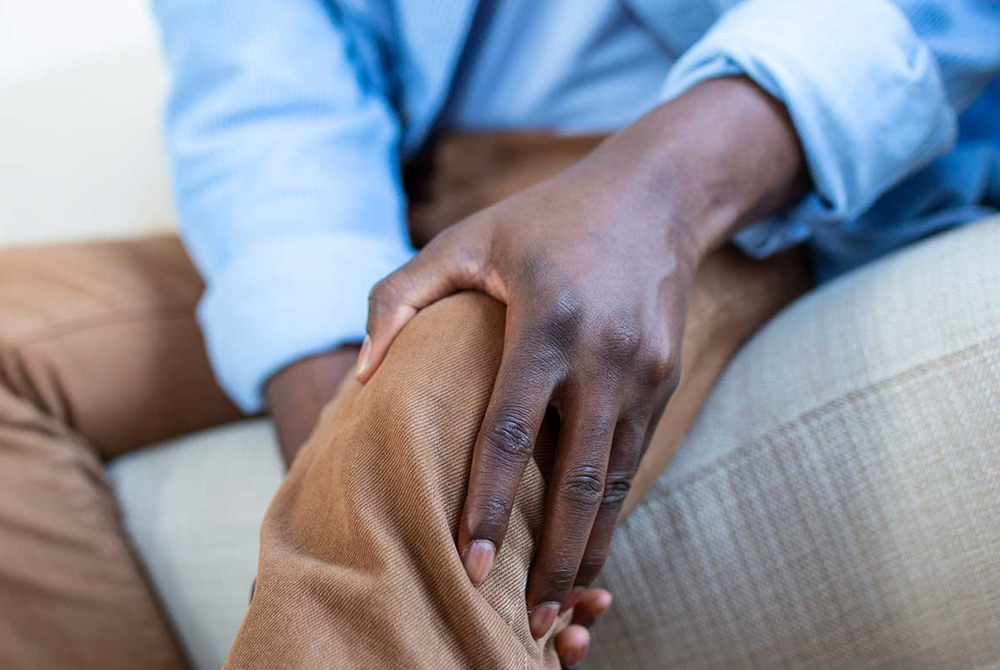
Symptoms of a Meniscus Tear — and When to Seek Treatment
April 2, 2024
Meniscus tears are not one size fits all: Sometimes they cause no pain, other times they’re excruciating.
 Once in a while they heal or adapt on their own, but more often than not they require physical therapy or surgery.
“Your meniscus is a fiber elastic cartilage that acts as a shock absorber for the knee,” says Ahmad Bazzi, M.D., a sports medicine physician at Henry Ford Health. “It also helps stabilize the knee joint. But when it tears — which can occur in young athletes after a pivot injury or in older people who have arthritis — it can be painful.”
Here, Dr. Bazzi shares symptoms of a meniscus tear and when to see a doctor.
What Does A Meniscus Tear Feel Like?
Depending upon the level of injury and type of tear, meniscus tears can either be asymptomatic or cause symptoms like:
- Locking. When the meniscus tears, a piece of it might move into the knee joint, causing mechanical issues like stiffness and locking of the knee joint.
- Catching or clicking. This often feels like a sudden ‘click’ in the knee joint, where it suddenly gives out while you’re walking or doing certain movements.
- Localized pain on the inner or outer part of the knee. In young athletes, a meniscus tear often causes an impaired range of motion and localized pain on the inner or outer part of the knee.
- Pain and swelling. In older people, a meniscus tear often causes swelling and an overall aching pain in the knee.
Treatment Options For Meniscus Tears
A meniscus tear can only heal on its own if the tear is on the outer part of the knee where it has better access to blood supply. If you’re experiencing pain a few days after injury and you have limited range of motion, instability and/or swelling in the knee, Dr. Bazzi recommends seeing a doctor to get an examination and, if needed, an MRI for diagnosis.
“It’s hard to tell what type of meniscus tear you have if you haven’t seen a doctor,” says Dr. Bazzi. “If you have a mechanically unstable tear and it goes untreated, it could lead to worsening range of motion and stiffness, or worsening arthritis. It’s important to get seen by a doctor to get an accurate diagnosis and the proper treatment. It may take one to three months for a full recovery.”
Here, Dr. Bazzi shares treatment options:
Surgery
If someone is having mechanical symptoms like locking or catching, surgery may be considered right away, especially if it’s an athlete younger than 40 years old. “Meniscus tear surgery has a shorter recovery compared to other knee surgeries,” says Dr. Bazzi. “Surgery could either consist of a meniscectomy, which is partial or complete removal of the meniscus, or sometimes just a meniscus repair.”
Hyaluronic acid or cortisone injections
Non-operative treatments are often recommended for older people who have degenerative tears due to arthritis. “This is because meniscus surgery doesn’t often relieve their pain since they have underlying arthritis, meaning they have cartilage loss in the meniscus,” says Dr. Bazzi.
Instead, a cortisone injection, which is an anti-inflammatory medication that can be injected into the knee, can reduce inflammation, swelling and pain caused by arthritis.
A hyaluronic acid injection may also be considered, which adds cushioning in the knee. “Hyaluronic acid is one of the substances that make up our cartilage, so this injection helps us mimic the lost cartilage,” says Dr. Bazzi. “It also has anti-inflammatory properties.”
Physical therapy
Physical therapy is another great option, especially for older people who need non-operative treatment options. It can help the knee adapt to the tear, reduce pain and encourage full range of motion. “Physical therapy for meniscus tears focuses on balance exercises and exercises to strengthen the muscles around the knee,” says Dr. Bazzi. “This helps to uphold the knee joint to achieve full range of motion and strength while being pain-free.”
To find a sports medicine provider at Henry Ford Health, visit henryford.com/athletes or call 313-651-1969.
Reviewed by Ahmad Bazzi, M.D., a sports medicine physician who sees patients at Henry Ford Medical Center – Fairlane.