


Did you see that?
May 29, 2012
The last full week of May usually represents the calm before the storm, at least relatively speaking, that is the MHSAA Spring Finals.
Although the weekend is generally one of the calmest of the season, the week was again filled with local championships, plus the start of lacrosse Regional play.
Here’s our look at some of the highlights from May 21-26:
Track and Field
All Tech in the PSL: Detroit Cass Tech’s girls and boys teams swept the Detroit Public School League championships Thursday, finishing ahead of Renaissance atop the standings in both meets. The girls are the reigning MHSAA Division 1 runner-up and led by senior Kyra Jefferson, who will run at the University of Florida next season. The boys team has hints of the team that won the MHSAA Division 1 football championship in the fall – this team also is coached by Thomas Wilcher, and quarterback Jayru Campbell was among those who shined. (Detroit News)
Still Hornets, with a side of Cougars: In a matchup of two of the best in Michigan from Divisions 2 and 3, the Williamston boys and girls again won Capital Area Activities Conference White championship meet titles -- with Lansing Catholic's boys then splitting the overall league title with Williamston. The Hornets boys are ranked No. 3 in Division 2 and the Cougars are No. 1 in Division 3. Williamston and Lansing Catholic's girls are both ranked No. 5 in their respective divisions. (Lansing State Journal)
Soccer
Okemos claims Gold: The Lansing area boasts top-four ranked teams in all four divisions, and two met for the CAAC Gold Cup championship Thursday – with Division 1 No. 2 Okemos downing Division 2 No. 4 DeWitt 3-1. The CAAC Cup pulls teams from each of its four divisions into a series of tournaments, based on league standings, with the top teams from each division playing for the Golf Cup. To advance to the championship game, DeWitt downed Division 3 No. 3 Williamston in a semifinal, while Okemos beat Division 2 honorable mention Mason. (Lansing State Journal)
Lacrosse
Final countdown: Girls and boys teams statewide began Regionals, with those finishing up this weekend. Of the few early games, the most significant might’ve been in Division 2 girls, where No. 9 Farmington Hills Mercy defeated Ann Arbor Skyline 18-6. (Observor & Eccentric)
Golf
Best by the Bay: For the first time in 18 seasons, Essexville-Garber won the Bay County Invitational, which matches teams from the Bay City area including larger Bay City Central and Western. (Bay City Times)
Fennville
Wes remembered: When Fennville’s Class of 2012 walked Thursday, Wes Leonard was with them. This year’s commencement included a remembrance of the standout, who died on March 3, 2011, as a junior, of cardiac arrest moments after hitting the game-winning shot for his basketball team. Classmate and close friend Selena Beltran-Pena walked with an additional cap, for Leonard, with accompanied by Leonard’s younger brother Mitchell. (Holland Sentinel)
Editor's note: Did we miss something? Comment below and tell us about it. Is there an event coming up that we should make sure to note? Comment or e-mail [email protected].
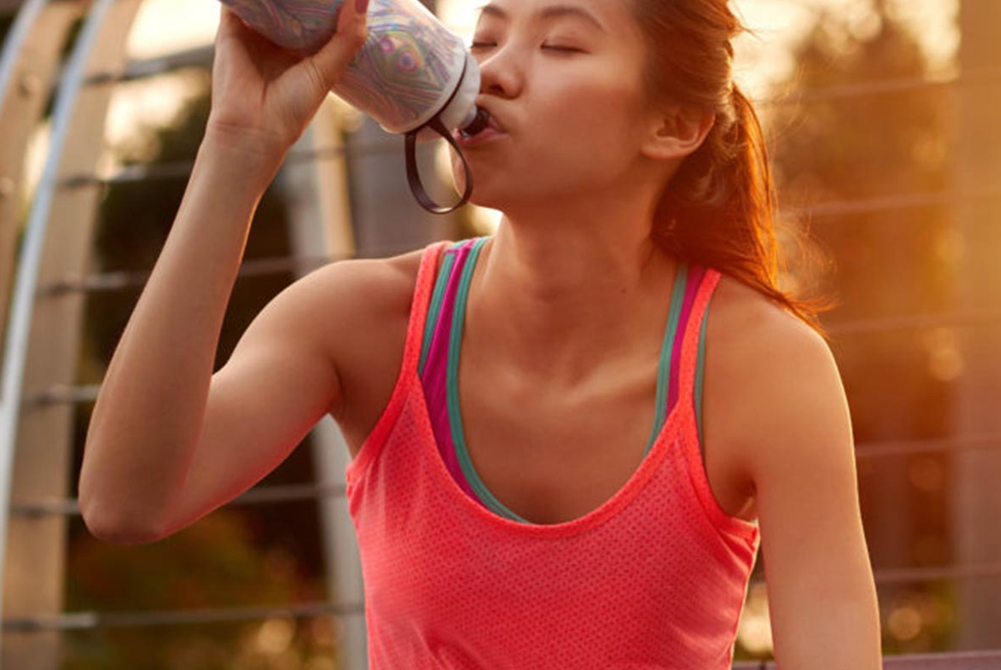
How To Stay Hydrated: 7 Tips For An Active Summer
By
Nick Parkinson, M.Ed., AT, ATC, TSAC-F
Henry Ford Health
June 4, 2024
Not only is water an essential nutrient, it makes up your entire being. We’re 40 to 70 percent water, depending on fitness level and age. And while staying hydrated is always important, it may become more challenging as the weather heats up. Hard-working muscles generate more heat when they’re surrounded by hot air, making it harder for your body to maintain a normal temperature.
 Even a 1 to 2 percent loss of body weight from water can compromise your performance and impact your body’s ability to cool itself. The heart pumps harder, circulation slows and muscles fatigue more quickly. If the loss creeps up to 3 or 4 percent, you’ll be at increased risk of developing heat-related illness and injury, including cramps, heat exhaustion and heat stroke.
Even when you’re not active, your body loses more than a quart of water every day through urine, perspiration, sweat and breath, according to the National Institutes of Health. And most days, it’s more than 2.5 quarts.
The goal, of course, is to replace what’s lost. And with a little planning and preparation, you can during any outdoor activity, no matter what the thermometer says. Here’s how:
- Drink before you’re thirsty. Need to quench your thirst? Chances are you’re already dehydrated. Your best defense against dehydration is drinking water on a consistent basis so you never reach the point of thirst.
- Take frequent water breaks. While you might not want to disrupt your workout for a water break, taking time out for some much-needed liquid nourishment will pay off in the long run. Drink 8 to 10 ounces of water (about one full glass) before starting any activity. Once the games begin, drink another 7 to 10 ounces every 20 to 30 minutes.
- Track your intake. Many people don’t know how much water they should drink daily—or even how much water they’re typically downing. If you’re sipping on a 16-ounce bottle, drink eight of them each day—and even more if you’re exercising heavily.
- Consider an electrolyte drink. Working out for more than an hour? Consider sipping a sports drink—or nibbling on some pretzels or a banana to restore lost electrolytes (minerals in the blood that regulate bodily systems). Your body loses important electrolytes like sodium, potassium and chloride when you sweat. A good sports drink can help you replenish them. Coconut water is a great choice, but there are a slew of healthy, low-sugar options on the market.
- Munch on water-rich produce. Water-packed snacks, including melon, berries, bell peppers and grapes, are all good options. A bonus: All of these foods boast a decent hit of electrolytes, too!
- Step on the scale. Weigh yourself before and after a workout. If the scale shows a loss, replenish it with water (gulp 20 to 24 ounces of water for every pound lost). If you’ve lost 3 percent or more of your body weight, chances are you’re severely dehydrated.
- Watch your urine stream. It may seem gross, but checking your pee is probably the best way to determine whether you’re dehydrated. If it looks like watered down, colored lemonade, you’re probably in the clear. But if it’s a deep yellow or light orange, you’re probably not drinking enough fluids.
Keep in mind that heat exhaustion happens quickly—especially during summer activities. It can easily turn into heat stroke, a dangerous condition that can lead to organ damage, seizures, coma and even death. If you feel dehydrated, dizzy or overheated, get out of the sun, sip some water (slowly) and apply cooling compresses to your head, neck and chest. If your symptoms don’t improve quickly, get to a doctor or call 9-1-1.
Nick Parkinson, M.Ed., AT, ATC, TSAC-F, is the supervisor of athletic training and sports performance at Henry Ford Health. Learn more about Nick.
To find a sports medicine provider at Henry Ford Health, visit henryford.com/athletes or call 313-651-1969.