


Did you see that?
June 4, 2012
Saturday annually is the busiest high school sports day on the MHSAA calendar.
The Spring Finals match began with Girls and Boys Track and Field and Girls Tennis Finals at sites all over both peninsulas. There were Regionals for both boys and girls lacrosse, which finish up this weekend. And, of course, there were Districts galore for softball, baseball and girls soccer.
Here's our sampling of some of the highlights:
Girls Track and Field
19 records fall: It was quite day across the seven MHSAA Girls Track and Field Finals, with 19 records broken, and two athletes – Reed City’s Sami Michell and Norway’s Dani Gagne – winning four individual events apiece. (Second Half)
Coast to coast: The Grosse Pointe South 3,200 relay was responsible for one of two all-Finals records, and ran a time of 8:48.29 that also surpassed the national record for that event (but may or may not stand as the national record, depending on what other times were run and will be submitted after this spring.) (Detroit Free Press)
Boys Track and Field
LP filled with first-time champs: Lake Orion in Division 1, Auburn Hills Avondale in Division 2 and Lansing Catholic in Division 3 won their first MHSAA team championships. Also, nine records fell across the state. (Second Half)
Quite a comeback: Marquette trailed Gladstone by 27 points at the Upper Peninsula Division 1 Final with four events to run. But the Redmen outscored Gladstone 42-0 over those events to win their third straight championship. (Marquette Mining Journal)
Girls Tennis
Southeast sweep: Detroit suburban schools claimed all four MHSAA Lower Peninsula team championships – Grosse Pointe South in Division 1, Birmingham Seaholm in Division 2, Bloomfield Hills Cranbrook-Kingswood in Division 3 and Bloomfield Hills Academy of the Sacred Heart in Division 4. (Second Half)
Freshman reigns: Utica freshman Davina Nguyen beat both the first and second seeds on her way to claiming the individual championship at No. 1 singles in Division 1. Nguyen was seeded fifth. (Macomb Daily)
Boys lacrosse
Cranbrook comes out on top: Cranbrook-Kingswood, ranked No. 3 in Division 2, emerged from a Regional that also included No. 4 Haslett/Williamston and No. 5 East Grand Rapids, beating the latter 8-4 in the Final. (Bloomfield Patch)
Girls lacrosse
EGR plays to top ranking, again: Rivals East Grand Rapids and Grand Rapids Catholic Central met in one of the multiple close Regional Finals, with the top-ranked Pioneers downing No. 2 GRCC one more time, 11-9. (Grand Rapids Press)
Baseball
It’s Holt, again: The Rams claimed their second championship in a week over rival Grand Ledge – both have been ranked in Division 1 this season. Two weeks ago, Holt split with the Comets to win the Capital Area Activities Conference Blue. Standout Justin Alleman gave up two hits and struck out 18 as Holt also won Saturday to claim a District title. (Lansing State Journal)
Softball
In the end, it’s Mattawan: The season-long battle for statewide Division 1 and Kalamazoo-area supremacy was decided in part at Saturday’s District at Portage Central. Reigning MHSAA champion Mattawan emerged as the winner from a field that included top-ranked Portage Central – which was upset by Kalamazoo Loy Norrix in a semifinal. (Kalamazoo Gazette)
Soccer
AAGR moves on: Ann Arbor Gabriel Richard, No. 8 in Division 3, shut out No. 7 Jackson Lumen Christi 3-0 in the Division 3 District final at Brooklyn Columbia Central (AnnArbor.com)
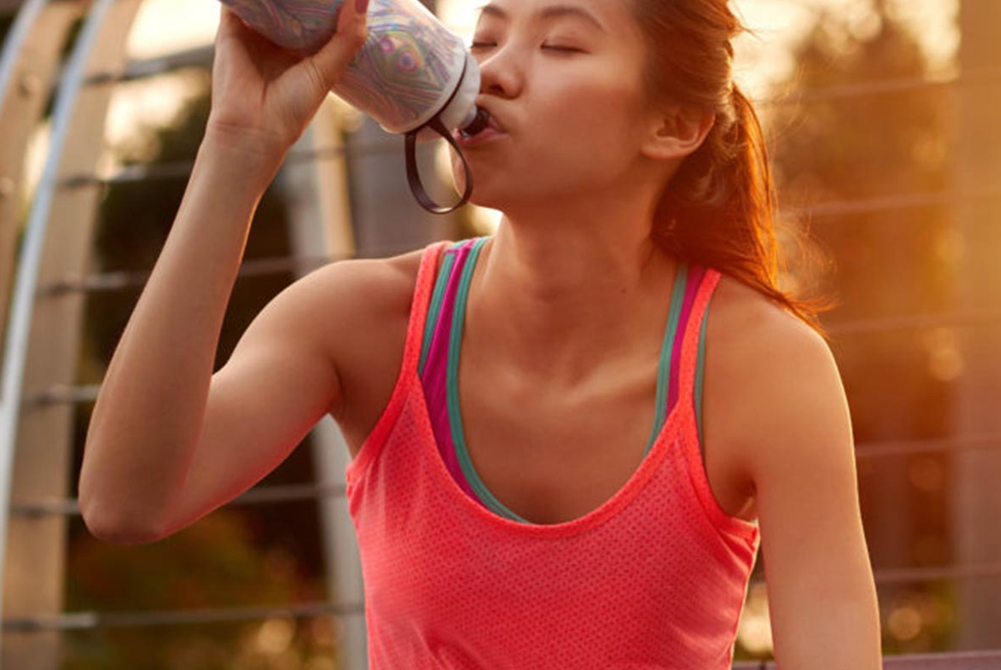
How To Stay Hydrated: 7 Tips For An Active Summer
By
Nick Parkinson, M.Ed., AT, ATC, TSAC-F
Henry Ford Health
June 4, 2024
Not only is water an essential nutrient, it makes up your entire being. We’re 40 to 70 percent water, depending on fitness level and age. And while staying hydrated is always important, it may become more challenging as the weather heats up. Hard-working muscles generate more heat when they’re surrounded by hot air, making it harder for your body to maintain a normal temperature.
 Even a 1 to 2 percent loss of body weight from water can compromise your performance and impact your body’s ability to cool itself. The heart pumps harder, circulation slows and muscles fatigue more quickly. If the loss creeps up to 3 or 4 percent, you’ll be at increased risk of developing heat-related illness and injury, including cramps, heat exhaustion and heat stroke.
Even when you’re not active, your body loses more than a quart of water every day through urine, perspiration, sweat and breath, according to the National Institutes of Health. And most days, it’s more than 2.5 quarts.
The goal, of course, is to replace what’s lost. And with a little planning and preparation, you can during any outdoor activity, no matter what the thermometer says. Here’s how:
- Drink before you’re thirsty. Need to quench your thirst? Chances are you’re already dehydrated. Your best defense against dehydration is drinking water on a consistent basis so you never reach the point of thirst.
- Take frequent water breaks. While you might not want to disrupt your workout for a water break, taking time out for some much-needed liquid nourishment will pay off in the long run. Drink 8 to 10 ounces of water (about one full glass) before starting any activity. Once the games begin, drink another 7 to 10 ounces every 20 to 30 minutes.
- Track your intake. Many people don’t know how much water they should drink daily—or even how much water they’re typically downing. If you’re sipping on a 16-ounce bottle, drink eight of them each day—and even more if you’re exercising heavily.
- Consider an electrolyte drink. Working out for more than an hour? Consider sipping a sports drink—or nibbling on some pretzels or a banana to restore lost electrolytes (minerals in the blood that regulate bodily systems). Your body loses important electrolytes like sodium, potassium and chloride when you sweat. A good sports drink can help you replenish them. Coconut water is a great choice, but there are a slew of healthy, low-sugar options on the market.
- Munch on water-rich produce. Water-packed snacks, including melon, berries, bell peppers and grapes, are all good options. A bonus: All of these foods boast a decent hit of electrolytes, too!
- Step on the scale. Weigh yourself before and after a workout. If the scale shows a loss, replenish it with water (gulp 20 to 24 ounces of water for every pound lost). If you’ve lost 3 percent or more of your body weight, chances are you’re severely dehydrated.
- Watch your urine stream. It may seem gross, but checking your pee is probably the best way to determine whether you’re dehydrated. If it looks like watered down, colored lemonade, you’re probably in the clear. But if it’s a deep yellow or light orange, you’re probably not drinking enough fluids.
Keep in mind that heat exhaustion happens quickly—especially during summer activities. It can easily turn into heat stroke, a dangerous condition that can lead to organ damage, seizures, coma and even death. If you feel dehydrated, dizzy or overheated, get out of the sun, sip some water (slowly) and apply cooling compresses to your head, neck and chest. If your symptoms don’t improve quickly, get to a doctor or call 9-1-1.
Nick Parkinson, M.Ed., AT, ATC, TSAC-F, is the supervisor of athletic training and sports performance at Henry Ford Health. Learn more about Nick.
To find a sports medicine provider at Henry Ford Health, visit henryford.com/athletes or call 313-651-1969.