


Did you see that?
June 4, 2012
Saturday annually is the busiest high school sports day on the MHSAA calendar.
The Spring Finals match began with Girls and Boys Track and Field and Girls Tennis Finals at sites all over both peninsulas. There were Regionals for both boys and girls lacrosse, which finish up this weekend. And, of course, there were Districts galore for softball, baseball and girls soccer.
Here's our sampling of some of the highlights:
Girls Track and Field
19 records fall: It was quite day across the seven MHSAA Girls Track and Field Finals, with 19 records broken, and two athletes – Reed City’s Sami Michell and Norway’s Dani Gagne – winning four individual events apiece. (Second Half)
Coast to coast: The Grosse Pointe South 3,200 relay was responsible for one of two all-Finals records, and ran a time of 8:48.29 that also surpassed the national record for that event (but may or may not stand as the national record, depending on what other times were run and will be submitted after this spring.) (Detroit Free Press)
Boys Track and Field
LP filled with first-time champs: Lake Orion in Division 1, Auburn Hills Avondale in Division 2 and Lansing Catholic in Division 3 won their first MHSAA team championships. Also, nine records fell across the state. (Second Half)
Quite a comeback: Marquette trailed Gladstone by 27 points at the Upper Peninsula Division 1 Final with four events to run. But the Redmen outscored Gladstone 42-0 over those events to win their third straight championship. (Marquette Mining Journal)
Girls Tennis
Southeast sweep: Detroit suburban schools claimed all four MHSAA Lower Peninsula team championships – Grosse Pointe South in Division 1, Birmingham Seaholm in Division 2, Bloomfield Hills Cranbrook-Kingswood in Division 3 and Bloomfield Hills Academy of the Sacred Heart in Division 4. (Second Half)
Freshman reigns: Utica freshman Davina Nguyen beat both the first and second seeds on her way to claiming the individual championship at No. 1 singles in Division 1. Nguyen was seeded fifth. (Macomb Daily)
Boys lacrosse
Cranbrook comes out on top: Cranbrook-Kingswood, ranked No. 3 in Division 2, emerged from a Regional that also included No. 4 Haslett/Williamston and No. 5 East Grand Rapids, beating the latter 8-4 in the Final. (Bloomfield Patch)
Girls lacrosse
EGR plays to top ranking, again: Rivals East Grand Rapids and Grand Rapids Catholic Central met in one of the multiple close Regional Finals, with the top-ranked Pioneers downing No. 2 GRCC one more time, 11-9. (Grand Rapids Press)
Baseball
It’s Holt, again: The Rams claimed their second championship in a week over rival Grand Ledge – both have been ranked in Division 1 this season. Two weeks ago, Holt split with the Comets to win the Capital Area Activities Conference Blue. Standout Justin Alleman gave up two hits and struck out 18 as Holt also won Saturday to claim a District title. (Lansing State Journal)
Softball
In the end, it’s Mattawan: The season-long battle for statewide Division 1 and Kalamazoo-area supremacy was decided in part at Saturday’s District at Portage Central. Reigning MHSAA champion Mattawan emerged as the winner from a field that included top-ranked Portage Central – which was upset by Kalamazoo Loy Norrix in a semifinal. (Kalamazoo Gazette)
Soccer
AAGR moves on: Ann Arbor Gabriel Richard, No. 8 in Division 3, shut out No. 7 Jackson Lumen Christi 3-0 in the Division 3 District final at Brooklyn Columbia Central (AnnArbor.com)
The Inside Scoop On Ski Safety: 6 Tips
January 10, 2023
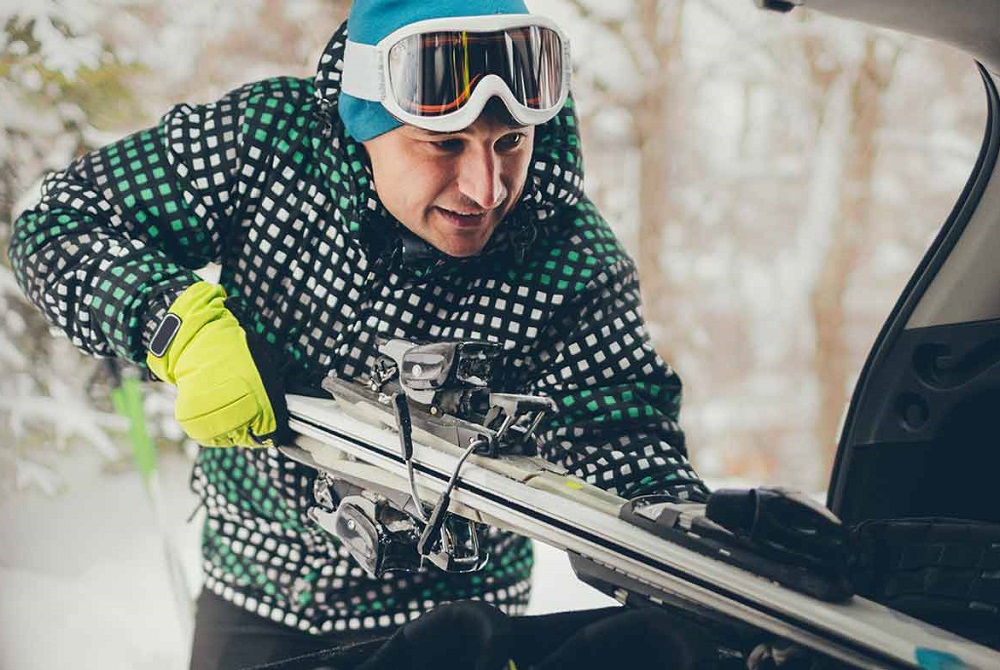
Injuries happen to skiers of all levels, even under pristine conditions and when using the best available equipment. “Beginners are more likely to get injured. But when experienced skiers go down, they tend to have more severe injuries,” says Michelle Gambino-Gorney, a certified athletic trainer at the Henry Ford Kutcher Clinic for Concussion and Sports Neurology.
 But you don’t have to let the risk of injury hold you back from having fun on the slopes. A few basic safety tips? Stay within your ability level and ensure your skis are in good condition. That said, going beyond ski safety basics and learning how to avoid injuries can help you stay safe on the slopes. Here are six expert tips:
Use caution when getting on and off the ski lift. Ski lifts make a lot of people anxious. Being high off the ground on your journey up the mountain can invoke a fear of falling. “But it’s getting on and off the ski lift where the vast majority of lift-related injuries occur,” Gambino-Gorney says. To lower your risk of injury, remove pole straps and backpacks before loading, look over your shoulder to make sure you sit squarely on the seat at the correct time, and don't try to retrieve items you lose hold of (including poles, gloves and phones). It’s best to let them go and ski back for them.
Keep it simple at terrain parks. Terrain parks include human-made features like ramps and rails that enable skiers to do jumps, flips and other maneuvers. Any time your skis leave the ground, injuries are possible. You can safely enjoy terrain parks by starting with smaller obstacles and maneuvers and mastering them before moving on to other challenges. Do not rely on online tutorials to learn new skills. Ski instructors can help you learn the correct technique and provide personalized tips for achieving your goals.
Beware of trees. Trees present multiple dangers. Colliding with a tree, especially at high speed, leads to some of the most severe ski injuries. A small number of skiers die each year from tree collisions. To avoid collisions, ski with control. Other concerns include tree wells and snow immersion suffocation. This type of injury occurs when a person falls head first into a pocket of loose snow near a tree trunk and gets trapped. Skiing with a partner on ungroomed paths, which typically run past tree wells, is essential. If you become immersed in a tree well, a partner can step in to help you break free.
Pay extra attention during your final run of the day. Injuries are more common during skiers’ last runs. “Skiing later in the day can be dangerous because small changes can affect your ability to maneuver and react to conditions,” Gambino-Gorney says. Fresh powder may get matted down. Groomed areas become bumpy. And fatigue can make you less aware of hazards and other skiers. While it may be tempting to give it your all on your last run, it’s better to ease up and take your time.
Follow the Skier Code of Responsibility. People of all ages, abilities and ski levels can safely share the slopes when everyone follows the National Ski Area Association™ Responsibility Code. Key points include: Giving right of way to people ahead of (downhill from) you, staying off closed trails, and looking uphill for other skiers when merging.
Expedite access to help in an emergency. Being prepared can help you quickly reach ski patrol in an emergency. Most ski areas list their ski patrol phone number near the lifts. While you are waiting in the ski lift line, program it into your phone. If you or someone nearby experiences an injury, being able to call for help will save precious time. Instead of waiting for someone to ski down the mountain and ask for help, you can stay with the injured person and call for help. Calling also makes it easier to share important details so that ski patrol arrives with the appropriate people and equipment.
“Skiing is like any sport in that there’s a risk of injury. But many people hit the slopes without incident. Some skiers go decades without a single fall,” Gambino-Gorney says. Follow these insider tips and don't forget to wear a helmet so you can relish your next powder day and get the most out of the season.
To find a sports medicine provider at Henry Ford, visit henryford.com/sports or call 313-651-1969.
Michelle Gambino-Gorney is a certified athletic trainer at the Henry Ford Kutcher Clinic for Concussion and Sports Neurology.