


Did you see that?
June 4, 2012
Saturday annually is the busiest high school sports day on the MHSAA calendar.
The Spring Finals match began with Girls and Boys Track and Field and Girls Tennis Finals at sites all over both peninsulas. There were Regionals for both boys and girls lacrosse, which finish up this weekend. And, of course, there were Districts galore for softball, baseball and girls soccer.
Here's our sampling of some of the highlights:
Girls Track and Field
19 records fall: It was quite day across the seven MHSAA Girls Track and Field Finals, with 19 records broken, and two athletes – Reed City’s Sami Michell and Norway’s Dani Gagne – winning four individual events apiece. (Second Half)
Coast to coast: The Grosse Pointe South 3,200 relay was responsible for one of two all-Finals records, and ran a time of 8:48.29 that also surpassed the national record for that event (but may or may not stand as the national record, depending on what other times were run and will be submitted after this spring.) (Detroit Free Press)
Boys Track and Field
LP filled with first-time champs: Lake Orion in Division 1, Auburn Hills Avondale in Division 2 and Lansing Catholic in Division 3 won their first MHSAA team championships. Also, nine records fell across the state. (Second Half)
Quite a comeback: Marquette trailed Gladstone by 27 points at the Upper Peninsula Division 1 Final with four events to run. But the Redmen outscored Gladstone 42-0 over those events to win their third straight championship. (Marquette Mining Journal)
Girls Tennis
Southeast sweep: Detroit suburban schools claimed all four MHSAA Lower Peninsula team championships – Grosse Pointe South in Division 1, Birmingham Seaholm in Division 2, Bloomfield Hills Cranbrook-Kingswood in Division 3 and Bloomfield Hills Academy of the Sacred Heart in Division 4. (Second Half)
Freshman reigns: Utica freshman Davina Nguyen beat both the first and second seeds on her way to claiming the individual championship at No. 1 singles in Division 1. Nguyen was seeded fifth. (Macomb Daily)
Boys lacrosse
Cranbrook comes out on top: Cranbrook-Kingswood, ranked No. 3 in Division 2, emerged from a Regional that also included No. 4 Haslett/Williamston and No. 5 East Grand Rapids, beating the latter 8-4 in the Final. (Bloomfield Patch)
Girls lacrosse
EGR plays to top ranking, again: Rivals East Grand Rapids and Grand Rapids Catholic Central met in one of the multiple close Regional Finals, with the top-ranked Pioneers downing No. 2 GRCC one more time, 11-9. (Grand Rapids Press)
Baseball
It’s Holt, again: The Rams claimed their second championship in a week over rival Grand Ledge – both have been ranked in Division 1 this season. Two weeks ago, Holt split with the Comets to win the Capital Area Activities Conference Blue. Standout Justin Alleman gave up two hits and struck out 18 as Holt also won Saturday to claim a District title. (Lansing State Journal)
Softball
In the end, it’s Mattawan: The season-long battle for statewide Division 1 and Kalamazoo-area supremacy was decided in part at Saturday’s District at Portage Central. Reigning MHSAA champion Mattawan emerged as the winner from a field that included top-ranked Portage Central – which was upset by Kalamazoo Loy Norrix in a semifinal. (Kalamazoo Gazette)
Soccer
AAGR moves on: Ann Arbor Gabriel Richard, No. 8 in Division 3, shut out No. 7 Jackson Lumen Christi 3-0 in the Division 3 District final at Brooklyn Columbia Central (AnnArbor.com)
5 Concussion Myths Debunked
November 8, 2022
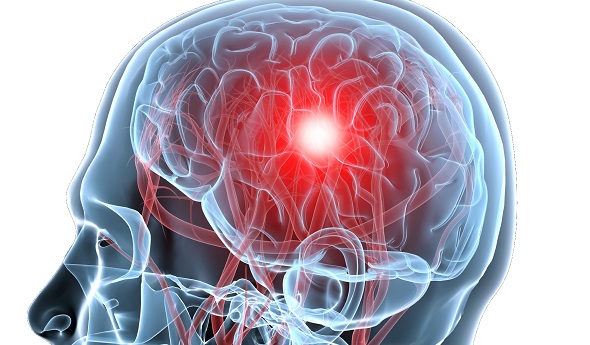
Awareness about the dangers of concussions is at an all-time high. In response, athletic organizations — from Pop Warner football (a nonprofit program for kids 5 to 16) to USA Hockey — have safe-play protocols in place. But misconceptions about injury — prevention, management and return to play — are still all too common.
 "It's great that parents, coaches and athletes are focused on the potential for concussions, but they also need to be aware of the complexities involved in evaluating, diagnosing and managing concussion," says Jeffrey Kutcher, M.D., a sports neurologist who treats athletes at the Henry Ford Kutcher Clinic for Concussion and Sports Neurology.
The best way to get the knowledge you need? Learn how to separate fact from fiction.
Separating Concussion Fact From Fiction
Here’s the truth behind five common concussion myths:
Myth #1: Concussions are only caused by blows to the head.
Concussions happen in response to force. While they often result from a blow to the head, they can also occur after a hit to the neck, shoulders or anywhere else on the body. To cause brain injury, the force of the impact only needs to cause the head to move rapidly back and forth (think whiplash from a car crash or a spill down the stairs).
Myth #2: Concussions always involve a loss of consciousness.
A very small percentage of all concussions, 10 percent or less, result in a loss of consciousness. For the remaining injuries, parents, coaches and medical providers should watch for additional symptoms such as:
· Confusion
· Balance problems
· Slurred speech
· Physical complaints including headache, nausea and vomiting.
Myth #3: You should keep a person awake overnight after a concussion has occurred.
It's important to observe and interact with a recently concussed person for the first few hours to recognize the potential signs of a more serious injury. However, if they are interacting normally after four hours, it’s okay to let them sleep. If you have any doubts or questions, always err on the side of caution and seek medical attention.
Myth #4: After a concussion, kids should avoid digital media until they feel better.
Unless digital activities or screen time significantly worsen symptoms, there's no reason to avoid them. "You shouldn't force people who have suffered a concussion to rest too much — or deprive them of sensory input — if they are comfortable engaging in activity," Dr. Kutcher says. What’s more, taking away activities that bring a person joy or keep them socially connected could end up prolonging their recovery by creating additional symptoms.
Myth #5: All physical activity should be avoided after a concussion.
It’s important to rest for the first two to three days after a concussion. However, you need to be careful not to rest too much or avoid all activity for too long.
Engaging in physical, mental and social activities can be beneficial. But knowing how much to do and when to take it easy can be difficult. If you have any questions, consult a sports neurologist for specific recommendations.
Ground Rules for Concussion Prevention and Management
When it comes to preventing concussion, common sense offers the greatest impact, Dr. Kutcher notes. He recommends starting with these four tenets:
- Whenever possible, limit the amount of contact in practices and games.
- Wear proper fitting and certified helmets or other head protection whenever appropriate.
- Spread contact drills out over time as much as possible.
- Practice good technique and play by the rules.
Athletes — especially those who play contact sports — should undergo an annual neurological evaluation that includes a comprehensive, focused neurological history and examination. This information provides a critical point of reference for medical professionals.
Knowing the truth about concussions — including what to watch for and what to do if one occurs — is really the best game plan.
Dr. Jeffrey Kutcher is a sports neurologist at the Henry Ford Concussion and Sports Neurology Clinic and the global director of the Kutcher Clinic.
Want to learn more? Henry Ford Health System sports medicine experts are treating the whole athlete, in a whole new way. From nutrition to neurology, and from injury prevention to treatment of sports-related conditions, they can give your athlete a unique game plan.
Visit henryford.com/sports or call (313) 972-4216 for an appointment within 24 business hours.