


Did you see that?
June 11, 2012
Geoff Kimmerly
Second Half editor
The second weekend of this spring's MHSAA Finals is behind us, with four more champions awarded in girls and boys lacrosse.
Below is our sampling of what struck us most from last week's many highlights as we kick off the final week of the 2011-12 school year.
Girls lacrosse
Birmingham wins thriller: Birmingham United scored the last three goals in Saturday’s MHSAA Division 1 Final to edge Hartland 12-11 in overtime. (Grand Rapids Press)
East Grand Rapids ends perfectly: The Pioneers won their first girls lacrosse championship –17-6 over Okemos in Division 2 – and finished this spring 28-0. (Grand Rapids Press)
Boys lacrosse
Again, it’s Brother Rice: The Warriors continued their hold on the MHSAA Division 1 championship and handed Ann Arbor Pioneer its only loss this season with a 14-8 win Saturday. (Detroit Free Press)
Rangers come back for more: Grand Rapids Forest Hills Central scored the final four goals of the Division 2 Final to edge reigning champion Detroit Country Day 7-6. (Second Half)
Soccer
14 goals, 2 wins: Grandville Calvin Christian eliminated two other top-10 teams in Division 4 during last week’s Regional. The No. 4 Squires first defeated No. 8 St. Joseph Lake Michigan Catholic 7-0, then No. 2 Kalamazoo Christian 7-2 in the final. (Grand Rapids Press)
DeWitt returns: The No. 4 Panthers earned a Division 2 Semifinal matchup with Plainwell by beating No. 5 Grand Rapids Christian 1-0 in their Regional Final. DeWitt fell to Plainwell in a 2011 Semifinal, but returns a number of players from that team. (Lansing State Journal)
Softball
Decade of dominance: The Gladstone softball team earned its 10th-straight Regional championship with 7-0 and 6-2 wins over Tawas and Traverse City St. Francis, respectively. Gladstone won MHSAA championships in 2009 and 2004, and was ranked No. 7 heading into this postseason. (Escanaba Daily Press)
Fantastic first: Swartz Creek won its first Regional by downing Alpena 2-1 in a Division 1 Final at Saginaw Valley State University. The Dragons are 34-6 and also have set a school record this spring for wins. (Bay City Times)
Baseball
Brighton beat Brother Rice: The unranked Bulldogs downed the top-ranked Warriors 4-1 in the Regional Final at Novi. Brighton rode the arm of pitcher Colin Nash, who moved to 8-0 this season. (Detroit News)
Bears also take out No. 1: The top-ranked team in Division 2 also fell, thanks to No. 10 St. Joseph. The Bears downed Richland Gull Lake 6-5 in eight innings before beating Coldwater for the championship. (St. Joseph Herald-Palladium)
Golf
No 300 here: No. 2-ranked Plymouth and unranked Saline and Canton all broke 300 at the Division 1 Regional at West Shore Golf and Country Club in Grosse Ile. Plymouth won the title with a 296, but Saline was only two behind and Canton came in at 299. Canton’s Donnie Trosper, a freshman, won the individual championship with a 67. Saline had beaten those two teams in the District. (MHSAA)
Why Athletes Should See A Sport Psychologist
By
Elizabeth Swanson
Henry Ford Health
January 9, 2024
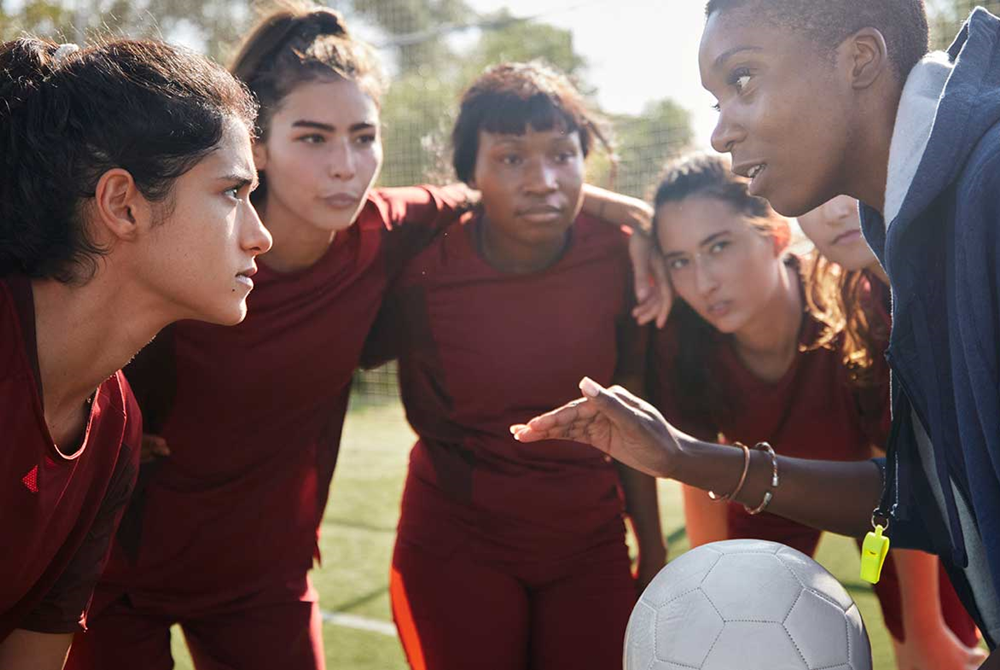
Whether at the professional or intramural level, there are so many benefits to being an athlete. Participating in a sport teaches communication skills, how to overcome adversity—and regular exercise has so many incredible health effects on the mind and body.
 But that’s not to say athletes don’t have their own set of challenges. Pressures to perform, physical injuries and intense schedules can take a toll on anyone’s mental health, which is where a sport psychologist comes in.
“It’s helpful that a sport psychologist knows the culture of athletics and the typical stressors that athletes face,” says Seth Swary, Ph.D., a sport psychology clinician at the Henry Ford Center for Athletic Medicine. “We’re familiar with the influence the world of athletics can have on someone and how it can affect their well-being.
“Athletes have a whole team around them to help them perform — athletic trainers, nutritionists, etc.— so why shouldn’t they have an expert who is dedicated to supporting their mental health? A sport psychologist acts as a strength-training coach for the mind.”
Mental Health Challenges That Athletes Face & How Sport Psychology Can Help
Athletes often have a built-in support system: teammates and coaches who know what they’re going through and trainers and physicians who can help manage aches and injuries. But still, it’s not always easy. Some of the difficulties that athletes face include:
- Increased attention on body image. Especially if you play a sport that requires revealing outfits — or a sport with increased focus on weight — it might be difficult to maintain a healthy body image. For some, this can lead to an increased risk of developing an eating disorder.
- The pressure to perform. “If you’re an athlete at the college or professional level and play badly during a game, you get roasted on Twitter,” says Dr. Swary. “But even if you’re not in the public eye, there is pressure to perform — from coaches, teammates, family members.”
- Navigating demanding schedules. “I work with many college athletes and their schedules are packed — practicing at least two hours a day, team meetings, traveling to and from games — and then they’re trying to keep up with school,” says Dr. Swary. “It can be stressful.”
- Debilitating physical injuries. The physical demand of sports can also bring about its own set of challenges — especially when injuries occur. “You’re not only dealing with surgery and rehabilitation, but you’re also out of the game for a while,” says Dr. Swary.
- Making career transitions. “I’ve worked with many athletes who are transitioning from one level of athletics to another (for example, middle school to high school, high school to college, college to professional) along with athletes who are transitioning out of their career,” says Dr. Swary. “They wonder how they can leave this sport they’ve been doing their whole lives — some since they were 3 or 4 years old. It can be a huge part of their identity and a tough transition to make. Even more so if it’s an injury that abruptly derails their career. We can provide them with ways to make a smooth, healthy transition.”
That said, nothing “bad” has to happen to benefit from sport psychology. As Dr. Swary says, you don’t see a personal trainer because you’re not strong, you see a personal trainer because you could benefit from being stronger. It’s the same with sport psychology — and it can help improve your performance.
“We have specific skills we work on for performance optimization,” says Dr. Swary. “How do we talk to ourselves? How do we respond in certain situations? How do we stay in the moment when we’re distracted?
“A high school athlete may have had a rough day at school; then they have to refocus and find energy at the end of the day for their game. It can be helpful for any athlete at any time.”
Reviewed by Seth Swary, Ph.D., a sport psychology clinician at the Henry Ford Center for Athletic Medicine.
To learn more about the sport psychology program at Henry Ford or to request an appointment, visit henryford.com/sportpsychology.