


Did you see that?
June 11, 2012
Geoff Kimmerly
Second Half editor
The second weekend of this spring's MHSAA Finals is behind us, with four more champions awarded in girls and boys lacrosse.
Below is our sampling of what struck us most from last week's many highlights as we kick off the final week of the 2011-12 school year.
Girls lacrosse
Birmingham wins thriller: Birmingham United scored the last three goals in Saturday’s MHSAA Division 1 Final to edge Hartland 12-11 in overtime. (Grand Rapids Press)
East Grand Rapids ends perfectly: The Pioneers won their first girls lacrosse championship –17-6 over Okemos in Division 2 – and finished this spring 28-0. (Grand Rapids Press)
Boys lacrosse
Again, it’s Brother Rice: The Warriors continued their hold on the MHSAA Division 1 championship and handed Ann Arbor Pioneer its only loss this season with a 14-8 win Saturday. (Detroit Free Press)
Rangers come back for more: Grand Rapids Forest Hills Central scored the final four goals of the Division 2 Final to edge reigning champion Detroit Country Day 7-6. (Second Half)
Soccer
14 goals, 2 wins: Grandville Calvin Christian eliminated two other top-10 teams in Division 4 during last week’s Regional. The No. 4 Squires first defeated No. 8 St. Joseph Lake Michigan Catholic 7-0, then No. 2 Kalamazoo Christian 7-2 in the final. (Grand Rapids Press)
DeWitt returns: The No. 4 Panthers earned a Division 2 Semifinal matchup with Plainwell by beating No. 5 Grand Rapids Christian 1-0 in their Regional Final. DeWitt fell to Plainwell in a 2011 Semifinal, but returns a number of players from that team. (Lansing State Journal)
Softball
Decade of dominance: The Gladstone softball team earned its 10th-straight Regional championship with 7-0 and 6-2 wins over Tawas and Traverse City St. Francis, respectively. Gladstone won MHSAA championships in 2009 and 2004, and was ranked No. 7 heading into this postseason. (Escanaba Daily Press)
Fantastic first: Swartz Creek won its first Regional by downing Alpena 2-1 in a Division 1 Final at Saginaw Valley State University. The Dragons are 34-6 and also have set a school record this spring for wins. (Bay City Times)
Baseball
Brighton beat Brother Rice: The unranked Bulldogs downed the top-ranked Warriors 4-1 in the Regional Final at Novi. Brighton rode the arm of pitcher Colin Nash, who moved to 8-0 this season. (Detroit News)
Bears also take out No. 1: The top-ranked team in Division 2 also fell, thanks to No. 10 St. Joseph. The Bears downed Richland Gull Lake 6-5 in eight innings before beating Coldwater for the championship. (St. Joseph Herald-Palladium)
Golf
No 300 here: No. 2-ranked Plymouth and unranked Saline and Canton all broke 300 at the Division 1 Regional at West Shore Golf and Country Club in Grosse Ile. Plymouth won the title with a 296, but Saline was only two behind and Canton came in at 299. Canton’s Donnie Trosper, a freshman, won the individual championship with a 67. Saline had beaten those two teams in the District. (MHSAA)
Concussion Care: Signs & Symptoms to Watch
November 1, 2022
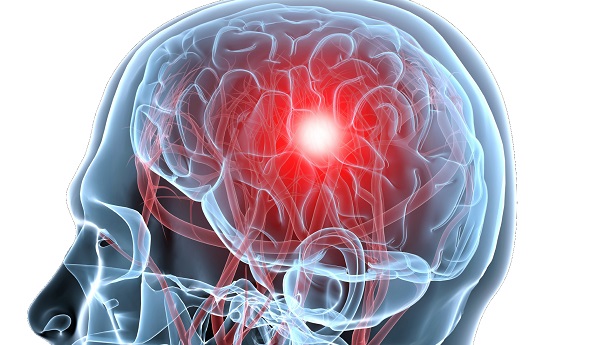
When you experience a blow to the head, knowing whether you've suffered a concussion isn't always clear cut.
 Head injuries have a range of physical, psychological and intellectual effects — and only a small number of people lose consciousness.
"It's critical for parents, coaches, players and trainers to recognize the potential signs and symptoms of a concussion," says Jeffrey Kutcher, M.D., a sports neurologist who treats athletes at the Henry Ford Kutcher Clinic for Concussion and Sports Neurology. "The basic rule is that a concussion can affect any aspect of brain function."
Signs of Concussion
The Latin root of the word "concussion" means "to shake violently" — which makes sense. Concussions happen when there's a combination of movement and impact. So, any injury that involves a hit to the head — a fall, collision or hard hit by a heavy object — could cause one. So could a hit to the body that causes the head to move quickly.
"But every brain injury is different," Dr. Kutcher says. "Some symptoms show up right away while others develop gradually over days."
Here are common concussion symptoms to watch for — both immediately following a head injury and in the hours and days after:
Physical Concussion Symptoms
- Changes in sleep patterns
- Difficulty with balance
- Dizziness or lightheadedness
- Fatigue
- Headache
- Light sensitivity
- Nausea
- Numbness or tingling
- Sensitivity to sound
- Visual problems
- Vomiting
Emotional Concussion Symptoms
- Anxiety
- Depression
- Irritability
- Mood swings
Cognitive Concussion Symptoms
- Confusion
- Difficulty concentrating
- Feeling "slow" or "foggy"
- Memory problems
Diagnosing Concussion: Getting It Right
One reason concussions are frequently misdiagnosed is because they're assessed on the field or courtside during game play or practice. Coaches, trainers and parents often make lightning fast decisions about whether symptoms, such as headache, nausea and light sensitivity, are signs of concussion.
"Unfortunately, it’s more complicated than completing a concussion checklist. Everyone — and every concussion — is different. So, observers shouldn’t be diagnosing a head injury on the spot, but rather making a triage decision for safety. They should leave the diagnosis to the medical professionals," Dr. Kutcher says. In fact, those in-the-moment assessments are wrong about half of the time.
People should focus instead on getting immediate, emergency care for anyone who displays the following signs and symptoms right after a hit:
- Difficulty walking
- Weakness on one or both sides
- Not waking up
- Repeated vomiting
- Persistent confusion
- Seizures
- Unconsciousness
No matter how hard (or lightly) you think you've been hit, it's important to take head injury symptoms seriously. Even a seemingly minor blow could have a major impact. A complete evaluation by a medical professional will not only determine whether you have a concussion, it can also identify more serious, or even life-threatening, concerns.
"In every case, medical professionals are better equipped to assess the extent of the damage if you have a comprehensive baseline evaluation on file," Dr. Kutcher says. This thorough evaluation with a sports neurologist, including a complete family and neurological history, can act as a critical point of reference when trainers and medical professionals are trying to diagnose or manage a concussion.
Dr. Jeffrey Kutcher is a sports neurologist and the medical director of the Henry Ford Kutcher Clinic for Concussion and Sports Neurology.
Want to learn more? Henry Ford Health System sports medicine experts are treating the whole athlete, in a whole new way. From nutrition to neurology, and from injury prevention to treatment of sports-related conditions, they can give your athlete a unique game plan.
Visit henryford.com/sports or call (313) 972-4216 for an appointment within 24 business hours.