


Did you see that?
June 11, 2012
Geoff Kimmerly
Second Half editor
The second weekend of this spring's MHSAA Finals is behind us, with four more champions awarded in girls and boys lacrosse.
Below is our sampling of what struck us most from last week's many highlights as we kick off the final week of the 2011-12 school year.
Girls lacrosse
Birmingham wins thriller: Birmingham United scored the last three goals in Saturday’s MHSAA Division 1 Final to edge Hartland 12-11 in overtime. (Grand Rapids Press)
East Grand Rapids ends perfectly: The Pioneers won their first girls lacrosse championship –17-6 over Okemos in Division 2 – and finished this spring 28-0. (Grand Rapids Press)
Boys lacrosse
Again, it’s Brother Rice: The Warriors continued their hold on the MHSAA Division 1 championship and handed Ann Arbor Pioneer its only loss this season with a 14-8 win Saturday. (Detroit Free Press)
Rangers come back for more: Grand Rapids Forest Hills Central scored the final four goals of the Division 2 Final to edge reigning champion Detroit Country Day 7-6. (Second Half)
Soccer
14 goals, 2 wins: Grandville Calvin Christian eliminated two other top-10 teams in Division 4 during last week’s Regional. The No. 4 Squires first defeated No. 8 St. Joseph Lake Michigan Catholic 7-0, then No. 2 Kalamazoo Christian 7-2 in the final. (Grand Rapids Press)
DeWitt returns: The No. 4 Panthers earned a Division 2 Semifinal matchup with Plainwell by beating No. 5 Grand Rapids Christian 1-0 in their Regional Final. DeWitt fell to Plainwell in a 2011 Semifinal, but returns a number of players from that team. (Lansing State Journal)
Softball
Decade of dominance: The Gladstone softball team earned its 10th-straight Regional championship with 7-0 and 6-2 wins over Tawas and Traverse City St. Francis, respectively. Gladstone won MHSAA championships in 2009 and 2004, and was ranked No. 7 heading into this postseason. (Escanaba Daily Press)
Fantastic first: Swartz Creek won its first Regional by downing Alpena 2-1 in a Division 1 Final at Saginaw Valley State University. The Dragons are 34-6 and also have set a school record this spring for wins. (Bay City Times)
Baseball
Brighton beat Brother Rice: The unranked Bulldogs downed the top-ranked Warriors 4-1 in the Regional Final at Novi. Brighton rode the arm of pitcher Colin Nash, who moved to 8-0 this season. (Detroit News)
Bears also take out No. 1: The top-ranked team in Division 2 also fell, thanks to No. 10 St. Joseph. The Bears downed Richland Gull Lake 6-5 in eight innings before beating Coldwater for the championship. (St. Joseph Herald-Palladium)
Golf
No 300 here: No. 2-ranked Plymouth and unranked Saline and Canton all broke 300 at the Division 1 Regional at West Shore Golf and Country Club in Grosse Ile. Plymouth won the title with a 296, but Saline was only two behind and Canton came in at 299. Canton’s Donnie Trosper, a freshman, won the individual championship with a 67. Saline had beaten those two teams in the District. (MHSAA)
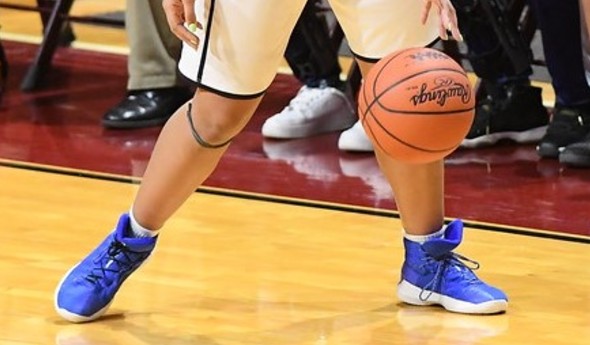
Navigating Twists, Turns Of Ankle Sprains
November 30, 2020

Henry Ford Health System
Oh, how the ankle turns! If you’ve had a misstep or wrong turn result in a sprained ankle, you know how painful this injury can be. Henry Ford podiatric surgeon Paul Di Liddo, DPM, discusses ankle sprains and treatments.
Ankle Injury 101
From risk factors to treatments (and nearly everything in between), here’s what to know — and do — about ankle sprains.
Sprained Ankles Are Painfully Common
In fact, they’re among the most frequent injuries in the United States, with up to 25,000 people per day spraining their ankles. Although often associated with sports, ankle sprains can happen to anyone, anywhere. “I see ankle sprains from tripping over curbs, stepping in holes in a yard or simply walking,” says Dr. Di Liddo. “Ankle sprains — like accidents — happen.”
Ankle Sprains Injure Ligaments
“Ankle sprains occur when the ankle suddenly and forcefully twists or rolls past a point that the ankle ligaments can tolerate,” remarks Dr. Di Liddo. “The ankle ligaments will stretch or tear, either partially or completely.” An ankle can twist, turn or roll during a fall, jump or change of direction, while walking on uneven ground and more.
A Weak Ankle Is A Vulnerable Ankle
Most sprained ankles heal without long-term concern. In some cases, however, ligaments may not fully heal, resulting in a weak or unstable ankle. “A weak or unstable ankle can make an individual more susceptible to repeated ankle sprains,” explains Dr. Di Liddo.
High Arches Can Be Risky Business
People who have high-arched feet are more at risk of rolling — and therefore spraining — their ankles. So are people who have “loose joints,” because the ankle can overstretch with a seemingly minor twist. People who are at-risk for ankle sprains should take extra precautions when playing sports or performing other activities.
Some Sprains Can Be Treated At Home — Emphasis On Some
How you treat a sprained ankle depends on the severity of the injury. Minor sprains can be treated at home with the RICE method. The RICE method include:
- Rest by avoiding use of the injured ankle
- Ice applied to the ankle (without touching the skin) for no more than 20 minutes every three to four hours
- Compression with an elastic bandage
- Elevation above the heart
Ice, compress and elevate your ankle for the first few days. Rest and refrain from sports until ankle pain and swelling have subsided.
At-home treatments aren’t right for everyone — or every ankle injury. “A swollen ankle is typical if you have experienced a sprain,” says Dr. Di Liddo. “However, if you have severe ankle swelling, are in extreme pain or notice an odd ankle appearance, seek medical attention.” This is also true if you can’t walk more than a few steps or have limited ankle mobility. A foot and ankle specialist can diagnose your injury and begin treatment.
Ankle Treatments Abound
Ankle sprain treatments are designed to decrease pain and swelling, while protecting the ligaments from further injury. Treatments include wearing an ankle brace, walking boot or cast. Physical therapy to strengthen the ankle and maintain range of motion may also be incorporated after the ligaments have started to heal.
“Of course, for more severe injuries, a thorough physical exam and X-rays are necessary,” says Dr. Di Liddo. “This helps ensure that there is no other underlying injury, such as a fractured ankle or Achilles tendon rupture.”
Healing Times Vary
The recovery time for a sprained ankle depends on the severity of the injury. Sprains with minimal ligament stretching and no tear require one to three weeks. Partially torn ankle ligaments may take up to six to eight weeks to heal. A fully torn ligament can take several months to fully heal.
What To Do When Ankle Problems Persist
For people who continue to experience ankle instability, there are a host of options. “Physical therapy is the first step — but not the only one,” says Dr. Di Liddo. “If physical therapy has not been beneficial, we can discuss surgical approaches.”
Surgical options include:
- Ligament repair or reinforcement via an outpatient procedure
- Osteotomy, which is surgical cutting of bone, to lower arches when ankle instability is caused by high arches
For those with frequent ankle sprains or instability, a medical assessment is necessary and may include:
- Physical exam
- X-rays to assess bones and joints
- MRI to evaluate ankle ligaments
With this information in mind, you can prevent — or address — the twists and turns of ankle sprains.
Want to learn more? Henry Ford Health System sports medicine experts are treating the whole athlete, in a whole new way. From nutrition to neurology, and from injury prevention to treatment of sports-related conditions, they can give your athlete a unique game plan.
Visit henryford.com/sports or call (313) 972-4216 for an appointment within 24 business hours.