


Did you see that? (9/10-9/16)
September 18, 2012
One of the state's premier regular-season cross country events plus some big-time volleyball in the Upper Peninsula highlight the non-football highlights from the week that was Sept. 10-16.
(Click for the Drive for Detroit football report.)
Cross country
Elite meet at MSU: The Spartan Invitational, run at Michigan State's Forest Akers East Golf Course, is arguably the most competitive regular season event in this sport and draws a number of top teams from all over the state for a series of races. Champions on Friday were the Waterford Mott boys and Grosse Pointe South girls in the Elite races, the Ithaca boys and North Muskegon girls in the White division, the Haslett boys and the Spring Lake girls in the Bronze division, and Bloomfield Hills Lahser boys and Jenison girls in the Green division. Click the "Playmakers" link for results and the others for coverage. (Playmakers.com) (Grand Haven Tribune) (Lansing State Journal)
Volleyball
Capital of UP volleyball: Calumet, ranked fourth in Class C this week. defended its title at the Articatz Invitational Autumn Classic in Marquette by winning all 12 of its games. The field also included Marquette, Houghton and Escanaba among others. (Marquette Mining Journal)
Trojans at home above the net: More of the Upper Peninsula's top teams met nearer the Wisconsin border. Crystal Falls Forest Park, ranked No. 6 in Class D, defended its home tournament title with a 2-1 win over No. 10 Lake Linden-Hubbell in the final. (Iron Mountain Daily News)
Golf
Lakeview owns Battle Creek: Lakeview continues to rank among the state's best teams in Division 2, at No. 3 this week. And there's no question it's the best in Battle Creek, as evidenced by a sixth-straight All-City championship won with a score of 176 -- 45 strokes better than runner-up Harper Creek. (Battle Creek Enquirer)
Recognition
Clawson names Judy Hacker Field: Hacker, who died in 2011, was a pioneer of girls sports in the southeastern corner of the state during her time at the school from 1963-95. She coached basketball, volleyball, softball, track and field and field hockey at the school. The school dedicated its softball diamond in her name Saturday. (Oakland Press)
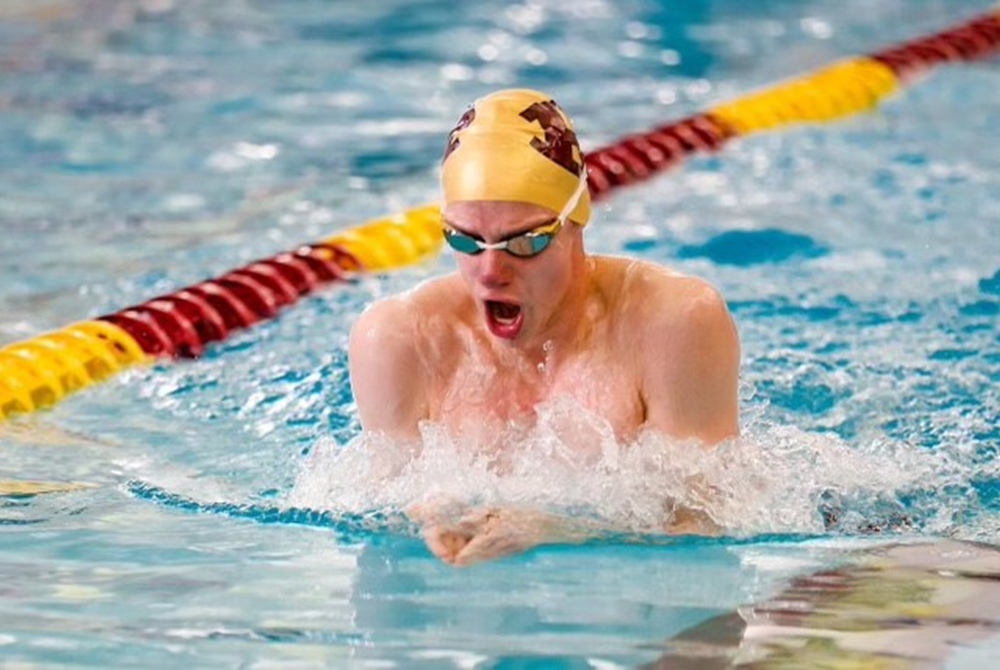
Performance of the Week: Riverview's Ewan Todd
January 26, 2024
 Ewan Todd ♦ Riverview
Sophomore ♦ Swimming
Todd swam a pair of Lower Peninsula Division 3 Finals-qualifying times in the 50 (22.44) and 100-yard (50.12) freestyles, and also swam on winning and Finals-qualifying 200 (1:34.09) and 400 freestyle (3.26) relays as Riverview won the Downriver Classic for the first time since 2018, edging 2023 champion Trenton for the title.
Todd’s time in the 50 was a personal best, and he should have plenty more opportunities to shine as this season continues and after reaching the Finals in two individual races and two relays as a freshman last year. He helped Riverview finish 21st as a team leading off the 10th-place 200 medley relay and finishing 16th in the 100 breaststroke, and also qualified for the meet in the 100 freestyle and as part of the 200 free relay.
@mhsaasports 🏊♂️POW: Ewan Todd #swimming #freestyle #riverview #part1 #highschoolsports #tiktalk #interview #performanceoftheweek #mistudentaid #fyp #MHSAA ♬ original sound - MHSAA
@mhsaasports 🏊♂️POW: Ewan Todd #tiktalk #questiontime #part2 #reese #snow #laughing #tiktok #phone #family #performanceoftheweek #mistudentaid #fyp #MHSAA ♬ original sound - MHSAA
Follow the MHSAA on TikTok.
MHSAA.com's "Performance of the Week" features are powered by MI Student Aid, a division within the Department of Lifelong Education, Advancement, and Potential (MiLEAP). MI Student Aid encourages students to pursue postsecondary education by providing access to student financial resources and information. MI Student Aid administers the state’s 529 college savings programs (MET/MESP), as well as scholarship and grant programs that help make college Accessible, Affordable and Attainable for you. Connect with MI Student Aid at www.michigan.gov/mistudentaid and find more information on Facebook and Twitter @mistudentaid.
Past 2023-24 Honorees
Jan. 18: Ashley Weller, Jackson Northwest basketball - Report
Jan. 11: Michael Baldwin, Saginaw Arthur Hill wrestling - Report
Dec. 15: Jena Fijolek, Fenton bowling - Report
Dec. 8: Sophia Wagner, Escanaba gymnastics - Report
Dec. 1: Isaiah Marshall, Southfield Arts & Technology football - Report
Nov. 24: Sarah Bradley, Clarkston Everest Collegiate volleyball - Report
Nov. 17: Kalieb Osborne, Waterford Mott football - Report
Nov. 10: Tekalegn Vlasma, Muskegon Western Michigan Christian soccer - Report
Nov. 3: Colton Kinnie, Birmingham Seaholm football - Report
Oct. 27: Lauren Timpf, Macomb Lutheran North golf - Report
Oct. 20: Alena Li, Okemos golf - Report
Oct. 13: Seth Norder, Grand Haven cross country - Report
Oct. 5: Paige Anderson, Muskegon Reeths-Puffer golf - Report
Sept. 29: MacKenzie Bisballe, Lake City volleyball - Report
Sept. 22: Jhace Massey, Gladwin football - Report
Sept. 15: Kaylee Draper, Sturgis swimming - Report
Sept. 8: Owen Jackson, Traverse City St. Francis tennis - Report
Sept. 1: Rachel Forsyth, Ann Arbor Pioneer cross country - Report
(Photos courtesy of the Riverview boys swimming & diving program.)