


Did you see that?
March 5, 2012
Check out our must-know scores and news from Feb. 27 - March 3.
(Click on links for coverage.)
Wrestling
We are the Champions, part 2: A group of 56 champions emerged from 896 MHSAA Individual Finals qualifiers -- including St. Johns senior Taylor Massa, who became the 16th in MHSAA history to win four individual championships and the fifth to do so while never losing a high school match. We reported both on Massa separately and on the top stories from our 13 other weight classes. (Second Half)
Competitive Cheer
New winners emerge: Southgate Anderson in Division 1 and Richmond in Division 3 won their first MHSAA cheer championships at the Grand Rapids Delta Plex; Richmond was runner-up in Division 3 last season, while Anderson improved from seventh in Division 1. Gibraltar Carlson and Michigan Center continued their recent successes by claiming the titles in Divisions 2 and 4, respectively. (Second Half D1) (Second Half D2-3-4)
Bowling
From no one to No. 1: Eight championships -- four team and four individual -- were awarded over the weekend. And for the most part, favorites prevailed. But the best stories from bowling might have been the Flat Rock girls and Mason boys, who defied expectations in emerging from unranked at the end of the regular season to win their Team Finals. (Second Half Girls Team) (Second Half Boys Team) (Second Half Girls Singles) (Second Half Boys Singles)
Girls Basketball
Unexpected East Lansing: The Trojans are regulars in the later rounds of the MHSAA Tournament. But among Lansing-area teams, Waverly was the biggest contender this winter and ranked No. 2 in Class A at the end of the regular season. But the Trojans extended a six-year postseason winning streak and avenged an early-season loss to the Warriors by winning Friday's District Final, 57-53. (Lansing State Journal)
Editor's note: Did we miss something? Comment below and tell us about it. Is there an event coming up that we should make sure to note? Comment or e-mail [email protected].
Concussion Care: Signs & Symptoms to Watch
November 1, 2022
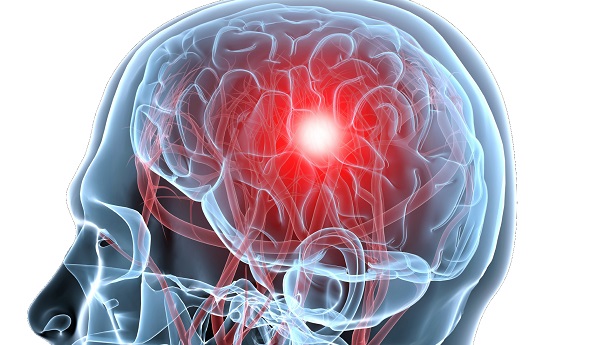
When you experience a blow to the head, knowing whether you've suffered a concussion isn't always clear cut.
 Head injuries have a range of physical, psychological and intellectual effects — and only a small number of people lose consciousness.
"It's critical for parents, coaches, players and trainers to recognize the potential signs and symptoms of a concussion," says Jeffrey Kutcher, M.D., a sports neurologist who treats athletes at the Henry Ford Kutcher Clinic for Concussion and Sports Neurology. "The basic rule is that a concussion can affect any aspect of brain function."
Signs of Concussion
The Latin root of the word "concussion" means "to shake violently" — which makes sense. Concussions happen when there's a combination of movement and impact. So, any injury that involves a hit to the head — a fall, collision or hard hit by a heavy object — could cause one. So could a hit to the body that causes the head to move quickly.
"But every brain injury is different," Dr. Kutcher says. "Some symptoms show up right away while others develop gradually over days."
Here are common concussion symptoms to watch for — both immediately following a head injury and in the hours and days after:
Physical Concussion Symptoms
- Changes in sleep patterns
- Difficulty with balance
- Dizziness or lightheadedness
- Fatigue
- Headache
- Light sensitivity
- Nausea
- Numbness or tingling
- Sensitivity to sound
- Visual problems
- Vomiting
Emotional Concussion Symptoms
- Anxiety
- Depression
- Irritability
- Mood swings
Cognitive Concussion Symptoms
- Confusion
- Difficulty concentrating
- Feeling "slow" or "foggy"
- Memory problems
Diagnosing Concussion: Getting It Right
One reason concussions are frequently misdiagnosed is because they're assessed on the field or courtside during game play or practice. Coaches, trainers and parents often make lightning fast decisions about whether symptoms, such as headache, nausea and light sensitivity, are signs of concussion.
"Unfortunately, it’s more complicated than completing a concussion checklist. Everyone — and every concussion — is different. So, observers shouldn’t be diagnosing a head injury on the spot, but rather making a triage decision for safety. They should leave the diagnosis to the medical professionals," Dr. Kutcher says. In fact, those in-the-moment assessments are wrong about half of the time.
People should focus instead on getting immediate, emergency care for anyone who displays the following signs and symptoms right after a hit:
- Difficulty walking
- Weakness on one or both sides
- Not waking up
- Repeated vomiting
- Persistent confusion
- Seizures
- Unconsciousness
No matter how hard (or lightly) you think you've been hit, it's important to take head injury symptoms seriously. Even a seemingly minor blow could have a major impact. A complete evaluation by a medical professional will not only determine whether you have a concussion, it can also identify more serious, or even life-threatening, concerns.
"In every case, medical professionals are better equipped to assess the extent of the damage if you have a comprehensive baseline evaluation on file," Dr. Kutcher says. This thorough evaluation with a sports neurologist, including a complete family and neurological history, can act as a critical point of reference when trainers and medical professionals are trying to diagnose or manage a concussion.
Dr. Jeffrey Kutcher is a sports neurologist and the medical director of the Henry Ford Kutcher Clinic for Concussion and Sports Neurology.
Want to learn more? Henry Ford Health System sports medicine experts are treating the whole athlete, in a whole new way. From nutrition to neurology, and from injury prevention to treatment of sports-related conditions, they can give your athlete a unique game plan.
Visit henryford.com/sports or call (313) 972-4216 for an appointment within 24 business hours.