


High 5s: 11/7/12
November 7, 2012
This past Saturday saw eight teams and eight individuals crowned MHSAA champions, and this week we feature a few who will be listed among the best for all time.
 Erin Finn
West Bloomfield senior
Cross country
Finn won her second straight MHSAA individual Lower Peninsula Division 1 championship, this time in 17:07.9. Her finish was the fastest from any of the four divisions that raced Saturday at Michigan International Speedway, and gave her the victory in hers by 27 seconds. Finn’s time was the fourth-best ever at an MHSAA Final. She has three of the top 15 times ever run at MIS, more than any other runner.
On track for more: Finn also won an MHSAA Track and Field championship last season, setting an all-division/class record in the 1,600 with a time of 10:17.86. That time was nearly five seconds better than the previous best.
Maize and Blue: Finn will run next season at the University of Michigan. The Wolverines cross country team is ranked No. 7 nationally heading into Friday's NCAA Great Lakes Regional.
Scientifically speaking: Finn intends to study biomechanical engineering at U-M. "My junior year, I found out I love physics, and I already knew I loved bio and chemistry. So, what's better than to combine those?"
Runners to chase: “I looked up to Megan Goethals (of Rochester), number one, and Shannon Osika (of Waterford Mott). They’re people I competed with. I know that one day I can be like that. It’s more real to me.”
 Nick Raymond
Erie Mason senior
Cross country
After dashing to the lead last season and finishing fourth, Nick Raymond dominated the Lower Peninsula Division 3 Final at MIS with a time of 15:05.1 – the second-fastest time for a Division 3/Class C MHSAA Final to only Maverick Darling's 14:52.8 for Ovid-Elsie in 2007. Raymond is the first individual cross country champion from Erie Mason (not counting another who finished first among individuals before team and individual placers were combined for one race beginning in 1997) and also placed in both the 1,600 and 3,200 at the spring's Lower Peninsula Division 3 Track and Field Final.
A long drive: "I've been working hard, since the first time (I ran) in sixth grade. Working hard and training hard over the summer and during mandatory practices too."
Brotherly influence: Raymond began running cross country in the footsteps of his older brother Andrew Raymond, a 2010 graduate. "He told me, 'If you just keep working hard, just look forward at your dream, your goal, you will achieve it.'"
Now the pool, then the track: Raymond swims during the winter, specializing in butterfly and breaststroke. Then it's on to track. Raymond finished fourth in the 1,600 (4:21.84) and seventh in the 3,200 (9:44.91) at last season's Lower Peninsula Division 3 Final.
Looking up to Pre: Like many in the running community, Raymond considers former Oregon and international star Steve Prefontaine a major influence. "I liked how he had a lot of faith in himself."
 East Kentwood soccer
The top-ranked Falcons edged Grand Blanc 1-0 at Troy Athens to claim their fourth Division 1 championship in six seasons. They finished 22-1-4, their seventh with at least 20 wins in the last eight years.
Previous 2012-13 honorees:
- Julia Bos, Grand Rapids Christian cross country - Click for more
- Morgan Bullock, Zeeland swimming - Click for more
- Nathan Burnand, Waterford Mott cross country - Click for more
- Aaron Chatfield, Burt Lake Northern Michigan Christian soccer - Click for more
- Billy Heckman, Portage Central tennis - Click for more
- Codi Jenshak, Escanaba tennis - Click for more
- Amanda McKinzie, Battle Creek St. Philip cross country - Click for more
- Connor Mora, Cedar Springs cross country - Click for more
- Kelsey Murphy, Plymouth golf - Click for more
- Dewey Lewis, Rockford soccer - Click for more
- Jacqueline Setas, Lansing Catholic golf - Click for more
- Michael Sienko, Williamston tennis - Click for more
- Beal City volleyball - Click for more
- Grand Blanc boys soccer - Click for more
- Ithaca football - Click for more
- Lansing Everett football - Click for more
- Ludington boys tennis - Click for more
- Muskegon Mona Shores girls golf - Click for more
Be Proactive with Concussions
October 22, 2019

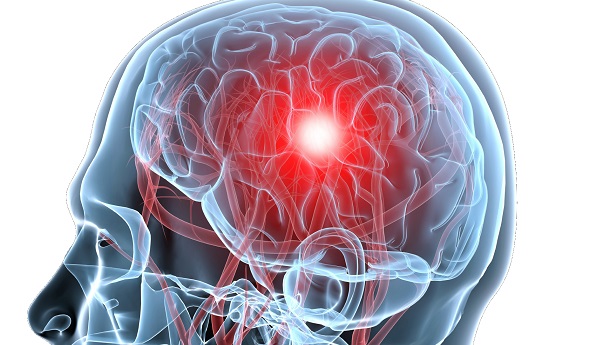
Most people have seen the headlines about concussions as a common sports injury, and it's natural that parents may be concerned for their young athlete.
A large misconception in sports is that previous concussions are to be blamed for ongoing headaches, blurred visions and memory loss, among other symptoms.
“It’s really important to think about concussions in concert with overall brain health,” says Jeffrey Kutcher, M.D., a sports neurologist who treats athletes at the Henry Ford Concussion and Sports Neurology Clinic. “Concussions can be concerning, but they shouldn’t be looked at in a vacuum. The best way to prevent brain injury begins before the injury occurs.”
One way to do that is to consult with your child’s doctor or a sports neurologist for an annual evaluation. A sports neurologist focuses on managing sports-related brain and nervous system injuries and conditions in athletes, such as concussions, post-concussion syndrome, peripheral nerve injuries, migraines, epilepsy, and more.
“Having an annual evaluation of your athlete’s brain function when they are healthy and uninjured can help diagnose and treat issues when they arise,” says Dr. Kutcher.
Results from the baseline test can be used as an important tool for comparison by a qualified healthcare professional later if an athlete has a suspected concussion.
Best Practices to Ensure Your Athlete Stays Safe
Dr. Kutcher shares these tips for parents to make sure you’re keeping your child’s brain health and safety – not just their athletic performance – at the forefront:
• Get a brain health baseline. A proper baseline test should include a personal and family neurological history, with a focus on any active issues. It is important to note any neurological conditions that may influence concussion recovery, such as ADHD, depression, anxiety, or migraine headaches.
• Teach your kid to listen to her or his body. With any sport, there is a calculated risk to play. Teaching kids to listen to and be honest about how their body is feeling is the best way to prevent and treat injuries.
• In the event of an injury, look for the signs. Within 24 hours after an injury, an athlete should be evaluated if they are experiencing:
· Headaches
· Fatigue
· Dizziness and nausea
· Changes in sleep habits
· Trouble with memory
· Confusion
· Irritability and anxiety
· Light sensitivity
• Brain injuries don’t just occur with a blow to the head. They can also occur from falls, car accidents, or even through whiplash. If your child is experiencing any symptoms, be sure to consult your physician.
• Brain health is more than just concussions. If your athlete is complaining of chronic headaches, migraines, dizziness, memory or mood issues, there may be an underlying issue.
“There is no magic number of concussions a brain can sustain. Each individual is different,” Dr. Kutcher explains. “The impact severity and recovery time can greatly affect an athlete’s brain. By getting a baseline before the injury, we can establish a goal to work towards in recovery.”
Want to learn more? Henry Ford Health System sports medicine experts are treating the whole athlete, in a whole new way. From nutrition to neurology, and from injury prevention to treatment of sports-related conditions, they can give your athlete a unique game plan.
Visit henryford.com/sports or call (313) 972-4216 for an appointment within 24 business hours.