

MI Army National Guard Presents MHSAA Events
February 24, 2016
By Geoff Kimmerly
Second Half editor
Sharing in the values of leadership, sportsmanship and ethics emphasized by the Michigan High School Athletic Association, the Michigan Army National Guard is serving as the official military branch supporting MHSAA events and digital initiatives through the 2015-16 school year.
 The Michigan Army National Guard provides trained and ready forces in support of the National Military Strategy, and responds as needed to state, local, and regional emergencies to ensure peace, order, and public safety. Guardsmen typically train one weekend per month and two weeks in the summer, and soldiers are eligible for educational benefits including state and federal tuition assistance programs, the G.I. Bill and grants at Michigan colleges and universities that combined usually exceed the total cost of tuition, books and fees at most Michigan post-secondary institutions.
The Guard adds value to our communities through continuous interaction. National Guard soldiers are part of the local community. Monthly and annual summer training maintains readiness when needed, be it either to defend our nation's freedom, or protecting lives and property of Michigan citizens during a local natural disaster.
“The National Guard provides opportunities for young men and women to mature into productive citizens,” MHSAA Executive Director John E. “Jack” Roberts said. “The emphasis the Guard puts on physical fitness, leadership and doing things the right way parallels what we strive to teach in school sports.”
The Guard has served as presenter of the MHSAA Cross Country Regionals and Finals and Football Playoffs during the fall, and this winter of the MHSAA Wrestling Tournament, which will conclude with the Team Wrestling Finals hosted Feb. 26-27 at Central Michigan University’s McGuirk Arena and the Individual Wrestling Finals scheduled for March 3-5 at The Palace of Auburn Hills. Guard recruiters also have been on-site attending numerous District, Regional and additional Finals events during the first half of the 2015-16 school year.
The Guard also is featured prevalently as part of the MHSAA’s online presence on both MHSAA.com and the MHSAA mobile app, and supports the “Michigan National Guard Performance of the Week” honoring a successful student-athlete on the MHSAA’s Second Half website.
“The Michigan Army National Guard is proud to support the MHSAA and student-athletes across Michigan,” said Lt. Col. Scott L. Meyers, who serves as recruiting and retention battalion commander for the Guard. “The Guard not only plays a key role in our national defense; we have a responsibility to serve our communities during times of state emergencies. As individuals, we are stewards in our communities and have an inherent responsibility to support our community in that role. One way to do this is to encourage student-athletes to live up to the ethics, values, and positive life choices common to the MHSAA and the Michigan Army National Guard.
“The National Guard is actively seeking these student-athletes to join our team. Their dedication combined with our education benefits and leadership training will provide the tools needed for them to become future leaders of Michigan’s communities.”
Click for additional information on the Michigan Army National Guard.
The MHSAA is a private, not-for-profit corporation of voluntary membership by more than 1,400 public and private senior high schools and junior high/middle schools which exists to develop common rules for athletic eligibility and competition. No government funds or tax dollars support the MHSAA, which was the first such association nationally to not accept membership dues or tournament entry fees from schools. Member schools which enforce these rules are permitted to participate in MHSAA tournaments, which attract more than 1.4 million spectators each year.
Concussion Care: Signs & Symptoms to Watch
November 1, 2022
When you experience a blow to the head, knowing whether you've suffered a concussion isn't always clear cut.
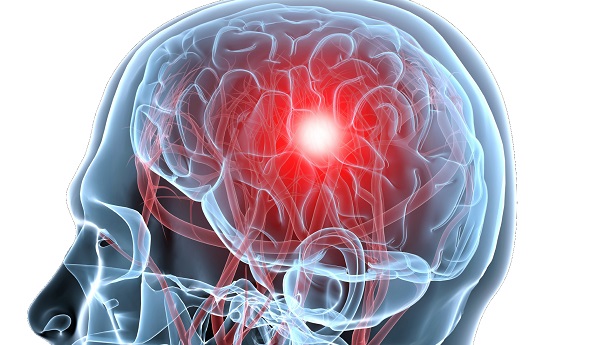
 Head injuries have a range of physical, psychological and intellectual effects — and only a small number of people lose consciousness.
"It's critical for parents, coaches, players and trainers to recognize the potential signs and symptoms of a concussion," says Jeffrey Kutcher, M.D., a sports neurologist who treats athletes at the Henry Ford Kutcher Clinic for Concussion and Sports Neurology. "The basic rule is that a concussion can affect any aspect of brain function."
Signs of Concussion
The Latin root of the word "concussion" means "to shake violently" — which makes sense. Concussions happen when there's a combination of movement and impact. So, any injury that involves a hit to the head — a fall, collision or hard hit by a heavy object — could cause one. So could a hit to the body that causes the head to move quickly.
"But every brain injury is different," Dr. Kutcher says. "Some symptoms show up right away while others develop gradually over days."
Here are common concussion symptoms to watch for — both immediately following a head injury and in the hours and days after:
Physical Concussion Symptoms
- Changes in sleep patterns
- Difficulty with balance
- Dizziness or lightheadedness
- Fatigue
- Headache
- Light sensitivity
- Nausea
- Numbness or tingling
- Sensitivity to sound
- Visual problems
- Vomiting
Emotional Concussion Symptoms
- Anxiety
- Depression
- Irritability
- Mood swings
Cognitive Concussion Symptoms
- Confusion
- Difficulty concentrating
- Feeling "slow" or "foggy"
- Memory problems
Diagnosing Concussion: Getting It Right
One reason concussions are frequently misdiagnosed is because they're assessed on the field or courtside during game play or practice. Coaches, trainers and parents often make lightning fast decisions about whether symptoms, such as headache, nausea and light sensitivity, are signs of concussion.
"Unfortunately, it’s more complicated than completing a concussion checklist. Everyone — and every concussion — is different. So, observers shouldn’t be diagnosing a head injury on the spot, but rather making a triage decision for safety. They should leave the diagnosis to the medical professionals," Dr. Kutcher says. In fact, those in-the-moment assessments are wrong about half of the time.
People should focus instead on getting immediate, emergency care for anyone who displays the following signs and symptoms right after a hit:
- Difficulty walking
- Weakness on one or both sides
- Not waking up
- Repeated vomiting
- Persistent confusion
- Seizures
- Unconsciousness
No matter how hard (or lightly) you think you've been hit, it's important to take head injury symptoms seriously. Even a seemingly minor blow could have a major impact. A complete evaluation by a medical professional will not only determine whether you have a concussion, it can also identify more serious, or even life-threatening, concerns.
"In every case, medical professionals are better equipped to assess the extent of the damage if you have a comprehensive baseline evaluation on file," Dr. Kutcher says. This thorough evaluation with a sports neurologist, including a complete family and neurological history, can act as a critical point of reference when trainers and medical professionals are trying to diagnose or manage a concussion.
Dr. Jeffrey Kutcher is a sports neurologist and the medical director of the Henry Ford Kutcher Clinic for Concussion and Sports Neurology.
Want to learn more? Henry Ford Health System sports medicine experts are treating the whole athlete, in a whole new way. From nutrition to neurology, and from injury prevention to treatment of sports-related conditions, they can give your athlete a unique game plan.
Visit henryford.com/sports or call (313) 972-4216 for an appointment within 24 business hours.