


Michel Finishes with Story to Tell
June 11, 2013
By Geoff Kimmerly
Second Half editor
Andrew Michel received the heart-breaking news only moments before leaving his golf team’s Regional on Friday to get ready for that night’s Brownstown-Woodhaven prom.
But missing making the MHSAA Finals by a stroke was not the first thing he shared with those who asked about his day at West Shore Golf and Country Club in Grosse Ile.
 Instead, the graduating senior told of the 132-yard shot he dropped for a hole-in-one on the par-3 12th hole, his second ace but first in competition.
Michel finished with a season-best 76, missing the cut for this weekend’s Lower Peninsula Division 1 Final by a stroke despite firing another eagle during the final holes of his round.
“At the start of the day, I told myself don’t leave anything on the table. Go for it on every hole, make every shot and just have fun at your last tournament,” Michel said Tuesday afternoon as he readied for that night’s graduation ceremony. “Being a senior, I went for everything.”
The best part might’ve been how he came back from a disappointing previous hole.
Michel had just finished off a triple bogey on No. 11, and admitted he was down on himself. He stepped to the next tee with his pitching wedge, and “I didn’t really care what happened. I chose the club I like to hit on that hole, and in the air I was thinking it was really good,” he said.
The ball touched down on the green and spun back into the hole.
Michel also played golf and soccer at Brownstown-Woodhaven. He’ll attend Grand Valley State University in the fall, study engineering, and will try to walk-on the Lakers’ golf team.
“Deep down inside,” he said he’s disappointed he won’t be playing at Michigan State’s Forest Akers West on Friday. But he’s got a quite a highlight to take with him from his final high school round.
“It was very bittersweet. I really wanted to go to state,” Michel said. “But the hole-in-one balanced it out a bit.”
Eye on the official
Hopefully you caught our MHSAA benchmarks piece (also published on Second Half) on longtime official Lamont Simpson, who has worked not only MHSAA Finals but NCAA tournaments and is one of 32 officials in the WNBA. (Here’s the link in case you missed it.)
He also became that league’s first to wear the referee cam, debuting the new gear during a recent game between the Phoenix Mercury and Indiana Fever.
The camera provides plenty of ref’s-eye views. Click the video below to check it out.
Wheels of Steele
We’ve been watching the inspiring progress of Frankenmuth runner Bobby Steele especially over the last few years as his story became known across the Lower Peninsula.
Steele, who is visually impaired, has run cross country and track for the Eagles, thanks to the help of guides who ran with him to help him stay on course.
If you haven’t heard Steele’s awesome story, check out this 8-minute video. Not only did Steele run, but he cut roughly 12 minutes off his first cross country times over the course of his career.
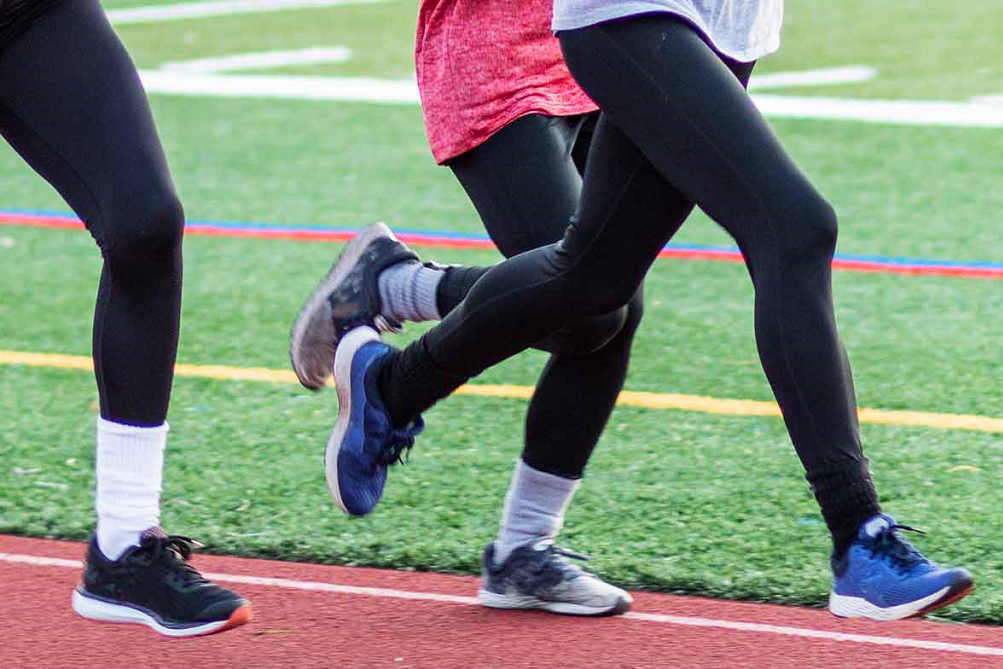
The Dangers of Returning to a Sport Too Soon After an Injury
September 12, 2023
 When you've been hit with an injury, it's natural to want to get back to your regular activities as soon as possible. In fact, it's not uncommon for athletes to sidestep doctors' orders and return to the field or the court before an injury has healed.
"It doesn’t matter how much you train, or how much you prepare, injuries are going to happen, especially if you're an athlete," says Jamie Schwab, an athletic trainer at Henry Ford Health System. "But the real trouble arises when athletes try to play through their pain without allowing sufficient time for recovery."
Risks Of Returning Too Soon After Injury
If you sprain your ankle during a cross country run, it can be tempting to finish the race. Unfortunately, hiding your pain and powering through the activity can actually make matters worse.
"If you continue to work out after suffering from an injury, you run the risk of furthering that injury," Schwab says. So what began as a minor ankle sprain can evolve into a major sprain that sidelines you for weeks.
Returning to play after surgery demands extra precautions. "Athletes are a lot more susceptible to re-injury after returning from surgery, especially if they don't complete the entire 9-month or year-long rehabilitation protocol," Schwab says. In some cases, you can exacerbate an injury to such a degree that you'll never be able to participate in the same capacity.
A Safe Return To Play
The road back to play after an injury is a long and winding one. Before you can even consider returning to exercise, you need to reduce swelling, get pain under control and get your range of motion back to almost normal.
"The recovery process takes time," Schwab says. "But if you stick with it, and you take it seriously, it's going to be a whole lot easier for you to return to the playing field in a timely manner."
Once you get pain and swelling under control, you can focus on agility and weight exercises that will help you regain strength and slowly return to baseline. The key tenets for a safer return to play:
► Be honest about your abilities: "So many athletes are afraid to tell the truth," Schwab says. "But if you're hurting and you're not competing at your full potential, you're letting your team down and yourself down, too." Even worse, you could increase your risk of further injury.
► Focus on building strength: Strength training is critical. It can help you become faster, stronger and more agile on the field. It can also help you recover more quickly after an injury.
► Listen to your body: If something doesn't feel right, pay attention to it. Talk to your athletic trainer or a physical therapist to get to the bottom of what's bugging you and put a plan in place to address it.
Boosting Performance Over The Long Haul
Unfortunately, not every coach and athletic trainer stresses the importance of a maintenance program. In fact, focused training and maintenance exercises are key to preventing injuries in the first place.
"The rehabilitation exercises you begin doing on day one after injury need to be maintained at least three to four times each week, indefinitely," Schwab says. "If you follow that regimen, all of your muscular nagging strains will no longer be a problem because your body is constantly adapting to the stresses. It's conditioned, it's strong, it can withstand the constant changes in direction."
Most importantly, don't be afraid to try complementary strategies. Practice using a foam roller, try cupping to release tension in the muscles and enhance blood flow and consider getting a monthly massage.
Jamie Schwab, AT, ATC, SCAT, CSCS, is an athletic trainer with Henry Ford Sports Medicine and works with student athletes at Edsel Ford High School. She is a National Strength and Conditioning Association-certified strength and conditioning specialist.
To find a sports medicine doctor or athletic trainer at Henry Ford, visit henryford.com/sports.