

Michel Finishes with Story to Tell
June 11, 2013
By Geoff Kimmerly
Second Half editor
Andrew Michel received the heart-breaking news only moments before leaving his golf team’s Regional on Friday to get ready for that night’s Brownstown-Woodhaven prom.
But missing making the MHSAA Finals by a stroke was not the first thing he shared with those who asked about his day at West Shore Golf and Country Club in Grosse Ile.
 Instead, the graduating senior told of the 132-yard shot he dropped for a hole-in-one on the par-3 12th hole, his second ace but first in competition.
Michel finished with a season-best 76, missing the cut for this weekend’s Lower Peninsula Division 1 Final by a stroke despite firing another eagle during the final holes of his round.
“At the start of the day, I told myself don’t leave anything on the table. Go for it on every hole, make every shot and just have fun at your last tournament,” Michel said Tuesday afternoon as he readied for that night’s graduation ceremony. “Being a senior, I went for everything.”
The best part might’ve been how he came back from a disappointing previous hole.
Michel had just finished off a triple bogey on No. 11, and admitted he was down on himself. He stepped to the next tee with his pitching wedge, and “I didn’t really care what happened. I chose the club I like to hit on that hole, and in the air I was thinking it was really good,” he said.
The ball touched down on the green and spun back into the hole.
Michel also played golf and soccer at Brownstown-Woodhaven. He’ll attend Grand Valley State University in the fall, study engineering, and will try to walk-on the Lakers’ golf team.
“Deep down inside,” he said he’s disappointed he won’t be playing at Michigan State’s Forest Akers West on Friday. But he’s got a quite a highlight to take with him from his final high school round.
“It was very bittersweet. I really wanted to go to state,” Michel said. “But the hole-in-one balanced it out a bit.”
Eye on the official
Hopefully you caught our MHSAA benchmarks piece (also published on Second Half) on longtime official Lamont Simpson, who has worked not only MHSAA Finals but NCAA tournaments and is one of 32 officials in the WNBA. (Here’s the link in case you missed it.)
He also became that league’s first to wear the referee cam, debuting the new gear during a recent game between the Phoenix Mercury and Indiana Fever.
The camera provides plenty of ref’s-eye views. Click the video below to check it out.
Wheels of Steele
We’ve been watching the inspiring progress of Frankenmuth runner Bobby Steele especially over the last few years as his story became known across the Lower Peninsula.
Steele, who is visually impaired, has run cross country and track for the Eagles, thanks to the help of guides who ran with him to help him stay on course.
If you haven’t heard Steele’s awesome story, check out this 8-minute video. Not only did Steele run, but he cut roughly 12 minutes off his first cross country times over the course of his career.
An Athletic Trainer's Guide To Winter Sports You Should Test Out This Year
February 15, 2022

Christina Eyers, Ed.D., AT, ATC, is the Director of Athletic Training & Community Outreach with Henry Ford Sports Medicine.
With the winter Olympics kicking off, you might be wondering which (if any) winter sports are safe for you to try.
In addition to favorite pastimes like skiing, snowshoeing and ice skating, athletes in the winter Olympics are shining a light on lesser-known sports that are worth checking out if you're feeling adventurous. (Curling anyone?)
Breaking Down Winter Olympic Sports
Whether you prefer snow or ice, there are plenty of cold-weather activities that offer a heart-pumping workout — and you don't have to be an Olympic athlete to join in the fun. A bonus: Many of these activities are easy on your joints and offer cross-training benefits.
Several favorites:
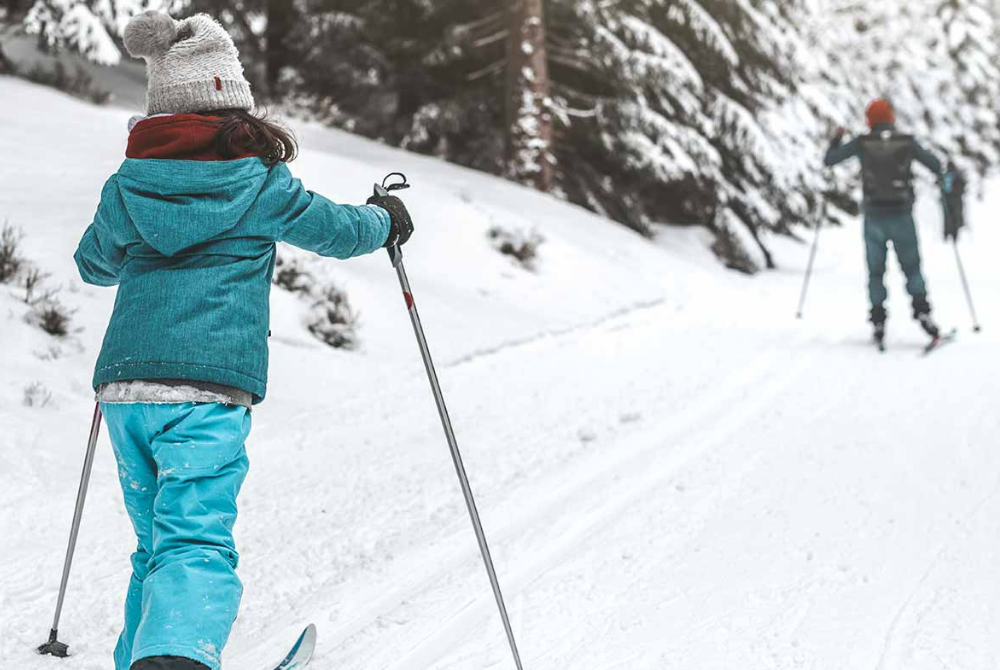
- Cross-country skiing. Cross-country skiing is a full-body, endurance pursuit similar to running. But since you're gliding through the snow, not pounding pavement, there's less stress and strain on your joints — and a lower risk of repetitive use injuries.
- Ice skating. Figure skating is among the most popular winter Olympic sports. It's also the oldest sport in the winter program. Even if you feel unsteady on ice skates (and what beginner doesn't?), taking an introductory lesson can help you glide safely while learning proper mechanics. Since falling is common for beginners, make sure you wear some extra padding and take your time as you master new maneuvers.
- Curling. A unique Olympic sport, curling is like shuffleboard on ice. While it may be one of the slower sports in the winter games, it's also a great game to play on the ice with your family.
- Skiing. Skiing is a fun activity for the whole family. But if you're an amateur skier, it's critical to be realistic about your abilities. Don't be afraid to take ski lessons to get the basics under your belt. A ski instructor not only gauges your skill level, but can also direct you to the slopes that are the best fit for your experience.
- Snowboarding. One of the newer Olympic sports on the circuit, snowboarding was first included at the 1998 Winter Olympics in Nagano, Japan. But since its introduction, snowboarding has become one of the most popular sports in the Games — and for winter recreation among nonathletes.
No matter which winter sports you choose, make sure you have appropriate equipment that fits. Winter sports gear can get pricey, but try secondhand stores or even rent equipment for weekend use. Just make sure to ask the experts for advice on things like length of skis, boots, bindings, figure skates or hockey skates. Most importantly, make sure to always wear a helmet for activities such as skiing and snowboarding (kids should wear helmets when ice skating too!).
Cold-Weather Sports Caveats
Winter sports can be engaging for everyone, no matter what their age or skill level. You can use the Olympics as inspiration or try one of the many non-Olympic sports that get your heart pumping during colder months. A few favorites:
► Sledding. Tubing and sledding require you to climb up the hill in order to ride your way down. Toboggan runs and sledding hills are a great way to enjoy local parks during the wintertime — and they're fun for the whole family.
► Snowshoeing. Like walking on sand, snowshoeing requires you to navigate uneven surfaces, which helps strengthen your leg and glute muscles.
► Hiking. If the weather is on the mild side, don't be afraid to get outdoors and explore. With newer materials and textiles, it's easier than ever to dress warmly and remove layers as you work your way up a hill or mountain.
Whatever winter activity you choose, keep in mind you’re not competing in the Olympics. If you’ve been mostly sedentary, it's important to start slow. Gradually increase your activity level and be sure to wear appropriate safety gear.To find a primary care or sports medicine specialist at Henry Ford, visit henryford.com or call 1-800-436-7936.