


Michel Finishes with Story to Tell
June 11, 2013
By Geoff Kimmerly
Second Half editor
Andrew Michel received the heart-breaking news only moments before leaving his golf team’s Regional on Friday to get ready for that night’s Brownstown-Woodhaven prom.
But missing making the MHSAA Finals by a stroke was not the first thing he shared with those who asked about his day at West Shore Golf and Country Club in Grosse Ile.
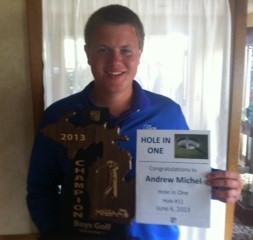 Instead, the graduating senior told of the 132-yard shot he dropped for a hole-in-one on the par-3 12th hole, his second ace but first in competition.
Michel finished with a season-best 76, missing the cut for this weekend’s Lower Peninsula Division 1 Final by a stroke despite firing another eagle during the final holes of his round.
“At the start of the day, I told myself don’t leave anything on the table. Go for it on every hole, make every shot and just have fun at your last tournament,” Michel said Tuesday afternoon as he readied for that night’s graduation ceremony. “Being a senior, I went for everything.”
The best part might’ve been how he came back from a disappointing previous hole.
Michel had just finished off a triple bogey on No. 11, and admitted he was down on himself. He stepped to the next tee with his pitching wedge, and “I didn’t really care what happened. I chose the club I like to hit on that hole, and in the air I was thinking it was really good,” he said.
The ball touched down on the green and spun back into the hole.
Michel also played golf and soccer at Brownstown-Woodhaven. He’ll attend Grand Valley State University in the fall, study engineering, and will try to walk-on the Lakers’ golf team.
“Deep down inside,” he said he’s disappointed he won’t be playing at Michigan State’s Forest Akers West on Friday. But he’s got a quite a highlight to take with him from his final high school round.
“It was very bittersweet. I really wanted to go to state,” Michel said. “But the hole-in-one balanced it out a bit.”
Eye on the official
Hopefully you caught our MHSAA benchmarks piece (also published on Second Half) on longtime official Lamont Simpson, who has worked not only MHSAA Finals but NCAA tournaments and is one of 32 officials in the WNBA. (Here’s the link in case you missed it.)
He also became that league’s first to wear the referee cam, debuting the new gear during a recent game between the Phoenix Mercury and Indiana Fever.
The camera provides plenty of ref’s-eye views. Click the video below to check it out.
Wheels of Steele
We’ve been watching the inspiring progress of Frankenmuth runner Bobby Steele especially over the last few years as his story became known across the Lower Peninsula.
Steele, who is visually impaired, has run cross country and track for the Eagles, thanks to the help of guides who ran with him to help him stay on course.
If you haven’t heard Steele’s awesome story, check out this 8-minute video. Not only did Steele run, but he cut roughly 12 minutes off his first cross country times over the course of his career.
Is Baseline Concussion Testing Right For You?
November 2, 2021

Did you know there’s a test that can aid your recovery if you sustain a concussion?
Read on to get the facts about baseline testing from Michelle Gambino-Gorney, a certified athletic trainer for Henry Ford Health System.
What Is Baseline Concussion Testing?
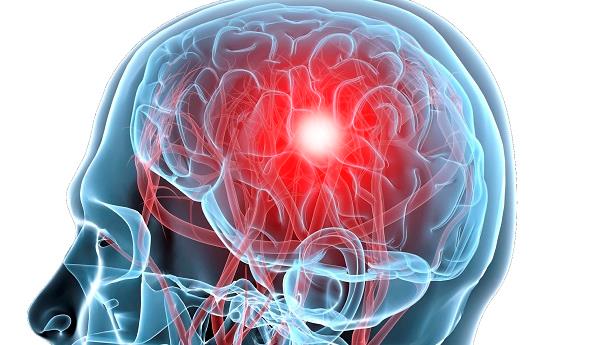
“Baseline testing is an evaluation of your normal brain function that tests for neurocognitive abnormalities,” explains Gambino-Gorney. “We recommend baseline testing prior to the start of a sports season, before tryouts or practice.”
During baseline concussion testing, athletic trainers or physicians collect extensive information about an athlete’s brain health. They evaluate health, family history and neurocognitive function. Gambino-Gorney says that might include assessing everything from balance and reflexes to memory, vision and concentration. “If the athlete does sustain a concussion during the season, we can compare pre-injury test results to post-injury test results and find out how the injury is affecting an athlete’s brain. It helps us make the right recovery plan and determine when it’s safe for them to return to their sport.”
Myth: Concussion Baseline Testing Is Only for Football Players
While baseline testing is ideal for athletes (ages 9 and up) who play high-impact collision sports, any athlete at risk of a concussion should consider baseline testing. This includes football, lacrosse and hockey players, in addition to gymnasts, snowboarders, skateboarders and lots of other athletes.
In fact, even if you just take the occasional weekend bike ride, go jogging or lift weights, there’s no harm in having baseline test results on file. Pre-concussion screenings can also benefit people with physically demanding jobs, such as first responders, military personnel and tactical athletes.
Myth: You Only Need to Get Baseline Testing Once
Just as your joints and muscles change as you get older, your brain changes, too. It’s best to get annual baseline testing. Yearly tests help your healthcare team keep track of your brain health over time. They can spot problems or changes early, before they develop into serious issues. Ask your physician about baseline neurocognitive testing as part of your annual sports physical.
Myth: Baseline Testing Is Only Useful If You Get a Concussion
First and foremost, baseline testing tracks your physical and mental well-being. Even if you never sustain a concussion, the test is a way to stay proactive about your brain health. Gambino-Gorney explains that they can look at test results across seasons to detect changes in neurocognitive function that can indicate disorders such as:
► Anxiety
► Attention-deficit/hyperactivity disorder (ADHD)
► Depression
► Learning disabilities
Myth: Baseline Testing Diagnoses a Concussion
Baseline testing is not a diagnostic tool for concussions. It’s one piece of all the information a healthcare provider needs to determine if you sustained a mild traumatic brain injury. In addition to comprehensive neurocognitive testing, your provider assesses a broad range of concussion signs and symptoms to confirm a diagnosis after you’ve sustained an impact to your head.
To find a primary care or sports medicine specialist at Henry Ford, visit henryford.com or call 1-800-436-7936.
Michelle Gambino-Gorney is a certified athletic trainer in the Henry Ford Kutcher Clinic for Concussion and Sports Neurology.