

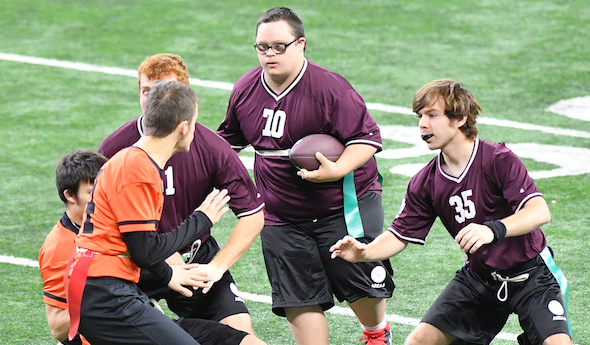
Unified Sports: Unified Goal, Unified Effort
By
Mark Uyl
MHSAA Executive Director
April 11, 2019
The following publisher's note and cover story were featured in this winter's edition of the MHSAA benchmarks magazine.
At its best, sport breaks down barriers and differences through promoting teamwork, inclusiveness and humility. At its worst, we’ve seen sport do the opposite.
Obviously those involved in school sports aim to create a culture within every school which fosters the best of what all of us can be. Those places that do this best have created a culture in every hallway, classroom, playing field and gymnasium filled with diverse students pulling for one another and working together regardless of the different backgrounds, races, religions, abilities, physical stature or academic acumen of each person. A culture of understanding and acceptance is what we strive for in each of our school communities.
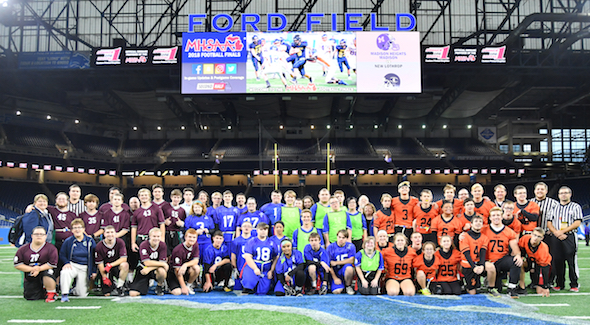
On Nov. 24, such a scene played out on the grand stage of the playing surface at Ford Field in Detroit. In what we hope will be the launching pad for many more such events, Unified Sports competitors from four MHSAA member schools competed simultaneously in two games prior to the MHSAA Division 7 Football Final.
Unified Sports is an inclusive sports program within Special Olympics which pairs students with and without intellectual disabilities as teammates for training and competition.
From the time competitors walked through the tunnel to perform in front of family, friends, and the appreciative crowds from New Lothrop and Madison Heights Madison awaiting kickoff for the 10 a.m. game, the enthusiasm was unmatched.
Following competition these Unified teams were given tours of the facility, including a visit to the Detroit Lions locker room. We intended to deliver a day filled with an experience and memory for a lifetime for our guests, and feedback suggests that was accomplished. But, make no mistake, the session left lasting impressions on the staff here at the MHSAA, as well.
Brighton, Holt, Mason and Sparta – schools represented at the 2018 Football Finals – are among the 300-plus schools statewide which are Special Olympics Unified Champion Schools®, and it is our hope that the number continues to grow around Michigan and throughout the country.
The MHSAA and Michigan Special Olympics have a wonderful relationship, and we will continue to plan with our valued partner for future events as opportunities present themselves.
There is no limit to the benefits of these games and such a partnership. And, no limit to the enthusiasm of its participants who are helping to redefine school cultures by helping us break down barriers and build inclusive school communities around this great state.
***
By Rob Kaminski
MHSAA benchmarks editor
The pass was lofted high, and floating toward the end zone nearest the tunnel where teams enter the playing surface at Ford Field.
As players from both teams converged, the intended receiver came away with the ball, clutching his prize and raising his arms in jubilant triumph.
It was arguably the best catch of the Thanksgiving weekend football feast in Detroit, and undoubtedly a memory this player will never forget. Moments later, the ear-to-ear grin remained as he high-fived spectators and family members on the way to the tunnel and up to the locker room.
And all of this happened before the second day of MHSAA 11-Player Football Finals kicked off Saturday, Nov. 24.
The play was one of many memorable moments to take place during the first-ever Unified Champion School event held in conjunction with the MHSAA Football Finals. If this year’s exhibition was any indication, it will be the first of many to come.
“The event far exceeded our expectations, and in discussions with the students, coaches and parents involved, I think it exceeded their expectations as well,” said MHSAA Executive Director Mark Uyl. “The feedback was positive, and the thanks and appreciation we received was overwhelming.”
Special Olympics Unified Champion Schools® (UCS) is an education-based project that uses sports and education programs to activate young people to develop school communities where all youth are agents of change – fostering respect, dignity and advocacy for people with intellectual disabilities.
Last summer, as Uyl was settling into his role as executive director at the MHSAA, Tim Hileman was acclimating himself to a similar role with Michigan Special Olympics. Both were replacing long-time leaders – Jack Roberts at the MHSAA and Lois Arnold at Special Olympics, who both had served their organizations for more than three decades.
The similarities brought Uyl and Hileman together, and they began to nurture seeds that had been planted by their predecessors.
“Mark reached out when the announcement was made that I was to become CEO of Michigan Special Olympics,” said Hileman. “We strongly believed in the benefits of a partnership between the two organizations. We talked about long-term plans and the goal of growing a culture of inclusion within our schools. A more immediate component was exploring existing opportunities to highlight a partnership, and what greater way to do that than at Ford Field during one of the most prominent weekends of the MHSAA sports season?”
The inaugural event included students from Brighton, Holt, Mason and Sparta school districts, each of which sponsor Unified teams.
Brighton, which has been in the game since 2016-17 and involves a combined 75 general education students and students with intellectual disabilities (I.D. students), recently earned national recognition for its Unified program.
“Andy Doupe, a faculty member who teaches special education here, brought the initiative to our district and it was a no-brainer that we needed to implement the program,” said John Thompson, athletic director at Brighton High School and a member of the MHSAA Representative Council. “It was a great opportunity to be supportive of all students in our community.”
Brighton Unified coach and faculty member Jody Renicker has helped take the lead.
“The foundation of Unified Sports is pretty simple,” Renicker said. “It's the idea that training and competing together is one of the fastest ways to friendship and understanding. The students discover that they are much more alike than they are different. This helps to dissolve the preconceptions and stereotypes often associated with people with disabilities.”
Just up the road in Holt, that community was gaining its own recognition, bringing home the Gold Medal from the USA Flag Football Championships in Seattle last summer. The lessons and experiences proved even more valuable.
“Athletes roomed with UCS partners,” said Val Suszko, a coach for the Holt/Mason program, which involves roughly 80 students with and without disabilities and is in its sixth year of existence. “The friendship that they developed over those 10 days was priceless. They are friends for life. They care for and protect each other. Without this experience, they wouldn’t have ever met.”
That’s the overriding goal of Unified athletics: to break down barriers within schools and communities while introducing young people to those with various challenges, offering opportunities to lead and assist.
 “The inclusion of special needs kids and how it makes them feel is a wonderful part of the school community and program,” Thompson said. “We have a young lady with a prosthetic leg who never wore shorts because she was embarrassed. Now, being part of our basketball team, she wears shorts all the time.
“Naturally there’s a huge upside for the special needs students, but the general ed kids are being provided an opportunity to grow and develop leadership skills. The experiences open some eyes and break down some divisions that exist to make for an improved culture throughout the school. The melding of kids with different backgrounds of any kind is always good for perspective.”
Unified programs offer increased participation opportunity for the general education population as well as the I.D. students. For students who may not make the cut for school teams, or prefer to focus on academics or part-time jobs, the Unified option provides just what they are seeking. Others are varsity athletes looking for competition outside their preferred sport seasons.
“We receive a lot of interest from those partners who might have wanted to play on freshman, JV, or varsity teams but couldn’t meet the eligibility requirements or physically do not make the cuts at those levels of team tryouts,” said Renne Wyman, Unified coach at Sparta High School. “So they wander into the gym and join us. What happens is, the level of play ratchets up a notch or two. These kids initially come here to play, not necessarily help the intellectually disabled kids.
“But, then they start giving shooting advice, or directing them where to move offensively or whom to cover defensively. Suddenly they are talking to each other, and no adult staged the mentoring. It carries on between quarters, at halftime, before games and practices. They start texting and offering a seat in the cafeteria at lunch. I’m talking about major culture change in our building.”
This type of interaction serves to reduce the number of negative incidents in the hallways.
“Statistics show that these programs have proven to reduce bullying of the intellectually disabled population,” said Suszko of Holt/Mason. “To have an organized sports team and school support team is invaluable. The students with intellectual disabilities gain so much. They train together, play together and develop friendships through sports with the general school population.”
With such important life lessons in the balance, and 300-plus schools around Michigan sponsoring school programs, the time was right to further shine a spotlight on the product. In the past, Unified basketball events have been showcased during MHSAA Hoopfest events in conjunction with the Boys Basketball Finals, and it was time to take the next step.
“A partnership between the MHSAA and Special Olympics is a natural fit, and our goal is to assist in promoting inclusiveness and leadership components of Unified Champion Schools as opportunities at our tournaments allow,” Uyl said. “These are such worthwhile endeavors, and the student-athletes involved truly symbolize the best in school sports.”
The Ford Field event provided a chance for some serious competition on the field, along with countless smiles – and some tears – from onlookers and support groups following the action.
“My favorite story from that day came as Mark (Uyl) was addressing the group in the Lions locker room and thanking them for being there,” Hileman said. “I looked into the corner of the room and there’s a man – pretty good sized, tough-looking – standing there with his wife, and they’ve got tears in their eyes. The dad came up and told me, ‘I never thought I’d see my son play any kind of sport, and here he is at Ford Field. I’ll never forget this, and never watch a Lions game without thinking of this.’
“So many of our athletes are told what they can't do. Special Olympics is about showing what they can do.”
 For Suszko, the highlights began earlier in the morning.
“The most memorable moment for me was watching the expressions on all of the athletes’ faces as they walked through the tunnel onto the field,” she said. “What a great opportunity. The hospitality that Mark Uyl, Nate Hampton, and the rest of the staff gave us was appreciated so much. The parents were excited. They loved seeing their athlete participating alongside the other high school football teams. Watching barriers being broken and teamwork being established is what inclusion is all about.”
There were plenty of emotions to go around, from the guests and the hosts.
“The kids and parents were over the moon when the invitation came. Ford Field, the MHSAA Finals, it really resonated with the kids, the school and families,” Thompson said. “Nate and Mark and all staff involved went out of their way to make it a wonderful and meaningful experience. They did more for the families and kids than anyone expected. We are very appreciative of the MHSAA continuing to work toward inclusion, and events like these help to spread the word.”
Spreading the word will help bolster an already strong movement both in Michigan and nationally. Hileman is excited for the future in partnering with the MHSAA for events like the one in November, which generate a high level of enthusiasm. In the near future, he has some more immediate goals.
“We are concentrating on expanding league play. That’s what sports are; athletes competing, and our athletes want to compete,” Hileman said. “We have league play in the O-K Conference, and in the Lansing area. Our goal and vision is to continue to build on the Unified conference experience; more competitions during the season.”
The Sparta program has been in place for four years, and numbers have increased from a handful to a total of 60 partners and Special Olympics athletes combined. Volunteers are a vital part of the initiative, and Wyman says hundreds of people donate their time at affiliated service projects held twice yearly. The school offers Unified flag football at the league/conference level each fall, Unified ski/snowboard on a smaller scale, Unified basketball at the league/conference level in the winter, and is looking to add Unified track & field at the league/conference level this spring.
Make no mistake; athletes of all kinds like to compete.
“My kids are learning the game like they never did before. The partners don’t dumb down the vocabulary or slow down what they teach. This occurs in real-time scrimmaging with a need to adjust quickly,” said Wyman. “So our Unified athletes are being coached and challenged to increase their skill and conditioning at a level I just can’t replicate in my Special Olympics Physical Education class where no partners are present.”
One also cannot replicate the related successes outside the gyms and away from the fields, where Wyman reports that I.D. students are now being offered rides to school for dances and athletic events, improving their grades to be eligible to participate in the program and becoming healthier through the activities, all while gaining confidence in themselves.
Renicker believes that seeing is believing, and encourages people to attend events in neighboring communities. The impression will likely spur action.
“My No. 1 suggestion would be to come and witness how special a Unified Game is,” Renicker said. “It will give you hope for our future and highlight some pretty amazing things that are going on in schools every day that don't make the front page of the newspaper. I feel so lucky to be part of a school community that values this program and the culture it has created.”
Hileman recently attended a national Special Olympics event and heard International Chairman of Special Olympics Dr. Timothy Shriver proclaim his dream: that just as every high school sponsors boys and girls athletic programs, he hopes that one day every high school in the country will become a Unified Champion School.
It is a big dream, but the slightest nudge can put things in motion, as Wyman has seen.
“It can start small. You only need one or two partners to commit and you can get something going,” Wyman said. “A lot of kids would love to help in supporting roles, whether it’s running sporting events, officiating, keeping stats, designing, or organizing. In the beginning, it is one person reaching out to one school seeing if they can get together and play the game.”
With that, the guidance of Special Olympics, and assistance from partners like the MHSAA, maybe the ball can keep rolling all the way around the state.
***
Inclusion is Primary Mission of Special Olympics UCS
Team sports bring people together. Special Olympics Unified Sports® teams do that, too, and much more.
About 1.4 million people worldwide take part in Unified Sports, breaking down stereotypes about people with intellectual disabilities in a really fun way. ESPN has served as the Global Presenting Sponsor of Special Olympics Unified Sports since 2013, supporting the growth and expansion of this program that empowers individuals with and without intellectual disabilities to engage through the power of sports.
Promoting Social Inclusion Through Sport
Special Olympics is dedicated to promoting social inclusion through shared sports training and competition experiences. Unified Sports joins people with and without intellectual disabilities on the same team. It was inspired by a simple principle: training together and playing together is a quick path to friendship and understanding. In Unified Sports, teams are made up of people of similar age and ability. That makes practices more fun and games more challenging and exciting for all. Having sport in common is just one more way that preconceptions and false ideas are swept away.
States Embracing Unified Sports
Young people with disabilities do not often get a chance to play on their school sports teams. More and more states are adopting the Unified Sports approach that Special Olympics pioneered.
Unified Sports is also an integral part of Special Olympics Unified Champion Schools, which was founded in 2008 and funded through the U.S. Office of Special Education Programs at the U.S. Department of Education to use Special Olympics as a way to build inclusion and tolerance in schools. Unified Sports are now in more than 4,500 elementary, middle and high schools in the United States. Seventy percent of Unified Champion Schools (Pre-K through Grade 12) are engaging in Unified Sports! Also 215 U.S. colleges and universities have Special Olympics College Clubs on campus, providing ongoing Unified and inclusionary activities for students and Special Olympics athletes. Seventy-three of the 215 U.S. colleges and universities activating Special Olympics College conduct ongoing Unified Sports on their campuses. Learn how to get involved at www.playunified.org.
Mission: Inclusion
As part of the Special Olympics-Lions Clubs International “Mission: Inclusion” partnership, the LCI youth network-Leos have become a strong global partner in expanding and implementing Unified Sports together with Special Olympics. The Leos have helped start and sustain Unified Sports in a number of nations worldwide, and serve as one of the movement’s strongest youth leadership networks in bringing inclusive programming to communities across the world. From Zimbabwe to Brazil and from California to India, the Leos continue to amplify the voice of athletes and embody the creed: Play Unified. Live Unified.
Major sports organization, league and event support to Play Unified
Many high-profile, professional sports organizations and events have also showcased Unified Sports as a vehicle to show the power of inclusive sports! This support includes:
• National Basketball Association (NBA)
• Major League Soccer (MLS)
• Union of European Football Associations (UEFA)
• National Collegiate Athletic Association, D-III
• ESPN's X Games Aspen
• National Federation of State High School Associations (NFHS)
• National Intramural-Recreational Sports Association (NIRSA)
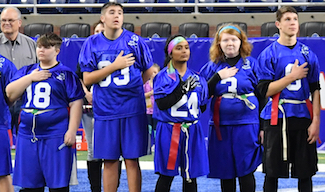
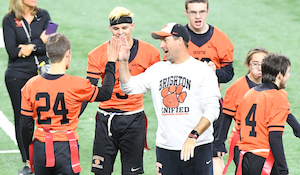
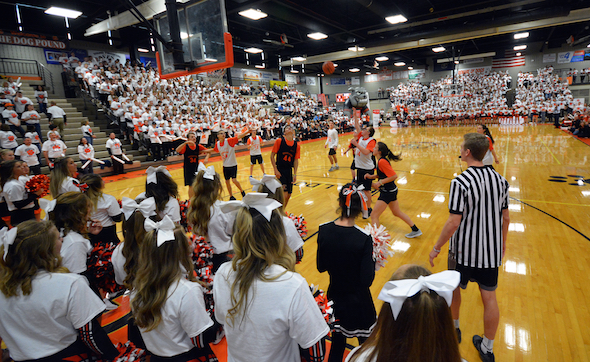
PHOTOS: (Top) Unified teams from Brighton and Mason/Holt play during the second day of the MHSAA 11-Player Football Finals at Ford Field. (Top middle) Participants from those three schools and Sparta took part in the morning's games. (Middle) Sparta athletes stand together for the national anthem. (Below middle) A Brighton coach and players exchange high fives. (Below) Brighton's Unified basketball team plays during a celebration for receiving national recognition last fall. (Photos by John Johnson.)
The Last Time MHSAA Finals were Canceled
By
Ron Pesch
MHSAA historian
April 27, 2020
Historians trace the start of World War II to German dictator Adolph Hitler’s decision to invade Poland on September 1, 1939. The Empire of Japan’s involvement in the war became effective in September 1940 with the signing of the Tripartite Pact.
Until December 7, 1941, the United States avoided official involvement, declaring themselves “a neutral nation.” Then came Imperial Japan’s bombing of Pearl Harbor.
A labor shortage caused by World War I had taken out spring high school sports in Michigan in 1917. As noted in the Second Half article, “1918 Pandemic, WWI Threatened High School Sports,” the global spread of a devastating strain of influenza interrupted the football season in Michigan. Prep athletics would roar through the 1920s and survive the Great Depression before seeing another interruption.
That next disturbance had nothing to do with war’s insatiable desire for manpower. Rather, it was because of tires.
“When the Japanese bombed Pearl Harbor, rubber instantly became the most critical strategic material for making war,” wrote Stephen W. Sears in the October/November issue of American Heritage magazine in 1979. “Nine-tenths of the nation’s rubber came from the Far East, and it was painfully evident that nothing would now stop Japan from cutting off that source.”
Americans consumed nearly two-thirds of the world’s production of rubber. With only about a year’s worth of material on hand, “Just four days after Pearl Harbor a freeze was put on the sale of new passenger-car tires,” stated Sears, “and on December 27 tire rationing was authorized, to go into effect early in January, 1942. Sales of new cars also were halted.”
The MHSAA
The Michigan High School Athletic Association arrived in December 1924. It replaced the old Michigan Interscholastic Athletic Association which had served Michigan for 15 years.
The organization’s primary purpose was to standardize, interpret and administer rules, educate and guide officials, and regulate student eligibility within prep sports in Michigan. By the 1940s, it had evolved into an association that also managed postseason tournaments, designed to identify state champions in specific sports: swimming, cross country, golf, tennis, track, and the sport sponsored by the most high schools in the state, basketball.
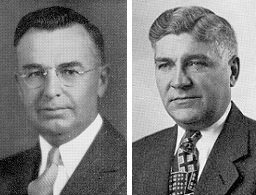 “The old MIAA had taken over the regulation of basketball tournaments in 1920. This had been done as a service to the schools and especially as a means of eliminating evils inherent in the invitational tournaments (that were hosted by various colleges around the state and the midwest),” wrote Lewis L. Forsythe in his book, Athletics in Michigan High Schools, recalling the first 100 years of prep sports in the state.
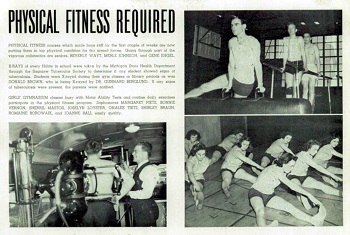
“In the last days of February 1942,” multiple Michigan schoolmen were in San Francisco to attend the annual meetings of Secondary School Principals, Superintendents and the National Federation of State High School Associations. “We were well aware that many of our boys in school would have to offer themselves in the service of their country,” noted Forsythe in his publication. “We fully realized that the quality of that service and, indeed, their own survival might well depend quite as much on their physical fitness as on their intellectual and spiritual resources. It was under those circumstances that we determined so to modify the emphasis of our athletic program as to make the largest possible contribution to the war effort. We recognized that the need in Michigan could not be met by our organization alone, and we therefore determined to encourage a general enrollment of all school groups in a united effort for promotion of physical fitness.”
Because of the “scarcity of tires and automobiles,” in April 1942 the MHSAA announced plans to curtail their upcoming annual golf and tennis events, eliminating a state championship round. Instead, the seasons were concluded with separate eastern and western sectional tournaments, hosted in Ann Arbor and Grand Rapids.
Early in May of 1942, MHSAA executive director Charlie Forsythe, nephew of Louis Forsythe, announced that the Association was “working on plans designed to make body-building exercises available to more young men and to spread recognition of sports achievements. He predicted substantial growth of intramural sports to include youngsters whose limited prowess might keep them from such interscholastic sports as football, baseball or basketball.”
Wire articles had told the story of how the running Battle of the Atlantic had impacted U.S. ocean transportation along the eastern seaboard. A Germany-mounted “campaign against American coastal shipping” by U-boats (submarines) was devastating “a section of America almost exclusively dependent upon ocean-point tankers for its petroleum products.” Without a viable alternative means to transport the products, on May 15, 1942, gasoline rationing began in 17 seaside states and the District of Columbia. It was hinted that gas rationing – specifically designed to save rubber – could roll out nationally. (Crude oil is the main ingredient in man-made rubber.)
The chances for restrictions in Michigan were a distinct possibility. According to P.J. Hoffmaster, the state’s supervisor of wells, the state consumed approximately 140,000 barrels of oil per day, but produced only 64,054 barrels. “This state has a shortage of at least 100,000 barrels on the basis of a regional demand,” he said, noting Michigan oil also supported needs outside the state. “When people say there can’t be rationing in Michigan because we have plenty of our own oil, they don’t have the true picture.”
Reverberations begin
When quizzed on the subject before the annual Lower Peninsula Track and Field championships, hosted at Michigan State College in May 1942, (Charlie) Forsythe, told The Associated Press he was unsure how rationing might affect the Association’s annual playoffs.
 “It is too early as yet to say exactly. … We are making every effort to maintain an adequate athletic program. Certainly where common carriers (busses and trains) will make it possible to get a team to a game, that means should be used,” Forsythe said. He added that the Association was “surprised to find the number of schools competing in this year’s tournaments practically equaled last year’s entries.”
A total of 162 schools had qualified individual contestants in the track championships, about 10 percent fewer than in 1941. However, L.L. Frimodig – the assistant director of college athletics at M.S.C. and acting director of the state track meet – felt “the actual field in the four-class carnival would be much smaller than the number eligible to compete,” considering the circumstances of travel. “Many coaches,” he said, “would think in terms of tires rather than trophies before embarking on any sizable journey to the meet.”
The threat of rationing was almost immediately seen within Michigan’s resorts and travel industry.
“July and August have been moved up into June,” wrote the Detroit Free Press. “This is the word that comes from various parts of the state. Evidently, determination to get the vacation over before gas rationing may be decreed is one of the factors that has stepped up the season. … Reports of heavy patronage at nearby resorts over Memorial Day week-end can be taken as an indication of the trend, or necessity in 1942 of holidays enjoyed close to home base.”
Come September, Joseph B. Eastman, national director of the office of war transportation, called for help in reducing consumption of natural resources: “We intend to solicit the help of colleges and universities in making arrangements for transfer of scheduled games to centers of population where as many people as possible will have an opportunity to attend football games without traveling.”
At the college level, the freshman eligibility rule was waived due to the loss of manpower tied to military enlistment and the enactment of the Selective Training and Service Act of 1940. Its passage required all men between ages 21 and 45 to register for the first peacetime draft in U.S. history. With entry into the war, in December 1941, it was amended to require all 18 to 64-year-olds to register, with starting age for likely draft lowered to 20.
“The seasons of 1942-45 turned the (college) game upside down, creating new juggernauts and decimating some old ones,” wrote Sports Illustrated in its 1971 article, “When Football Went to War.”
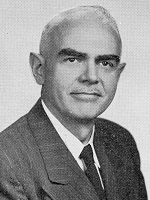 “Michigan’s 85 high school athletic leagues are speculating on the effects of the office of defense transportation plan to whittle sports travel drastically,” stated an Associated Press (AP) article soon after Eastman’s announcement. The Southwestern Conference, comprised of Kalamazoo Central, Benton Harbor, Muskegon, Holland, Grand Haven and Muskegon Heights and one of the most widely spread major prep circuits in the state, was told by its regular bus company that its busses were not available for charter.
On Sept. 25, according to AP, “the state department of public instruction warned today that a threat of ‘no new tires’ will be held over rural schools which use their school busses to transport football players to and from games.”
Julian W. Smith, named the interim director of the MHSAA when Charlie Forsythe went into military service, didn’t think the directive would have much impact on football schedules. “However, I believe the order will have a serious effect on basketball schedules this winter and on next year’s football schedule.”
“Four Gallons a Week for Most Drivers”
Two days later it was announced that nationwide gas rationing would go into effect at the beginning of December 1942. More immediately, compulsory tire inspections every 60 days and a “Victory Speed Limit” of 35 miles per hour, effective Oct. 1, were also enacted. “This is not a gasoline rationing program, but a rubber conservation program,” said William M. Jeffers, president of the Union Pacific Railroad, which had been placed in charge of the government’s struggle to alleviate the rubber shortage.
“The object is not to take cars off the road, but to keep them on the road. … The safe life of a tire at 50 miles per hour is only half as great as it is at 30 m.p.h.”
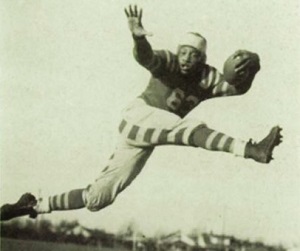 After initial announcements of game cancellations, the impact on high school football in Michigan in 1942 appears to have been minimal. Solutions were found to most challenges. In Bessemer, the high school superintendent announced that “enough persons have volunteered their automobiles to take the Speed Boy players to Calumet” for the game, scheduled for Saturday, Oct. 3. At season’s end, Flint Northern, Detroit Catholic Central, Muskegon, and Wyandotte each lay claim to a share of Michigan’s mythical football title.
But a hint of what was to follow came with an announcement concerning the annual Cross Country Finals. The state meet was cancelled to reduce travel, with honors instead awarded during October meets to which schools were assigned based on geography.
In its October 1942 bulletin, the MHSAA endorsed a commando-type “training plan drafted by the Minnesota branch of the office of civilian defense” to “step up scholastic physical fitness programs.” When plotted on a football field, the course bordered the playing area with 11 obstacles spaced 20 yards apart. The course required participants to jump a 4-foot fence, crawl under a 2-foot-high rope, then run between a maze of stakes and, later in the course, high-step through a series of open boxes. Students would scale a 7½-foot wall, walk on a 12-foot balance beam, swing across a broad jump pit from a rope that hung from above, then climb another rope hung from the crossbar of the goal posts. Once accomplished, the participant was to move, hand-over-hand, across the span of the crossbar before dropping to the ground.
At the end of October, the MHSAA’s Representative Council acknowledged the direct contribution that interscholastic sports had on the “lives of students and citizens of the communities in which they are offered” while recommending that they be “retained insofar as possible.”
The committee, however, also emphasized its belief “that physical fitness programs for all students, and intramural sports to offer opportunity for competition to all, should be stressed in the schools’ athletics program.
“In all probability,” it continued, “it will be necessary to modify the general plans of conducting tournaments.” The mechanics of modification would be hammered out at the next Council meeting to be held in December in Lansing.
Financial concerns also were expressed, as much of the Association’s operating budget came from a share of gate receipts of tournaments.
The Impact
“All over the state, athletic directors and coaches are tackling transportation problems. Instead of piling the athletes into privately owned automobiles or school busses, coaches have diligently studied timetables of regular train and bus lines with many satisfactory results,” stated the AP on Dec. 4.
That same day, the MHSAA announced that the upcoming basketball postseason would be altered due to rationing. The story was picked up by various newspapers across the Midwest.
“The association’s Representative Council last night stressed need for following a ‘principle of minimum travel’ in basketball play this winter and voted to dispense with the annual Lower Peninsula finals,” instead opting for a modified layout. Initial conversation related to a plan calling for sectional meets with the possibility of naming titles in the northern half of the Lower Peninsula, and in both the southern and eastern areas. An appointed basketball committee was also to consider combining enrollment classifications wherever necessary to localize tournament play.
From 1932-1947, inclusive, separate Lower and Upper Peninsula basketball champions were determined. The Upper Peninsula Athletic Committee announced a similar plan at its meeting in January of 1943. The committee expected to present winners of the U.P. events with certificates instead of the customary trophies due to shortage of materials prompted by the war.
According to a survey of its 40 member state associations by the National Federation of State High School Associations, Michigan was one of only four states, including Maine, Montana and Nevada, to eliminate naming basketball state champions come the winter of 1943, “since the distances within those states are too vast or transportation facilities are too limited. The same will prevail in track contests.”
 By mid-January, the MHSAA had polled its membership, and approximately 95 percent of the state’s high schools indicated a desire to participate in the replacement tournaments pitched by the Association. After examining the logistics, the plan previously discussed was modified. The Association then identified 51 Lower and 11 Upper Peninsula sites, based on availability to host the tournament and geographic suitability. The competition would run for two weeks, and end with what had previously equaled District championship contests.
In the meantime, the annual swim championships were reduced to a one-day meet. Hosted at the University of Michigan, the meet would tax the endurance of individual swimmers, “since officials … decided to conduct semi-final events additional to the customary qualifying trials and finals.” That meant a swimmer entered in two events could compete six times during the day, with qualifying events in the morning, semifinals in the afternoon and finals swum at night. Perennial powers Battle Creek Central and Ann Arbor University High emerged as champions.
“The war to date has proved one thing conclusively – athletics in all schools must go on, for they serve to properly condition our young men for the bigger task ahead,” said MHSAA interim director Smith, speaking at an “annual football and basketball ‘bust’ for Lakeview High School” in Battle Creek in February 1943. Smith had served as principal at the high school for 14 years before taking over at the MHSAA. He “expressed regret” that the MHSAA had altered the various formats of the annual championships. According to coverage of the gathering in the Battle Creek Enquirer, “he intimated that it, along with all other forms of statewide competition, would be restored before another school year begins.”
Continued Chaos
The cities of Lansing and Kalamazoo played host to the most contingents, with 25 teams across the four enrollment classifications playing games at recently completed Lansing Sexton – the rechristened Lansing Central High School – and the Lansing Boys Vocational School. A total of 23 schools squared off at Western Michigan College of Education (now Western Michigan University).
As previously stated, transportation considerations meant some schools played above or below their normal classification to make things work. Ecorse, normally a Class B school, battled in the Class A tournament hosted at Dearborn Fordson. Benton Harbor, with Class A enrollment numbers, competed in the Class B tournament played across the St. Joseph River at St. Joseph High School instead of at the Kalamazoo Area tournament against similarly-sized schools.
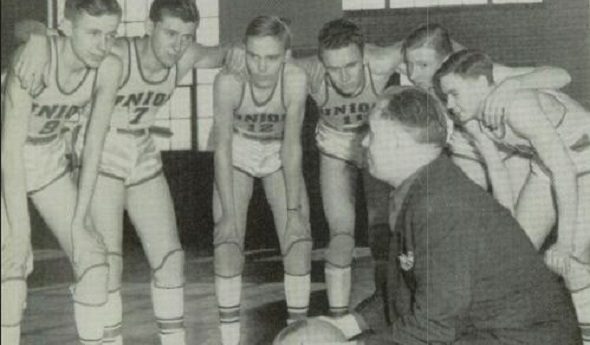
A total of 128 area titles were awarded across the state’s two peninsulas. Decatur, the Class C state champion in 1942 with a 25-0 record, was the only team titlist to repeat in 1943, emerging with one of the “Area” crowns and extending its streak of victories to 41 consecutive. Also among the winners was Grand Rapids Union, a “cellar team in the regular season.”
“Although Union stood seventh in the city tally, the Red Hawks won the Area Tournament Crown in three smashing, spine-tingling battles,” stated the sports editor in the 1943 Aurora - Union’s yearbook. “In fast games the Hawks overcame Catholic and beat the Creston Bears … as well as whipping Davis Tech for their final victory.”
In April, the MHSAA confirmed that competition would end with area, city or conference meets in track, and again in tennis and golf, because of transportation, participation issues, and the “prospects of closing of some of the schools early.”
Various fans and media members grumbled about the unsatisfying conclusion to the prep sports calendars.
Hope
The coaching ranks were heavily hit by the war, as numerous mentors were tapped by the armed forces to lead physical fitness programs. Despite initial concerns, few “of the state’s 400 football-playing prep schools” dropped the sport come the 1943-44 school year. As it would turn out, because of the travel constraints, attendance increased as more and more sports fans turned to high school competition for entertainment.
Smith stated in October that he had “yet to find anyone who is definitely against bringing the (basketball) championship tournament back to life. There seems to be overwhelming sentiment in favor of the revival. The schools right-about face on the state cage classic which annually drew 700 prep teams and 11,000 players is explained by the fact coaches now feel the federal government is strongly in favor of any attempt to encourage or extend athletics. Last year schoolmen were not certain what the government’s attitude on sports would be and were hesitant about continuing athletics in pre-war style.”
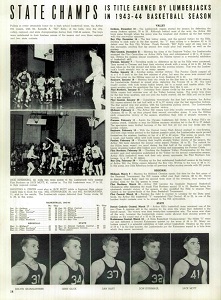 Only 258 of 614 schools replied to a questionnaire about restoring the winter basketball state championships, but 73 percent of respondents were in favor of such, and in December, the Representative Council voted to resume the final rounds of the tournaments.
Born October 1918 in St. Johns, Michigan at the peak of the “Spanish Flu” pandemic, Hal Schram was a 25-year-old sports reporter for the Lansing State Journal when he covered the restart.
“State championship basketball and track competition once more became a part of (the) Michigan high school athletic program when the Representative Council of the MHSAA voted to reinstate these two state-wide tournaments after a suspension of one year,” he wrote.
According to Schram, “It was believed that student working hours, transportation, scarcity of balls and general lack of interest” still necessitated cancellation of golf and tennis tournaments for the year. Conduction of a swimming championship was left “in the hands of a committee representing schools which sponsor the sport … subject to the approval of the representative committee.”
Plans were to return the final rounds of the basketball tournament to Jenison Field House on the campus of Michigan State, which had hosted those rounds from 1940-42. However, the facility was in use by Army trainees for a physical fitness program.
“We would like to have the finals staged here very much,” said MSC athletic director Ralph Young, “but our obligations to the army come first.”
“Despite the hitch, the executive committee opted to stay in Lansing, playing Class A and C semifinal contests at the Boys Vocational School fieldhouse, and Class B and D semi games at Sexton High School. Finals were held at the Vocational gym.
“Fifty-five hundred spectators jammed their way into every nook and cranny of the Boys Vocational school fieldhouse last night to see four high school teams (Saginaw Arthur Hill, Marshall, Lansing St. Mary, Benton Harbor St. John) win championships in the Lower Peninsula tournament finals. With all seats taken almost before the first game started, the big floor was completely encircled by people sitting and standing before the finish,” wrote State Journal sports editor George S. Alderton. “By 6 o’clock, when the Class D game started, all seats in the side bleachers had been filled and most of the end bleachers were gone. The last vacancy was occupied before the Class C game started at 7:15 o’clock and from that time on, those who came either stood or seized a seat left by some departing fan. In many instances two sat down when one departed. Corners of the court were seething masses of humanity …”
United Press International wire reports indicated that 8,500 in total saw the Finals, as fans shifted in and out of the venue in support of the participating teams. “Some people had to be turned away at the finals,” said Smith, “and that certainly shows that people need and want this kind of relaxation.” The previous three Finals at MSC had drawn between 6,000-7,000 fans, while the 1939 Finals at I.M.A in Flint drew 5,000 and the 1938 event at Grand Rapids Civic Auditorium saw 6,000 attend.
“Lighting was so poor in the press box Friday night for the semi-finals,” added Alderton, “that workers came equipped with candles for the finals on Saturday night and propped them against their typewriters.”
Ishpeming hosted the Upper Peninsula Finals, as Escanaba, Crystal Falls, Channing and Amasa swept titles, respectively, in Classes B, C, D and Class E – the state’s smallest classification, reserved only for the smallest U.P. schools based on enrollment.
“Only complaint,” noted the Marquette Mining Journal, “was from those who couldn’t get in or were caught in a jam of fans seeking general admission seats. … Probably another 100 to 200 could have been accommodated if they were permitted to sit on the floor all along the court lines, but this would have been hazardous to players and fans …”
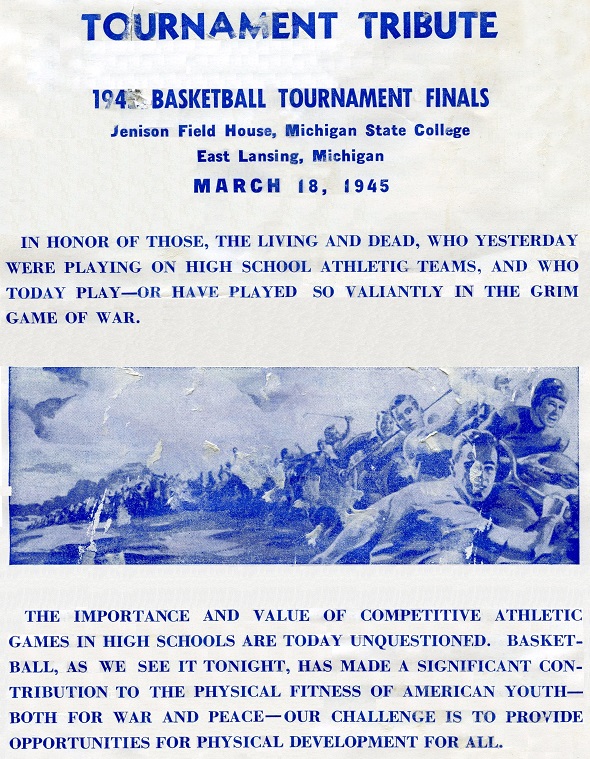
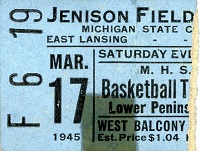 (The Lower Peninsula finals returned to Jenison in 1945 – where they stayed, uninterrupted, through 1970 – and were played before 7,833 spectators that first season back. Locals were delighted as they watched Lansing Sexton top Benton Harbor’s undefeated Tigers, 31-30. Michigan Governor Harry Kelly “personally presented the Class B championship trophy to Sturgis Capt. Tom Tobar, congratulated Capt. Larry Thomson of East Lansing and then shook hands with the captains of the Class A contest before the game started.”)
In mid-May, “some 800 Michigan prep trackmen, survivors of 40 regionals at 10 centers” headed to Michigan State College to determine statewide champs. Only Kalamazoo in Class A and Birmingham in Class B held the chance to “repeat” as team champions. Instead, Saginaw Arthur Hill capped a stellar sports year, earning its first Class A team track title to go with its recently-earned basketball crown. (Earlier in the school year, the Lumberjacks also had opened their own football field.)
East Grand Rapids earned its second track title, grabbing the Class B crown. Fowlerville and Glen Arbor Leelanau brought home titles in Class C and D, respectively.
All sports – including golf and tennis which had gone three years without competing in a true state title round – returned to their original formats with the start of the 1944-45 school year.
In May 1945, Germany surrendered to the Allies, followed by Imperial Japan’s surrender, announced in August.
Participation in prep sports and attendance numbers would explode across the state and the nation in the coming years, tied to multiple factors, including, of course, the baby boom that followed World War II.
 Ron Pesch has taken an active role in researching the history of MHSAA events since 1985 and began writing for MHSAA Finals programs in 1986, adding additional features and "flashbacks" in 1992. He inherited the title of MHSAA historian from the late Dick Kishpaugh following the 1993-94 school year, and resides in Muskegon. Contact him at [email protected] with ideas for historical articles.
PHOTOS: (Top) Grand Rapids Union was among "Area" boys basketball champions in 1943. (2) Lewis Forsythe, left, and Charles Forsythe were among leaders during the MHSAA's first decades (3) The Saginaw Arthur Hill yearbook for 1944 tells of fitness training undertaken by students. (4) Julian W. Smith served as interim MHSAA executive director while Charles Forsythe was serving in the military. (5) Flint Northern's Bill Hamilton earned all-state honors in 1942. (6) Western Michigan College was among hosts of 1943 Area tournaments. (7) Arthur Hill's yearbook celebrates the 1943-44 boys basketball championship. (8) Basketball Finals returned to Jenison Field House in 1945. (9) The MHSAA paid tribute to World War II veterans in its 1945 Basketball Finals program.