


10 to Remember: Spring 2013
June 25, 2013
By Geoff Kimmerly
Second Half editor
Nine teams won their first MHSAA championships this spring. Birmingham Brother Rice's boys lacrosse team won its ninth in a row.
And those are only among the toppers of the long list that made memorable moments during this season's Finals, which finished up the school year two weekends ago.
Locking down the 10 most significant performances is impossible. But endeavoring to do so, here are one person's guess at those that will continue to be discussed most in the years to come.
Among those that just missed this list: Brother Rice boys lacrosse, St. Ignace's girls track and field team after winning its fourth straight team title, Grosse Pointe Woods University Liggett's baseball team after its extra-innings Final win over Beal City, Grandville Calvin Christian's girls soccer team after winning a rematch of last season's Division 4 Final and Port Huron Northern's girls tennis team after it emerged from a loaded field to win the Lower Peninsula Division 1 title.
Sami Michell Shines Once More
In her final high school meet, Reed City senior Sami Michell won four more MHSAA Finals individual titles to finish her career with 12 – two more than the previous Lower Peninsula record. A year after becoming the second female to win four events at one Finals meet, she did so again by finishing first in the 100 and 300-meter hurdles, the 200 dash and the long jump. She scored 40 points to claim the team runner-up trophy for her school. Click to read more.
Best Class of All-Time?
That could be the argument for this season’s girls track and field seniors, as twins Hannah and Haley Meier and Erin Finn joined Sami Michell, Detroit Country Day's Kendall Baisden and a host of others in finishing their careers. The Meiers already are members of a national record-holding relay (which set its milestone in 2012), and Hannah won two more Division 1 individual titles (setting all-Finals records) while Haley placed in the same two races and joined her sister on two winning relays. West Bloomfield’s Finn, considered as well one of the nation’s top high school distance runners, finished third to the Meiers in the Division 1 1,600 before cutting nine seconds off her 2012 time in setting an all-Finals record in the 3,200. Click to read more.
Warriors Earn First Title for Winning Coach
Bay City Western’s baseball team strung together two 1-0 shutouts by pitchers Brett Adcock and then Connor Foley to claim its first MHSAA baseball championship – and the first to go with coach Tim McDonald’s other 563 wins over the last 21 seasons. The 1-0 championship game victory over Brother Rice was Western's 35th straight of the season; Western finished 42-2. Click to read more.
Gull Lake Soccer Makes Mark
Richland Gull Lake hadn’t played in a girls soccer Final since 1999, but survived two overtimes against reigning champion Bloomfield Hills Marian to win the Division 2 championship game 1-0. The title was Gull Lake’s first since 1992 and came against a program that not only won in 2012, but three of the last five Division 2 championships. Click to read more.
Upper Peninsula Ace Shoots Record Round
Snow and rain put a damper on a good portion of the girls golf season in the Upper Peninsula this spring. But no U.P. female golfer has ever finished as strongly as Marquette’s Avery Rochester. She claimed her second straight individual Finals championship with a U.P. Finals-record 69, which was three under par at Portage Lake Golf Course in Houghton. Her score also was just one more stroke than the all-Finals record of 68 shot by Grandville’s Stacy Snider in 1998. Click to read more.
7 ... 2 ... 1 ... Champion Tecumseh
Tecumseh entered the MHSAA Tournament after finishing the regular season an honorable mention in the Division 2 softball coaches poll. But the Indians defeated No. 1 Stevensville Lakeshore in the Quarterfinal, reigning champion and No. 2 Livonia Ladywood in the Semifinal and No. 7 Saginaw Swan Valley in the Final to claim their first championship since 2008. Click to read more.
Bishop Foley Sets Baseball Bar
Madison Heights Bishop Foley claimed its third straight Division 3 baseball championship to become the first in MHSAA baseball history to win that many consecutive titles. Bishop Foley is 112-8-1 over the last three seasons and finished 35-2-1 this spring. The Ventures outscored their Bailey Park competition by a combined 18-5 over Finals weekend – getting junior Garrett Schilling to 15-0 for this season and 31-0 for his career with a 6-0 Semifinal win. Click to read more.
Done Deal for Dundee
The Dundee softball team eliminated two-time reigning champion Clinton on the way to Bailey Park this spring, and then beat three-time champion Unionville-Sebewaing in the Division 3 Final to claim its first MHSAA championship in the sport. In the process, Dundee finished 45-1 – setting an MHSAA record for wins in a softball season. Click to read more.
Troy Moves Up to No. 1
After two-straight Division 1 runner-up finishes, Troy earned its first girls soccer championship since 2003 with a 2-1 Final win over Grandville. The Colts had been outscored a combined 3-0 in the last two MHSAA Division 1 Finals, and began this season 3-6-2 before rattling off 15 wins and a tie on the way to claiming the championship. Click to read more.
Tie-Breaker After Heart-Breaker
The Battle Creek Lakeview boys golf team had finished one stroke behind Birmingham Brother Rice at the 2012 Lower Peninsula Division 1 Final, and found itself tied with Plymouth this month after the final round was complete. But thanks to a fifth-player tie-breaker, Lakeview claimed its first MHSAA championship since 2008. Click to read more.
Play it Safe: Basics of Proper Helmet Use
June 8, 2021

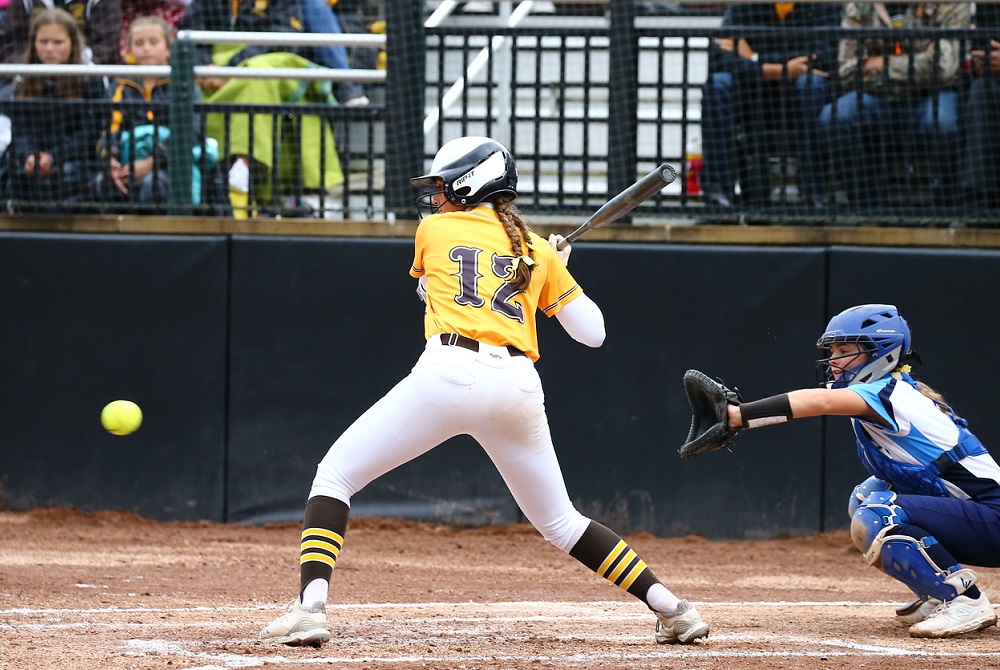
If you or your child plays sports or participates in physically risky activities, wearing a helmet could be lifesaving. While no helmet is concussion-proof, wearing one can help reduce the risk of serious head injuries.
"Helmets are made with materials that help reduce impact to the head, protecting the skull from damage," says Jeffrey Kutcher, M.D., a sports neurologist who treats athletes at the Henry Ford Kutcher Clinic for Concussion and Sports Neurology. "You should be wearing a helmet whether you're playing a contact sport or riding something on a hard surface, such as a bike, scooter, skateboard or rollerblades."
Head Injury Prevention 101: Helmet Buying Basics
All helmets are certified at the same level for multi-use recreational activities. So there's no need to search for a specific seal or rating. Instead, when you're purchasing a helmet — or getting one second-hand — focus on these four factors:
How you’ll use it:
Pay attention to the risks involved with the activity you're doing. If you're biking, skiing or snowboarding, for example, you're wearing a helmet in case you get hit, not because you'll get hit.
There are two types of helmets: single-impact and multiple-impact. Single-impact helmets are made with foam materials that break down when hit as part of their force mitigating strategy. These helmets work well for bicycling, skateboarding, skiing or snowboarding. Multiple-impact helmets, such as those designed for sports like football, hockey and lacrosse, can withstand many hits over an entire season. The materials in these helmets don't break down, but rather compress and regain their original form.
"A helmet may perform better in the lab — for example, the dummy brain will experience 98Gs of force instead of 100Gs — but 2Gs of force probably won't make enough of a difference with a one-time injury," Dr. Kutcher says. "But 2Gs less force per hit for a linebacker who suffers multiple blows on a daily basis for many years? That could make a big difference.”
If football is your sport, the National Football League provides a helmet rating system that assesses helmets based on their ability to mitigate force over time.
How it fits:
Helmets fit differently depending on the make, style and type of sport they’re made for. "The key is making sure the helmet covers the entire skull and doesn't move around when in use," Dr. Kutcher says. The helmet should sit on the head without falling forward or backward. If you're relying only on a chinstrap to keep it in place, you don't have the right fit.
How comfortable it is:
Not all helmet brands fit every head. Helmet designs vary just like running shoes do. When you're shopping for a helmet, make sure it's snug, but not tight or uncomfortable. Comfort is critical, especially for kids. "You don't want a child to develop a negative association with wearing a protective helmet," Dr. Kutcher says.
What condition it’s in:
To get the most protection, your helmet should be in top condition. Do not wear a cracked or broken helmet, or one that has been involved in a crash or similar event (unless it's a multiple-impact design). An impact can crush foam materials. And don't allow the helmet to get too hot or cold — that can cause the materials to break down over time.
Get the Best Helmet Fit for Your Head
Properly wearing a helmet provides the greatest defense against injury — more than any style or brand. To make sure your helmet is secure, follow these rules:
· Measure head circumference: Every helmet brand provides a size chart, along with instructions about how to select the best fit. To get the best measurement, use a cloth tape to measure your head circumference. Place the tape about an inch above the eyebrows, keeping it level from front to back. If the measurement falls between sizes, select the smaller size.
· Pay attention to hairstyles: Make sure to try the helmet on with the hairstyle you'll have during the activity. A long-haired bike rider who gets a short haircut may require a helmet adjustment.
· Watch your vision: The helmet should not block your vision. You should be able to see straight ahead and side to side.
To Wear a Helmet or Not To Wear a Helmet: When to Play It Safe
There are several sports that don't require wearing a helmet. But if you or your child is involved in rugby or soccer, or another sport where helmets are optional, that doesn’t mean you're in the clear.
"It's important to base any decision about whether or not to wear a helmet in conjunction with your sports neurologist," notes Dr. Kutcher. "Your past medical history and current health status may still warrant the use of a helmet."
Unsure whether you're at risk of sustaining a head injury? Get a brain health baseline evaluation. Proper consideration of your brain health includes a physical examination, along with a personal and family medical and neurological history. It also offers you an opportunity to learn how to best protect your head.
Dr. Jeffrey Kutcher is a sports neurologist at the Henry Ford Concussion and Sports Neurology Clinic and the global director of the Kutcher Clinic.
Want to learn more? Henry Ford Health System sports medicine experts are treating the whole athlete, in a whole new way. From nutrition to neurology, and from injury prevention to treatment of sports-related conditions, they can give your athlete a unique game plan.
Visit henryford.com/sports or call (313) 972-4216 for an appointment within 24 business hours.