

10 to Remember: Winter 2012-13
April 4, 2013
By Geoff Kimmerly
Second Half editor
This winter in Michigan will be remembered by some as lasting seemingly forever. But at least we had plenty to enjoy over the five weeks from the end of February through March.
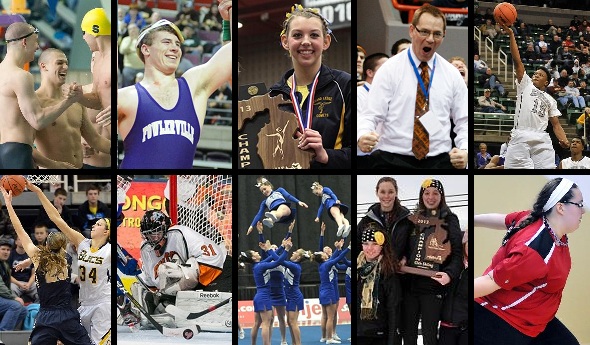
Below are 10 stories from this winter's Finals that we're likely to recall for years to come. They aren't necessarily the 10 most exciting moments, but rather 10 stories of particular significance covering every sport the MHSAA sponsors during this mostly-indoor season.
A few that just missed the list: Livonia Stevenson winning that hockey town's first hockey title, St. Ignace's first perfect girls basketball finish, Flint Beecher's last-second success in the Class C Boys Basketball Final, East Grand Rapids' four-point win in Division 3 swimming and diving and the emergence of Troy's Christina Shabet as the MHSAA's top gymnast.
There are plenty of others we could mention as well. Feel free to post about them after checking out our 10.
Saline Seniors Leave Mark
One of the most impressive swimming and diving classes in MHSAA history finished its high school career March 9 in Holland the same way it began four seasons ago. Saline won its fourth-straight Lower Peninsula Division 1 championship anchored by seniors David Boland, Josh Ehrman, Michael Bundas and Adam Whitener, who combined hold four Division 1 Finals individual and two relay records. Ehrman finished his prep career with the all-class/division records in the 200-yard individual medley and 100 breaststroke, and those four hold the all-class/division record in the 200 medley relay with a time of 1:30.01 – good also for third in the national record book. Click to read more.
Fowlerville’s Coon Finishes with 4
Only 16 others had accomplished what Fowlerville’s Adam Coon achieved to finish his MHSAA wrestling career. And none had done so wrestling at the heaviest weights. On March 2 at The Palace of Auburn Hills, Coon became the 17th athlete to win four MHSAA wrestling individual titles by picking up his second at 285 pounds after also winning two at 215. He finished his career with a record of 211-3 and won 194 straight matches dating to his freshman season. Click to read more.
Comets Shine for 6th Consecutive Gymnastics Win
Despite graduating the Division 1 all-around champion (again) and facing a talented Canton team (again), Grand Ledge won the team title again – for the sixth-straight time, the longest streak in MHSAA gymnastics history. On March 8 at Canton High School, the Comets scored 149.350 points – fifth-most in MHSAA Finals history. What are the chances for seven in a row? They’ll have a strong start: junior Presley Allison won the Division 2 all-around title the next day, and freshman Rachel Hogan won the Division 1 floor competition. Click to read more.
Hudson Completes Drive for 5
The Tigers won three of the final four matches to edge Hesperia 32-24 in the Division 4 Team Wrestling Final on Feb. 23 at Kellogg Arena and earn their fifth-straight MHSAA title – tying the 2002-06 Davison teams for the longest such streak since the Team Finals began in 1988. Hudson was loaded with 11 Individual Finals qualifiers, including three who went on to win their weights the following weekend. Click to read more.
This Time, It’s Romulus’ Turn
Romulus advanced to Boys Basketball Finals weekend at Breslin Center for the fourth time in six seasons, and on March 23 left with its first MHSAA championship since 1986. The Eagles had just fallen short a number of times during the recent run, but controlled from the tip in downing Detroit Southeastern 61-49 to claim the Class A title. Romulus finished this season 27-1. Click to read more.
Grand Haven Wins Repeat Class A Final
Only a few things about Grand Haven were the same this season as in 2011-12, including one significant advantage – 6-foot-5 center Abby Cole. After putting up 23 points, 19 rebounds and 12 blocks in a Semifinal win over Westland John Glenn, she tallied 11 points, seven rebounds and eight blocks in a 60-54 overtime win over Grosse Pointe South on March 16 at the Breslin Center to give the Buccaneers two straight Class A title wins – both over the Blue Devils. Click to read more.
Puck Stops Here as Brighton Marches On
The Bulldogs claimed their second-straight Division 1 hockey championship March 9 at Compuware Arena with what has become a characteristic defensive stand, this time in a 2-1 win over 10-time champ Detroit Catholic Central. Brighton goalie James Milletics stopped 37 of 38 shots against him, and his team finished a 12-game winning streak during which it gave up only 12 goals total. Click to read more.
No Stopping Carlson’s Cheer Dynasty
All four MHSAA cheer champions March 2-3 at the Grand Rapids DeltaPlex were repeat winners from 2012, but Carlson faced an intriguing set of circumstances. Although coach Danielle Jokela basically had served as a co-coach with Christine Wilson through four titles over the previous five seasons, this was her first time leading the team solo with Wilson now coaching Brighton. And the Marauders pulled out a third-straight title despite losing all-stater Annie Hajec to an injury during the Regional the weekend before. Click to read more.
Trojans Skiers Second No Longer
Traverse City Central’s girls skiing team had finished MHSAA runner-up five straight seasons before hoisting its first championship trophy since 2005 on Feb. 25 at Boyne Mountain. The Trojans finished with 81 points, 11 better than runner-up Walled Lake Central. Shannon Weaver was the individual runner-up in both the slalom and giant slalom to lead the effort. Click to read more.
Vandercook Lake Wins Battle of Bowling Powers
After facing each other and splitting the last two Division 4 titles, it seemed fate that Vandercook Lake and Sandusky should meet again in the 10th year of the MHSAA tournament on March 1 at Sunnybrook Golf and Bowl. The teams were separated by only six pins with three frames to roll before Vandercook Lake pulled away for a 1,322-1,166 win. The Jayhawks' Malloree Ambs won the individual title the next day. Click to read more.
Play it Safe: Basics of Proper Helmet Use
June 8, 2021

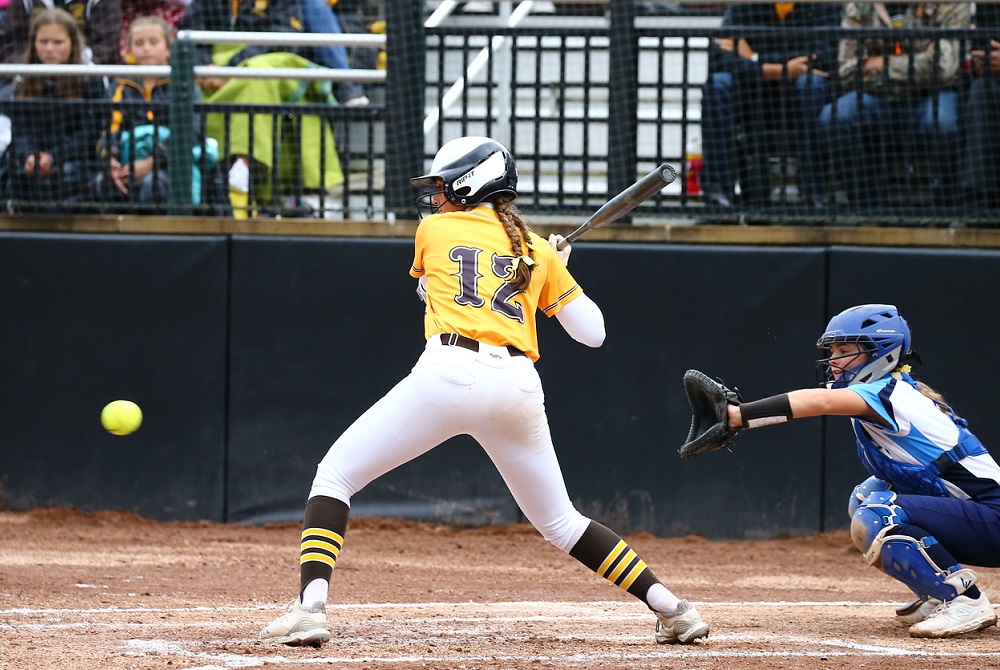
If you or your child plays sports or participates in physically risky activities, wearing a helmet could be lifesaving. While no helmet is concussion-proof, wearing one can help reduce the risk of serious head injuries.
"Helmets are made with materials that help reduce impact to the head, protecting the skull from damage," says Jeffrey Kutcher, M.D., a sports neurologist who treats athletes at the Henry Ford Kutcher Clinic for Concussion and Sports Neurology. "You should be wearing a helmet whether you're playing a contact sport or riding something on a hard surface, such as a bike, scooter, skateboard or rollerblades."
Head Injury Prevention 101: Helmet Buying Basics
All helmets are certified at the same level for multi-use recreational activities. So there's no need to search for a specific seal or rating. Instead, when you're purchasing a helmet — or getting one second-hand — focus on these four factors:
How you’ll use it:
Pay attention to the risks involved with the activity you're doing. If you're biking, skiing or snowboarding, for example, you're wearing a helmet in case you get hit, not because you'll get hit.
There are two types of helmets: single-impact and multiple-impact. Single-impact helmets are made with foam materials that break down when hit as part of their force mitigating strategy. These helmets work well for bicycling, skateboarding, skiing or snowboarding. Multiple-impact helmets, such as those designed for sports like football, hockey and lacrosse, can withstand many hits over an entire season. The materials in these helmets don't break down, but rather compress and regain their original form.
"A helmet may perform better in the lab — for example, the dummy brain will experience 98Gs of force instead of 100Gs — but 2Gs of force probably won't make enough of a difference with a one-time injury," Dr. Kutcher says. "But 2Gs less force per hit for a linebacker who suffers multiple blows on a daily basis for many years? That could make a big difference.”
If football is your sport, the National Football League provides a helmet rating system that assesses helmets based on their ability to mitigate force over time.
How it fits:
Helmets fit differently depending on the make, style and type of sport they’re made for. "The key is making sure the helmet covers the entire skull and doesn't move around when in use," Dr. Kutcher says. The helmet should sit on the head without falling forward or backward. If you're relying only on a chinstrap to keep it in place, you don't have the right fit.
How comfortable it is:
Not all helmet brands fit every head. Helmet designs vary just like running shoes do. When you're shopping for a helmet, make sure it's snug, but not tight or uncomfortable. Comfort is critical, especially for kids. "You don't want a child to develop a negative association with wearing a protective helmet," Dr. Kutcher says.
What condition it’s in:
To get the most protection, your helmet should be in top condition. Do not wear a cracked or broken helmet, or one that has been involved in a crash or similar event (unless it's a multiple-impact design). An impact can crush foam materials. And don't allow the helmet to get too hot or cold — that can cause the materials to break down over time.
Get the Best Helmet Fit for Your Head
Properly wearing a helmet provides the greatest defense against injury — more than any style or brand. To make sure your helmet is secure, follow these rules:
· Measure head circumference: Every helmet brand provides a size chart, along with instructions about how to select the best fit. To get the best measurement, use a cloth tape to measure your head circumference. Place the tape about an inch above the eyebrows, keeping it level from front to back. If the measurement falls between sizes, select the smaller size.
· Pay attention to hairstyles: Make sure to try the helmet on with the hairstyle you'll have during the activity. A long-haired bike rider who gets a short haircut may require a helmet adjustment.
· Watch your vision: The helmet should not block your vision. You should be able to see straight ahead and side to side.
To Wear a Helmet or Not To Wear a Helmet: When to Play It Safe
There are several sports that don't require wearing a helmet. But if you or your child is involved in rugby or soccer, or another sport where helmets are optional, that doesn’t mean you're in the clear.
"It's important to base any decision about whether or not to wear a helmet in conjunction with your sports neurologist," notes Dr. Kutcher. "Your past medical history and current health status may still warrant the use of a helmet."
Unsure whether you're at risk of sustaining a head injury? Get a brain health baseline evaluation. Proper consideration of your brain health includes a physical examination, along with a personal and family medical and neurological history. It also offers you an opportunity to learn how to best protect your head.
Dr. Jeffrey Kutcher is a sports neurologist at the Henry Ford Concussion and Sports Neurology Clinic and the global director of the Kutcher Clinic.
Want to learn more? Henry Ford Health System sports medicine experts are treating the whole athlete, in a whole new way. From nutrition to neurology, and from injury prevention to treatment of sports-related conditions, they can give your athlete a unique game plan.
Visit henryford.com/sports or call (313) 972-4216 for an appointment within 24 business hours.