


AD Inducted to National Hall of Fame
May 7, 2014
By Geoff Kimmerly
Second Half editor
Winter gets hectic so quickly that we’re forced to save some intriguing items that come our way for a sunnier day – and that day is today.
Following are news, notes and a few key links collected over the last few months, including the national Hall of Fame induction of a longtime Michigan athletic director, local recognition for another and statewide acclaim for a group of students putting their video production equipment to good use benefiting all.
Ann Arbor AD Honored Nationally
Former Ann Arbor Huron athletic director Jane Bennett was among five inducted into the National Interscholastic Athletic Administrators Association Hall of Fame in December.
Bennett served 26 years as a teacher, coach, athletic director and assistant principal in Michigan before spending the last decade as a principal at two schools in Montana. She served as athletic director at Huron for 15 years through 2002-03. The NIAAA reported that during her final decade in that position, participation in athletics doubled.
Bennett, who received her bachelor’s and master’s degrees from the University of Michigan, began her career at Huron in 1977 as varsity softball coach and became a math teacher and the co-director of athletics a year later. She coached the softball team 14 seasons before moving into the full-time athletic director position. Bennett was co-founder of the Michigan High School Softball Coaches Association and served as MHSSCA president from 1982-87.
Among other achievements at Huron, Bennett was a leader in a successful campaign to gain voter approval of a $60 million bond package, which included $20 million to improve and expand athletic facilities. She also developed curriculum for an annual varsity captains/head coaches leadership training program and composed handbooks/guidebooks for coaches, athletes and parents.
Bennett also was a valuable contributor to the Michigan Interscholastic Athletic Administrators Association and the NIAAA. She was president of the MIAAA in 1993-94 and a state conference speaker on several occasions. Bennett also served in various NIAAA leadership positions including on the committee that developed the Leadership Training Institute in 1996.
Bennett was named MIAAA Athletic Director of the Year in 1998 and received its State Award of Merit in 1997. She received the MHSAA’s Women in Sports Leadership Award in 1995 and was inducted into the MHSSCA Hall of Fame in 1995. Prior to her selection to the NIAAA Hall of Fame, Bennett was honored with the NIAAA Distinguished Service Award in 1998 and the NIAAA Thomas E. Frederick Award of Excellence in 2000. In 2005, she was inducted into the National Council of Secondary School Athletic Directors Hall of Fame, having served as its president in 2003 and been selected as its Athletic Director of the Year in 1998.
PSL's Ward: 'Pillar' of Detroit Athletics
Alvin Ward, the executive director of athletics for the Detroit Public School League and a member of the MHSAA Representative Council, received a 2014 Pillar in the Community Award in April from the Coast II Coast All-Stars, a Detroit-based pro basketball team that plays in the American Basketball Association.
Ward has served as a teacher, assistant principal and principal as well for Detroit Public Schools, and directs programs with a combined 500 coaches and 4,500 athletes.
Linked up
- This winter, the MHSAA Representative Council adopted a number of football practice rules changes aimed at improving player acclimatization at the start of fall and reducing head trauma and injuries. The Adrian Daily Telegram’s Doug Donnelly got responses from a number of coaches from that area of the state; click to find out why they feel these changes are important.
- Port Huron Times Herald writer Paul Costanzo let people know about our Student Advisory Council through the experience of Marlette’s Connor Thomas, one of our juniors and a great contributor this school year.
Power of Awareness
The Kimberly Anne Gillary Foundation works to educate Michigan schools on sudden cardiac arrest and train personnel in CPR and the use of an AED (automated external defibrillator). The video below teaches us again about the importance of awareness.
Saginaw Heritage was awarded $5,000 in April as the winner of the Gillary Foundation’s High School AED Contest. Students were asked to create a 3-minute video emphasizing the importance of Michigan high schools being adequately prepared to respond to a sudden cardiac arrest or related event on school property.
Randy and Sue Gillary created the foundation after their 15-year-old daughter Kimberly – an athlete at Troy Athens – died after suffering sudden cardiac arrest in 2000. The contest judges were Kimberly’s sisters Emily Kucinich, Jennifer Gregroy and Katie Gillary.
As of April 1, the Gillary Foundation had raised $1.2 million and donated 650 AEDs to schools – with three lives having been saved with donated AEDs. For more, click www.kimberlysgift.org.
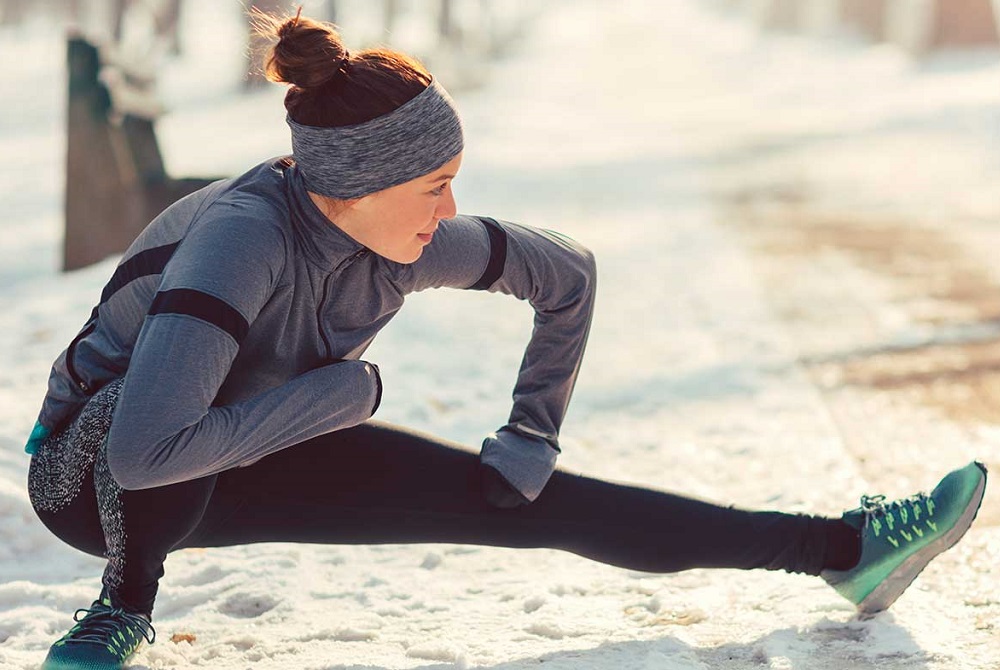
6 Tips for the Best Cold-Weather Workout
December 6, 2022
With temperatures getting colder, it may be tempting to get back to the gym.
 But it’s still possible to get your exercise outdoors if you prepare properly to counter the chillier conditions that accompany living in Michigan this time of year.
Winter Weather Workout Tips
While cold air can make it challenging to breathe, our bodies adjust to reduced temperatures over time. The key thing to watch for is hypothermia (dangerously low body heat).
"Viruses are more likely to attack our bodies if we're in a cold state," says Ramsey Shehab, M.D., a sports medicine specialist at Henry Ford Health. "If your internal body temperature drops significantly, it can suppress your immune system and make you more vulnerable to infection."
The good news: Adopting these six strategies can help ensure your outdoor workouts are safe and effective.
Check the forecast. Know what the outdoor weather is and plan accordingly. Pay attention to the temperature, wind and moisture level. If temps dip below zero, the wind chill is extreme, or it's raining or snowing, exercising outside can be risky.
Dress in layers. Dressing too warmly can increase your risk of overheating (even in frigid air). Instead, dress in layers so you can remove layers as you warm up. "The innermost layer should be made of moisture-wicking material," Dr. Shehab says. "The middle layer should have thermal protection like wool or fleece, and the outermost layer should be waterproof and breathable to protect you from wind, rain and sleet." If you get wet and moisture soaks through your clothing, you may not be able to keep your core body temperature up.
Pay attention to your hands, feet and head. When you're engaged in a heart-pumping workout, blood flows to your core, leaving your fingers, toes and head vulnerable to the cold. Wear a hat, gloves and warm socks. If it's especially chilly, consider wearing a scarf.
Take time to warm up (and cool down). Instead of leaving your cozy house and launching straight into a sprint, take time to warm up your major muscle groups. "Your joints may be stiffer when it's cold, so warming up and stretching out is especially important during the winter months," Dr. Shehab says.
Stay hydrated. People tend to think more about dehydration during the summer months, but you can get dehydrated in the winter, too. "Proper hydration before, during and after exercise is very important, not just to maintain health and well-being, but also to stave off infection," Dr. Shehab says.
Take a vitamin D supplement. Even though you're exercising outdoors, sunlight is in low supply in Michigan during the winter. To keep your immune system humming, consider taking a vitamin D supplement. "Making sure you have sufficient vitamin D can enhance your bone health, boost your immune system and keep your hormones in balance," Dr. Shehab says.
Get Savvy About Outdoor Workouts
Frigid temperatures can create obstacles for even the most enthusiastic exercisers. While it's tempting to table exercise until warmer weather returns, there are things you can do to make outdoor — and indoor — workouts more enjoyable.
You don't have to stick to the same routine of running, walking and circuit training. Take advantage of the winter chill to participate in activities like ice skating, sledding, hiking, skiing and cross-country skiing. You can even take interval workouts outdoors. Climb stairs, hike up hills or just play with a kettlebell in the snow.
"Exercise is medicine," Dr. Shehab says. "It can sometimes replace medication for people who have diabetes, hypertension and other chronic conditions. It's good for the mind and the body, and it can help stave off infections, including COVID-19."
The caveat: Working out, outdoors or indoors, is not recommended for people who are currently battling the coronavirus. Instead, it's important to preserve your energy. Once your symptoms begin to improve, you can gradually increase your exercise level.
To find a doctor or athletic trainer at Henry Ford, visit henryford.com or call 1-800-HENRYFORD (436-7936).
Dr. Ramsey Shehab is the deputy chief of Sports Medicine at Henry Ford Health. He sees patients at the Henry Ford Center for Athletic Medicine and Henry Ford Medical Center - Bloomfield Township.