


AD Inducted to National Hall of Fame
May 7, 2014
By Geoff Kimmerly
Second Half editor
Winter gets hectic so quickly that we’re forced to save some intriguing items that come our way for a sunnier day – and that day is today.
Following are news, notes and a few key links collected over the last few months, including the national Hall of Fame induction of a longtime Michigan athletic director, local recognition for another and statewide acclaim for a group of students putting their video production equipment to good use benefiting all.
Ann Arbor AD Honored Nationally
Former Ann Arbor Huron athletic director Jane Bennett was among five inducted into the National Interscholastic Athletic Administrators Association Hall of Fame in December.
Bennett served 26 years as a teacher, coach, athletic director and assistant principal in Michigan before spending the last decade as a principal at two schools in Montana. She served as athletic director at Huron for 15 years through 2002-03. The NIAAA reported that during her final decade in that position, participation in athletics doubled.
Bennett, who received her bachelor’s and master’s degrees from the University of Michigan, began her career at Huron in 1977 as varsity softball coach and became a math teacher and the co-director of athletics a year later. She coached the softball team 14 seasons before moving into the full-time athletic director position. Bennett was co-founder of the Michigan High School Softball Coaches Association and served as MHSSCA president from 1982-87.
Among other achievements at Huron, Bennett was a leader in a successful campaign to gain voter approval of a $60 million bond package, which included $20 million to improve and expand athletic facilities. She also developed curriculum for an annual varsity captains/head coaches leadership training program and composed handbooks/guidebooks for coaches, athletes and parents.
Bennett also was a valuable contributor to the Michigan Interscholastic Athletic Administrators Association and the NIAAA. She was president of the MIAAA in 1993-94 and a state conference speaker on several occasions. Bennett also served in various NIAAA leadership positions including on the committee that developed the Leadership Training Institute in 1996.
Bennett was named MIAAA Athletic Director of the Year in 1998 and received its State Award of Merit in 1997. She received the MHSAA’s Women in Sports Leadership Award in 1995 and was inducted into the MHSSCA Hall of Fame in 1995. Prior to her selection to the NIAAA Hall of Fame, Bennett was honored with the NIAAA Distinguished Service Award in 1998 and the NIAAA Thomas E. Frederick Award of Excellence in 2000. In 2005, she was inducted into the National Council of Secondary School Athletic Directors Hall of Fame, having served as its president in 2003 and been selected as its Athletic Director of the Year in 1998.
PSL's Ward: 'Pillar' of Detroit Athletics
Alvin Ward, the executive director of athletics for the Detroit Public School League and a member of the MHSAA Representative Council, received a 2014 Pillar in the Community Award in April from the Coast II Coast All-Stars, a Detroit-based pro basketball team that plays in the American Basketball Association.
Ward has served as a teacher, assistant principal and principal as well for Detroit Public Schools, and directs programs with a combined 500 coaches and 4,500 athletes.
Linked up
- This winter, the MHSAA Representative Council adopted a number of football practice rules changes aimed at improving player acclimatization at the start of fall and reducing head trauma and injuries. The Adrian Daily Telegram’s Doug Donnelly got responses from a number of coaches from that area of the state; click to find out why they feel these changes are important.
- Port Huron Times Herald writer Paul Costanzo let people know about our Student Advisory Council through the experience of Marlette’s Connor Thomas, one of our juniors and a great contributor this school year.
Power of Awareness
The Kimberly Anne Gillary Foundation works to educate Michigan schools on sudden cardiac arrest and train personnel in CPR and the use of an AED (automated external defibrillator). The video below teaches us again about the importance of awareness.
Saginaw Heritage was awarded $5,000 in April as the winner of the Gillary Foundation’s High School AED Contest. Students were asked to create a 3-minute video emphasizing the importance of Michigan high schools being adequately prepared to respond to a sudden cardiac arrest or related event on school property.
Randy and Sue Gillary created the foundation after their 15-year-old daughter Kimberly – an athlete at Troy Athens – died after suffering sudden cardiac arrest in 2000. The contest judges were Kimberly’s sisters Emily Kucinich, Jennifer Gregroy and Katie Gillary.
As of April 1, the Gillary Foundation had raised $1.2 million and donated 650 AEDs to schools – with three lives having been saved with donated AEDs. For more, click www.kimberlysgift.org.
When Can I Walk Off Knee Pain — And When Should I See A Doctor?
June 7, 2022

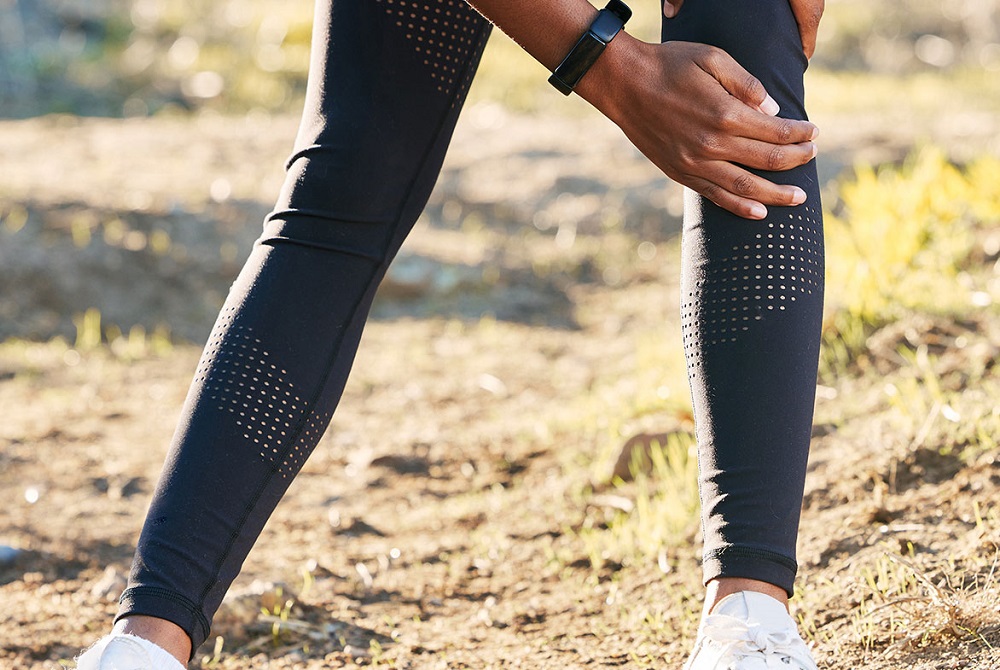
Whether you wake up with a stiff knee, sustain an injury, or start feeling knee pain for seemingly no good reason, you might wonder what to do. Should you immediately rush off to the doctor? Can you just ignore it and hope it will get better? Can you treat it yourself? Knowing when you need a doctor’s intervention can be a tricky decision to make.
We see people at the start of injuries and after they’ve been ongoing,” says Nancy White, M.D., a sports medicine physician at Henry Ford Health. “While the sooner you see an expert, the better, there’s really no right or wrong to it. However, there are a few key signs that it’s a good idea to get it checked out.”
Dr. White recommends seeing a doctor if:
► You are waking up with consistent knee stiffness. If there’s no history of an injury involved, it could be due to osteoarthritis or rheumatoid arthritis.
► If your knee pain isn’t going away.
► Your knee is swollen and you can’t bear weight on it.
► You can’t fully flex or extend your knee.
► Your knee is warm to the touch. This could signal inflammation.
If your pain is mild — or you’re trying to decide whether to see someone — Dr. White recommends icing it on a scheduled basis. “That means two to three times a day,” she says. “Apply the ice to your knee. It will get cold. It will burn, then it will get numb. Remove the ice when it gets to the numb stage.”
She also recommends elevating your leg and putting a compression wrap or sleeve on your knee. If the pain is bad, you can try taking ibuprofen or naproxen for a few days.
Common Causes of Knee Pain
But if your knee is not getting better, it’s a good idea to see a doctor, as common causes of knee pain include:
► ACL sprains and tears. Short for anterior cruciate ligament, the ACL is one of four ligaments in the knee that allows it to flex and extend. The ACL can tear when your foot is firmly planted in place, and the knee locks and twists or pivots at the same time.
► MCL sprains and tears. Short for medial collateral ligament, the MCL connects your shinbone to your thighbone. It can tear when landing after a jump, or after an exterior blow to the knee (usually during contact sports). Luckily, most MCL injuries heal on their own.
► Meniscal tears. The menisci are your knee’s shock absorbers; they're two discs made of soft cartilage. Abrupt movements (like pivots, stops, turns, squats or lifts) can cause them to tear.
► Kneecap dislocation. A direct hit to the knee — or a sudden twist or pivoting of the leg — can make the kneecap can shift out of place.
► Patellar tendonitis. This is also known as Jumper’s Knee, as it’s a common injury in basketball and volleyball players. The patellar tendon connects the bottom of the kneecap to the top of the shinbone, and can become inflamed from overuse, excessive force or repetitive stress.
Knee bursitis. The bursa is a small, fluid-filled sac located near the knee joint. Knee bursitis occurs when the bursa becomes inflamed, often because of a knee injury or overuse from frequent kneeling.
How to Help Prevent Knee Pain
And if you want to help prevent knee pain in the future? “Exercise regularly so that you’re strengthening your quadriceps, hamstrings and gluteal muscles,” says Dr. White. “It’s also important to stretch to increase quadricep and hamstring flexibility.”
Wearing shoes with sturdy soles and proper arch support can also help ease pain and issues you may already have, says Dr. White. “I would say the top reasons people get into trouble with their knees are things they could prevent by changing lifestyle habits. This includes maintaining a healthy weight, as being overweight can also lead to increased wear and tear on the joints.
To learn more about your orthopedic condition or to find a provider, visit henryford.com/ortho.
Dr. Nancy White is a sports medicine physician at Henry Ford Health. She sees patients at Henry Ford Medical Center – Novi, and Henry Ford Medical Center — Bloomfield Township.