


Add, Subtract, Divide, Multiply: MHSAA Not Alone
July 25, 2017
By Rob Kaminski
MHSAA benchmarks editor
This is the third part in a series on MHSAA tournament classification, past and present, that will be published over the next two weeks. This series originally ran in this spring's edition of MHSAA benchmarks.
As the MHSAA faces its most recent classification task with 8-Player Football, and opinions continue to swirl about as to the method, timeframe, location and other procedures, a look around the country provides plenty of company among state association brethren factoring variables into their own equations.
In the Pacific Northwest, the Oregon School Activities Association Football Playoffs are under public scrutiny as leadership ponders a five or six classification format beginning with the 2018-19 school year.
The OSAA has crowned six champions on the gridiron since 2006-07. Many of the state’s smaller schools would like to keep it that way, while larger schools lean toward a five-classification system, citing larger leagues, ease of travel and credibility to state championships as the advantages.
Still others would prefer more than six classes, pointing to safety issues and the opportunity to increase participation numbers as positives.
Moving southeast of Oregon, the Nevada Interscholastic Activities Association recently voted to hold serve on a classification proposal that was volleyed to the membership.
However, changes still could be forthcoming by as early as the 2018-19 season which would add a fifth classification in more populated southern Nevada while allowing northern schools to participate in four classifications. Such divisions could mean no state championship for the fifth class in southern Nevada.
Because of that, the NIAA wants equal numbers of schools in each classification on both ends of the state. Complicating the issue is the fact that the 24 largest schools in the state, by enrollment, are all in Clark County in Southern Nevada.
Across Nevada’s border into Arizona, charter schools are asking the Arizona Interscholastic Association to reconsider classification that was voted upon and approved in September 2015. That agreement called for the largest 33 percent of charter schools by enrollment to be placed in the state’s largest school classification, 3A, the middle 33 percent into 2A, and the smallest 33 percent into 1A.
Less than two years later the charter schools have had a change of heart and have asked to be considered the same as other Arizona public schools and be placed appropriately by enrollment beginning with the 2018-19 school year.
The situation in Arizona further illustrates how the public/private debate that all state associations have faced throughout existence now has the added dynamic of rapidly growing charter schools in today’s educational system, along with virtual school enrollment.
In the nation’s heartland, Nebraska has retooled its football classifications by using enrollment of boys students only in its schools rather than total enrollment. The Nebraska School Activities Association football-playing schools will kick off the 2018 season using this alignment.
Nebraska has three classes of 11-player football, with the smallest class divided in two, Class C-1 and C-2. The state also will have 8-player football for boys enrollments under 47, and the NSAA will sponsor a new 6-player tournament in 2018 for schools with 27 or fewer boys.
“This is a good proposal because some schools have a sizable imbalance between the number of boys and girls, and there’s a large gap (in enrollment) between the largest and smallest schools in Classes A and B,” NSAA executive director Jim Tenopir said. “I think this addresses both of those concerns.”
Swimmers in Georgia, meanwhile, will feel like they are moving with the current, rather than upstream in 2017-18, as the Georgia High School Association recently doubled the number of team championship events from two to four.
Swim enthusiasts can also count on longer days at the finals, as the top 30 finishers from the prelims will advance to the finals instead of 20, and all championship events will have three heats versus two.
The Inside Scoop On Ski Safety: 6 Tips
January 10, 2023
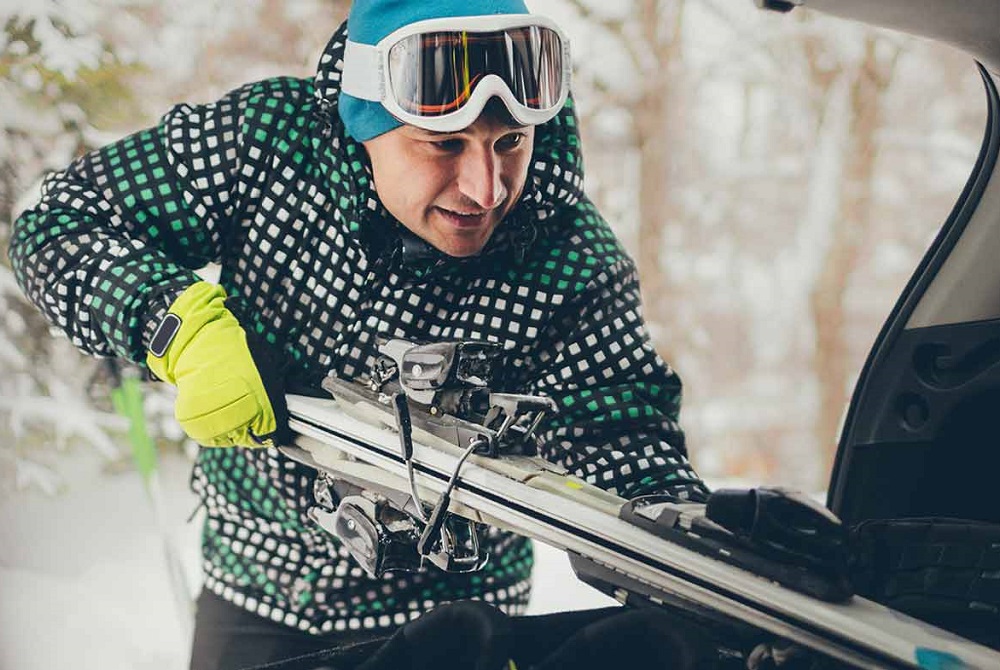
Injuries happen to skiers of all levels, even under pristine conditions and when using the best available equipment. “Beginners are more likely to get injured. But when experienced skiers go down, they tend to have more severe injuries,” says Michelle Gambino-Gorney, a certified athletic trainer at the Henry Ford Kutcher Clinic for Concussion and Sports Neurology.
 But you don’t have to let the risk of injury hold you back from having fun on the slopes. A few basic safety tips? Stay within your ability level and ensure your skis are in good condition. That said, going beyond ski safety basics and learning how to avoid injuries can help you stay safe on the slopes. Here are six expert tips:
Use caution when getting on and off the ski lift. Ski lifts make a lot of people anxious. Being high off the ground on your journey up the mountain can invoke a fear of falling. “But it’s getting on and off the ski lift where the vast majority of lift-related injuries occur,” Gambino-Gorney says. To lower your risk of injury, remove pole straps and backpacks before loading, look over your shoulder to make sure you sit squarely on the seat at the correct time, and don't try to retrieve items you lose hold of (including poles, gloves and phones). It’s best to let them go and ski back for them.
Keep it simple at terrain parks. Terrain parks include human-made features like ramps and rails that enable skiers to do jumps, flips and other maneuvers. Any time your skis leave the ground, injuries are possible. You can safely enjoy terrain parks by starting with smaller obstacles and maneuvers and mastering them before moving on to other challenges. Do not rely on online tutorials to learn new skills. Ski instructors can help you learn the correct technique and provide personalized tips for achieving your goals.
Beware of trees. Trees present multiple dangers. Colliding with a tree, especially at high speed, leads to some of the most severe ski injuries. A small number of skiers die each year from tree collisions. To avoid collisions, ski with control. Other concerns include tree wells and snow immersion suffocation. This type of injury occurs when a person falls head first into a pocket of loose snow near a tree trunk and gets trapped. Skiing with a partner on ungroomed paths, which typically run past tree wells, is essential. If you become immersed in a tree well, a partner can step in to help you break free.
Pay extra attention during your final run of the day. Injuries are more common during skiers’ last runs. “Skiing later in the day can be dangerous because small changes can affect your ability to maneuver and react to conditions,” Gambino-Gorney says. Fresh powder may get matted down. Groomed areas become bumpy. And fatigue can make you less aware of hazards and other skiers. While it may be tempting to give it your all on your last run, it’s better to ease up and take your time.
Follow the Skier Code of Responsibility. People of all ages, abilities and ski levels can safely share the slopes when everyone follows the National Ski Area Association™ Responsibility Code. Key points include: Giving right of way to people ahead of (downhill from) you, staying off closed trails, and looking uphill for other skiers when merging.
Expedite access to help in an emergency. Being prepared can help you quickly reach ski patrol in an emergency. Most ski areas list their ski patrol phone number near the lifts. While you are waiting in the ski lift line, program it into your phone. If you or someone nearby experiences an injury, being able to call for help will save precious time. Instead of waiting for someone to ski down the mountain and ask for help, you can stay with the injured person and call for help. Calling also makes it easier to share important details so that ski patrol arrives with the appropriate people and equipment.
“Skiing is like any sport in that there’s a risk of injury. But many people hit the slopes without incident. Some skiers go decades without a single fall,” Gambino-Gorney says. Follow these insider tips and don't forget to wear a helmet so you can relish your next powder day and get the most out of the season.
To find a sports medicine provider at Henry Ford, visit henryford.com/sports or call 313-651-1969.
Michelle Gambino-Gorney is a certified athletic trainer at the Henry Ford Kutcher Clinic for Concussion and Sports Neurology.