


Add, Subtract, Divide, Multiply: MHSAA Not Alone
July 25, 2017
By Rob Kaminski
MHSAA benchmarks editor
This is the third part in a series on MHSAA tournament classification, past and present, that will be published over the next two weeks. This series originally ran in this spring's edition of MHSAA benchmarks.
As the MHSAA faces its most recent classification task with 8-Player Football, and opinions continue to swirl about as to the method, timeframe, location and other procedures, a look around the country provides plenty of company among state association brethren factoring variables into their own equations.
In the Pacific Northwest, the Oregon School Activities Association Football Playoffs are under public scrutiny as leadership ponders a five or six classification format beginning with the 2018-19 school year.
The OSAA has crowned six champions on the gridiron since 2006-07. Many of the state’s smaller schools would like to keep it that way, while larger schools lean toward a five-classification system, citing larger leagues, ease of travel and credibility to state championships as the advantages.
Still others would prefer more than six classes, pointing to safety issues and the opportunity to increase participation numbers as positives.
Moving southeast of Oregon, the Nevada Interscholastic Activities Association recently voted to hold serve on a classification proposal that was volleyed to the membership.
However, changes still could be forthcoming by as early as the 2018-19 season which would add a fifth classification in more populated southern Nevada while allowing northern schools to participate in four classifications. Such divisions could mean no state championship for the fifth class in southern Nevada.
Because of that, the NIAA wants equal numbers of schools in each classification on both ends of the state. Complicating the issue is the fact that the 24 largest schools in the state, by enrollment, are all in Clark County in Southern Nevada.
Across Nevada’s border into Arizona, charter schools are asking the Arizona Interscholastic Association to reconsider classification that was voted upon and approved in September 2015. That agreement called for the largest 33 percent of charter schools by enrollment to be placed in the state’s largest school classification, 3A, the middle 33 percent into 2A, and the smallest 33 percent into 1A.
Less than two years later the charter schools have had a change of heart and have asked to be considered the same as other Arizona public schools and be placed appropriately by enrollment beginning with the 2018-19 school year.
The situation in Arizona further illustrates how the public/private debate that all state associations have faced throughout existence now has the added dynamic of rapidly growing charter schools in today’s educational system, along with virtual school enrollment.
In the nation’s heartland, Nebraska has retooled its football classifications by using enrollment of boys students only in its schools rather than total enrollment. The Nebraska School Activities Association football-playing schools will kick off the 2018 season using this alignment.
Nebraska has three classes of 11-player football, with the smallest class divided in two, Class C-1 and C-2. The state also will have 8-player football for boys enrollments under 47, and the NSAA will sponsor a new 6-player tournament in 2018 for schools with 27 or fewer boys.
“This is a good proposal because some schools have a sizable imbalance between the number of boys and girls, and there’s a large gap (in enrollment) between the largest and smallest schools in Classes A and B,” NSAA executive director Jim Tenopir said. “I think this addresses both of those concerns.”
Swimmers in Georgia, meanwhile, will feel like they are moving with the current, rather than upstream in 2017-18, as the Georgia High School Association recently doubled the number of team championship events from two to four.
Swim enthusiasts can also count on longer days at the finals, as the top 30 finishers from the prelims will advance to the finals instead of 20, and all championship events will have three heats versus two.
Concussion Care: Signs & Symptoms to Watch
November 1, 2022
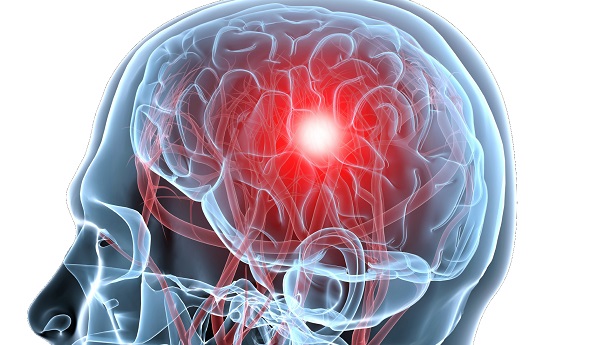
When you experience a blow to the head, knowing whether you've suffered a concussion isn't always clear cut.
 Head injuries have a range of physical, psychological and intellectual effects — and only a small number of people lose consciousness.
"It's critical for parents, coaches, players and trainers to recognize the potential signs and symptoms of a concussion," says Jeffrey Kutcher, M.D., a sports neurologist who treats athletes at the Henry Ford Kutcher Clinic for Concussion and Sports Neurology. "The basic rule is that a concussion can affect any aspect of brain function."
Signs of Concussion
The Latin root of the word "concussion" means "to shake violently" — which makes sense. Concussions happen when there's a combination of movement and impact. So, any injury that involves a hit to the head — a fall, collision or hard hit by a heavy object — could cause one. So could a hit to the body that causes the head to move quickly.
"But every brain injury is different," Dr. Kutcher says. "Some symptoms show up right away while others develop gradually over days."
Here are common concussion symptoms to watch for — both immediately following a head injury and in the hours and days after:
Physical Concussion Symptoms
- Changes in sleep patterns
- Difficulty with balance
- Dizziness or lightheadedness
- Fatigue
- Headache
- Light sensitivity
- Nausea
- Numbness or tingling
- Sensitivity to sound
- Visual problems
- Vomiting
Emotional Concussion Symptoms
- Anxiety
- Depression
- Irritability
- Mood swings
Cognitive Concussion Symptoms
- Confusion
- Difficulty concentrating
- Feeling "slow" or "foggy"
- Memory problems
Diagnosing Concussion: Getting It Right
One reason concussions are frequently misdiagnosed is because they're assessed on the field or courtside during game play or practice. Coaches, trainers and parents often make lightning fast decisions about whether symptoms, such as headache, nausea and light sensitivity, are signs of concussion.
"Unfortunately, it’s more complicated than completing a concussion checklist. Everyone — and every concussion — is different. So, observers shouldn’t be diagnosing a head injury on the spot, but rather making a triage decision for safety. They should leave the diagnosis to the medical professionals," Dr. Kutcher says. In fact, those in-the-moment assessments are wrong about half of the time.
People should focus instead on getting immediate, emergency care for anyone who displays the following signs and symptoms right after a hit:
- Difficulty walking
- Weakness on one or both sides
- Not waking up
- Repeated vomiting
- Persistent confusion
- Seizures
- Unconsciousness
No matter how hard (or lightly) you think you've been hit, it's important to take head injury symptoms seriously. Even a seemingly minor blow could have a major impact. A complete evaluation by a medical professional will not only determine whether you have a concussion, it can also identify more serious, or even life-threatening, concerns.
"In every case, medical professionals are better equipped to assess the extent of the damage if you have a comprehensive baseline evaluation on file," Dr. Kutcher says. This thorough evaluation with a sports neurologist, including a complete family and neurological history, can act as a critical point of reference when trainers and medical professionals are trying to diagnose or manage a concussion.
Dr. Jeffrey Kutcher is a sports neurologist and the medical director of the Henry Ford Kutcher Clinic for Concussion and Sports Neurology.
Want to learn more? Henry Ford Health System sports medicine experts are treating the whole athlete, in a whole new way. From nutrition to neurology, and from injury prevention to treatment of sports-related conditions, they can give your athlete a unique game plan.
Visit henryford.com/sports or call (313) 972-4216 for an appointment within 24 business hours.