


Add, Subtract, Divide, Multiply: MHSAA Not Alone
July 25, 2017
By Rob Kaminski
MHSAA benchmarks editor
This is the third part in a series on MHSAA tournament classification, past and present, that will be published over the next two weeks. This series originally ran in this spring's edition of MHSAA benchmarks.
As the MHSAA faces its most recent classification task with 8-Player Football, and opinions continue to swirl about as to the method, timeframe, location and other procedures, a look around the country provides plenty of company among state association brethren factoring variables into their own equations.
In the Pacific Northwest, the Oregon School Activities Association Football Playoffs are under public scrutiny as leadership ponders a five or six classification format beginning with the 2018-19 school year.
The OSAA has crowned six champions on the gridiron since 2006-07. Many of the state’s smaller schools would like to keep it that way, while larger schools lean toward a five-classification system, citing larger leagues, ease of travel and credibility to state championships as the advantages.
Still others would prefer more than six classes, pointing to safety issues and the opportunity to increase participation numbers as positives.
Moving southeast of Oregon, the Nevada Interscholastic Activities Association recently voted to hold serve on a classification proposal that was volleyed to the membership.
However, changes still could be forthcoming by as early as the 2018-19 season which would add a fifth classification in more populated southern Nevada while allowing northern schools to participate in four classifications. Such divisions could mean no state championship for the fifth class in southern Nevada.
Because of that, the NIAA wants equal numbers of schools in each classification on both ends of the state. Complicating the issue is the fact that the 24 largest schools in the state, by enrollment, are all in Clark County in Southern Nevada.
Across Nevada’s border into Arizona, charter schools are asking the Arizona Interscholastic Association to reconsider classification that was voted upon and approved in September 2015. That agreement called for the largest 33 percent of charter schools by enrollment to be placed in the state’s largest school classification, 3A, the middle 33 percent into 2A, and the smallest 33 percent into 1A.
Less than two years later the charter schools have had a change of heart and have asked to be considered the same as other Arizona public schools and be placed appropriately by enrollment beginning with the 2018-19 school year.
The situation in Arizona further illustrates how the public/private debate that all state associations have faced throughout existence now has the added dynamic of rapidly growing charter schools in today’s educational system, along with virtual school enrollment.
In the nation’s heartland, Nebraska has retooled its football classifications by using enrollment of boys students only in its schools rather than total enrollment. The Nebraska School Activities Association football-playing schools will kick off the 2018 season using this alignment.
Nebraska has three classes of 11-player football, with the smallest class divided in two, Class C-1 and C-2. The state also will have 8-player football for boys enrollments under 47, and the NSAA will sponsor a new 6-player tournament in 2018 for schools with 27 or fewer boys.
“This is a good proposal because some schools have a sizable imbalance between the number of boys and girls, and there’s a large gap (in enrollment) between the largest and smallest schools in Classes A and B,” NSAA executive director Jim Tenopir said. “I think this addresses both of those concerns.”
Swimmers in Georgia, meanwhile, will feel like they are moving with the current, rather than upstream in 2017-18, as the Georgia High School Association recently doubled the number of team championship events from two to four.
Swim enthusiasts can also count on longer days at the finals, as the top 30 finishers from the prelims will advance to the finals instead of 20, and all championship events will have three heats versus two.
An Athletic Trainer's Guide To Winter Sports You Should Test Out This Year
February 15, 2022

Christina Eyers, Ed.D., AT, ATC, is the Director of Athletic Training & Community Outreach with Henry Ford Sports Medicine.
With the winter Olympics kicking off, you might be wondering which (if any) winter sports are safe for you to try.
In addition to favorite pastimes like skiing, snowshoeing and ice skating, athletes in the winter Olympics are shining a light on lesser-known sports that are worth checking out if you're feeling adventurous. (Curling anyone?)
Breaking Down Winter Olympic Sports
Whether you prefer snow or ice, there are plenty of cold-weather activities that offer a heart-pumping workout — and you don't have to be an Olympic athlete to join in the fun. A bonus: Many of these activities are easy on your joints and offer cross-training benefits.
Several favorites:
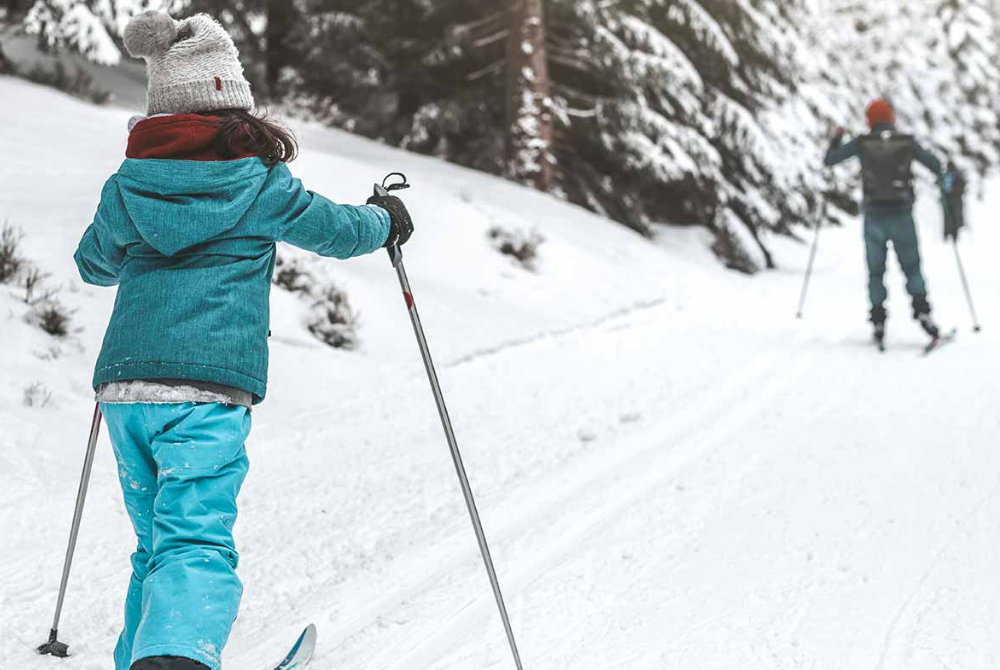
- Cross-country skiing. Cross-country skiing is a full-body, endurance pursuit similar to running. But since you're gliding through the snow, not pounding pavement, there's less stress and strain on your joints — and a lower risk of repetitive use injuries.
- Ice skating. Figure skating is among the most popular winter Olympic sports. It's also the oldest sport in the winter program. Even if you feel unsteady on ice skates (and what beginner doesn't?), taking an introductory lesson can help you glide safely while learning proper mechanics. Since falling is common for beginners, make sure you wear some extra padding and take your time as you master new maneuvers.
- Curling. A unique Olympic sport, curling is like shuffleboard on ice. While it may be one of the slower sports in the winter games, it's also a great game to play on the ice with your family.
- Skiing. Skiing is a fun activity for the whole family. But if you're an amateur skier, it's critical to be realistic about your abilities. Don't be afraid to take ski lessons to get the basics under your belt. A ski instructor not only gauges your skill level, but can also direct you to the slopes that are the best fit for your experience.
- Snowboarding. One of the newer Olympic sports on the circuit, snowboarding was first included at the 1998 Winter Olympics in Nagano, Japan. But since its introduction, snowboarding has become one of the most popular sports in the Games — and for winter recreation among nonathletes.
No matter which winter sports you choose, make sure you have appropriate equipment that fits. Winter sports gear can get pricey, but try secondhand stores or even rent equipment for weekend use. Just make sure to ask the experts for advice on things like length of skis, boots, bindings, figure skates or hockey skates. Most importantly, make sure to always wear a helmet for activities such as skiing and snowboarding (kids should wear helmets when ice skating too!).
Cold-Weather Sports Caveats
Winter sports can be engaging for everyone, no matter what their age or skill level. You can use the Olympics as inspiration or try one of the many non-Olympic sports that get your heart pumping during colder months. A few favorites:
► Sledding. Tubing and sledding require you to climb up the hill in order to ride your way down. Toboggan runs and sledding hills are a great way to enjoy local parks during the wintertime — and they're fun for the whole family.
► Snowshoeing. Like walking on sand, snowshoeing requires you to navigate uneven surfaces, which helps strengthen your leg and glute muscles.
► Hiking. If the weather is on the mild side, don't be afraid to get outdoors and explore. With newer materials and textiles, it's easier than ever to dress warmly and remove layers as you work your way up a hill or mountain.
Whatever winter activity you choose, keep in mind you’re not competing in the Olympics. If you’ve been mostly sedentary, it's important to start slow. Gradually increase your activity level and be sure to wear appropriate safety gear.To find a primary care or sports medicine specialist at Henry Ford, visit henryford.com or call 1-800-436-7936.