

All Saints Celebrates on Big Screen
July 31, 2014
By Geoff Kimmerly
Second Half editor
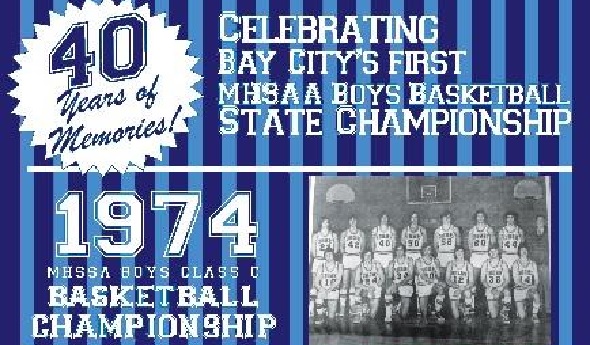
Forty years ago, Bay City All Saints brought its hometown the first of two straight MHSAA boys basketball championships – which continue to stand as the only ones won by a Bay City school.
 As part of the Class of 1974’s 40-year reunion this weekend, organizers will show the broadcast of that 71-59 victory over Detroit Servite in the Class C Final, on Friday at the downtown State Theater.
The team was coached by Russell “Lefty” Franz, who sits 14th in MHSAA boys basketball coaching history with 545 wins (545-215) at All Saints, Bay City St. Stanislaus and Pinconning achieved from 1953-1991. All Saints repeated as Class C champion under Franz in 1975 with a 79-69 win over Cassopolis.
The Bay City Times caught up today with three starters from that team who are expected to return for the showing of the game. Click to read more.
Rooting for Haske
Northern Michigan basketball fans and supporters from all over are cheering on Traverse City St. Francis boys basketball coach Keith Haske, who is battling throat cancer and seeking treatment in Houston, according to a report by the Petoskey News.
Haske has coached three boys teams to MHSAA Class C runner-up finishes – St. Francis in 2012 and Charlevoix in 2004 and 2001, and also coached at St. Johns prior to taking the Rayders job in 1998. He also coached the Charlevoix girls team to a Class C runner-up finish in 2004.
Click to read more about Haske and how to donate to his treatment.
Thanks, Gary Hice
The MHSAA welcomed 43 new athletic directors to East Lansing today for training as they take over their schools’ athletic departments.
An athletic director we’ll certainly miss is Petoskey’s Gary Hice.
Hice – an MHSAA Allen W. Bush Award winner in 2002 for his contributions to high school athletics – has retired after 30 years as his school’s athletic director.
Click to read more, again from the Petoskey News, about Hice’s service to his school and community.
PHOTO: The Bay City All Saints Class of 1974 reunion this weekend will include a showing of the boys basketball team’s Class C championship game win over Detroit Servite.
Symptoms of a Meniscus Tear — and When to Seek Treatment
April 2, 2024
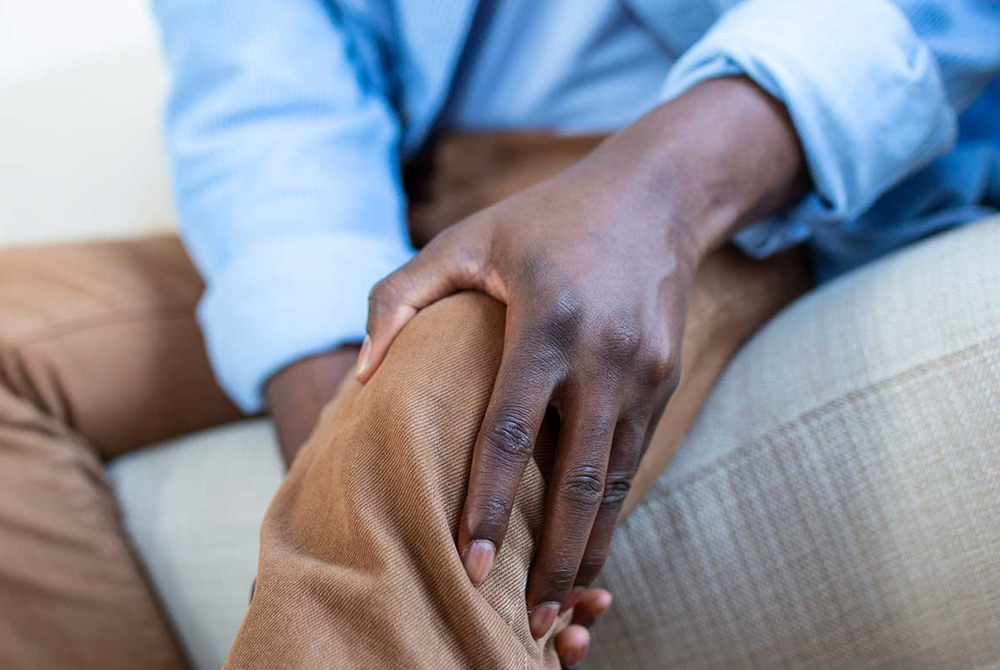
Meniscus tears are not one size fits all: Sometimes they cause no pain, other times they’re excruciating.
 Once in a while they heal or adapt on their own, but more often than not they require physical therapy or surgery.
“Your meniscus is a fiber elastic cartilage that acts as a shock absorber for the knee,” says Ahmad Bazzi, M.D., a sports medicine physician at Henry Ford Health. “It also helps stabilize the knee joint. But when it tears — which can occur in young athletes after a pivot injury or in older people who have arthritis — it can be painful.”
Here, Dr. Bazzi shares symptoms of a meniscus tear and when to see a doctor.
What Does A Meniscus Tear Feel Like?
Depending upon the level of injury and type of tear, meniscus tears can either be asymptomatic or cause symptoms like:
- Locking. When the meniscus tears, a piece of it might move into the knee joint, causing mechanical issues like stiffness and locking of the knee joint.
- Catching or clicking. This often feels like a sudden ‘click’ in the knee joint, where it suddenly gives out while you’re walking or doing certain movements.
- Localized pain on the inner or outer part of the knee. In young athletes, a meniscus tear often causes an impaired range of motion and localized pain on the inner or outer part of the knee.
- Pain and swelling. In older people, a meniscus tear often causes swelling and an overall aching pain in the knee.
Treatment Options For Meniscus Tears
A meniscus tear can only heal on its own if the tear is on the outer part of the knee where it has better access to blood supply. If you’re experiencing pain a few days after injury and you have limited range of motion, instability and/or swelling in the knee, Dr. Bazzi recommends seeing a doctor to get an examination and, if needed, an MRI for diagnosis.
“It’s hard to tell what type of meniscus tear you have if you haven’t seen a doctor,” says Dr. Bazzi. “If you have a mechanically unstable tear and it goes untreated, it could lead to worsening range of motion and stiffness, or worsening arthritis. It’s important to get seen by a doctor to get an accurate diagnosis and the proper treatment. It may take one to three months for a full recovery.”
Here, Dr. Bazzi shares treatment options:
Surgery
If someone is having mechanical symptoms like locking or catching, surgery may be considered right away, especially if it’s an athlete younger than 40 years old. “Meniscus tear surgery has a shorter recovery compared to other knee surgeries,” says Dr. Bazzi. “Surgery could either consist of a meniscectomy, which is partial or complete removal of the meniscus, or sometimes just a meniscus repair.”
Hyaluronic acid or cortisone injections
Non-operative treatments are often recommended for older people who have degenerative tears due to arthritis. “This is because meniscus surgery doesn’t often relieve their pain since they have underlying arthritis, meaning they have cartilage loss in the meniscus,” says Dr. Bazzi.
Instead, a cortisone injection, which is an anti-inflammatory medication that can be injected into the knee, can reduce inflammation, swelling and pain caused by arthritis.
A hyaluronic acid injection may also be considered, which adds cushioning in the knee. “Hyaluronic acid is one of the substances that make up our cartilage, so this injection helps us mimic the lost cartilage,” says Dr. Bazzi. “It also has anti-inflammatory properties.”
Physical therapy
Physical therapy is another great option, especially for older people who need non-operative treatment options. It can help the knee adapt to the tear, reduce pain and encourage full range of motion. “Physical therapy for meniscus tears focuses on balance exercises and exercises to strengthen the muscles around the knee,” says Dr. Bazzi. “This helps to uphold the knee joint to achieve full range of motion and strength while being pain-free.”
To find a sports medicine provider at Henry Ford Health, visit henryford.com/athletes or call 313-651-1969.
Reviewed by Ahmad Bazzi, M.D., a sports medicine physician who sees patients at Henry Ford Medical Center – Fairlane.