

UP Schools Big & Small Find Multi-Sport Success
January 10, 2020
By Dennis Grall
For the Second Half
ESCANABA – It should not come as a surprise that the Class A school with the highest percentage of multi-sport athletes has an athletic director who lived that life.
 Alex Tiseo, athletic director at Marquette High School, received 15 varsity letters while he was a student at the school, including as a three-sport participant for two years in the fall alone. Tiseo played soccer for four years while running cross country for three years and playing football for two. He also played basketball and ran track.
He is not taking any credit for the excess of multi-sport athletes at his alma mater. "It is the foundation of the thing, the culture of the coaches," Tiseo said of all the school's coaches supporting and encouraging all-around athletic participation.
"It is the benefit and mentality of getting away from (athletic) specialization," Tiseo said, noting an athlete may be "a leader in one sport and just a role player" in another.
He also pointed out athletes are not penalized when they have to miss practices or events because of their heavy extracurricular participation.
According to the most recent multi-sport participation survey conducted by the Michigan High School Athletic Association, Marquette had the highest percentage of multi-sport athletes among all Class A schools in 2018-19 with a whopping 85.9 percent. Grand Rapids Northview, at 83.1 percent, was the only other large school above 80 percent.
Four Class B schools and six Class C schools topped the 80-percent mark while 14 Class D schools surpassed 80 percent, including three topping 90 percent, led by Gaylord St. Mary (93.2).
Marquette, unlike many larger schools, does allow students to participate in more than one sport in the same season. Many small schools, simply because of the lower enrollment, also allow students to compete in more than one sport during the same season.
"It is near and dear to my heart," Tiseo said of seeing multi-sport participation. Students must pick a priority sport if practices or games would conflict on the same date. "For me, it was cross country," Tiseo said, noting his soccer and football coaches knew he was getting plenty of running in that primary sport. In football, he was a place-kicker, which made it easier if he had to miss a practice.
He would often kick with his dad, he said, agreeing that a primary position player may have found it harder to miss a practice or game.
He also pointed out that in fall sports, "one-third of the season comes before school starts" and fall sports ended in mid to late October, reducing the number of potential conflicts.
Tiseo said multi-sport athletes work closely with their coaches to arrange practice schedules: "If coaches have difficulty with the kids in putting the schedule together, there is a caveat there where I can help." To date he has not needed to assist.
Students and coaches alike "reinforce the importance of academics," Tiseo said. "Multi-sport athletes are definitely among our highest academic achievers."
Athletes realize, he said, the importance of staying academically eligible so they can compete in their athletic endeavors.
Tiseo also has noticed student-athletes in general maintain better attitudes, which permeates the hallways and classrooms and benefits the general student body.
Success in athletics can generally bolster improved spirit and attitude in school. He said there is a general attitude of wanting to participate in something "when you see your peers having fun." The long Upper Peninsula winters also help encourage students to participate in athletics to help the time speed along. "It also correlates with the success of the teams," he said.
Two other Upper Peninsula schools have also found outstanding multi-sport participation, with Class B Gladstone at 86.7 percent and Class D Watersmeet with 90.3 percent during 2018-19.
 First-year Gladstone athletic director Dave Lindbeck said "I strongly promote for kids to go to the next level. When I hire a new coach, I ask them how they feel about (multi-sport participation)."
Like Tiseo, Lindbeck also encourages athletes to get involved in programs for lifting weights and nutritional growth. Tiseo said proper conditioning and nutrition "help lessen the risk of injury" and playing multiple sports allows students to use different sets of muscles in those various activities. "You don't see over-use injuries" he said.
Lindbeck said "a good strength and conditioning program involves everything, including in-season and off-season workouts and help them maintain strength. We're not asking kids to bulk up. There is a lot of strength and flexibility (training), working (various) muscle groups, strengthen(ing) ligaments."
Lindbeck said the Braves' coaches are encouraged to attend games in the wide selection of activities, which shows students they care.
He also said it is easy to see how students grow in athletics and socially as they raise their participation levels. "You see how they communicate, you see it in the hallways," he said.
He also noted it has a big impact on their classroom work. "Those who don't participate don't do as well," he said, noting B-C students tend to improve their grade-point averages as they increase their involvement. "Kids seldom have issues with their grades.
"It is so crucial to be involved with sports," Lindbeck added. "The ones who do it really value it. We use it as a carrot, a motivator. It also keeps the structure and holds each other accountable."
Watersmeet has only 44 students this school year – up from 36 last year – but the Nimrods definitely are a school and community-oriented program.
Pizza parties, camping trips and cook-outs are among projects to encourage students to participate in sports, and fund-raisers are used to buy warm-ups for players in grades 6-12. "We dress them up so they look special," said long-time administrator-coach George Peterson.
"We work hard to get them to enjoy all the sports."
The board of education uses the Nimrod Fund to help students "dress up and be a part of it," said Peterson, who indicated much of that financial opportunity comes from the memorable 2003-04 season when ESPN coined the "Nimrod Nation" program.
That spring the boys basketball team appeared on The Tonight Show, and the Sundance Channel did a series on the school/town in 2006.
Peterson said the school realized $500,000 in gross revenue as a result of that national exposure and still averages $10-13,000 a year in profits. "I still pinch myself. I still can't believe it happened," Peterson said of that exposure and financial benefit.
Watersmeet has girls volleyball and offers cross country country, basketball, track and golf for boys and girls. "They are proud to be out there," said Peterson. "They have to conduct themselves in a respectful manner.”
The MHSAA study revealed nearly 43 percent of state prep athletes participated in two or more sports in 2018-19. It also indicated "early and intense sport specialization has become one of the most serious issues related to health and safety at all levels of youth sports, with overuse injuries and burnout among athletes tied to chronic injuries and health-related problems later in life."
The survey found 45.1 percent of boys and 40.4 percent of girls participated in more than one sport.
 Denny Grall retired in 2012 after 39 years at the Escanaba Daily Press and four at the Green Bay Press-Gazette, plus 15 months for WLST radio in Escanaba; he served as the Daily Press sports editor from 1970-80 and again from 1984-2012 and currently is in a second stint as the interim in that position. Grall was inducted into the Upper Peninsula Sports Hall of Fame in 2002 and serves as its executive secretary. E-mail him at [email protected] with story ideas for the Upper Peninsula.
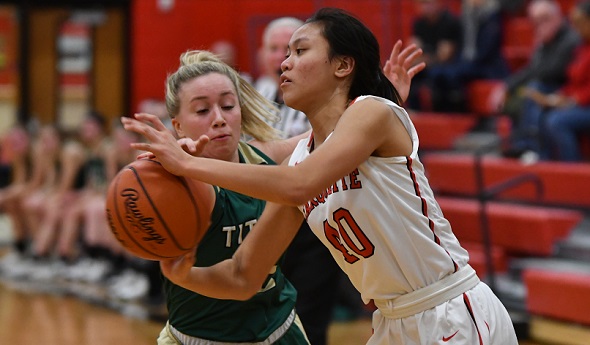
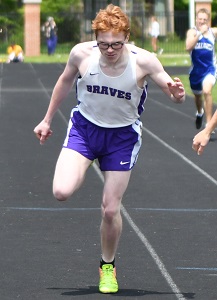
PHOTOS: (Top) Marquette's Maria Millado (40) works to get a pass past a Traverse City West defender last season; Millado also runs track for the Redettes. (Middle) Gladstone's Luke Van Brocklin crosses the finish line to finish second in the 400 meters at last spring's Upper Peninsula Division 1 Track & Field Finals; he played football this fall. (Photos by Cara Kamps.)

2026 MHSAA Bush Awards Honorees Exemplify Dedicated Service in Several Roles
By
Geoff Kimmerly
MHSAA.com senior editor
June 30, 2026
Athletic administrators must balance multiple roles no matter the size of their school districts or numbers of sports they direct, and St. Ignace’s Don Gustafson, Brethren’s Jason Kemler, Grand Rapids’ Jolinda Lucas and Greenville’s Brian Zdanowski have thrived while shouldering wide-ranging responsibilities to provide first-rate athletic experiences for their students.
Their dedication to school sports and those athletes – both locally and statewide – made them clearly deserving recipients of 2026 Allen W. Bush Meritorious Service Awards as selected by the Michigan High School Athletic Association’s Representative Council.
Al Bush served as executive director of the MHSAA for 10 years. The award honors individuals for past and continuing service to school athletics as a coach, administrator, official, trainer, doctor or member of the media. The award was developed to bring recognition to people who are giving and serving locally, regionally or statewide without a lot of attention. This is the 35th year of the award.
 Gustafson has taught at his alma mater St. Ignace since 1982 and continued even after retiring from administration in 2021. In addition to his classroom work, he served as assistant athletic director his first three years, then athletic director for four, as junior high principal from 1994-2005, high school principal from 2005-11 and superintendent for the next decade.
He’s also been an MHSAA-registered game official since 1978, working six Finals in football, one in basketball and numerous in cross country, in addition to several more postseason events during his time officiating seven sports. He was named to the Basketball Coaches Association of Michigan (BCAM) Hall of Honor in 2021 as an official and “Friend of Basketball.”
Gustafson served on the MHSAA Representative Council from 2015-21. The Michigan State University grad also has served on St. Ignace’s city council, taking time away only during his tenure as superintendent.
“Don Gustafson’s contributions to school sports span nearly half a century and have included everything from behind-the-scenes support to being considered one of the state’s top game officials and a valued voice on our Representative Council,” MHSAA Executive Director Mark Uyl said. “He has long been a knowledgeable and positive voice impacting not only the Upper Peninsula but our community statewide.”
 Brethren High School athletic director Jason Kemler recently completed his 20th year with the Kaleva Norman Dickson school district, where he has hosted several MHSAA Tournament events in a variety of sports including Regionals in track & field both at the high school and middle school/junior high levels. He’s also served on multiple MHSAA committees including the Junior High/Middle School Committee.
Kemler has done extensive work as well as part of the Michigan Interscholastic Athletic Administrators Association (MIAAA), serving as a regional representative, historical records chairperson and co-chair of the middle school/junior high committee, and also co-chair for the MIAAA’s 60th and 65th anniversary celebrations. He was named the MIAAA’s Region 3 Athletic Director of the Year in 2023.
Kemler is a graduate of Dansville High School and Albion College and received his teaching certificate from Michigan State University and master’s from Central Michigan University. He also serves as a captain for his local fire department.
“Jason Kemler’s stamp is all over the Brethren athletic department and community as a whole, as he’s embraced all of the roles that go with serving at a small school – teaching physical education and history and coaching as well as serving as athletic director and representing his school in significant ways among his colleagues statewide,” Uyl said. “His commitment and dedication are fine examples of what the Bush Award seeks to recognize.”
 Lucas also has made an outsized impact at the middle school level during her 14 years serving in multiple roles for Grand Rapids Public Schools, including as middle school athletic director, director of all GRPS elementary sports and as athletic director for Grand Rapids University Prep Academy, whose students compete for either Ottawa Hills or Union High School. She has served on the MHSAA Junior High/Middle School Committee, contributing to an increasing emphasis at that level, and was selected as a meet manager for inaugural MHSAA Cross Country and Track & Field Regionals for junior high/middle school athletes.
Also a teacher at University Prep and an MHSAA-registered official the last six years for track & field and cross country – and the last two for volleyball – Lucas has served as sportsmanship chair for the MIAAA and as part of the MHSAA/Farm Bureau Insurance Scholar-Athlete Award Committee, and on the board for the Michigan-based Academy of Sports Leadership. She was named the MIAAA’s Region 14 Athletic Director of the Year in 2022.
Lucas graduated from Hobart (Ind.) High School and has a bachelor’s degree in physical education and health from Indiana State University, a master’s in educational leadership from Indiana University, and earned her certified athletic administrator designation from the National Interscholastic Athletic Administrators Association (NIAAA). She is a Red Cross instructor and has served on the GRPS health and physical education leadership team. Prior to coming to Grand Rapids, Lucas served in multiple athletic administration roles in Indiana, where she also taught for 24 years and earned a 30-year coaching and multiple 20-year service awards.
“Jolinda Lucas has brought a special dedication to our junior high and middle school sports and their important roles in educational athletics,” Uyl said. “She has provided valuable input on a variety of historic decisions, including the addition of sixth graders to MHSAA competition and creation of Regional competitions in cross country and track & field. Her foresight is impacting Michigan’s school-sports athletes at the youngest levels and making a difference that will continue to benefit them as they advance to high school programs.”
 Zdanowski recently completed his 28th school year as athletic director at Greenville after previously serving as a teacher, coach and athletic director over a decade at Onaway and Midland Bullock Creek. As an athletic director, he has hosted more than 100 MHSAA Tournament events, including five 8-Player Football Finals and 13 11-Player Semifinals. He also has been an MHSAA-registered game official for 44 years, working five sports including Finals in baseball in 1995 and football in 2001.
The longtime administrator also has served on multiple MHSAA committees, including more than a decade on the MHSAA/Farm Bureau Insurance Scholar-Athlete Award Committee, and served as Ottawa-Kent Conference president for two years. He’s been a member of the MIAAA for 34 years, Michigan Association of Secondary School Principals (MASSP) for 28 years and National Association of Sports Officials (NASO) for 25. He was named the MIAAA’s Region 4 Athletic Director of the Year in 2008.
Zdanowski, a graduate of Standish-Sterling, has a bachelor’s degree in teacher education from Saginaw Valley State University and a master’s in athletic administration from Central Michigan University. He’s also completed 24 courses from the NIAAA Leadership Training Institute.
“Brian Zdanowski has created a program at Greenville that is the model of quality, and that was proven deservedly when his athletic department was named an Exemplary Athletic Program by the MIAAA in 2000, the first year of that prestigious recognition program,” Uyl said. “He has consistently shared what he’s built at home with the rest of the state for now several decades, and we continue to be thankful for Brian’s desire to serve and contribute to school sports in a variety of leadership roles.”
The MHSAA is a private, not-for-profit corporation of voluntary membership by more than 1,500 public and private senior high schools and junior high/middle schools which exists to develop common rules for athletic eligibility and competition. No government funds or tax dollars support the MHSAA, which was the first such association nationally to not accept membership dues or tournament entry fees from schools. Member schools which enforce these rules are permitted to participate in MHSAA tournaments, which attract more than 1.4 million spectators each year.