


Beginning Another Tourney Journey
August 8, 2016
Below is the introductory commentary to the MHSAA's spring issue of benchmarks. Histories of MHSAA tournaments published in that issue have been appearing on Second Half every Tuesday and Friday.
By Jack Roberts
MHSAA Executive Director
Concussions and cutbacks. Participation fees and part-time employment. Student safety and specialization. International students and interstate travel. Transfers and trials.
Through a myriad of issues which periodically cloud our mission, the foundation on which the MHSAA was built still shines brightest three times each year: Tournament Time!
It can be daunting and overwhelming to make a living at this business of interscholastic athletics these days, not to mention a tad confusing. Do we need legal degrees? Medical degrees? Business degrees? Marketing degrees? There seems to be no escape from threat of legislative mandates which continually change the landscape of our product and how it’s delivered. Demands pile up, resources dwindle.
Add the daily challenges of scheduling issues, inclement weather and pleasing teenagers and their parents on a daily basis, and it’s easy to lose focus of the primary missions for the MHSAA and its member schools.
And then, scenes like this happen:
• Holly Bullough, a senior cross country runner from Traverse City St. Francis takes her second straight Division 3 championship, winning by 36.4 seconds ... with a stress fracture in her left foot.
• Detroit Martin Luther King QB Armani Posey directs a game-winning drive to give his school the Division 2 football championship ... a drive which started on his own 3-yard line with 37 seconds left and ended with a 40-yard heave to receiver Donnie Corley on the final play of the game.
• Leland sweeps the Class D volleyball title match 3-0 over Battle Creek St. Philip ... ending a string of nine straight titles for St. Phil, the 10th longest national streak in history.
• Davison’s Taylor Davis becomes only the fourth person in MHSAA Girls Bowling history to roll a 300 game in the Singles portion of the tournament ... and the first ever in the championship match.
• The Upper Peninsula’s Hancock HS wins the Division 3 ice hockey title in its first trip to the Final since 2000 ... a trip funded in part from a “Go Fund Me” web page that raised $6,620 from 99 donors in two days.
• Junior Kierra Fletcher of Warren Cousino carries her team to the Class A girls basketball championship with 27 points in the Final ... after scoring 37 of her team’s 60 points in the Semifinals and totaling 198 during eight tournament games.
That’s just a sampling of the magic from last fall and winter.
These moments shine through the current challenges and the unseen future that awaits us as they always have. The uniforms and faces are different, but the tournaments have always yielded the fruits of our labors, and the memories for our mental scrapbooks.
PHOTO: Leland's volleyball team hoists its Class D championship trophy last fall at Kellogg Arena.
6 Tips for the Best Cold-Weather Workout
December 6, 2022
With temperatures getting colder, it may be tempting to get back to the gym.
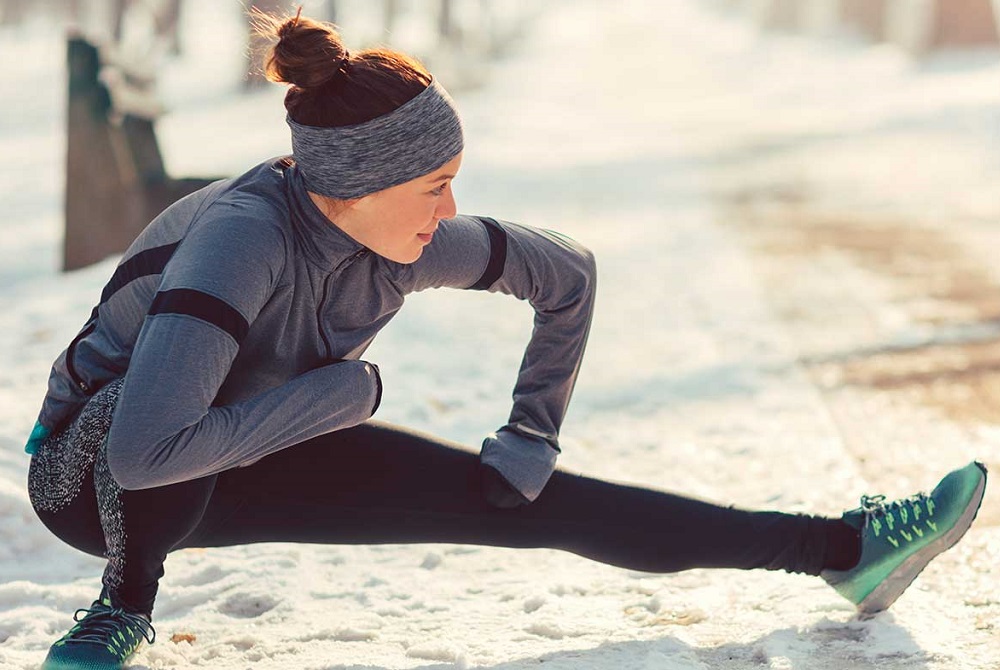
 But it’s still possible to get your exercise outdoors if you prepare properly to counter the chillier conditions that accompany living in Michigan this time of year.
Winter Weather Workout Tips
While cold air can make it challenging to breathe, our bodies adjust to reduced temperatures over time. The key thing to watch for is hypothermia (dangerously low body heat).
"Viruses are more likely to attack our bodies if we're in a cold state," says Ramsey Shehab, M.D., a sports medicine specialist at Henry Ford Health. "If your internal body temperature drops significantly, it can suppress your immune system and make you more vulnerable to infection."
The good news: Adopting these six strategies can help ensure your outdoor workouts are safe and effective.
Check the forecast. Know what the outdoor weather is and plan accordingly. Pay attention to the temperature, wind and moisture level. If temps dip below zero, the wind chill is extreme, or it's raining or snowing, exercising outside can be risky.
Dress in layers. Dressing too warmly can increase your risk of overheating (even in frigid air). Instead, dress in layers so you can remove layers as you warm up. "The innermost layer should be made of moisture-wicking material," Dr. Shehab says. "The middle layer should have thermal protection like wool or fleece, and the outermost layer should be waterproof and breathable to protect you from wind, rain and sleet." If you get wet and moisture soaks through your clothing, you may not be able to keep your core body temperature up.
Pay attention to your hands, feet and head. When you're engaged in a heart-pumping workout, blood flows to your core, leaving your fingers, toes and head vulnerable to the cold. Wear a hat, gloves and warm socks. If it's especially chilly, consider wearing a scarf.
Take time to warm up (and cool down). Instead of leaving your cozy house and launching straight into a sprint, take time to warm up your major muscle groups. "Your joints may be stiffer when it's cold, so warming up and stretching out is especially important during the winter months," Dr. Shehab says.
Stay hydrated. People tend to think more about dehydration during the summer months, but you can get dehydrated in the winter, too. "Proper hydration before, during and after exercise is very important, not just to maintain health and well-being, but also to stave off infection," Dr. Shehab says.
Take a vitamin D supplement. Even though you're exercising outdoors, sunlight is in low supply in Michigan during the winter. To keep your immune system humming, consider taking a vitamin D supplement. "Making sure you have sufficient vitamin D can enhance your bone health, boost your immune system and keep your hormones in balance," Dr. Shehab says.
Get Savvy About Outdoor Workouts
Frigid temperatures can create obstacles for even the most enthusiastic exercisers. While it's tempting to table exercise until warmer weather returns, there are things you can do to make outdoor — and indoor — workouts more enjoyable.
You don't have to stick to the same routine of running, walking and circuit training. Take advantage of the winter chill to participate in activities like ice skating, sledding, hiking, skiing and cross-country skiing. You can even take interval workouts outdoors. Climb stairs, hike up hills or just play with a kettlebell in the snow.
"Exercise is medicine," Dr. Shehab says. "It can sometimes replace medication for people who have diabetes, hypertension and other chronic conditions. It's good for the mind and the body, and it can help stave off infections, including COVID-19."
The caveat: Working out, outdoors or indoors, is not recommended for people who are currently battling the coronavirus. Instead, it's important to preserve your energy. Once your symptoms begin to improve, you can gradually increase your exercise level.
To find a doctor or athletic trainer at Henry Ford, visit henryford.com or call 1-800-HENRYFORD (436-7936).
Dr. Ramsey Shehab is the deputy chief of Sports Medicine at Henry Ford Health. He sees patients at the Henry Ford Center for Athletic Medicine and Henry Ford Medical Center - Bloomfield Township.