


A Leading Official
July 29, 2014
For more than a decade, Mark Uyl has been the MHSAA’s leader of service and support to officials. Mark’s calm demeanor and subtle sense of humor have much to do with his successful leadership of what we sometimes call “the complaint department;” but because he has been both, Mark has a good feel for and the respect of both school administrators and officials.
Since joining the MHSAA staff in January of 2004, Mark has continued to referee college football and baseball. Last month Mark worked the NCAA College World Series in Omaha which had been a long-time goal for this still very young man.
This week Mark ascends to chair of the board of directors of the National Association of Sports Officials (NASO).
It’s clear that Mark has as fine a reputation nationwide as he enjoys here in his home state.
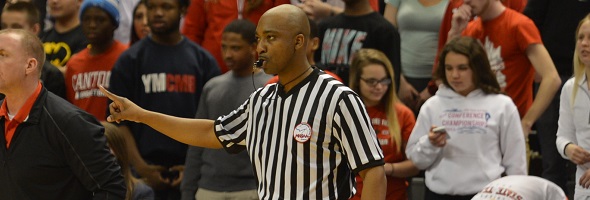
Be the Referee: Video Clip Library
February 20, 2015
This week, MHSAA assistant director Mark Uyl explains MHSAA policy for video submitted to argue an official's call.
Be The Referee is a series of short messages designed to help educate people on the rules of different sports, to help them better understand the art of officiating, and to recruit officials.
Below is this week's segment - Video Clip Library - Listen
Throughout the year, callers and e-mailers to our office will often complain about an official’s call, and this concerned person will then tell us that they have video to back up their claim.
The policy here at the MHSAA is to not review video tape for the purposes of changing an official’s call. Many times this video that is provided to the MHSAA is from a single angle, and that one angle would never allow us to overturn a call, even if our rules were similar to the college and pro level to allow for instant replay.
We do, however,use that video to put in our video clip library to help officials and others continue to train and learn from different situations.
Past editions
Feb. 9 - Cheer Safety - Listen
Feb. 2 - Basketball PA Announcers - Listen
Jan. 26 - Wrestling Health Concerns - Listen
Jan. 19 - Basketball Physical Contact - Listen
Jan. 12 - Video Review Part 2 - Listen
Dec. 29 - Video Review Part 1 - Listen
Dec. 17 - Registration Part 2 - Listen
Dec. 10 - Registration Part 1 - Listen
Dec. 3 - Legacy Program - Listen
Nov. 26 - Sideline Management - Listen
Nov. 19 - 7-Person Mechanics - Listen
Nov. 12 - Blocking Below the Waist - Listen
Nov. 5 - Tournament Selection - Listen
Oct. 29 - Uncatchable Pass - Listen
Oct. 22 - Preparation for Officials - Listen
Oct. 15 - Automatic First Downs - Listen
Oct. 8 - Officials & Injuries - Listen
Oct. 1 - Overtime - Listen
Sept. 25 - Field Goals - Listen
Sept. 18 - Tackle Box - Listen
Sept. 11 - Pass Interference - Listen
Aug. 25 - Targeting - Listen