


Nonfaculty Coaches
June 18, 2012
Since the so-called heyday of school sports in the 1950s, when you could count on more talk in a community about its few high school teams than about all the college and professional sports teams in the country combined, some things have improved – diversity and safety, for example; but some things have not met the high ideals hoped for in educational athletics.
During the explosive growth period of school sports in the 1970s and 1980s, when girls programs were introduced or reintroduced to schools and well-established community programs were added to the school sports curriculum, schools in almost every state had to backpedal from the ideal that only trained educators – certified teachers – could coach interscholastic athletic teams. (In Michigan, except for two years in the mid 1950s when certified teachers were required, the rules only urge that coaches be certified teachers.)
While the number of sports and levels of teams have greatly expanded these past five or six decades, the coaching pool within the faculty of a school district has not. Furthermore, teachers’ salaries improved so much that coaching stipends became less necessary to supplement teachers’ incomes, so teachers “volunteered” less readily to serve as coaches for a second and third sport.
Moreover, the coaching demands for one sport increased out of season, interfering with a person’s availability to help coach second and third sports during the school year. This was commonplace in the sports that moved from the community into schools, but the out of season demands have increased significantly for traditional school sports as well.
There is irony that community youth sports programs not only have provided school districts with a pool of informed and interested people to serve as coaches, but they have also increased the demands on coaches so much out of season that coaches must specialize in a single sport and therefore are less available to assist with the many different sports and levels of teams that school districts struggle to provide students.
It is estimated now that more than half of all high school coaches do not work in the school building where they coach, which can create communications challenges for schools. A smaller but growing number of high school coaches do not work at all in the field of education, which can create philosophical problems as well. Not always, of course; in fact, many nonfaculty coaches are a rich and increasingly indispensible blessing for school sports.
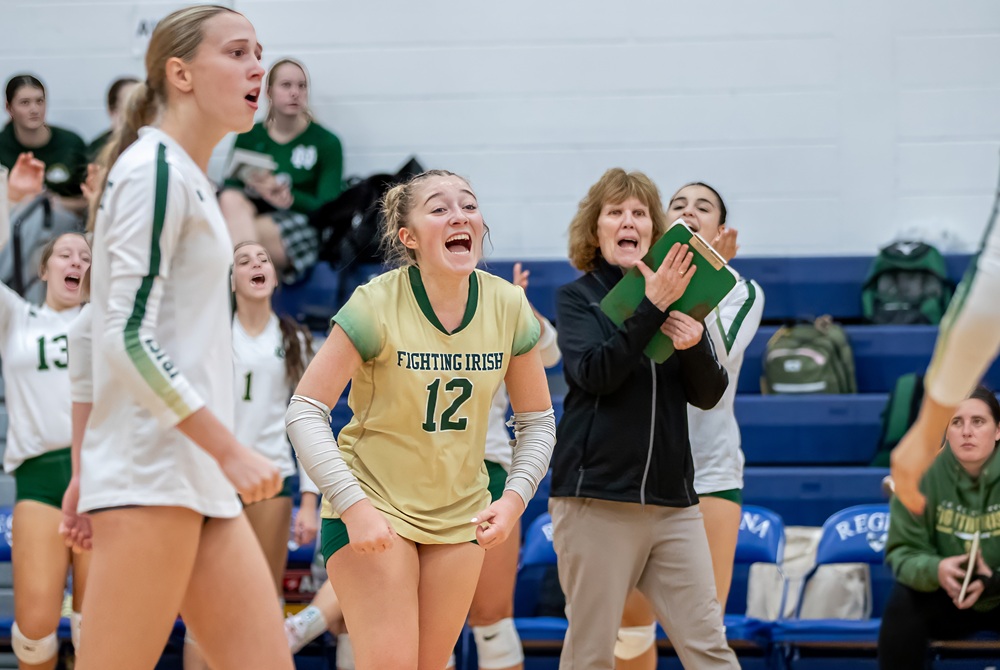
Chase Remains On Pace as Wroubel Ranks 2nd Among Nation's Winningest Active Coaches
By
Keith Dunlap
Special for MHSAA.com
September 18, 2026
PONTIAC — While the Pontiac Notre Dame Prep girls volleyball team pursues wins in Michigan this fall, parents, supporters and others around the program are also paying attention to what a program in Alabama is doing.
 Why? It has everything to do with a prominent coaching record on the national level.
At the moment, it’s a nice neck-and-neck race to see who will finish this season as the active coach with the most wins nationally, Betty Wroubel of Notre Dame Prep or Ann Schilling of Bayside Academy in Daphne, Ala.
Going into the season, Schilling had 1,796 career wins, three more than Wroubel. As of Wednesday, Schilling had added 16 wins to her total to make it 1,812, while Wroubel added 14 for a grand total of 1,807.
The two are also third and fourth, respectively, on the overall all-time wins list nationally. Two coaches who are retired, Jodi Manore of Temperance Bedford (2,231) and Jack Magelssen of Portage Northern (1,832), top the list.
Schilling and Wroubel are fast approaching Magelssen, but if there is one person who isn’t too occupied with it all, it’s Wroubel.
Sure, she has a good laugh or smile when parents or other school officials have casually come up to her over the past few weeks to mention the situation. But as has been the case throughout her legendary career, there is a greater purpose for her.
“It’s the kids’ winning,” Wroubel said. “I get to facilitate a little bit. But it’s really about the kids, and I’ve been blessed with some really good kids here over the years and some coaches who have coached with me.”
Notre Dame Prep senior Nicole McDowell said trying to win so Wroubel can keep up with Schilling hasn’t really been talked about much among players this season. But that doesn’t mean the chase can’t provide a little more incentive the rest of the fall.
“That will help motivate us more,” McDowell said.
The head coach of Notre Dame Prep since 1994, Wroubel remains an institution for not only her school, but the volleyball coaching community statewide.
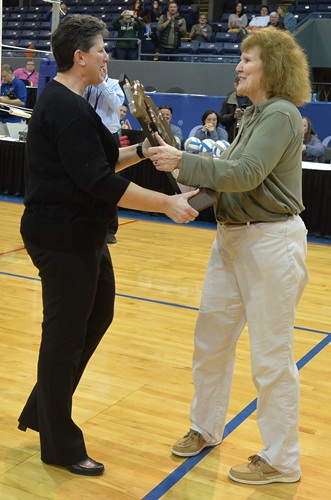
Wroubel has guided Notre Dame Prep to four Finals titles in Class B/Division 2, with the latest in 2021. When Notre Dame Prep won the Class B championship in 2007 (fall season), the Fighting Irish not only captured the school’s first volleyball title but became the first program in Oakland County history to win at the Finals.
“I just love being around the kids, and they provide the energy and keep you going,” said Wroubel, who is also the athletic director and varsity softball coach at Notre Dame Prep.
Even as eras and the sport have changed drastically, players have enjoyed playing for Wroubel as much as she’s enjoyed coaching them.
“She really is competitive and she’s hard on us, but she wants to win and all of her intentions are good,” said McDowell, who has committed to play collegiately for Rider University (N.J.) and is a returning all-state player. “Outside of volleyball, she is the most generous person I know.”
Time will tell if Notre Dame Prep (14-12-2) can continue to pile up wins this season for itself and Wroubel.
While the coaching wins angle could be a fun storyline for the program and its supporters to follow, it certainly won’t sway Wroubel from her ultimate objective to make her players better volleyball players and women.
“I just love my job,” she said. “I think this is where God has placed me. There’s a place where we’re all supposed to be, and this is part of my mission. This is where I’m supposed to be. God has blessed me with great support and great athletes, and I just love it here.”
 Keith Dunlap has served in Detroit-area sports media for more than two decades, including as a sportswriter at the Oakland Press from 2001-16 primarily covering high school sports but also college and professional teams. His bylines also have appeared in USA Today, the Washington Post, the Detroit Free Press, the Houston Chronicle and the Boston Globe. He served as the administrator for the Oakland Activities Association’s website from 2017-2020. Contact him at [email protected] with story ideas for Oakland, Macomb and Wayne counties.
PHOTOS (Top) Pontiac Notre Dame Prep girls volleyball coach Betty Wroubel encourages her team during a match last season against Warren Regina. (Middle) Wroubel, right, accepts the 2021 Division 2 championship trophy from Vicky Groat. (Top photo by KMS Photography.)