


See the Whole Play
August 19, 2014
Here are a few more pearls of wisdom from the nation’s leading gathering of sports officials, these from Barry Mano, NASO president:
- “Incorrect no-calls are easier to explain than incorrect calls.”
- “Officials are to enforce, not appease.”
- “In spite of their criticisms, there is no sensible parent who would want their child to participate without officials.”
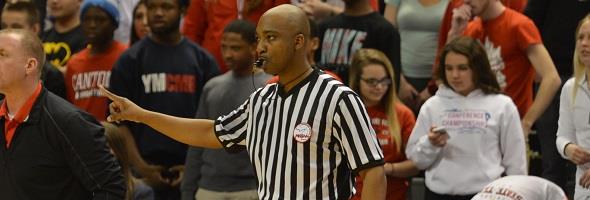
Be the Referee: Coaching Box Expansion
December 6, 2018
This week, MHSAA officials coordinator Sam Davis details the adoption of the larger sideline coaching box for basketball.
Be The Referee is a series of short messages designed to help educate people on the rules of different sports, to help them better understand the art of officiating, and to recruit officials.
Below is this week's segment – Coaching Box Expansion - Listen
There’s one very visible change coming to the basketball court this year in Michigan. The sideline coaching box has been expanded from 14 feet to 28 feet. The expansion was allowed by national playing rules for individual state association adoption a year ago, but the change was announced too late for Michigan to opt for the larger box.
Even though the box size has changed, other rules for behavior inside the box have not. Only the head coach is allowed to stand up in the box as allowed by rule; once the coaching box is lost due to a technical foul, there is no way to get the coaching box back; and all other related rules restrictions apply.
The change brings the game in Michigan full circle from when the old “seat belt” rule was created in the 1980s. Hopefully, common sense will prevail, and the coaching box will be used for just that – coaching.
Past editions
November 29: Video Review, Part 2 - Listen
November 22: Video Review, Part 1 - Listen
November 15: You Make the Call - Sleeper Play - Listen
November 8: 7-Person Football Crews - Listen
November 1: Overtime Differences - Listen
October 25: Trickery & Communication - Listen
October 18: Punts & Missed Field Goals - Listen
October 11: What Officials Don't Do - Listen
October 4: Always 1st-and-Goal - Listen
September 27: Unique Kickoff Option - Listen
September 20: Uncatchable Pass - Listen
September 13: Soccer Rules Change - Listen
September 6: You Make the Call: Face Guarding - Listen
August 30: 40-Second Play Clock - Listen
August 23: Football Rules Changes - Listen