

Calumet Invite Produces Northern Stars
September 18, 2013
By Geoff Kimmerly
Second Half editor
The Calumet Invitational dates back roughly 30 years as an annual staple of the cross country schedule for schools at the northernmost tip of Michigan's Upper Peninsula.
A creative move by the Copper Kings last year added some statewide prestige to the event.
 Last week, for the second season, Calumet ran the series of races at Keweenaw Mountain Lodge, a resort near Copper Harbor and the northern bank of the Keweenaw Peninsula.
Calumet is the northernmost high school in Michigan. And moving this race another 35 miles northeast more or less guaranteed it's the northernmost event run in the state.
"We figured it was pretty safe. We're the northernmost school in the state, and you can only go four more miles and you're in Lake Superior," Calumet athletic director Sean Jacques said. "Nobody else is going to do anything more north than that."
A total of 10 schools were represented this fall in the races for boys and girls varsity, junior varsity and middle schoolers.
Jacques said the event formerly was run at a golf course in Calumet. But a few years ago, Calumet graduate and former Copper Kings cross country runner Dan Harri moved home from Florida to become general manager at the Mountain Lodge (he's also a renowned chef and has owned restaurants in Miami with Hall of Fame Dolphins coach Don Shula).
Harri had asked a few times about bringing a cross country or golf event to the lodge. Jacques told him last year they'd give it a try, so Harri set up a course that includes golf course, a couple of bridges, trails and finishes with a climb on the No. 1 fairway. It also provides various points for fans to watch runners go by, not always available on other courses.
"We were looking for a little bit of a change, and it's a beautiful course," Jacques said. "We thought if people were willing to make the extra drive, it would be really nice."
Calumet won the boys race this season, just ahead of runner-up Houghton. Houghton's girls were victorious, followed by the host Copper Kings.
Click to read more about this year's event from the Houghton Mining Gazette.
Michigan's claim to an NFL evolution
As part of its NFL preview this month, Sports Illustrated reported on one of the most significant developments for offenses over the last few decades – the silent snap count, which is used regularly by visiting teams because offensive linemen can’t hear the quarterback calling for the ball over the clamor of the home crowd.
And the article explained that the silent snap count might’ve gotten its start at one of Michigan’s smallest high schools – Flint’s Michigan School for the Deaf.
Offensive linemen during the 1980s were feasted on by pass rushers like Lawrence Taylor and Bruce Smith, who built record sack totals by blasting past blockers who seemed a step slow. Turns out, that was true. Defensive players were getting an edge by attacking as soon as they saw the ball move. But blockers (especially offensive tackles), focused instead on the defensive ends and linebackers lined up across from them, and didn’t have the luxury of watching the ball – and since they also couldn’t hear the snap count, started each play a step behind.
Enter the silent count. The quarterback signals to the center that he is ready to receive the ball (with a pat on the back, by raising a foot, etc.). The center then raises his head, and after a predetermined count of at least one second snaps the ball without a sound. This means an offensive tackle doesn’t have to listen for a snap count – he just counts after seeing the center get set.
The SI report recognized longtime offensive line coach Howard Mudd as the guru of the silent snap count. But Mudd recalled a conversation he’d had while working for the Seattle Seahawks with another coach, the late Andy MacDonald, who also had coached early in his career at a school for the deaf in Michigan.
The article doesn’t mention Michigan School for the Deaf by name. But it seems to make sense that the Tartars were the first to use the now-revolutionary count. MacDonald – who played at Central Michigan University and went on to coach at Michigan State and four other colleges and also for the Buffalo Bills – grew up in Flint and attended Flint Northern before playing for the Chippewas from 1950-53. The historical web site Michigan-football.com has results for Flint’s Michigan School for the Deaf dating to 1950, making it a decent assumption that MacDonald might’ve gotten in a little early coaching experience at the school down the road from his home.
Click for the SI story and go to page 4 for the mention of Michigan’s school.
Michigan mourns trooper, running standout
The law enforcement community is mourning the death of Michigan State Police trooper Paul Butterfield, who was shot Sept. 9 during a traffic stop in Mason County. He also was a well-known distance runner during the 1980s and the MHSAA Class A cross country champion running for Bridgeport in 1987.
According to a Ludington Daily News report, Butterfield continued running after high school at the University of Tennessee, and also competed at the 1989 Pan American Junior Games in Argentina.
Butterfield was stationed in Hart after previously serving in Manistee, and lived in Mason County. He also had served in the U.S. Army. Click to read more from the Ludington Daily News.
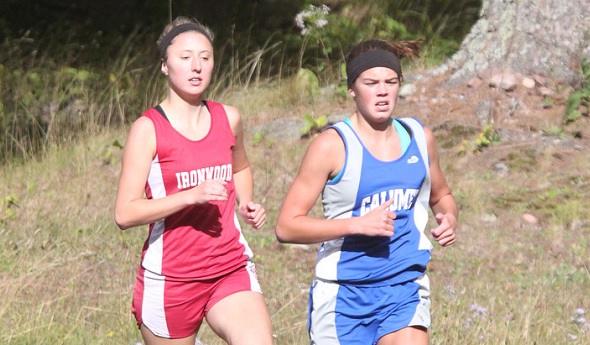
PHOTO: Calumet's Chelsea Jacques (right) won this season's Calumet Invitational with a time of 21:08.06, just ahead of Ironwood's Jessica Gering at 21:46.16. (Photo courtesy of Calumet athletic department.)
Add Rest Days to Your Workout Routine
June 2, 2020

Henry Ford Health System
Whether you're new to exercise or a seasoned enthusiast, it's tempting to adopt an all-go, no-quit attitude. This is especially common when you're are trying to achieve a fitness goal. Maybe you want to run a 5K, or maybe you have 10 pounds you want to shed before going on vacation.
"Whatever the driver, it's important to remember that scheduling time for rest and rejuvenation is a critical component of any workout regimen," says James Moeller, M.D., a sports medicine specialist at Henry Ford Health System.
Building in Rest Days
From high-intensity interval training (HIIT) and spin to barre and Zumba, popular workouts increasingly push exercisers to go faster, longer, stronger. This prolonged physical stress can lead to overuse injuries, such as stress fractures, muscle strains and joint pain. Excessive exercise can also lead to hormonal changes, disrupted sleep patterns, decreased immunity and mood swings.
“Working out, especially resistance training, breaks tissues down, causing microscopic damage,” Dr. Moeller says. "Rest days allow your muscles time to rebuild."
So how much rest do you really need? There isn't a one-size-fits-all prescription. Factors like your age, fitness level, the intensity of your workout and the amount of training you do weekly will impact the amount of recovery time you need. But there are some basic guidelines for rest days:
1. Go easy: Rest is a relative term. "It's not just sitting on the couch with an iced tea," says Dr. Moeller. "You may still be exercising on 'rest' days, but at a lower intensity." Maybe you go for a brisk walk or ride your bike to work. Take a yoga class or do some dynamic stretching. The key is to make sure you're not overworking the same body parts.
2. Get sufficient sleep: Sleep is a key component of muscle repair and rebuilding. During sleep, your body’s production of growth hormone increases. Not getting quality shuteye thwarts your body's production of growth hormone and can impact your performance.
3. Give overtaxed muscles a break: You don't need to skip the gym on specific days each week, but you do need to rotate which body parts you're working. The general rule is to give muscles 48 hours to recover after a workout. So it's a good idea to take two to three days off before working the same muscle groups again.
4. Stay hydrated: Make sure to restore lost fluids before, during and after a workout. Dehydration can lead to overheating, headaches and muscle fatigue, among other ailments. You don’t need a sports drink; water is best. "Sports drinks aren't required unless you're getting into very high intensity activity, or exercising for more than one hour at a time," Dr. Moeller says.
5. Pay attention to your body: A lot of people try to work out through pain and fatigue. If there's a heaviness to your movements, or if you feel like your muscles are not responding appropriately to the stress you're providing, take a time out. "It's really about learning to read your body's signals," says Dr. Moeller.
Health authorities and news headlines widely publicize the health benefits of exercise — and the consequences of inactivity. The American Heart Association recommends that adults get at least 150 minutes of moderate-intensity exercise per week, plus strength training two or three days per week. Less discussed are the negative effects of not allowing your body sufficient time to rest.
Getting sufficient rest between workouts is just as important as participating in regular exercise. "Both are part of the total process required to build strength, endurance and muscle mass," Dr. Moeller says.
Want to learn more? Henry Ford Health System sports medicine experts are treating the whole athlete, in a whole new way. From nutrition to neurology, and from injury prevention to treatment of sports-related conditions, they can give your athlete a unique game plan.
Visit henryford.com/sports or call (313) 972-4216 for an appointment within 24 business hours.