

Casting Lines for Future Tournaments
August 12, 2016
By Jack Roberts
MHSAA Executive Director
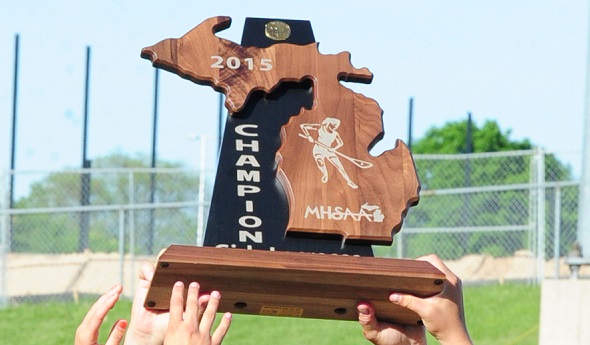
The MHSAA is best known to the public for the tournaments it conducts to conclude the fall, winter and spring seasons each school year.
These tournaments, the first and largest program of the MHSAA, have survived the Vietnam War, the Korean conflict and two World Wars. They have survived the technology bubble, the housing collapse, the energy crisis and the Great Depression.
MHSAA tournaments existed at the dawn of aviation and at the time of our nation’s lunar landing. Popes, presidents and governors have changed and changed again and again, and MHSAA tournaments roll on year after year.
But the sense of tradition and permanence and inevitability of MHSAA tournaments doesn’t dissuade us from asking questions about our tournaments, even some of the most basic questions. Here are two.
Question #1
I have long been and will always be an advocate for a Ryder Cup format for the MHSAA Golf Finals, and a team tennis approach to the MHSAA Tennis Finals; but 90 years of tradition is hard to overcome. Might this be a more exciting format? Could it be co-ed? Could it reverse the decline in boys tennis participation, and increase girls golf participation? Wouldn’t it be fun to try?
Periodically, the International Olympic Committee requires each of the designated Olympic sports to defend its status, to state its case why the sport should remain a part of the Olympic program. Then, after a series or votes that retain one sport at a time, the IOC drops the sport that makes the weakest case. It does so to make room for one of the previously unlisted sports that makes the best case for inclusion.
This would appear to keep the existing Olympic sports on their toes, and to keep the Olympic movement fresh and reflective of modern trends in sports.
While I would not enjoy the controversy, I can see the potential for some positive results if the MHSAA were to invoke the same policy for determining the 14 tournaments it will provide for girls and the 14 for boys.
This might cause us to consider more deeply what a high school sport should look like, or at least what an MHSAA tournament sport should stand for.
On the one hand, we might be inclined to drop tournaments for those sports that involve mostly non-faculty coaches and non-school venues, or require cooperative programs to generate enough participants to support a team, or resort almost entirely to non-school funding, or cater to individuals more than teams.
Or perhaps this process would cause policymakers to forget traditional thinking and ask: “In this day and age, should we shake off traditional notions of sport and consider more where modern kids are coming from?” That might mean fewer team sports and more individual sports, more “extreme” sports like snowboarding and skateboarding, and more lifetime sports, meaning not just golf and tennis and running sports, but also fishing and even shooting sports.
Currently, MHSAA policy states that the MHSAA will consider sponsorship of a tournament series for any sport which 64 member schools conduct on an interscholastic basis as a result of action by the governing boards of those schools.
Should the only question be how many schools sponsor a sport, or must an activity also have certain qualities and/or avoid certain “defects?” What should an MHSAA tournament sport look like and stand for?
Question #2
Bristling from criticism that his association is a money-grabbing exploiter of children, my counterpart in another state said, “If we were running our programs just to make money, we would do very many things very differently.” I knew exactly what he meant.
Because we care about the health and welfare of students, because we mean what we say that the athletic program needs to maximize the ways it enhances the school experience while minimizing academic conflicts, and because we try to model our claim that no sport is a minor sport when it comes to its potential to teach young people life lessons, we operate our programs in ways that make promoters, marketers and business entrepreneurs laugh, cry or cringe.
If money were the only object, we would seed and select sites to assure the teams that attracted the most spectators had the best chance to advance in our tournaments, regardless of the travel for any team or its fan base. If money were the only object, we would never schedule two tournaments to overlap and compete for public attention, much less tolerate three or four overlapping events. If money were the only object, we would allow signage like NASCAR events and promotions like minor league baseball games.
Those approaches to event sponsorship may not be all wrong; they’re just not all right for us. And we will live with the consequences of our belief system.
During a typical school year, more than 20 percent of the MHSAA’s 2,097 District, Regional and Final tournaments lose money. Not a single site in golf, skiing or tennis makes a single penny. In no sport did every District, Regional and Final site have revenue in excess of direct expenses.
In fact, in only three sports – boys and girls basketball and football – is revenue so much greater than direct expenses overall that it helps to pay for all the other tournaments in which the MHSAA invests.
That’s right: invests. When we present our budget to our board, we talk about the MHSAA’s investment in providing tournament opportunities in all those sports and all those places that cannot sustain the cost of those events on their own. How much is this investment worth to students, schools and society?
These two are core questions that require our focus far in advance of talk about scheduling, site selection, seeding and the myriad matters that too often hijack our time and attention.
Mattawan's Novaks Claim League Titles, Ready to Pursue Next Championship Goals
By
Pam Shebest
Special for MHSAA.com
May 17, 2022
MATTAWAN — In a family steeped in tennis history, one member is forging his own path.
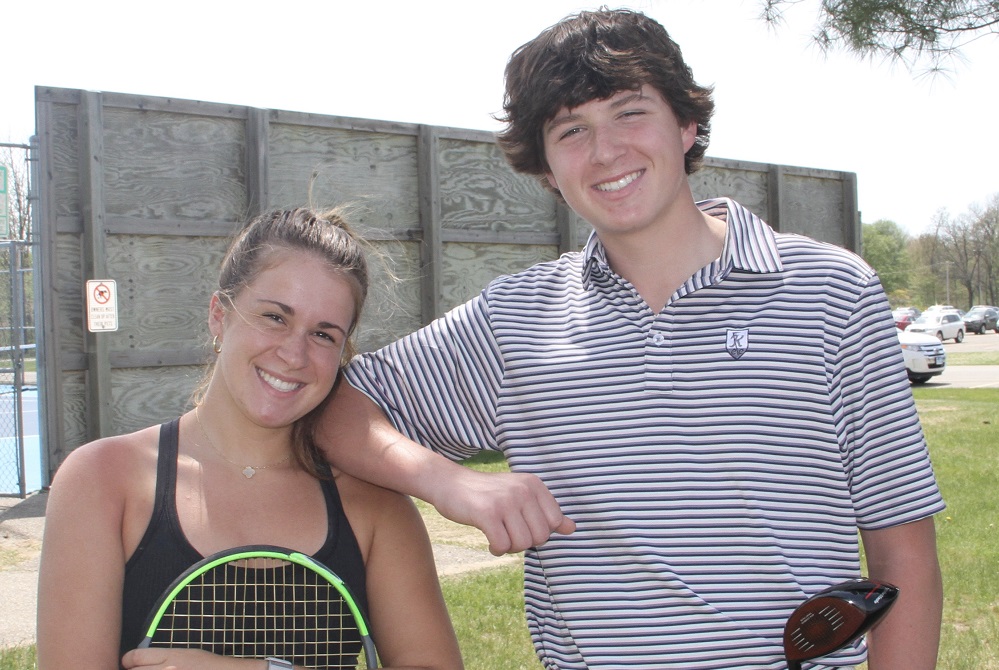
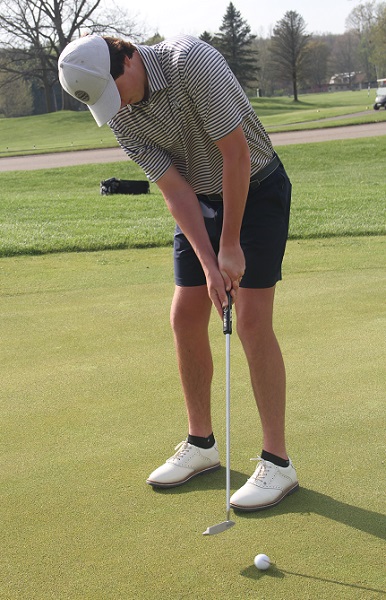
 Matt Novak has been tearing up the course as Mattawan’s top golfer.
The sophomore won the individual medalist honor in the 36-hole Southwestern Michigan Athletic Conference Championship two weeks ago and carded the best nine-hole average in SMAC West matches this season.
“He’s having quite a year so far, and we are just very excited to take this ride with him,” Mattawan’s first-year coach Troy Pelak said.
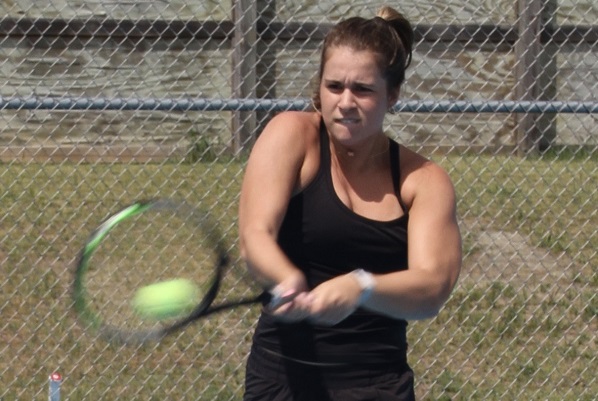
Novak’s sister, Lizzie, is also having a stellar season as the Wildcats’ top tennis player.
She, too, won the SMAC Championship last weekend and, after recovering from an early-season injury, takes a 9-0 record into this week’s Regional.
“Her big win (this year) was vs. Forest Hills Northern (ranked No. 1 in the state in Lower Peninsula Division 2),” said Matt Boven, in his 24th season coaching the Wildcats.
Mattawan tennis is ranked sixth.
As a freshman, Lizzie Novak won the LPD2 Finals No. 2 singles title playing behind her sister, Kate, who is now playing tennis at Bucknell (Pa.) University.
COVID-19 caused Lizzie Novak’s sophomore season to be canceled, and she opted to play USTA tournaments her junior year but hopes to add one more MHSAA title to her resume.
 If she does, she will finish with just one fewer than her dad, David Novak, who won three state titles at Hackett Catholic Central, one at No. 2 singles in 1983 and two at No. 1 singles (1985, 1986).
Matt Novak played tennis at a young age, but “I didn’t like it as much as my sisters did, so I decided to pursue golf more in the summer,” he said.
“I like that you’re really out there by yourself, and you’re playing against the course and not a specific person. You push yourself every single time you’re out there.”
The sophomore also plays hockey during the winter, which has helped his golf game.
“A couple of my coaches taught me how to be a good leader,” he said. “I think I translated a lot of my leader skills from hockey into golf.”
That includes his slap shot which “definitely helps with power off the tee in that long ball,” he said.
Pelak said although Matt is the youngest on the team, he is the team leader.
“We had an event earlier in the year and we took third of 21 teams,” Pelak said. “The team said, ‘This is pretty good,’ and Matt said, ‘Guys, we’re here to win, not place third.’ That’s the message he sent right away.”
Junior Will Kuiper said teammates have a lot of respect for Novak.
“He knows a lot about golf, and he wants to help the team get better,” Kuiper said. “He’ll help you after practice.
“He’ll be hard on us sometimes, but he just wants us to get better. He just wants the team to win.”
That passion for golf sometimes leaves Novak out of family chatter.
“I feel singled out at the dinner table when they’re all talking about their tennis and I’m over here just thinking about golf,” he said, laughing.
His sister agrees.
 “We’ll go full tennis and Matt will go, ‘What about me?’ We’ll try to turn to him, but no one can relate to him as much,” she said.
“I think he has the attitude for tennis, but I think it’s kinda fun that he has something different from tennis. Golf is more exciting for him.”
The senior, who is headed to University of Richmond in the fall, is also a team leader.
“I feel I bring a lot of leadership and energy and excitement,” she said. “Some of these players are so much more inexperienced.
“I’m trying to get everyone together on and off the court. I’ve been having a blast. We’ve improved every week, and I hope we can make it to State.”
Tennis suits her, Lizzie Novak said.
“I feel like I’m kind of a control freak,” she said. “I like everything a certain way, and I don’t want someone else to mess up. I can mess up.”
She thanks her sister for steering her to tennis.
“I was obsessed with my sister when I was younger, and she started playing tennis, so that’s what I’ll do,” she said. “She quit dance, I quit dance. It worked, and I love it. It’s just like breathing to me at this point.”
The senior has one more weapon to help her: She’s a lefty which, at times, gives her an advantage since most players are used to facing righties.
“When I play someone left-handed, I’m like, this is terrible, but I like it,” she laughed.
Boven said Lizzie Novak brings power to the team.
“Having a star at No 1 singles puts her other teammates in a position to win,” he said. “It gives other opportunities and actually strengthens other flights.
“To have someone who’s basically a guaranteed point really does a great deal for the team.”
Other seniors on the tennis team are Romika Shokohi, Ashley Goding, Adelaide Douglass and Sloane Lohroff; juniors are Emma Coleman and Madison Pratt. Sophomores are Madison Engel and Kendall Coon, while freshmen are Sienna Watts, Nadia Baird and Emma Pratt.
 Boven said it will be strange not having a Novak on a tennis team next year, but he still has hope.
Talking about trying to convince Matt Novak to play tennis, he said, “Absolutely I did, and I’m still trying to talk him into it. I hear he’s a natural, and tennis is in his blood.
“I love his personality. I think he could bring charisma and some talent to the team. So, yes, on a daily basis I’m trying to talk Matthew into playing tennis.”
That may be wishful hoping on Boven’s part.
Novak is totally focused on golf.
“We made it to Regionals but did not qualify for states last year, and I, sadly, didn't qualify (individually),” he said. “(This year) we’re strong, and we have to work on consistency.
“We definitely have a couple guys who can go low. It just matters if we can do it more than once, shoot a good round and the next day shoot a good round again.”
Pelak has six seniors on varsity: Logan McClish, Andrew Keorkunian, Jared Yetter, Zach Sylvester, Seth Reeves and Brady Weller.
Juniors include Blake Welch and Cameron Graver, and the other sophomore is Eason Haller.
Pelak said Novak possesses the qualities of a top golfer.
“In addition to scoring, which is obviously very important in golf, he plays with tremendous poise. His course management skills are off the chart,” Pelak said.
“He does a good job of not getting too high or low and really manages himself on the course with a lot of poise. He’s not emotional, which is perfect for a golfer.”
With two top athletes usually competing on the same day, the Novaks have come up with a plan.
“My mom (Meredith) usually likes to take the tennis and my dad likes golf,” Matt Novak said. “It gets too stressful watching my sister.”
 Pam Shebest served as a sportswriter at the Kalamazoo Gazette from 1985-2009 after 11 years part-time with the Gazette while teaching French and English at White Pigeon High School. She can be reached at [email protected] with story ideas for Calhoun, Kalamazoo and Van Buren counties.
PHOTOS (Top) Sister Lizzie and brother Matt Novak are among Mattawan athletes with high aspirations as their sports approach postseason play this spring. (2) From left, Mattawan girls tennis coach Matt Boven, boys golf coach Troy Pelak and golfer Will Kuiper. (3) Lizzie Novak returns a volley during a recent tennis practice. (4) Matt Novak putts during a golf practice. (Boven head shot courtesy of Mattawan’s girls tennis program; all other photos by Pam Shebest.)