


Class in Session: A History in Classification
July 24, 2017
By Rob Kaminski
MHSAA benchmarks editor
This is the first part in a series on MHSAA tournament classification, past and present, that will be published over the next two weeks. This series originally ran in this spring's edition of MHSAA benchmarks.
Conversation and discussion at the March 2017 MHSAA Representative Council Meeting leaned heavily toward the subject of 8-Player Football and how to properly balance its tournament with the growing number of schools sponsoring the sport.
While the proposal to split the tournament into two divisions beginning with the 2017 school year was adopted, the MHSAA then faced questions such as when to set the divisions, how to determine qualifiers and where to host the championship games.
The topic continues to create a buzz in Class D schools across both peninsulas, and likely will do into the start of school this fall.
Likewise, the lone holdouts still conducting tournaments by class – MHSAA Boys and Girls Basketball and Girls Volleyball – took center stage at the May Council discussion, and following the 2017-18 school year, class is out for good. Both genders of basketball, and girls volleyball, will move to divisional formats thereafter.
There is much to be decided to be sure; but as those in education are well aware, history is the best teacher.
Fortunately for the sports in flux and for all sports under the governance of the MHSAA, the Association more or less wrote the book on the subject of sport classification. Following is a history lesson, with a little advanced division thrown in.
Class structure
Credited with being the first state with multiple tournament classifications, Michigan’s attention to trends and shifts in philosophy aimed at fair play and equal tournament opportunity can be traced from 80 years ago to the present.
In the earliest years of the MHSAA, there were four classifications for elections and tournaments – Classes A, B, C and D. Classes C and D had far more schools than Classes A and B. For example, 80 years ago (1937), there were only 58 schools in Class A, 94 schools in Class B, 297 schools in Class C and 253 schools in Class D.
Gradually through the years, as Michigan’s major cities spawned suburbs, there was a shift in the other direction to the point 30 years ago (1987) when school size became more balanced: 173 Class A schools, 178 Class B schools, 179 Class C schools and 182 Class D schools.
Up until 1987, the MHSAA published the dividing line between each classification, after which schools submitted their enrollments. Then, for 1988 and thereafter, the MHSAA adopted the plan of gathering all enrollments first and then placing 25 percent of the schools in each of four classes. This completed the equalization of the number of schools in each class for elections.
However, the change for 1988 did nothing to equalize the number of teams actually entered by each class in each sport. And unlike the early years of the Association when there were many more Class C and D teams than A and B teams, there were more Class A and B teams than C and D teams entering MHSAA tournaments decades later.
Moreover, the difference in number of teams entered in the different classifications for a sport continued to increase as many small schools, the fastest growing portion of the MHSAA's membership, sponsor only a few sports, or they sponsor no sports at all but enter into cooperative programs with other schools.
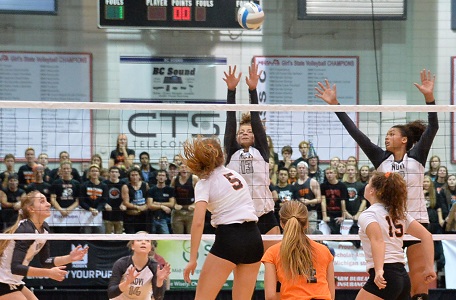 Because of these differences, Class A or B schools sometimes had to win twice as many games as Class C or D schools to reach the MHSAA Finals in a sport. At times, the larger classifications had District Tournaments, even rat-tail games, and/or a Quarterfinal game, and the smaller classifications did not. Most Class D Districts have had four teams (some only three), while Class A Districts often had seven or eight teams. In Regional levels of individual sports, the number of entries in the larger classification once greatly outnumbered those in the smaller classifications of the tournament for the same sport.
Over the years, these dividing lines between classes escalated gradually, as did the differences in enrollments of largest and small schools in each class. In 1937 the dividing lines were 700, 300 and 100 between Class A and B, B and C, and C and D, respectively. By 1987, the dividing lines were 1,129, 571 and 298, respectively, leading to the current method of collecting enrollments and then setting the classification.
With the pendulum swinging well past center by the late 1980s, coaches associations, MHSAA sport committees, tournament managers and school administrators began discussion and offered proposals to correct what many believed had become a flawed system of MHSAA tournament classification.
At the 1996 MHSAA Update Meetings, ¾ of 858 respondents to that year’s annual survey indicated they favored a system that would divide schools which actually sponsor each sport into two, three or four nearly equal divisions.
Problem solving
At its meeting May 4-6, 1997, the Representative Council defeated a motion that would have adopted in one action a coordinated plan of reclassification for all sports to equalize the number of schools in each tournament for each respective sport. Instead, the Council discussed and voted on each proposal that had been presented from sport committees.
This resulted in the Representative Council adopting four equal divisions for baseball and softball, four equal divisions for boys and girls tennis, four equal divisions for boys soccer and three equal divisions for girls soccer, effective with the 1997-98 school year. Helping in the decision was the success of the 1995-96 MHSAA Wrestling season, which saw the sport move to four divisions for its tournament structure
The Council delayed action on similar proposals for football and boys golf at that time to glean additional input. The same decision was made with respect to a proposal from the Ice Hockey Committee that would have split the Class A schools in two divisions and left the Class B/C/D Tournament unchanged.
“The gist of the move from classes to divisions was to equalize the path to championships for students of all schools, regardless of the size of those schools,” said MHSAA Executive Director Jack Roberts.
While the restructuring accomplished that goal for the majority of competitors, opposition exists now as it did then. The primary argument in opposition to the changes is that, in some sports, it increases the range between largest and smallest schools in the division for smallest schools, even as the range is usually reduced for other divisions.
Larger schools offered a counterpoint.
“The larger schools suggested that while they may have more students, they also attempt to sponsor more sports than the smaller schools, in some cases spreading the enrollment as thin as a much smaller school with fewer sports,” Roberts said.
“Even today, the idea of four equal divisions can be unpopular among some Class D schools which feel especially burdened by the equal division concept,” Roberts said. “There was enough opposition in 1997 that equal divisions were rejected for boys and girls basketball and girls volleyball, and some of that opposition remains.”
The numbers of schools sponsoring each MHSAA tournament are still close to the totals today, with the exception of soccer in both genders, which has enjoyed substantial increases. This spring, 466 girls teams were scheduled to compete in the MHSAA Soccer Tournament, while 473 boys teams will suit up this fall.
Since the beginning of MHSAA divisions in 1996 with wrestling, 147 additional team champions have been crowned and countless individuals have known the thrill of victory due to an extra level of Finals in various sports. Girls soccer has seen the most growth in opportunity, moving from two classes in 1987 to three divisions the following year, and then four divisions in 2000. Boys soccer had enjoyed four classes for two years prior to the new four-division format, and it was the sport of soccer that helped to create a caveat in the nearly equal division movement.
Lower Peninsula boys and girls swimming & diving expanded from two to three divisions in 2008, while boys and girls bowling are the most recent sports to enjoy increased tournament opportunity, adding a fourth division in 2010.
“Fairness is in the eye of the beholder. While having the same number of schools in each division is one kind of fairness, holding in check the enrollment range between the largest and smallest schools in Division 4 is another kind of fairness that is dear to a great number of people,” Roberts said. “Because more schools sponsor basketball and volleyball than other sports, Class D schools would have been least affected by the equal divisions concept in those sports; but that, and ‘tradition,’ did not dissuade the opponents in the 1990s.”
The shift to divisions not only paved the way for student-athletes, but also assisted administrators and schools hosting tournaments. MHSAA tournament mangers looked to equal divisions to more closely equalize the number of schools in District or Regional Tournaments and to better equalize the length of day required for these rounds of tournaments, both for management and participating teams and individuals.
Pinning down an answer
Wrestling became the first MHSAA Tournament to be conducted in nearly equal divisions when team and individual champions were crowned in Divisions 1, 2, 3 and 4 rather than Classes A, B, C/D for the 1996 winter championships.
The movement was well received, as schools saw more opportunity for success: four champions where there once were three at the District, Regional and Final levels, and a smaller range of enrollment between the smallest and largest school in all four tournaments, leading to the impetus for the Fall 1996 Update Meeting Survey of schools regarding similar movement in other sports.
Team champions that year were Holt (D1), Petoskey (D2), Middleville Thornapple Kellogg (D3) and Dundee (D4).
Getting their kicks
When the "equal divisions" concept was approved by the Representative Council for most MHSAA Tournaments for the 1997-98 school year, there was opposition from the smallest schools which, under the equal divisions, are forced to play against larger schools than reside in Class D. Compelling arguments were made – and still are – that an enrollment difference between schools with smaller enrollments (e.g., Class D) is more difficult to overcome in athletic competition than an even larger enrollment difference between schools with larger enrollments (e.g., Class A).
The opposition was most intense in soccer because of the number of students needed to field a team and the physical nature of the sport. As a result, from 2000-01 through 2010-11, soccer operated with a “20-percent modification.” This placed 20 percent of all schools that actually sponsored soccer in Division 4, and the remaining 80 percent were placed equally in Divisions 1, 2 and 3.
At the time the 20 percent modification was adopted, it was also established that soccer would return to four equal divisions when the largest Division 4 soccer school had an enrollment equal to or smaller than the mid point for Class C schools. That occurred in 2010.
Last class on the schedule
In the same volume of “history being the best teacher,” one can also find the adage, “times change.” While the division format was a welcome change in some sports, others were left to hold class without change.
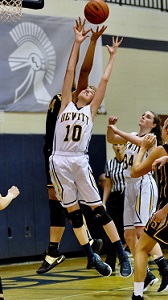 In the sports of boys and girls basketball, and girls volleyball, the number of schools sponsoring the sports were so close to the overall membership of the MHSAA that divisions were not necessary; the enrollment breakdowns themselves were enough to delineate equal opportunity for tournament success.
That is no longer the case, according to MHSAA membership. The last move from classes to divisions occurred for the 2006-07 school year following Council action. Before this May, that is. Action at the most recent Representative Council meeting, May 2017, called for the shift to divisions for MHSAA Boys and Girls Basketball, and Girls Volleyball, beginning with the 2018-19 season.
“Because the MHSAA Volleyball Committee had requested this change several times a number of years ago, and because the Council felt the change inevitable, there should not be further delay,” Roberts said. “It is an important detail that the Class D maximum has dropped 50 students over the past decade so the objection that much larger schools would be competing in Division 4 isn’t very strong now.”
Using the 2017-18 enrollment figures, just eight Class C schools would be competing in Division 4 for boys basketball, 11 for girls basketball and 14 for girls volleyball.
Good things came of the previous most-recent switches in 2006-07. Competitive Cheer was re-classified from Class A, B and C-D into four equal divisions assisting in the rapid growth of sponsoring schools (approximately 80 schools per division). Alpine skiing was changed from Class A and B-C D to two equal divisions.
At that time, the MHSAA Basketball Committee had recommended to the Council the study of increased classifications, but status quo remained.
Back on the grid
As such, MHSAA Basketball and Volleyball remained the only holdovers of the MHSAA class structure. Discussion resurfaced periodically during the last two decades to bring those tournaments in line with the other MHSAA sports.
Regular-season football-playing schools are separated by class, then are reshuffled by divisions for the playoffs. Football, as we know, underwent a significant postseason facelift in the late 1990s.
While MHSAA Football also remained a class sport through 1998, it had expanded from four to eight classes from 1990-98, becoming the first MHSAA sport to crown more than four team champions. Member schools were asked to consider a pair of options in November of 1997. One called for eight equal divisions, and the second would leave Class D by itself as division 8, and split Class A, B and C schools into seven nearly equal divisions.
After much discussion, retooling, and crunching of formulas, the MHSAA unveiled its revised Football Playoff model that continues to roll today, nearly 20 years later. It was determined that 256 teams would qualify for the tournament based first on a minimum of six wins, then by Playoff Points determined by formula. From there, the field would be divided into eight divisions, with the field being filled out by a nearly equal number of five-win teams in each division as needed to reach 256.
Eight championships would indeed be enough, until football sponsorship among the MHSAA’s smallest schools – some with rich football traditions – began to trend downward. The MHSAA again went to the drawing board, examining the viability of 8-player football. After an experimental year in 2010 without a tournament, the 8-player game was playoff-ready for 2011, with a field of 16 qualifiers embarking on a four-week tournament.
Not only did the 8-player option restore recently canceled programs, but it also created teams in schools which previously had none, and convinced some 11-player schools that this new division was the best path to take.
What did this do for the Class D holdovers staying in the traditional 11-player game? Well, a couple of things, positive and negative. As two and three dozen Class D schools opted for the 8-player game, the remaining 11-player Class D schools at times found themselves in disrupted leagues and had to travel further to complete schedules. They also competed against larger teams in Division 8 of the 11-player MHSAA Football Playoffs.
However, the growth of the 8-player game among the smallest schools also resulted in more Class D schools qualifying for the MHSAA Football Playoffs than ever before. In 2012, an all-time high 44 percent of Class D schools sponsoring football qualified for either the 8-player tournament or Division 8 of the 11-player tournament. That compared to 42.2 percent of Class C schools, 44.9 percent of Class B schools and 41.6 percent of Class A schools which qualified for the 2012 playoffs.
Much is to be determined in the most recent chapter of MHSAA Tournament expansion as the 8-Player Football Playoffs welcome a second division. As the past illustrates, there will be pluses and minuses. History also shows that the MHSAA has received maximum input from its constituents, researched all possibilities, and will find solutions to questions still in the balance before an additional group of athletes hoists a new trophy in November.
Through the Years
A chronology of when which sports moved from Class to Division in the MHSAA.
1995-96: LP Wrestling
1997-98: Baseball, Boys Soccer, Girls Soccer, Softball, LP Girls Tennis, LP Boys Tennis
1998-99: LP Boys Golf, LP Girls Golf
1999-2000: Ice Hockey, LP Boys Track & Field, LP Girls Track & Field
2000-01: LP Boys Cross Country, LP Girls Cross Country, UP Boys Cross Country, UP Girls Cross Country, UP Boys Golf, UP Girls Golf, UP Boys Tennis, UP Girls Tennis, UP Boys Track & Field, UP Girls Track & Field
2002-03: LP Girls Swimming & Diving, LP Boys Swimming & Diving
2005-06: Boys Bowling, Girls Bowling
2006-07: Girls Competitive Cheer, Boys Skiing, Girls Skiing
2018-19: Boys Basketball, Girls Basketball, Girls Volleyball
Note: Boys and Girls Lacrosse has been a divisional sport since it began in during the 2004-05 school year.

1st & Goal: 2022 Week 8 Review
By
Geoff Kimmerly
MHSAA.com senior editor
October 17, 2022
Plenty of regular-season wheels were still in spin during football’s Week 8, including opportunities for a few more historic league championship claims and a few upsets to keep this season’s playoff field a little tougher to forecast.
 Dexter and Durand are among the latest to celebrate league titles many years in the making. Spring Lake, Elk Rapids and East Grand Rapids kept us on our toes as well as we dug deeper into crunch time with only one week of regular-season matchups to play.
Here’s a look at how those teams and others continued to drive us forward as we draw nearer to playoff selection coming up this Sunday.
Bay & Thumb
HEADLINER Goodrich 21, Linden 0 The Martians (7-1) added the overall Flint Metro League championship to their Stars division title and also extended their winning streak that began after a season-opening defeat. Since that Week 1 loss, Goodrich has given up more than seven points in a game only once, with this its third shutout of the fall. The Martians have won all three meetings with Linden (5-3) since joining the Metro in 2019. Click for more from the Flint Journal.
Watch list North Branch 35, Croswell-Lexington 21 The must-follow Blue Water Area Conference race has reached a conclusion, with North Branch (7-1) clinching a share of the championship with this victory and Armada (7-1) clinching a share with its win over Richmond on Friday. The Broncos avenged a 28-7 defeat last year to the Pioneers (6-2), who went on to win the 2021 BWAC title.
On the move Harbor Beach 28, Bad Axe 7 The East’s Harbor Beach (7-1) won this matchup of Greater Thumb Conference division runners-up, avenging last year’s 42-33 loss to the Hatchets (5-3). Davison 49, Grand Blanc 14 The Cardinals (7-1) avenged last year’s 43-7 loss to the rival Bobcats to set up a winner-take-all Saginaw Valley League South title matchup this week against Lapeer. Freeland 40, Birch Run 6 The Falcons (7-1) have moved up in the Division 4 playoff-point rankings three straight weeks and now sit at No. 12 after sending Birch Run (4-4) one spot out of the Division 5 qualifier list to No. 33 heading into the regular-season finales.
Greater Detroit
HEADLINER Detroit Cass Tech 28, Detroit Martin Luther King 14 The Detroit Public School League Blue championship game was a rematch from Week 4, won by King 28-23. But this time, Cass Tech was able to shut down a Crusaders offense averaging 43 points per game and break a three-game losing streak against its biggest rival. Cass Tech (5-3) also received a nice boost to No. 29 in Division 1 playoff-point average after entering the weekend at No. 31. King, at 5-2, sits No. 12 on the Division 3 playoff-point list. Click for more from the Detroit News.
Watch list Farmington 39, Birmingham Seaholm 21 A two-point loss to Troy in Week 5 put the Falcons (6-2) in chase mode, but they earned a share of the Oakland Activities Association Blue title by handing Seaholm (7-1) its lone loss in the league finale. The next-best news for both is both were sub-.500 last year and have rebounded in big ways.
On the move Belleville 42, Livonia Franklin 14 The Tigers (8-0) clinched another Kensington Lakes Activities Association East title outright and ran their overall winning streak to 19, while dealing Franklin (7-1) its only defeat. Detroit Central 31, Detroit Southeastern 14 The Trail Blazers (8-0) ran their regular-season winning streak to 18 in finishing an outright PSL Gold championship run with a second win over Southeastern (5-3) this fall. Clarkston 48, Lapeer 13 The Wolves (6-2) have two good losses and some really solid wins this season, this one over the Lightning (7-1) just the latest and enough to push Clarkston up to No. 7 on the Division 1 playoff-point list.

Mid-Michigan
HEADLINER Durand 23, New Lothrop 21 The Railroaders’ season would have been considered a mighty success with just a shared championship in the Mid-Michigan Activities Conference. But Durand (8-0) continued to make its case as one of the most intriguing stories of this season statewide by edging the Hornets to claim the title outright, after two weeks ago earning a share of its first league championship since 1983. Even with the loss, New Lothrop (6-2) moved up a spot in Division 7 playoff-point ranking to No. 12, and its defeats this season are by a combined three points. Click for more from the Owosso Argus-Press.
Watch list Holt 16, East Lansing 13 The Rams actually ran their winning streak over East Lansing (6-2) to two, but this one spun the Capital Area Activities Conference Blue race on its side with Holt (5-3) clinching a share and East Lansing and Grand Ledge now set to decide the other half of the championship when they face off this week. The Trojans had entered the weekend in first alone.
On the move Portland 32, Cadillac 6 The Raiders (7-1) are shaping up as Division 5 contenders again, with this win over the Vikings (5-3) moving them up three spots to No. 6 on that playoff-point average list. Charlotte 44, Flint Hamady 34 The Orioles’ rise continues as they moved to 7-1 by handing Hamady (7-1) its lone defeat. Hastings 33, Jackson Northwest The Saxons (7-1) clinched a share of the Interstate 8 Athletic Conference title and can claim it outright this week against winless Battle Creek Pennfield.
Northern Lower Peninsula
HEADLINER Elk Rapids 26, St. Ignace 19 Add the Elks (6-2) to teams enjoying an unforgettable fall. They finished third in the Northern Michigan Football Conference Leaders, but earned their most notable win this season over a St. Ignace team that’s clinched a share of the NMFC Legacy title and will play for the outright championship this week. Elk Rapids (6-2) has put together its best season since 2018, while the Saints (6-2) are surging through their best showing since 2016.
Watch list Traverse City St. Francis 42, Lawton 7 We’ve been watching the Gladiators all season, and it feels like we’ll be watching them late into November again as they moved to 8-0 with a big win over last season’s Division 7 runner-up Blue Devils (6-2).
On the move Traverse City Central 21, Bay City Western 0 A four-game losing streak in September had the Trojans (4-4) solidly outside the Division 2 playoff field, but a three-game winning streak has moved them back up to No. 21 in Division 2. McBain 46, Manton 20 After a few weeks skating outside the top 32 in Division 8 playoff-point average, McBain (4-4) is up to a more comfortable No. 27 with winless Muskegon Heights Academy up next. Charlevoix 38, Kalkaska 0 The Rayders moved to 7-1 with their second-straight shutout and sixth in eight games this season.
Southeast & Border
HEADLINER Dexter 21, Saline 14 The Dreadnaughts (8-0) defeated eight-time reigning champion Saline to clinch the Southeastern Conference Red championship outright – that league title also Dexter’s first in 59 years. Cole Cabana scored all three touchdowns, while the Dreadnaughts’ defense stood strong again and is giving up only 10.4 points per game this season. Saline moved to 6-2. Click for more from the Ann Arbor News.
Here are the highlights of the Saline at Dexter game that aired on Football Fridays Overtime powered by STATE CHAMPS! on @BallySportsDET#MIFTBL | @DreadStrong | @colecabana pic.twitter.com/JndzfPoY2k
— STATE CHAMPS! Michigan (@statechampsmich) October 15, 2022
Watch list Adrian 39, Sturgis 13 The Maples (4-4) finished fourth in the SEC White, but their four wins are the team’s most since 2016, and they are one spot outside making the Division 4 playoff field after moving up seven spots with this win over the Trojans (5-3).
On the move Napoleon 36, Addison 18 The Pirates (8-0) clinched the Cascades Conference championship outright with their first win over Addison (4-4) since 2018. Hudson 46, Dundee 17 The Tigers (8-0) guaranteed a winner-take-all Week 9 matchup with Clinton in the Lenawee County Athletic Association while taking Dundee (6-2) out of title consideration. Ottawa Lake Whiteford 50, Erie Mason 14 The Bobcats (8-0) finished a perfect run through the Tri-County Conference and sit No. 2 in Division 8 playoff-point average, while Erie Mason (5-3) is hanging in at No. 29 in Division 7.
Southwest Corridor
HEADLINER Buchanan 34, Benton Harbor 22 The Bucks (7-1) wrapped up the inaugural Lakeland Athletic Conference championship outright, and deservedly so after putting up the most points a tough Benton Harbor defense has given up this season. Similarly, the Tigers (4-4) tied the third-most Buchanan has allowed, and will hope to continue that trend this week as they sit two spots outside the Division 5 playoff field with a trip to Constantine next. This win moved Buchanan up three spots in Division 6 to No. 12. Click for more from the Niles Daily Star.
Watch list Homer 34, Reading 30 The Trojans (6-2) didn’t catch Union City in the Big 8 Conference but finished a solid second thanks to their first win over Reading (6-2) since 2016. They also guaranteed their best record since 2019 with the win.
On the move Edwardsburg 46, Chelsea 7 The Eddies (7-1) are making some noise, with this win over the reigning Division 4 champion Bulldogs (5-3) a good conversation starter. White Pigeon 44, Kent City 19 A three-game winning streak has White Pigeon (5-3) steadily moving up the Division 8 playoff-point list, and this win over Kent City (6-2) was their most impressive of the fall. Watervliet 32, Parchment 7 Watervliet (5-3) was in need of some added comfort in the Division 6 playoff field, and this win pushed it up six spots to No. 22. Parchment (4-4) fell five spots to a less comfortable No. 34, two out of making the postseason.
Upper Peninsula
HEADLINER Negaunee 48, Houghton 0 The Miners (8-0) not only experienced no letdown after a big Week 7 win over Gladstone, they put up their third-most points of the season and earned their second shutout in clinching a share of the Western Peninsula Athletic Conference Copper title. Negaunee will play for its first perfect regular season since 2016 against Ishpeming Westwood this week, while Houghton (5-3) is working to hold onto a playoff spot in Division 6 and could see the Miners again. Click for more from Upper Michigan Source.
Watch list Kingsford 46, Hopkins 7 The Flivvers (6-2) quietly have won five straight – with Hopkins (5-3) playing for a league title share this week. Kingsford has gone over 45 points three of the last four games and held its last four opponents to single digits.
On the move Gladstone 22, Gaylord 14 The Braves (6-2) quickly bounced back from that Negaunee loss, with a sixth win representing their most in a season since 2017 – and against a Gaylord team (5-3) enjoying its best since 2018. Iron Mountain 28, Ishpeming 8 The Mountaineers (7-1) are holding on to the top spot in Division 8 playoff-point average for the second-straight week after defeating a possible playoff opponent in the Hematites (4-4). Bark River-Harris 34, Ishpeming Westwood 6 The Broncos (6-2) may bring a little more momentum to this week’s West-PAC Iron title decider with Ishpeming after avenging last year’s 50-8 loss to Westwood (4-4).
West Michigan
HEADLINER Spring Lake 35, Hudsonville Unity Christian 32 The Lakers (3-5) have quite a bit to make up to have a shot at making the Division 4 playoffs. But they made a massive impact on the Ottawa-Kent Conference Blue race with this upset, denying Unity Christian (5-3) a chance to clinch a share of the league title and instead bringing Fruitport and Grand Rapids West Catholic back into the mix. Click for more from the Grand Haven Tribune.
Watch list East Grand Rapids 15, Lowell 14 The Pioneers (3-5) were coming off two losses, but in edging the Red Arrows (5-3) they pushed into a pretty solid No. 24 slot in Division 3 playoff-point average.
On the move Grand Rapids Forest Hills Central 30, Grand Rapids Christian 7 The Rangers (8-0) are one of two undefeated teams left in Division 2 and now own a share of the O-K White championship with the chance to repeat as outright winner this week. Muskegon Mona Shores 15, Muskegon Reeths-Puffer 0 With their second shutout of the season, the Sailors (7-1) clinched a share of the O-K Green title. Grand Rapids South Christian 37, Grand Rapids Kenowa Hills 7 These Sailors now own a share of the O-K Gold championship but with a tough opponent coming up in Forest Hills Eastern as they seek to win outright.
8-Player
HEADLINER Rogers City 42, Alcona 26 The North Star League Big Dipper championship belongs to Rogers City after this highly-anticipated matchup. The last three between these rivals had been decided by a score, but the Hurons broke away and are now one more win from a first perfect regular season since 1998. Alcona is 6-2. Click for more from MI Sports Now
Watch list Central Lake 26, Farwell 22 Early losses to Gaylord St. Mary and Indian River Inland Lakes are why Central Lake ended up third in the Ski Valley Conference. But the Trojans have won five straight (including a forfeit) and handing Farwell (7-1) its lone loss makes them a team to watch even more as we head into the postseason.
On the move Climax-Scotts 28, Adrian Lenawee Christian 21 The Panthers (7-1) are absolutely among the best teams in 8-player Division 2 with this win solidifying that reputation. Lenawee Christian (6-2) remains a favorite in Division 1. Gaylord St. Mary 38, Rudyard 14 The Snowbirds also are a Division 2 team to watch coming off a solid win over Division 1 Rudyard (5-3). Kingston 56, Mayville 26 The Cardinals (8-0) are a win away from a possible first perfect regular season since 1999, and this win over Mayville (5-3) was one of their best.
Second Half’s weekly “1st & Goal” previews and reviews are powered by MI Student Aid, a part of the Office of Postsecondary Financial Planning located within the Michigan Department of Treasury. MI Student Aid encourages students to pursue postsecondary education by providing access to student financial resources and information. MI Student Aid administers the state’s 529 college savings programs (MET/MESP), as well as scholarship and grant programs that help make college Accessible, Affordable and Attainable for you. Connect with MI Student Aid at www.michigan.gov/mistudentaid and find more information on Facebook and Twitter @mistudentaid.
PHOTOS (Top) Detroit Central's quarterback attempts to launch a pass amid a Southeastern rush during the PSL Gold final. (Middle) A Detroit Cass Tech ball carrier looks to break past a Martin Luther King defender during the PSL Blue championship game. (Photos by Chardonne’ U of Olivia B. Photography.)