

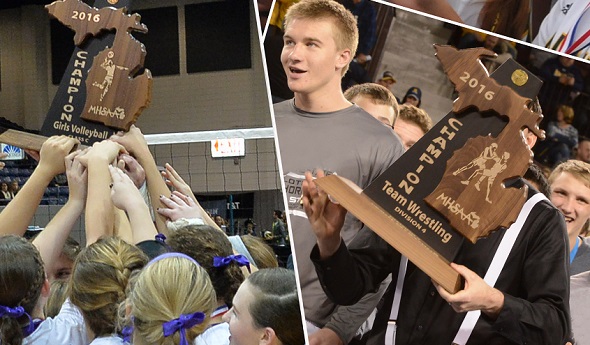
Class in Session: A History in Classification
July 24, 2017
By Rob Kaminski
MHSAA benchmarks editor
This is the first part in a series on MHSAA tournament classification, past and present, that will be published over the next two weeks. This series originally ran in this spring's edition of MHSAA benchmarks.
Conversation and discussion at the March 2017 MHSAA Representative Council Meeting leaned heavily toward the subject of 8-Player Football and how to properly balance its tournament with the growing number of schools sponsoring the sport.
While the proposal to split the tournament into two divisions beginning with the 2017 school year was adopted, the MHSAA then faced questions such as when to set the divisions, how to determine qualifiers and where to host the championship games.
The topic continues to create a buzz in Class D schools across both peninsulas, and likely will do into the start of school this fall.
Likewise, the lone holdouts still conducting tournaments by class – MHSAA Boys and Girls Basketball and Girls Volleyball – took center stage at the May Council discussion, and following the 2017-18 school year, class is out for good. Both genders of basketball, and girls volleyball, will move to divisional formats thereafter.
There is much to be decided to be sure; but as those in education are well aware, history is the best teacher.
Fortunately for the sports in flux and for all sports under the governance of the MHSAA, the Association more or less wrote the book on the subject of sport classification. Following is a history lesson, with a little advanced division thrown in.
Class structure
Credited with being the first state with multiple tournament classifications, Michigan’s attention to trends and shifts in philosophy aimed at fair play and equal tournament opportunity can be traced from 80 years ago to the present.
In the earliest years of the MHSAA, there were four classifications for elections and tournaments – Classes A, B, C and D. Classes C and D had far more schools than Classes A and B. For example, 80 years ago (1937), there were only 58 schools in Class A, 94 schools in Class B, 297 schools in Class C and 253 schools in Class D.
Gradually through the years, as Michigan’s major cities spawned suburbs, there was a shift in the other direction to the point 30 years ago (1987) when school size became more balanced: 173 Class A schools, 178 Class B schools, 179 Class C schools and 182 Class D schools.
Up until 1987, the MHSAA published the dividing line between each classification, after which schools submitted their enrollments. Then, for 1988 and thereafter, the MHSAA adopted the plan of gathering all enrollments first and then placing 25 percent of the schools in each of four classes. This completed the equalization of the number of schools in each class for elections.
However, the change for 1988 did nothing to equalize the number of teams actually entered by each class in each sport. And unlike the early years of the Association when there were many more Class C and D teams than A and B teams, there were more Class A and B teams than C and D teams entering MHSAA tournaments decades later.
Moreover, the difference in number of teams entered in the different classifications for a sport continued to increase as many small schools, the fastest growing portion of the MHSAA's membership, sponsor only a few sports, or they sponsor no sports at all but enter into cooperative programs with other schools.
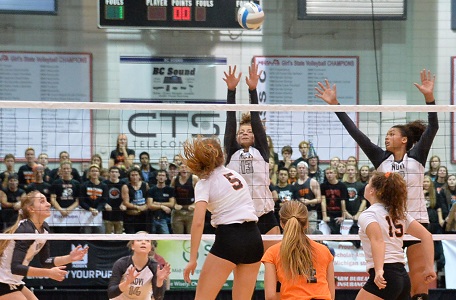 Because of these differences, Class A or B schools sometimes had to win twice as many games as Class C or D schools to reach the MHSAA Finals in a sport. At times, the larger classifications had District Tournaments, even rat-tail games, and/or a Quarterfinal game, and the smaller classifications did not. Most Class D Districts have had four teams (some only three), while Class A Districts often had seven or eight teams. In Regional levels of individual sports, the number of entries in the larger classification once greatly outnumbered those in the smaller classifications of the tournament for the same sport.
Over the years, these dividing lines between classes escalated gradually, as did the differences in enrollments of largest and small schools in each class. In 1937 the dividing lines were 700, 300 and 100 between Class A and B, B and C, and C and D, respectively. By 1987, the dividing lines were 1,129, 571 and 298, respectively, leading to the current method of collecting enrollments and then setting the classification.
With the pendulum swinging well past center by the late 1980s, coaches associations, MHSAA sport committees, tournament managers and school administrators began discussion and offered proposals to correct what many believed had become a flawed system of MHSAA tournament classification.
At the 1996 MHSAA Update Meetings, ¾ of 858 respondents to that year’s annual survey indicated they favored a system that would divide schools which actually sponsor each sport into two, three or four nearly equal divisions.
Problem solving
At its meeting May 4-6, 1997, the Representative Council defeated a motion that would have adopted in one action a coordinated plan of reclassification for all sports to equalize the number of schools in each tournament for each respective sport. Instead, the Council discussed and voted on each proposal that had been presented from sport committees.
This resulted in the Representative Council adopting four equal divisions for baseball and softball, four equal divisions for boys and girls tennis, four equal divisions for boys soccer and three equal divisions for girls soccer, effective with the 1997-98 school year. Helping in the decision was the success of the 1995-96 MHSAA Wrestling season, which saw the sport move to four divisions for its tournament structure
The Council delayed action on similar proposals for football and boys golf at that time to glean additional input. The same decision was made with respect to a proposal from the Ice Hockey Committee that would have split the Class A schools in two divisions and left the Class B/C/D Tournament unchanged.
“The gist of the move from classes to divisions was to equalize the path to championships for students of all schools, regardless of the size of those schools,” said MHSAA Executive Director Jack Roberts.
While the restructuring accomplished that goal for the majority of competitors, opposition exists now as it did then. The primary argument in opposition to the changes is that, in some sports, it increases the range between largest and smallest schools in the division for smallest schools, even as the range is usually reduced for other divisions.
Larger schools offered a counterpoint.
“The larger schools suggested that while they may have more students, they also attempt to sponsor more sports than the smaller schools, in some cases spreading the enrollment as thin as a much smaller school with fewer sports,” Roberts said.
“Even today, the idea of four equal divisions can be unpopular among some Class D schools which feel especially burdened by the equal division concept,” Roberts said. “There was enough opposition in 1997 that equal divisions were rejected for boys and girls basketball and girls volleyball, and some of that opposition remains.”
The numbers of schools sponsoring each MHSAA tournament are still close to the totals today, with the exception of soccer in both genders, which has enjoyed substantial increases. This spring, 466 girls teams were scheduled to compete in the MHSAA Soccer Tournament, while 473 boys teams will suit up this fall.
Since the beginning of MHSAA divisions in 1996 with wrestling, 147 additional team champions have been crowned and countless individuals have known the thrill of victory due to an extra level of Finals in various sports. Girls soccer has seen the most growth in opportunity, moving from two classes in 1987 to three divisions the following year, and then four divisions in 2000. Boys soccer had enjoyed four classes for two years prior to the new four-division format, and it was the sport of soccer that helped to create a caveat in the nearly equal division movement.
Lower Peninsula boys and girls swimming & diving expanded from two to three divisions in 2008, while boys and girls bowling are the most recent sports to enjoy increased tournament opportunity, adding a fourth division in 2010.
“Fairness is in the eye of the beholder. While having the same number of schools in each division is one kind of fairness, holding in check the enrollment range between the largest and smallest schools in Division 4 is another kind of fairness that is dear to a great number of people,” Roberts said. “Because more schools sponsor basketball and volleyball than other sports, Class D schools would have been least affected by the equal divisions concept in those sports; but that, and ‘tradition,’ did not dissuade the opponents in the 1990s.”
The shift to divisions not only paved the way for student-athletes, but also assisted administrators and schools hosting tournaments. MHSAA tournament mangers looked to equal divisions to more closely equalize the number of schools in District or Regional Tournaments and to better equalize the length of day required for these rounds of tournaments, both for management and participating teams and individuals.
Pinning down an answer
Wrestling became the first MHSAA Tournament to be conducted in nearly equal divisions when team and individual champions were crowned in Divisions 1, 2, 3 and 4 rather than Classes A, B, C/D for the 1996 winter championships.
The movement was well received, as schools saw more opportunity for success: four champions where there once were three at the District, Regional and Final levels, and a smaller range of enrollment between the smallest and largest school in all four tournaments, leading to the impetus for the Fall 1996 Update Meeting Survey of schools regarding similar movement in other sports.
Team champions that year were Holt (D1), Petoskey (D2), Middleville Thornapple Kellogg (D3) and Dundee (D4).
Getting their kicks
When the "equal divisions" concept was approved by the Representative Council for most MHSAA Tournaments for the 1997-98 school year, there was opposition from the smallest schools which, under the equal divisions, are forced to play against larger schools than reside in Class D. Compelling arguments were made – and still are – that an enrollment difference between schools with smaller enrollments (e.g., Class D) is more difficult to overcome in athletic competition than an even larger enrollment difference between schools with larger enrollments (e.g., Class A).
The opposition was most intense in soccer because of the number of students needed to field a team and the physical nature of the sport. As a result, from 2000-01 through 2010-11, soccer operated with a “20-percent modification.” This placed 20 percent of all schools that actually sponsored soccer in Division 4, and the remaining 80 percent were placed equally in Divisions 1, 2 and 3.
At the time the 20 percent modification was adopted, it was also established that soccer would return to four equal divisions when the largest Division 4 soccer school had an enrollment equal to or smaller than the mid point for Class C schools. That occurred in 2010.
Last class on the schedule
In the same volume of “history being the best teacher,” one can also find the adage, “times change.” While the division format was a welcome change in some sports, others were left to hold class without change.
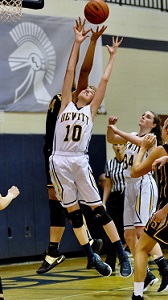 In the sports of boys and girls basketball, and girls volleyball, the number of schools sponsoring the sports were so close to the overall membership of the MHSAA that divisions were not necessary; the enrollment breakdowns themselves were enough to delineate equal opportunity for tournament success.
That is no longer the case, according to MHSAA membership. The last move from classes to divisions occurred for the 2006-07 school year following Council action. Before this May, that is. Action at the most recent Representative Council meeting, May 2017, called for the shift to divisions for MHSAA Boys and Girls Basketball, and Girls Volleyball, beginning with the 2018-19 season.
“Because the MHSAA Volleyball Committee had requested this change several times a number of years ago, and because the Council felt the change inevitable, there should not be further delay,” Roberts said. “It is an important detail that the Class D maximum has dropped 50 students over the past decade so the objection that much larger schools would be competing in Division 4 isn’t very strong now.”
Using the 2017-18 enrollment figures, just eight Class C schools would be competing in Division 4 for boys basketball, 11 for girls basketball and 14 for girls volleyball.
Good things came of the previous most-recent switches in 2006-07. Competitive Cheer was re-classified from Class A, B and C-D into four equal divisions assisting in the rapid growth of sponsoring schools (approximately 80 schools per division). Alpine skiing was changed from Class A and B-C D to two equal divisions.
At that time, the MHSAA Basketball Committee had recommended to the Council the study of increased classifications, but status quo remained.
Back on the grid
As such, MHSAA Basketball and Volleyball remained the only holdovers of the MHSAA class structure. Discussion resurfaced periodically during the last two decades to bring those tournaments in line with the other MHSAA sports.
Regular-season football-playing schools are separated by class, then are reshuffled by divisions for the playoffs. Football, as we know, underwent a significant postseason facelift in the late 1990s.
While MHSAA Football also remained a class sport through 1998, it had expanded from four to eight classes from 1990-98, becoming the first MHSAA sport to crown more than four team champions. Member schools were asked to consider a pair of options in November of 1997. One called for eight equal divisions, and the second would leave Class D by itself as division 8, and split Class A, B and C schools into seven nearly equal divisions.
After much discussion, retooling, and crunching of formulas, the MHSAA unveiled its revised Football Playoff model that continues to roll today, nearly 20 years later. It was determined that 256 teams would qualify for the tournament based first on a minimum of six wins, then by Playoff Points determined by formula. From there, the field would be divided into eight divisions, with the field being filled out by a nearly equal number of five-win teams in each division as needed to reach 256.
Eight championships would indeed be enough, until football sponsorship among the MHSAA’s smallest schools – some with rich football traditions – began to trend downward. The MHSAA again went to the drawing board, examining the viability of 8-player football. After an experimental year in 2010 without a tournament, the 8-player game was playoff-ready for 2011, with a field of 16 qualifiers embarking on a four-week tournament.
Not only did the 8-player option restore recently canceled programs, but it also created teams in schools which previously had none, and convinced some 11-player schools that this new division was the best path to take.
What did this do for the Class D holdovers staying in the traditional 11-player game? Well, a couple of things, positive and negative. As two and three dozen Class D schools opted for the 8-player game, the remaining 11-player Class D schools at times found themselves in disrupted leagues and had to travel further to complete schedules. They also competed against larger teams in Division 8 of the 11-player MHSAA Football Playoffs.
However, the growth of the 8-player game among the smallest schools also resulted in more Class D schools qualifying for the MHSAA Football Playoffs than ever before. In 2012, an all-time high 44 percent of Class D schools sponsoring football qualified for either the 8-player tournament or Division 8 of the 11-player tournament. That compared to 42.2 percent of Class C schools, 44.9 percent of Class B schools and 41.6 percent of Class A schools which qualified for the 2012 playoffs.
Much is to be determined in the most recent chapter of MHSAA Tournament expansion as the 8-Player Football Playoffs welcome a second division. As the past illustrates, there will be pluses and minuses. History also shows that the MHSAA has received maximum input from its constituents, researched all possibilities, and will find solutions to questions still in the balance before an additional group of athletes hoists a new trophy in November.
Through the Years
A chronology of when which sports moved from Class to Division in the MHSAA.
1995-96: LP Wrestling
1997-98: Baseball, Boys Soccer, Girls Soccer, Softball, LP Girls Tennis, LP Boys Tennis
1998-99: LP Boys Golf, LP Girls Golf
1999-2000: Ice Hockey, LP Boys Track & Field, LP Girls Track & Field
2000-01: LP Boys Cross Country, LP Girls Cross Country, UP Boys Cross Country, UP Girls Cross Country, UP Boys Golf, UP Girls Golf, UP Boys Tennis, UP Girls Tennis, UP Boys Track & Field, UP Girls Track & Field
2002-03: LP Girls Swimming & Diving, LP Boys Swimming & Diving
2005-06: Boys Bowling, Girls Bowling
2006-07: Girls Competitive Cheer, Boys Skiing, Girls Skiing
2018-19: Boys Basketball, Girls Basketball, Girls Volleyball
Note: Boys and Girls Lacrosse has been a divisional sport since it began in during the 2004-05 school year.

Preview: Prepare for Power-Packed Matchups, Plenty of History-Making Moments
By
Geoff Kimmerly
MHSAA.com senior editor
June 15, 2022
The roster for this weekend’s MHSAA Softball Finals at Michigan State University’s Secchia Stadium makes for a power-packed lineup.
The 16 teams playing for four championships have combined to claim 28 Finals titles in the past. Unionville-Sebewaing and Stevensville Lakeshore are among those sitting second in MHSAA history with seven championships won – and with opportunities to tie the record of eight Saturday.
Also among those 16 contenders are seven seeking their first championship – and four hoping to reach Saturday’s season-concluding games for the first time.
Division 1 - Thursday
Mattawan vs. Allen Park, 10 a.m.
Hudsonville vs. Macomb Dakota, 12:30 p.m.
Division 2 – Thursday
Essexville Garber vs. Trenton, 3 p.m.
Escanaba vs. Stevensville Lakeshore, 5:30 p.m.
Division 3 - Friday
Millington vs. Algonac, 10 a.m.
Grandville Calvin Christian vs. Evart, 12:30 p.m.
Division 4 - Friday
Mount Pleasant Sacred Heart vs. Ottawa Lake Whiteford, 3 p.m.
Unionville-Sebewaing vs. Pickford, 5:30 p.m.
FINALS – Saturday
Division 1 - 10 a.m.
Division 2 - 12:30 p.m.
Division 3 - 3 p.m.
Division 4 - 5:30 p.m.
Tickets cost $11 and may be purchased online only at GoFan. One ticket is good for all softball, baseball and girls soccer games at MSU’s Old College Field that day. All Semifinals and Finals will be broadcast and available with subscription from MHSAA.tv, with free audio broadcasts on the MHSAA Network.
Below is a glance at all 16 teams taking the field (with statistics through Regional Finals unless noted):
Division 1
ALLEN PARK
Record/rank: 36-4-1, No. 2
Coach: Michael Kish, third season (96-18-3)
League finish: First in Downriver League
Championship history: Division 1 runner-up 2021.
Players to watch: Madison Hool, sr. IF (.344, 32 R, 35 RBI); Madilyn Ramey, sr. IF (.490, 39 R, 16 2B, 39 RBI); Morgan Sizemore, jr. P (.400, 31 RBI, 20-4 pitching, 1.64 ERA, 126 K/145 IP); Mia Hool, jr. IF (.461, 14 2B, 28 RBI).
Outlook: Allen Park is back after coming up one win shy of its first Finals title in this sport, and eight starters are back from last year’s championship game lineup. Ramey, Madison Hool and Sizemore made the all-state first team last season, while Mia Hool and junior catcher Molly Hool (.425, 11 2B) earned honorable mentions. Junior Faith Peschke (.397, 33 R) and seniors Autumn Bridges and Riley Kish also are returning starters. Allen Park’s latest two tournament wins were over No. 8 Brownstown Woodhaven in the Regional Final and No. 6 Farmington Hills Mercy in the Quarterfinal.
HUDSONVILLE
Record/rank: 34-6, No. 9
Coach: Tom Vruggink, 41st season (1,124-89)
League finish: Second in Ottawa-Kent Conference Red
Championship history: Division 1 champion 2009, 2010 and 2012.
Players to watch: Ella Reifschneider, jr. SS (.536, 60 R, 41 RBI, 21 SB); Megan Beemer, soph. OF (.579, 70 R, 14 2B, 33 SB); Sydney Bosgraaf, jr. P (.367, 10 2B, 32 RBI, 16-4 pitching, 1.60 ERA, 167 K/105 IP); Annika Talsma, jr. 1B. (.487, 35 R, 21 2B, 62 RBI).
Outlook: Hudsonville is returning to the Semifinals for the first time since that most recent championship season, with wins over No. 5 Jenison and state rankings honorable mentions Zeeland West, Byron Center and Rockford along the way. Only two starters are seniors, and sophomore Elly Koopman (16-2, 1.62 ERA, 112 K/117 IP) joins Bosgraaf throwing for a team that has a big future as well. Junior Avery Hobson (.396, 14 2B, 39 RBI) is another big bat, and Koopman (.329), junior Ashley Sorrell (.330) and seniors Jessica Dobias (.338, 15 SB) and Lauren Schwallier (.354) help fill out the lineup.
MACOMB DAKOTA
Record/rank: 31-4, No. 3
Coach: Dan Vitale, third season (58-13-1)
League finish: First in Macomb Area Conference Red
Championship history: Division 1 champion 2017, runner-up 2016.
Players to watch: Megan Nuechterlein, jr. P (.392, 33 RBI, 16-2 pitching, 0.84 ERA, 199 K/108 IP); Angela Petrovitch, sr. SS (.505, 45 R, 39 SB); Brooklyn Plitz, jr. 2B (.490, 41 R, 19 SB); Faith Maloney, jr. UTY (.470, 23 RBI).
Outlook: Dakota took the next step after reaching the Quarterfinals a year ago. Dakota defeated honorable mention New Baltimore Anchor Bay in the Regional Final and No. 4 Walled Lake Northern in the Quarterfinal to run its winning streak to 20 this spring. Nuechterlein and senior catcher Briana Bumbalough made the all-state first team last season, with Petrovitch earning an honorable mention. Freshman Jenna Higgins (.373), sophomores Sidnee Puffpaff (.355, 13 SB) and Gracie Maloney (.330, 31 RBI) and senior May Franzoni (.319) help fill out the lineup.
MATTAWAN
Record/rank: 24-15, honorable mention
Coach: Alicia Smith, 22nd season (556-254-2)
League finish: Second in Southwestern Michigan Athletic Conference
Championship history: Division 1 champion 2013 and 2011, runner-up 2012.
Players to watch: Alyssa Bloomfield, sr. OF (.468, 52 R, 11 2B, 8 HR); Ashlyn Bloomfield, soph. SS (.404, 38 R, 30 RBI); Eliana Ruhrup, jr. 3B (.357, 10 2B, 46 RBI); Madison Vrba, jr. P (14-8, 2.32 ERA, 160 K/126 2/3 IP).
Outlook: This will be Mattawan’s sixth Semifinal trip over the last 10 seasons (not counting COVID-canceled 2020), and first since 2017. The Wildcats advanced with a 3-1 win over top-ranked and reigning champion South Lyon in a Quarterfinal, avenging an earlier sweep. Mattawan also notably closed the regular season with a split against Hudsonville. Alyssa Bloomfield made the all-state first team last season, and senior catcher Hannah Sweers earned an honorable mention. Senior Madelyn Beck (.325) is among others who add pop to the lineup.
Division 2
ESCANABA
Record/rank: 30-5, No. 7
Coach: Andy Fields, second season (49-15)
League finish: First in Great Northern Conference
Championship history: Division 2 champion 2019 and 2018, Division 1 runner-up 2003.
Players to watch: Anna Boutilier, soph. 3B (.511, 36 R, 17 SB); Lizzy Sliva, sr. OF (.495, 41 R, 10 2B, 10 HR, 45 RBI); McKayla Mott, jr. P (.433, 11 2B, 10 HR, 33 RBI, 14-2 pitching, 1.16 ERA, 130 K/78 1/3 IP); Carsyn Segorski, sr. SS (.379, 44 R, 30 SB).
Outlook: After missing out last year, Escanaba is back at the Semifinals for the fifth time in six seasons (not counting canceled 2020). The Eskymos defeated top-ranked Gaylord in the Regional Final and then No. 10 (tied) Hudsonville Unity Christian in the Quarterfinal, and all five losses this spring were to top-10 ranked teams in either Division 1 or 2. Segorski, a starter in the 2019 Final, earned an all-state honorable mention last season and leads off for a lineup that as a whole entered the week hitting .446. There are big bats throughout, with senior Erica Moore (.474, 11 2B, 30 RBI), juniors Carney Salo (.465, 31 RBI) and Paxton Bullen (.483, 39 R, 12 2B, 19 SB), sophomore Carley McInerney (.421, 32 R) and freshman Grayson LaMarche (.412) regulars as well. LaMarche (10-2, 1.73, 135 K/64 2/3 IP) is expected to get the Semifinals start in the circle.
ESSEXVILLE GARBER
Record/rank: 35-8, No. 8
Coach: Chris Kokaly, second season (69-16)
League finish: Second in Tri-Valley Conference 8
Championship history: Class B runner-up 1997.
Players to watch: Alexis Linton, jr. SS (.432, 59 R, 36 RBI, 26 SB); Sarah Basket, jr. P (.468, 20 2B, 46 RBI, 22-4 pitching, 1.87 ERA, 242 K/172 1/3 IP); Kortney Kotenko, jr. C (.527, 11 HR, 53 RBI); Lauren Claerbout, sr. C/OF (.462, 47 R, 12 2B).
Outlook: Garber defeated No. 10 (tied) Linden, No. 5 Frankenmuth and honorable mention Detroit Country Day in its last three games to reach the Semifinals for the first time since that runner-up season of 1997. The Frankenmuth win avenged a doubleheader sweep by the league rival Eagles. Basket earned an all-state honorable mention last season and is part of a junior class that makes up two-thirds of the hitting and fielding lineups. Seniors Emma Miller (.357, 30 RBI) and Jacqueline Brinkman (.324) and juniors Ella Wagner (.426, 39 R, 40 RBI) and Laney Kokaly (.403, 32 R, 15 2B, 39 RBI, 20 SB) also are major contributors.
STEVENSVILLE LAKESHORE
Record/rank: 38-4, honorable mention
Coach: Denny Dock, 43rd season (1,054-228)
League finish: First in Southwestern Michigan Athletic Conference
Championship history: Seven MHSAA titles (most recent 2014), two runner-up finishes.
Players to watch: Gianna Kerschbaum, sr. P/OF (.387, 53 R, 12 HR, 34 RBI, 1.94 ERA); Olivia DenDooven, sr. IF (.363, 41 R); Pallas Dominion, soph. 2B (.357, 46 R, 32 RBI, 14 SB); Anna Chellman, sr. 3B (.394, 52 R, 32 RBI).
Outlook: Dock is the third-winningest coach in MHSAA softball history, and Lakeshore is something of a regular at the Semifinals with this its seventh appearance since 2010 and latest since finishing Division 2 runner-up in 2019. Kerschbaum made the all-state first team as a pitcher last season and was the team’s starter in the 2019 Final. She had 11 wins this season entering the week as part of a three-person staff with junior Ava Mullen winning 14 games and sophomore Avery Arwood 11 as well, all with ERAs below 2.00. Junior Eden Gray is another important bat, hitting .350 with 35 runs scored.
TRENTON
Record/rank: 32-10, honorable mention
Coach: Rick Tanguay, third season (62-15)
League finish: Second in Downriver League
Championship history: Division 2 runner-up 2005.
Players to watch: Annika Segedi, soph. 2B (.522, 56 R, 25 SB); Olivia Hickman, sr. C/DP (.465, 20 2B, 49 RBI); London Williams, soph. SS (.512, 56 R, 18 2B, 57 RBI, 12 SB, 6-0 pitching, 2.15 ERA); Aila Johnson, sr. P (21-9, 2.47 ERA, 160 K/155 2/3 IP).
Outlook: Trenton is back at the Semifinals for the first time since that runner-up season of 2005, and despite losing all-stater and Michigan recruit Lillian Vallimont for the entire season. Williams, also an all-state first-teamer last season, has continued to produce big numbers and forms an outstanding duo up the middle with Segedi, an all-state honorable mention in 2021. Trenton finished second in the Downriver League only to Division 1 contender Allen Park, and defeated honorable mention Milan on the way to MSU. Sophomore Molly Edmunds (.364) and juniors Gracie Rickman (.347, 38 R, 32 RBI) and Kendyl Gearhart (.330) also bring strong averages to the starting lineup.
Division 3
ALGONAC
Record/rank: 32-3, No. 4
Coach: Len Perkins, fourth season (76-33)
League finish: Second in Blue Water Area Conference
Championship history: Has never played in an MHSAA Final.
Players to watch: Ella Stephenson, jr. OF (.650, 64 R, 18 2B, 16 HR, 63 RBI, 28 SB); Kenna Bommarito, soph. P/1B (.527, 32 R, 15 2B, 37 RBI, 17-2 pitching, 1.64 ERA, 181 K/115 IP); Sierra Vosler, soph. OF (.419 32 R, 41 RBI, 14 SB); Brianna Thomason, sr. 2B (.410, 45 R, 34 RBI).
Outlook: Algonac has emerged from one of the state’s strongest leagues – the BWAC also included No. 2 Richmond and No. 5 Almont – to win its first Regional title and reach the season’s final week for the first time. The Muskrats advanced with a 5-4 Quarterfinal win over honorable mention Grass Lake. Stephenson made the all-state first team last season and is enjoying one of the most jaw-dropping seasons in the state this spring. Freshman Jaycee Reams (.372, 37 R, 41 RBI, 13 SB), sophomore Camdin Thaler (.380, 34 R) and senior Maria Simpson (.344, 11 SB) also are key contributors for a lineup averaging 10.8 runs per game. In addition to Bommarito in the circle, junior Deanna DeLange entered the week 11-0 with a 1.18 ERA. Senior catcher Sophia DuVernay earned an all-state honorable mention last season.
EVART
Record/rank: 31-8-1, unranked
Coach: Amanda Brown, 11th season (160-110-3)
League finish: First in Highland Conference
Championship history: Has never played in an MHSAA Final.
Players to watch: Addysen Gray, jr. P (.445, 57 R, 29 RBI, 20-4 pitching, 1.50 ERA, 207 K/144 1/3 IP); Katelyn Gostlin, soph. 3B (.512, 46 R, 22 2B, 50 RBI); Kayanne Tiedt, soph. 2B (.447, 28 R); Brooklyn Decker, soph. RF (.395, 33 R, 10 2B).
Outlook: Brown has led Evart to a 57-14-1 record over the last two seasons and this spring its first Regional title since 1999 and first trip to the Semifinals. The Wildcats haven’t given up more than a run in any of six playoff games. Senior Skylar Baumgardner (.378, 35 R), sophomore Ally Theunick (.377, 29 RBI) and freshman Kylynn Thompson (.370, 37 R, 7-3 pitching, 2.04 ERA) also bring big bats to the lineup. And the future looks incredibly bright as well, with Baumgardner and first baseman Veronica Lofquist the only senior starters in a lineup that also includes five underclassmen.
GRANDVILLE CALVIN CHRISTIAN
Record/rank: 34-3, honorable mention
Coach: Michal Huizenga, second season (70-8)
League finish: First in O-K Silver
Championship history: Two MHSAA titles (most recent 1993), three runner-up finishes.
Players to watch: Brooke Hunderman, sr. P/IF (.383, 33 R, 10 2B, 43 RBI, 24-2 pitching, 1.17 ERA, 194 K/143 2/3 IP); Macy Verbeek, jr. C (.520, 60 R, 18 2B, 47 RBI, 13 SB); Anna Zoet, fr. 3B (.559, 71 R, 28 2B, 40 RBI, 19 SB); Lauren Steenstra, sr. SS (.488, 55 R, 22 2B, 60 RBI).
Outlook: Calvin Christian finished Division 3 runner-up in 2016 and is back at the Semifinals for the first time since after also reaching the Quarterfinals two more seasons in between. Hunderman made the all-state first team last season, and Verbeek earned an honorable mention, and they help lead a lineup with plenty of run production. Zoet is enjoying a memorable high school debut, and sophomores Karsen Balmer (.411, 36 RBI), Emili Goodheart (.387, 34 R, 42 RBI) and Grace Walcott (.340) are among other key contributors. Hunderman, Steenstra and outfielder Katelynn VanDyken (.328) are the only seniors on the roster, with junior Andrea Diemer (.309) and sophomore Ella Walcott two more starters who should make the 2023 team tough as well.
MILLINGTON
Record/rank: 33-3, No. 1
Coach: Greg Hudie, 13th season (329-97)
League finish: First in Tri-Valley Conference 10
Championship history: Division 3 champion 2019, runner-up 2018.
Players to watch: Ashley Ziel, sr. P (.339, 42 R, 10 2B, 25-3 pitching, 1.64 ERA, 209 K/153 1/3 IP); Trinity Fessler, sr. C (.475, 37 R, 18 2B, 44 RBI); Lilia Sherman, jr. 1B (.516, 46 R, 21 2B, 51 RBI, 8-0 pitching, 2.38 ERA); Dylan Holmes, sr. SS (.472, 42 R, 11 2B, 35 RBI).
Outlook: Hudie helped Millington earn its first championship in 2019 with Fessler, Ziel and senior Leah Coleman (.414, 54 R, 16 2B, 36 RBI) making contributions in the Final as freshmen. Fessler, Ziel and now-senior centerfielder Emma Dickie (.412, 38 R, 10 2B, 41 RBI) made the all-state first team last season, and Sherman earned an honorable mention. The Cardinals advanced with their most recent wins over No. 2 Richmond in the Quarterfinal and No. 9 Cass City and honorable mention New Lothrop in the Regional. Seniors Falon Wilson (.337, 31 R) and Shannon Ziel (.296, 33 R) are two more key contributors to a lineup averaging just under 10 runs per game.
Division 4
MOUNT PLEASANT SACRED HEART
Record/rank: 27-11, unranked
Coach: Josh Wheaton, fifth season (86-47)
League finish: First in Mid-State Activities Conference
Championship history: Has never played in an MHSAA Final.
Players to watch: Laura Goenner, sr. OF (.436, 51 R, 40 RBI, 24 SB); Kelsey McDonald, sr. 2B (.449, 49 R, 27 SB); Ellery Garver, fr. 1B (.630, 37 R, 12 2B, 33 RBI, 18 SB); Nyah Carson, fr. P/OF (.447, 29 R, 39 RBI).
Outlook: Sacred Heart is returning to the Semifinals for the first time since 2012, with a Regional win over No. 7 Portland St. Patrick among highlights from the tournament run. The Irish have won nine straight since suffering a 10-0 regular-season loss to St. Patrick. Goenner made the all-state first team last season, and McDonald earned an honorable mention. Senior Natalie Jones (14-2 pitching, 2.88 ERA, 135 K/102 IP) will throw for Sacred Heart, and she’s also part of a hitting lineup with all batters averaging at least .303. Senior Anna Terwilliger (.375, 34 R, 10 2B, 33 RBI, 12 SB) is another major run producer, with junior Eliza Pieratt (.370), freshman Kallie Smith (.315), Jones (.314) and senior Emma Yonker (.303) rounding out the lineup.
OTTAWA LAKE WHITEFORD
Record/rank: 39-4, No. 2
Coach: Matt VanBrandt, third season (71-9)
League finish: First in Tri-County Conference
Championship history: Three MHSAA titles (most recent 1987), three runner-up finishes.
Players to watch: Alyssa VanBrandt, jr. SS (.692, 68 R, 12 2B, 43 RBI, 27 SB); Unity Nelson, soph. P/2B (.417, 46 RBI, 20-3 pitching, 0.36 ERA, 239 K/116 IP); Ambrelle Billau, sr. 3B (.490, 62 R, 10 2B, 50 RBI, 14 SB); Berlynn Keller, sr. P/2B (.441, 11 2B, 50 RBI, 17-0 pitching, 1.13 ERA, 145 K/87 IP).
Outlook: Whiteford is a combined 71-9 over VanBrandt’s two seasons and is returning to the Semifinals for the first time since finishing Division 4 runner-up in 2017 and after reaching the final week of the season for the fourth time in six seasons (not counting canceled 2020). VanBrandt, Nelson, Billau and Keller all made the all-state first team last spring. Senior Adrianna VanBrandt is hitting .516 with 44 runs scored and 16 stolen bases, and junior Patrina Marsh (.391, 37 R, 11 SB) and sophomores Karlei Conard (.359), Jillian Webb (.339) and Kaydence Sheldon (.300) round out the hitting lineup.
PICKFORD
Record/rank: 24-14-2, unranked
Coach: Matt Hudecek, second season (42-22-2)
League finish: Second in Straits Area Conference
Championship history: Has never played in an MHSAA Final.
Players to watch: Lucy Bennin, sr. UTY (.530, 64 R, 12 2B, 47 RBI); Laura Bush, soph. P/1B (.441, 41 R, 41 RBI, 8-4 pitching); Chloe May, soph. SS (.396, 62 R, 12 2B, 39 RBI); Lizzie Storey, sr. OF (.365, 42 R, 35 RBI). (Statistics include Quarterfinal.)
Outlook: Pickford is making its first trip to the Semifinals after winning its first Regional title in this sport. The Panthers advanced by defeating honorable mention Norway in the Regional Final and No. 8 Hillman in the Quarterfinal. Pickford is averaging 10.6 runs per game and has scored in double digits four of five playoff games. Six sophomores and five seniors make up the bulk of the roster, with two juniors, and sophomore Finley Hudecek (14-9, 105 K/149 IP) will be in the circle for the Semifinal. Senior Morgan Fox (.359), junior Madison Thurmes (.309) and Hudecek (.306) also are among the team’s top-hitting regulars.
UNIONVILLE-SEBEWAING
Record/rank: 29-9, No. 1
Coach: Isaiah Gainforth, sixth season (163-39)
League finish: First in Greater Thumb Conference West
Championship history: Seven MHSAA titles (most recent 2021), three runner-up finishes.
Players to watch: Laci Harris, sr. P/3B (.489, 61 R, 19 2B, 11 HR, 57 RBI, 18-5 pitching, 1.29 ERA, 212 K/130 IP), Macy Reinhardt, sr. 2B (.434, 48 R, 13 2B, 38 RBI); Gabriella Crumm, soph. C (.556, 57 R, 20 2B, 11 HR, 50 RBI); Ella Neumann, soph. SS (.476, 40 R, 17 2B, 44 RBI, 15 SB).
Outlook: USA has won four of the last six Division 4 championships including the last two, and this year’s Patriots are plenty tested with all nine losses to ranked teams in Divisions 2 and 3 including two (Garber and Millington) playing for championships this weekend. USA defeated No. 4 Riverview Gabriel Richard in the Quarterfinal. Reinhardt and Harris made the all-state first team last season, and Crumm earned an honorable mention. Sophomores Jenna Gremel (.441, 43 R, 45 RBI) and Rylie Betson (.407, 42 R, 10 2B, 35 RBI), and juniors Olivia Jubar (.389 46 R, 17 2B, 41 RBI), Kennedy Schember (.344, 41 R, 10 2B) and Lauren Green (.340, 32 R) round out a lineup averaging 11.1 runs per game.
PHOTO Grandville Calvin Christian huddles up before the start of an inning during a Division 3 Regional Final against Ravenna. (Photo by Bethany McCullough/CatchMark SportsNet.)