


Class in Session: A History in Classification
July 24, 2017
By Rob Kaminski
MHSAA benchmarks editor
This is the first part in a series on MHSAA tournament classification, past and present, that will be published over the next two weeks. This series originally ran in this spring's edition of MHSAA benchmarks.
Conversation and discussion at the March 2017 MHSAA Representative Council Meeting leaned heavily toward the subject of 8-Player Football and how to properly balance its tournament with the growing number of schools sponsoring the sport.
While the proposal to split the tournament into two divisions beginning with the 2017 school year was adopted, the MHSAA then faced questions such as when to set the divisions, how to determine qualifiers and where to host the championship games.
The topic continues to create a buzz in Class D schools across both peninsulas, and likely will do into the start of school this fall.
Likewise, the lone holdouts still conducting tournaments by class – MHSAA Boys and Girls Basketball and Girls Volleyball – took center stage at the May Council discussion, and following the 2017-18 school year, class is out for good. Both genders of basketball, and girls volleyball, will move to divisional formats thereafter.
There is much to be decided to be sure; but as those in education are well aware, history is the best teacher.
Fortunately for the sports in flux and for all sports under the governance of the MHSAA, the Association more or less wrote the book on the subject of sport classification. Following is a history lesson, with a little advanced division thrown in.
Class structure
Credited with being the first state with multiple tournament classifications, Michigan’s attention to trends and shifts in philosophy aimed at fair play and equal tournament opportunity can be traced from 80 years ago to the present.
In the earliest years of the MHSAA, there were four classifications for elections and tournaments – Classes A, B, C and D. Classes C and D had far more schools than Classes A and B. For example, 80 years ago (1937), there were only 58 schools in Class A, 94 schools in Class B, 297 schools in Class C and 253 schools in Class D.
Gradually through the years, as Michigan’s major cities spawned suburbs, there was a shift in the other direction to the point 30 years ago (1987) when school size became more balanced: 173 Class A schools, 178 Class B schools, 179 Class C schools and 182 Class D schools.
Up until 1987, the MHSAA published the dividing line between each classification, after which schools submitted their enrollments. Then, for 1988 and thereafter, the MHSAA adopted the plan of gathering all enrollments first and then placing 25 percent of the schools in each of four classes. This completed the equalization of the number of schools in each class for elections.
However, the change for 1988 did nothing to equalize the number of teams actually entered by each class in each sport. And unlike the early years of the Association when there were many more Class C and D teams than A and B teams, there were more Class A and B teams than C and D teams entering MHSAA tournaments decades later.
Moreover, the difference in number of teams entered in the different classifications for a sport continued to increase as many small schools, the fastest growing portion of the MHSAA's membership, sponsor only a few sports, or they sponsor no sports at all but enter into cooperative programs with other schools.
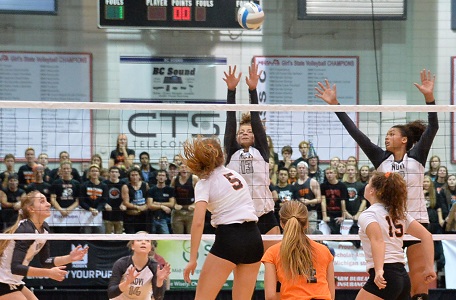 Because of these differences, Class A or B schools sometimes had to win twice as many games as Class C or D schools to reach the MHSAA Finals in a sport. At times, the larger classifications had District Tournaments, even rat-tail games, and/or a Quarterfinal game, and the smaller classifications did not. Most Class D Districts have had four teams (some only three), while Class A Districts often had seven or eight teams. In Regional levels of individual sports, the number of entries in the larger classification once greatly outnumbered those in the smaller classifications of the tournament for the same sport.
Over the years, these dividing lines between classes escalated gradually, as did the differences in enrollments of largest and small schools in each class. In 1937 the dividing lines were 700, 300 and 100 between Class A and B, B and C, and C and D, respectively. By 1987, the dividing lines were 1,129, 571 and 298, respectively, leading to the current method of collecting enrollments and then setting the classification.
With the pendulum swinging well past center by the late 1980s, coaches associations, MHSAA sport committees, tournament managers and school administrators began discussion and offered proposals to correct what many believed had become a flawed system of MHSAA tournament classification.
At the 1996 MHSAA Update Meetings, ¾ of 858 respondents to that year’s annual survey indicated they favored a system that would divide schools which actually sponsor each sport into two, three or four nearly equal divisions.
Problem solving
At its meeting May 4-6, 1997, the Representative Council defeated a motion that would have adopted in one action a coordinated plan of reclassification for all sports to equalize the number of schools in each tournament for each respective sport. Instead, the Council discussed and voted on each proposal that had been presented from sport committees.
This resulted in the Representative Council adopting four equal divisions for baseball and softball, four equal divisions for boys and girls tennis, four equal divisions for boys soccer and three equal divisions for girls soccer, effective with the 1997-98 school year. Helping in the decision was the success of the 1995-96 MHSAA Wrestling season, which saw the sport move to four divisions for its tournament structure
The Council delayed action on similar proposals for football and boys golf at that time to glean additional input. The same decision was made with respect to a proposal from the Ice Hockey Committee that would have split the Class A schools in two divisions and left the Class B/C/D Tournament unchanged.
“The gist of the move from classes to divisions was to equalize the path to championships for students of all schools, regardless of the size of those schools,” said MHSAA Executive Director Jack Roberts.
While the restructuring accomplished that goal for the majority of competitors, opposition exists now as it did then. The primary argument in opposition to the changes is that, in some sports, it increases the range between largest and smallest schools in the division for smallest schools, even as the range is usually reduced for other divisions.
Larger schools offered a counterpoint.
“The larger schools suggested that while they may have more students, they also attempt to sponsor more sports than the smaller schools, in some cases spreading the enrollment as thin as a much smaller school with fewer sports,” Roberts said.
“Even today, the idea of four equal divisions can be unpopular among some Class D schools which feel especially burdened by the equal division concept,” Roberts said. “There was enough opposition in 1997 that equal divisions were rejected for boys and girls basketball and girls volleyball, and some of that opposition remains.”
The numbers of schools sponsoring each MHSAA tournament are still close to the totals today, with the exception of soccer in both genders, which has enjoyed substantial increases. This spring, 466 girls teams were scheduled to compete in the MHSAA Soccer Tournament, while 473 boys teams will suit up this fall.
Since the beginning of MHSAA divisions in 1996 with wrestling, 147 additional team champions have been crowned and countless individuals have known the thrill of victory due to an extra level of Finals in various sports. Girls soccer has seen the most growth in opportunity, moving from two classes in 1987 to three divisions the following year, and then four divisions in 2000. Boys soccer had enjoyed four classes for two years prior to the new four-division format, and it was the sport of soccer that helped to create a caveat in the nearly equal division movement.
Lower Peninsula boys and girls swimming & diving expanded from two to three divisions in 2008, while boys and girls bowling are the most recent sports to enjoy increased tournament opportunity, adding a fourth division in 2010.
“Fairness is in the eye of the beholder. While having the same number of schools in each division is one kind of fairness, holding in check the enrollment range between the largest and smallest schools in Division 4 is another kind of fairness that is dear to a great number of people,” Roberts said. “Because more schools sponsor basketball and volleyball than other sports, Class D schools would have been least affected by the equal divisions concept in those sports; but that, and ‘tradition,’ did not dissuade the opponents in the 1990s.”
The shift to divisions not only paved the way for student-athletes, but also assisted administrators and schools hosting tournaments. MHSAA tournament mangers looked to equal divisions to more closely equalize the number of schools in District or Regional Tournaments and to better equalize the length of day required for these rounds of tournaments, both for management and participating teams and individuals.
Pinning down an answer
Wrestling became the first MHSAA Tournament to be conducted in nearly equal divisions when team and individual champions were crowned in Divisions 1, 2, 3 and 4 rather than Classes A, B, C/D for the 1996 winter championships.
The movement was well received, as schools saw more opportunity for success: four champions where there once were three at the District, Regional and Final levels, and a smaller range of enrollment between the smallest and largest school in all four tournaments, leading to the impetus for the Fall 1996 Update Meeting Survey of schools regarding similar movement in other sports.
Team champions that year were Holt (D1), Petoskey (D2), Middleville Thornapple Kellogg (D3) and Dundee (D4).
Getting their kicks
When the "equal divisions" concept was approved by the Representative Council for most MHSAA Tournaments for the 1997-98 school year, there was opposition from the smallest schools which, under the equal divisions, are forced to play against larger schools than reside in Class D. Compelling arguments were made – and still are – that an enrollment difference between schools with smaller enrollments (e.g., Class D) is more difficult to overcome in athletic competition than an even larger enrollment difference between schools with larger enrollments (e.g., Class A).
The opposition was most intense in soccer because of the number of students needed to field a team and the physical nature of the sport. As a result, from 2000-01 through 2010-11, soccer operated with a “20-percent modification.” This placed 20 percent of all schools that actually sponsored soccer in Division 4, and the remaining 80 percent were placed equally in Divisions 1, 2 and 3.
At the time the 20 percent modification was adopted, it was also established that soccer would return to four equal divisions when the largest Division 4 soccer school had an enrollment equal to or smaller than the mid point for Class C schools. That occurred in 2010.
Last class on the schedule
In the same volume of “history being the best teacher,” one can also find the adage, “times change.” While the division format was a welcome change in some sports, others were left to hold class without change.
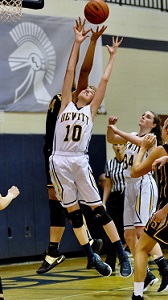 In the sports of boys and girls basketball, and girls volleyball, the number of schools sponsoring the sports were so close to the overall membership of the MHSAA that divisions were not necessary; the enrollment breakdowns themselves were enough to delineate equal opportunity for tournament success.
That is no longer the case, according to MHSAA membership. The last move from classes to divisions occurred for the 2006-07 school year following Council action. Before this May, that is. Action at the most recent Representative Council meeting, May 2017, called for the shift to divisions for MHSAA Boys and Girls Basketball, and Girls Volleyball, beginning with the 2018-19 season.
“Because the MHSAA Volleyball Committee had requested this change several times a number of years ago, and because the Council felt the change inevitable, there should not be further delay,” Roberts said. “It is an important detail that the Class D maximum has dropped 50 students over the past decade so the objection that much larger schools would be competing in Division 4 isn’t very strong now.”
Using the 2017-18 enrollment figures, just eight Class C schools would be competing in Division 4 for boys basketball, 11 for girls basketball and 14 for girls volleyball.
Good things came of the previous most-recent switches in 2006-07. Competitive Cheer was re-classified from Class A, B and C-D into four equal divisions assisting in the rapid growth of sponsoring schools (approximately 80 schools per division). Alpine skiing was changed from Class A and B-C D to two equal divisions.
At that time, the MHSAA Basketball Committee had recommended to the Council the study of increased classifications, but status quo remained.
Back on the grid
As such, MHSAA Basketball and Volleyball remained the only holdovers of the MHSAA class structure. Discussion resurfaced periodically during the last two decades to bring those tournaments in line with the other MHSAA sports.
Regular-season football-playing schools are separated by class, then are reshuffled by divisions for the playoffs. Football, as we know, underwent a significant postseason facelift in the late 1990s.
While MHSAA Football also remained a class sport through 1998, it had expanded from four to eight classes from 1990-98, becoming the first MHSAA sport to crown more than four team champions. Member schools were asked to consider a pair of options in November of 1997. One called for eight equal divisions, and the second would leave Class D by itself as division 8, and split Class A, B and C schools into seven nearly equal divisions.
After much discussion, retooling, and crunching of formulas, the MHSAA unveiled its revised Football Playoff model that continues to roll today, nearly 20 years later. It was determined that 256 teams would qualify for the tournament based first on a minimum of six wins, then by Playoff Points determined by formula. From there, the field would be divided into eight divisions, with the field being filled out by a nearly equal number of five-win teams in each division as needed to reach 256.
Eight championships would indeed be enough, until football sponsorship among the MHSAA’s smallest schools – some with rich football traditions – began to trend downward. The MHSAA again went to the drawing board, examining the viability of 8-player football. After an experimental year in 2010 without a tournament, the 8-player game was playoff-ready for 2011, with a field of 16 qualifiers embarking on a four-week tournament.
Not only did the 8-player option restore recently canceled programs, but it also created teams in schools which previously had none, and convinced some 11-player schools that this new division was the best path to take.
What did this do for the Class D holdovers staying in the traditional 11-player game? Well, a couple of things, positive and negative. As two and three dozen Class D schools opted for the 8-player game, the remaining 11-player Class D schools at times found themselves in disrupted leagues and had to travel further to complete schedules. They also competed against larger teams in Division 8 of the 11-player MHSAA Football Playoffs.
However, the growth of the 8-player game among the smallest schools also resulted in more Class D schools qualifying for the MHSAA Football Playoffs than ever before. In 2012, an all-time high 44 percent of Class D schools sponsoring football qualified for either the 8-player tournament or Division 8 of the 11-player tournament. That compared to 42.2 percent of Class C schools, 44.9 percent of Class B schools and 41.6 percent of Class A schools which qualified for the 2012 playoffs.
Much is to be determined in the most recent chapter of MHSAA Tournament expansion as the 8-Player Football Playoffs welcome a second division. As the past illustrates, there will be pluses and minuses. History also shows that the MHSAA has received maximum input from its constituents, researched all possibilities, and will find solutions to questions still in the balance before an additional group of athletes hoists a new trophy in November.
Through the Years
A chronology of when which sports moved from Class to Division in the MHSAA.
1995-96: LP Wrestling
1997-98: Baseball, Boys Soccer, Girls Soccer, Softball, LP Girls Tennis, LP Boys Tennis
1998-99: LP Boys Golf, LP Girls Golf
1999-2000: Ice Hockey, LP Boys Track & Field, LP Girls Track & Field
2000-01: LP Boys Cross Country, LP Girls Cross Country, UP Boys Cross Country, UP Girls Cross Country, UP Boys Golf, UP Girls Golf, UP Boys Tennis, UP Girls Tennis, UP Boys Track & Field, UP Girls Track & Field
2002-03: LP Girls Swimming & Diving, LP Boys Swimming & Diving
2005-06: Boys Bowling, Girls Bowling
2006-07: Girls Competitive Cheer, Boys Skiing, Girls Skiing
2018-19: Boys Basketball, Girls Basketball, Girls Volleyball
Note: Boys and Girls Lacrosse has been a divisional sport since it began in during the 2004-05 school year.

1st & Goal: Playoff Week 1 Preview
October 29, 2020
By Geoff Kimmerly
Second Half editor
During a football season full of new and different this fall, this weekend will be right up there for first-time opportunities.
With the regular season shortened to six games because of COVID-19 precautions, tonight begins the first MHSAA Playoffs with nearly every team in the state taking part. And with more playoff games than ever before, this first round will see 15 games played Thursday night.
The 11-player bracket kicks off with District First Round games, while 8-player begins in the Regional First Round. Click for links to all 10 brackets and monitor the MHSAA Score Center all weekend for scores as they come in.
Spectator limits remain in effect (check with your local school for purchasing information). So if you can’t attend in person, check out one or more of 87 games being broadcast on MHSAA.tv or FOX Sports Detroit.
Let’s take a glance at a game that jumps out from each division this opening weekend. Games below are Friday unless noted.
11-Player
DIVISION 1
Lake Orion (3-2) at Grand Blanc (5-1)
The Bobcats haven’t reached the second round of the playoffs since 2012, but have seemed on the verge of taking a step – and last week’s 14-13 win over previously-undefeated Saline provided an indication the time may be now. Lake Orion had trouble with league rivals Clarkston and West Bloomfield this fall, but has to be one of the stronger five seeds – this District is topped by three undefeated teams.
Keep an eye on these FRIDAY Lapeer (3-3) at Davison (6-0), Utica Eisenhower (2-4) at Clinton Township Chippewa Valley (2-3). SATURDAY East Kentwood (2-3) at Hudsonville (4-2), Detroit Western (5-1) at Dearborn Fordson (4-2).
DIVISION 2
Grand Rapids Forest Hills Northern (4-2) vs. Grand Rapids Forest Hills Central (5-1) at Forest Hills Eastern
Everything looks to be going the Rangers’ way heading into this rematch, as they’ve won all five recent meetings with Forest Hills Northern – including 28-13 in Week 5 – and picked up a share of the Ottawa-Kent Conference White championship with Friday’s win over Lowell. But the Huskies are on a roll too; they’ve won their last four games, all by double digits, and also including a victory over the Red Arrows.
Keep an eye on these FRIDAY Lowell (3-3) at Byron Center (5-1), Warren De La Salle Collegiate (2-4) at Roseville (4-2), Ypsilanti Community (3-3) at Dearborn Heights Crestwood (5-1), Birmingham Groves (3-3) at Auburn Hills Avondale (3-3).
DIVISION 3
Trenton (3-3) at Allen Park (4-2)
These Downriver League rivals also have met in the playoffs the last two seasons. Allen Park won both of those games and also this regular season’s opener, 29-7. But that’s only half the history. Before this fall’s first meeting, Trenton had taken the last three during the regular season. Semi-related, both played Brownstown Woodhaven to nearly matching one-score losses over the last five weeks.
Keep an eye on these FRIDAY Parma Western (4-2) at Battle Creek Harper Creek (4-2), Sturgis (3-3) at Coldwater (4-2), Garden City (3-3) at South Lyon East (4-2), Gibraltar Carlson (4-2) at River Rouge (4-1).
DIVISION 4
Imlay City (4-2) at Croswell-Lexington (5-1)
This is a rematch of a season opener, won by the Pioneers 54-12. But the Spartans have gone on to guarantee their second-straight winning finish (after a string of mostly sub-.500 seasons over the last decade). That said, Croswell-Lexington was a seven-point loss to North Branch from a perfect regular season and league title – also a good improvement story after finishing 4-5 a year ago.
Keep an eye on these FRIDAY Ada Forest Hills Eastern (3-3) at Allendale (3-3), Plainwell (3-2) at Vicksburg (4-2), Armada (3-3) at Goodrich (5-1), Detroit Henry Ford (3-3) at Detroit Country Day (3-2).
DIVISION 5
Belding (5-1) at Hopkins (5-1), Saturday
This is among the most surprising first-round matchups, as these two played for the O-K Silver championship just three weeks ago. Chalk it up to being in a District that includes an unbeaten team and four at 5-1. The Vikings’ got the best of their first meeting with Belding, 34-28, but are coming back off a week off while the Black Knights went on to win their last two games by a combined 108-3.
Keep an eye on these FRIDAY Lake Odessa Lakewood (3-3) at Portland (5-1), South Haven (4-2) at Dowagiac (3-3), Hillsdale (4-2) at Olivet (5-1). SATURDAY Ogemaw Heights (3-3) at Kingsford (3-2).
DIVISION 6
Kent City (5-1) at Clare (6-0)
This is another big-time matchup for the first round, with third-seeded Clare the Jack Pine Conference champion and sixth-seeded Kent City the winner of the Central State Activities Association Silver title. The Eagles’ lone loss came in last week’s finale, 26-20 to Muskegon Orchard View, and they’ll surely be revved up play spoiler this time. But they’ll have to figure out a Pioneers defense giving up only 9.3 points per game in what could be a low-scoring one – Kent City gives up just 8.8 on average.
Keep an eye on these FRIDAY Negaunee (3-3) at Gladstone (2-3), Harrison (4-2) at Sanford Meridian (4-2), Comstock (3-3) at Niles Brandywine (3-3). SATURDAY Flint Hamady (3-3) at Detroit Pershing (3-3).
DIVISION 7
Houghton Lake (4-2) at Evart (4-2)
In just six games, Evart tied its win total from a year ago and best season since 2016. After opening 0-2, the Wildcats got rolling with a 29-22 win over Houghton Lake and now are seeking their first playoff win since 2012. The Bobcats are coming off a loss to undefeated Oscoda but still guaranteed to end with their third winning season in four years. Whoever comes out on top in this rematch will see Highland Conference champ McBain next week.
Keep an eye on these FRIDAY Morley Stanwood (4-2) at Ravenna (3-3), Hesperia (4-2) at Pewamo-Westphalia (5-1), Delton Kellogg (3-3) at Bronson (3-2), Jackson Lumen Christi (2-4) at Hanover-Horton (4-2).
DIVISION 8
Gwinn (3-3) at East Jordan (3-3)
One of these teams will end the night celebrating its first playoff win since 1999 – both are seeking to break a two-decade drought. After a fast start, East Jordan has had some troubles especially on offense the last two weeks – but with one more win, the Red Devils would equal their total from last season. Gwinn is a tough read because two wins came by forfeit. But a 22-14 loss two weeks ago to undefeated West Iron County is an indication the Modeltowners will be up for this challenge.
Keep an eye on these FRIDAY Frankfort (3-3) at Saginaw Nouvel (4-2), Marlette (3-3) at Unionville-Sebewaing (4-2), Saugatuck (3-3) at White Pigeon (3-2). SATURDAY Saginaw Michigan Lutheran Seminary (2-4) at Harbor Beach (3-3).
8-Player
DIVISION 1
Deckerville (4-2) at Merrill (5-1), Saturday
Deckerville had a few stumbles against the co-champions in its league, but few programs have done the playoffs better over the last decade – Deckerville is 16-7 during the postseason since moving to 8-player in 2012. Merrill is the latest new force in 8-player, not entirely surprising after back-to-back 6-4 finishes in 11-player the last two seasons, and will be looking to extend the run into its first playoff win since 2010.
Keep an eye on these THURSDAY Genesee (4-2) at Mayville (6-0). SATURDAY Newberry (3-3) at Onaway (6-0), International Academy of Flint (3-3) at Adrian Lenawee Christian (6-0), Camden-Frontier (2-4) at New Buffalo (3-3).
DIVISION 2
Lake Linden-Hubbell (3-3) at Crystal Falls Forest Park (4-1), Saturday
These longtime league and occasional playoff rivals in 11-player will face off for the first time in 8-player – and first time at all since 2015 since Lake Linden-Hubbell made the format switch this fall. The Lakes are 3-1 on the field and gave undefeated Powers North Central easily its closest game, falling 34-22 two weeks ago. Forest Park has played two games on the field, but both were wins over teams that entered the postseason with .500 records.
Keep an eye on these THURSDAY Rudyard (3-3) at Rapid River (5-1), Climax-Scotts (3-3) at Colon (5-1). SATURDAY Ashley (3-3) at Peck (3-3), Waldron (4-2) at Tekonsha (4-2).
PHOTO by Robert Batzloff.