


Classes Still Create Hoosier Hysteria
July 27, 2017
By Rob Kaminski
MHSAA benchmarks editor
This is the fourth part in a series on MHSAA tournament classification, past and present, that will be published over the next two weeks. This series originally ran in this spring's edition of MHSAA benchmarks.
Twenty years ago, Bloomington North High School won the Indiana High School Athletic Association boys basketball championship, defeating Delta 75-54 at the RCA Dome in Indianapolis.
The date, March 22, 1997, is at the same time revered and disdained by traditionalists in the state who saw it as the last schoolboy championship game the state would ever host.
That’s how devout the game of basketball, particularly interscholastic basketball, had become in the Hoosier state during the 87 years a state champion – one state champion, to be precise – was crowned.
Following that 1997 season, the IHSAA moved to a four-class system for its roundball tournaments, like so many of its state association counterparts had done years earlier.
It would be shocking to find more than a small percentage of current high school basketball players around the country unfamiliar with the iconic movie Hoosiers, even though the film is now more than 30 years old.
And, the storyline for that blockbuster unfolded more than 30 years prior to its release, when small-town, undermanned Milan High School defeated Muncie Central High School 32-30 in the 1954 IHSAA title game.
Perhaps it’s because of the David vs Goliath notion, or the fame of the movie that replaced Milan with the fictional Hickory and real-life star Bobby Plump with Hollywood hero Jimmy Chitwood, or the simple fact that Indiana had something other states didn’t.
Whatever the reason, plenty of opposition remains to this day to basketball classification in the state.
The fact is, the small rural schools were regularly being beaten handily by the much larger suburban and city schools as the tournament progressed each season.
Small schools also were closing at a rapid rate following the state’s School Reorganization Act in 1959, as students converged on larger, centralized county schools. From 1960 to 2000, the number of schools entering the tournament dropped from 694 to 381, and in 1997 a total of 382 schools and 4,584 athletes began competition at the Sectional level (the first level of the IHSAA Basketball Tournament).
It was at the entry level of the tournament where school administrators felt the pain of the new class system, but not necessarily for the same nostalgic reasons as the fans who either attended or boycotted the tournament.
At the Sectional round of the tournament, the IHSAA was culling just 2 percent of the revenue, with the participating schools splitting the balance. So, when Sectional attendance dropped by 14 percent in that first year of class basketball, many schools realized a financial loss. It was money they had grown to count on in prior years to help fund various aspects of the department.
Schools cumulatively received more than $900,000 from Sectional competition in 1998, but that total was down from more than $1 million in the last year of the single-class tournament.
Yet, the current format provides a great deal more opportunity and realistic chances at championship runs for schools of all enrollments.
To date, 60 additional teams have championship or runner-up trophies on display in school trophy cases around Indiana.
That was the mission in front of then-IHSAA commissioner Bob Gardner (now National Federation executive director) once the board made its decision: to give thousands more student-athletes the opportunity for once-in-a-lifetime experiences.
As any statistician knows, figures can be manipulated to tell any side of a story. Declining attendance in year one of class basketball is such a number.
The truth is tournament attendance had been on a steady downward spiral since its peak of just over 1.5 million in 1962. By the last single-class event in 1997, the total attendance was half that.
The challenge then and today, as it is for all state associations, is to find that delicate balance for those holding onto tradition, those holding onto trophies, and the number of trophies to hand out.
Editor’s Note: Stories from the Fort Wayne Journal Gazette in 1998 and from a 2007 issue of Indianapolis Monthly provided facts in this article.
Record-Setting Offense Helps Lift Vicksburg to 2023 Runner-Up Finish
By
Geoff Kimmerly
MHSAA.com senior editor
April 26, 2024
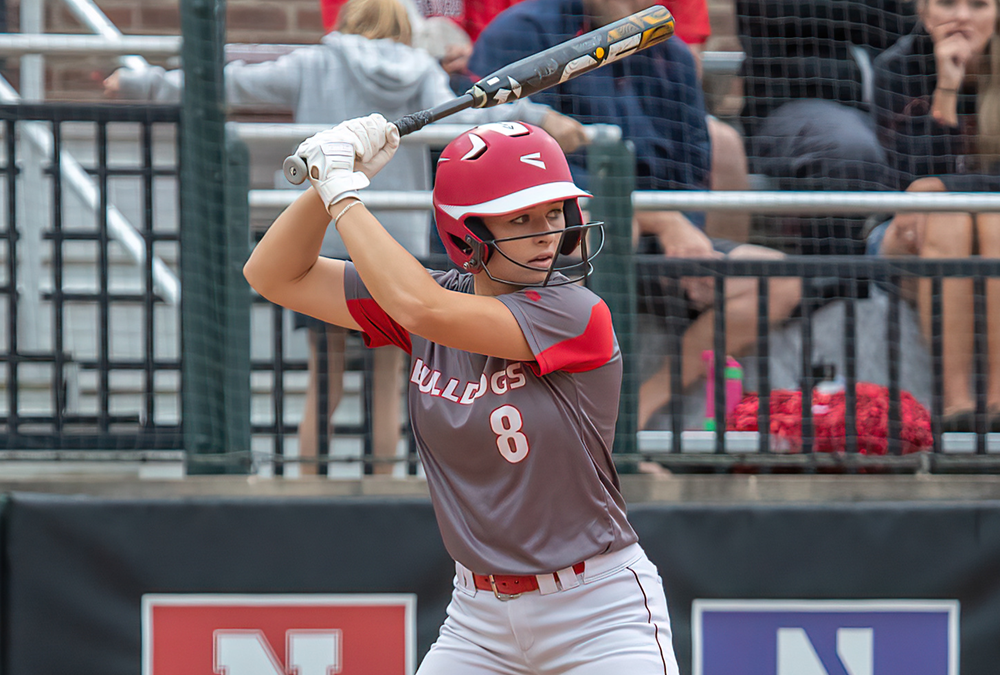
Vicksburg finished Division 2 runner-up last spring led by one of the most accomplished offenses in MHSAA history.
The Bulldogs made the single-season wins list finishing 41-6, setting a record with 441 RBI, ranking second 538 runs and 541 hits and tying for third with 62 home runs.
Maddison Diekman tied for fifth individually both with 84 runs scored and 89 hits, while Peyton Smith made lists with 73 hits, 19 doubles and 12 home runs. Brooklynn Ringler earned listings with 75 runs and 74 hits, and Delaney Monroe did as well with 16 home runs and 76 RBI. All four are seniors this season.
Diekman will continue her career at Central Michigan, Smith will continue at Concordia-Ann Arbor and Monroe will continue at Lawrence Tech, and Ringler will golf at Davenport. See below for more recent MHSAA softball record book updates, and click the heading to see the record book in full.
Softball
A pair of Fowler standouts earned individual record book entries last spring, and the team also earned a pair of entries. Avery Koenigsknect had back-to-back home runs and six RBI in one game May 18 against Bath, making lists for both, and teammate Brianne Halfmann had three home runs, including two back-to-back, and seven RBI in a single game against Mendon on June 13 to make lists for all three categories. As a team, the Eagles were added for 391 hits and 297 RBI over 37 games. Koenigsknecht graduated last spring, and Halfmann is a senior this school year.
Now-senior Marissa Warren led another strong Big Rapids effort in 2023, reaching the record book with 71 hits, 70 runs, 17 doubles, 15 home runs, 84 RBI and with three listings for multiple homers in a game or inning. She was joined by teammate Pharis Carroll, who made the runs scored list with 68 and is also a senior this school year. Hanna Smith (46), Rylie Haist (41) and Josie Cornell (34) finished three-season varsity careers all on the career doubles list. As a team., Big Rapids made lists with 445 hits, 428 runs, 90 doubles, 353 RBI and a .416 batting average. Warren has signed with Toledo, Haist and Smith are continuing at Ferris State, and Cornell signed with Husson University in Maine.
Payton Manninen’s junior season last spring saw her reach the MHSAA record book with a .645 average over 27 games – and also climb the list of longest hitting streaks in state history. The Ishpeming standout’s run came to an end last May 10, almost two years to the day it started and after 61 straight games with at least one hit – good for second on the list.
Hamilton’s best season in several years saw the Hawkeyes rank eighth all-time with 503 hits, fifth with 40 triples and ninth with a .438 team batting average over 41 games in 2023 – those listings among six total to make the team record book. Individually, senior Madie Jamrog made the records with 66 runs scored and 15 triples last season and 27 triples and 22 home runs for her three-year varsity career. Ella Davison, just a freshman last spring, made the lists with 81 hits, 18 doubles, a .643 average and a 23-game hitting streak. Then-sophomore Taylor Oosterink was added for six RBI in a game, and then-sophomore Kianna Vork for being hit by pitches three times in one contest. Jamrog is continuing her career at Akron.
Another pair of Richland Gull Lake standouts has been added to the records, one a recent graduate and another a senior this season. Mandy Esman was added seven times including for 35 doubles, 29 home runs and a .530 batting average over her three-season career – and despite her sophomore year being canceled due to the pandemic. Now-senior Ava Coffinger was added five times; her 86 runs scored last spring are tied for third-most for one season, and she had stolen 79 bases consecutively without getting caught entering this year and stole 73 total in 2023. Esman played a season at Michigan State and now plays at Houston, and Coffinger has signed with MSU.
Grandville Calvin Christian’s Karsen Balmer twice last season hit home runs in back-to-back at bats – against Beaverton on May 6, 2023, and then against Sparta on May 23. She’s a senior this spring.
A trio of Leslie seniors this spring are all over the record book for single-season and career accomplishments after their first three years of varsity. Ada Bradford ranked on the career strikeout list with 937 and at the plate with 49 doubles, 26 home runs and 166 RBI heading into this spring. Jalen Fossitt joins her with 58 doubles and 152 RBI for her career so far, and Gabby Waldofsky ranks with 171 runs scored and 209 hits over her first three seasons. Leslie also was added for 387 hits, 79 doubles and 254 RBI over 39 games last spring. Bradford will continue her career at Aquinas College, and Fossitt will continue at Hope College.
Cecelia Thorington’s junior season last spring at Pinckney saw her reach the record book four times, including for season totals of 73 hits, 68 runs scored and 60 stolen bases over 36 games. Senior teammate Kylee Douglas was added as well for six RBI in a game. Douglas is continuing her career at Henry Ford College, and Thorington will continue hers at University of Michigan.
Olivia Turner entered her senior season this spring at Grass Lake with 16 record book entries and two MHSAA records. She tied the record for single-season hits with 100 over 40 games in 2023, and along the way broke the career record for doubles with 80 and a season to play. She’s also climbing career record lists for home runs (15th) and RBI (third), and last season added single-season listings for 30 doubles (tied for third), 17 home runs, 102 RBI (second) and a .714 batting average (seventh). She has signed with Bradley.
A pair of Okemos hitters reached the record book last season for RBI in one game – now-junior Violet Greborunis twice driving in six, and now-junior Keirlyn Bane also bringing home six runners in one game.
Parma Western’s Abby Nieswender smashed 30 doubles last spring as a junior, which landed third on the single-season list. She’s signed with Aquinas.
Grayling earned its first record book achievements in this sport over the last two seasons. The Vikings as a team are listed for 82 doubles and 284 RBI over 37 games in 2023, and 68 doubles over 35 games in 2022. Anna Wood made the single-season individual doubles list with 17 last spring, and Mandy Andrews made the hit-by-pitch list with 16. Wood, Cali D’Amour and Jessica Campbell all made the single-game RBI list for six or more either last season or during 2022. Andrews is a senior this spring, and the other three are juniors.
Otisville LakeVille Memorial made the record book several times after finishing 33-8 in 2023, with now-senior Jayla Thompson leading the way. The Falcons were added for 437 runs, 420 hits, 88 doubles, 32 home runs and 350 RBI as a team. Thompson scored 70 runs, hit 16 doubles and 10 home runs and also reached the career home runs list with 27 and a season to play. She and now-senior Brooke Newberry, now-sophomore Anabell Newberry and now-junior Mallorie Nevadomski also made lists with single-game accomplishments.
PHOTO Vicksburg’s Peyton Smith stands in for a pitch during last season’s Division 2 Semifinal win over Richmond.