


Classes Still Create Hoosier Hysteria
July 27, 2017
By Rob Kaminski
MHSAA benchmarks editor
This is the fourth part in a series on MHSAA tournament classification, past and present, that will be published over the next two weeks. This series originally ran in this spring's edition of MHSAA benchmarks.
Twenty years ago, Bloomington North High School won the Indiana High School Athletic Association boys basketball championship, defeating Delta 75-54 at the RCA Dome in Indianapolis.
The date, March 22, 1997, is at the same time revered and disdained by traditionalists in the state who saw it as the last schoolboy championship game the state would ever host.
That’s how devout the game of basketball, particularly interscholastic basketball, had become in the Hoosier state during the 87 years a state champion – one state champion, to be precise – was crowned.
Following that 1997 season, the IHSAA moved to a four-class system for its roundball tournaments, like so many of its state association counterparts had done years earlier.
It would be shocking to find more than a small percentage of current high school basketball players around the country unfamiliar with the iconic movie Hoosiers, even though the film is now more than 30 years old.
And, the storyline for that blockbuster unfolded more than 30 years prior to its release, when small-town, undermanned Milan High School defeated Muncie Central High School 32-30 in the 1954 IHSAA title game.
Perhaps it’s because of the David vs Goliath notion, or the fame of the movie that replaced Milan with the fictional Hickory and real-life star Bobby Plump with Hollywood hero Jimmy Chitwood, or the simple fact that Indiana had something other states didn’t.
Whatever the reason, plenty of opposition remains to this day to basketball classification in the state.
The fact is, the small rural schools were regularly being beaten handily by the much larger suburban and city schools as the tournament progressed each season.
Small schools also were closing at a rapid rate following the state’s School Reorganization Act in 1959, as students converged on larger, centralized county schools. From 1960 to 2000, the number of schools entering the tournament dropped from 694 to 381, and in 1997 a total of 382 schools and 4,584 athletes began competition at the Sectional level (the first level of the IHSAA Basketball Tournament).
It was at the entry level of the tournament where school administrators felt the pain of the new class system, but not necessarily for the same nostalgic reasons as the fans who either attended or boycotted the tournament.
At the Sectional round of the tournament, the IHSAA was culling just 2 percent of the revenue, with the participating schools splitting the balance. So, when Sectional attendance dropped by 14 percent in that first year of class basketball, many schools realized a financial loss. It was money they had grown to count on in prior years to help fund various aspects of the department.
Schools cumulatively received more than $900,000 from Sectional competition in 1998, but that total was down from more than $1 million in the last year of the single-class tournament.
Yet, the current format provides a great deal more opportunity and realistic chances at championship runs for schools of all enrollments.
To date, 60 additional teams have championship or runner-up trophies on display in school trophy cases around Indiana.
That was the mission in front of then-IHSAA commissioner Bob Gardner (now National Federation executive director) once the board made its decision: to give thousands more student-athletes the opportunity for once-in-a-lifetime experiences.
As any statistician knows, figures can be manipulated to tell any side of a story. Declining attendance in year one of class basketball is such a number.
The truth is tournament attendance had been on a steady downward spiral since its peak of just over 1.5 million in 1962. By the last single-class event in 1997, the total attendance was half that.
The challenge then and today, as it is for all state associations, is to find that delicate balance for those holding onto tradition, those holding onto trophies, and the number of trophies to hand out.
Editor’s Note: Stories from the Fort Wayne Journal Gazette in 1998 and from a 2007 issue of Indianapolis Monthly provided facts in this article.
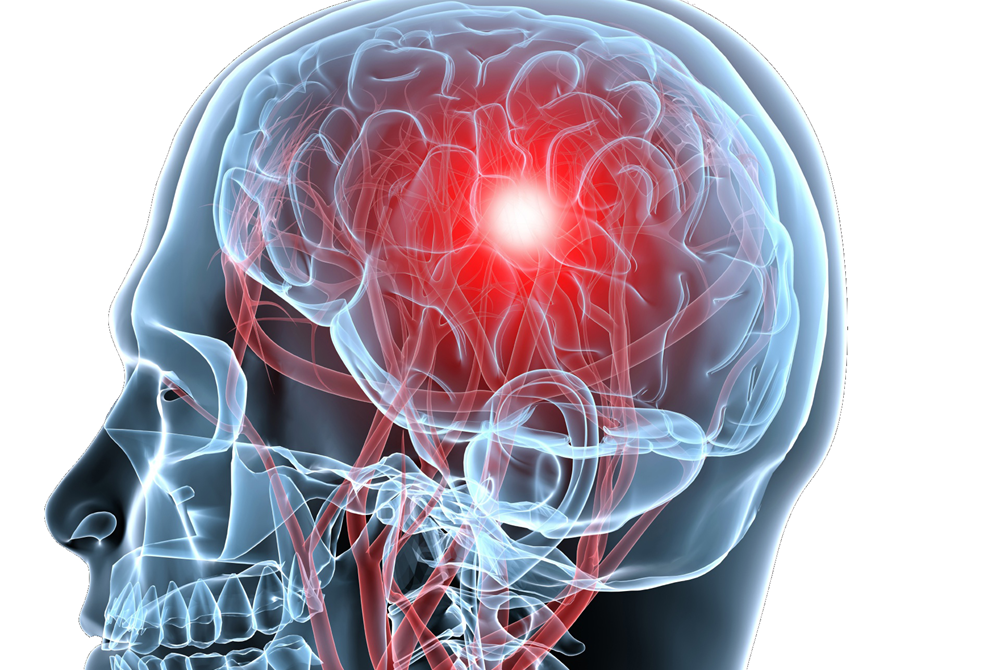
How To Be Proactive About Concussions In Student Athletes
December 5, 2023
Most people have seen the headlines about concussions as a common sports injury—and it's natural that parents of athletes may have concerns. A large misconception in sports is that previous concussions are to be blamed for ongoing headaches, blurred vision and memory loss, among other symptoms.
 “It’s really important to think about concussions in tandem with overall brain health,” says Jake Carpenter-Thompson, M.D., Ph.D., a board-certified neurologist at the Henry Ford Kutcher Clinic for Concussion and Sports Neurology. “Concussions can be concerning, but they shouldn’t be looked at in a vacuum. It is important to understand an athlete’s overall brain health to help manage recovery after any impact.”
One way to do that is to consult with your child’s doctor or a sports neurologist for an annual evaluation. A sports neurologist focuses on managing sports-related brain and nervous system injuries and conditions in athletes, such as concussions, post-concussion syndrome, peripheral nerve injuries, migraines, epilepsy and more.
“Having an annual evaluation of your athlete’s brain health when they are at their baseline – and uninjured – can help diagnose and treat issues when they arise,” says Dr. Carpenter-Thompson.
A qualified healthcare professional can use the baseline evaluation results as an important comparison tool if an athlete develops a suspected concussion.
Best Practices For Keeping Athletes Safe
Dr. Carpenter-Thompson shares these tips to ensure you keep front of mind your child’s brain health and safety, not just their athletic performance:
- Get a brain health baseline test. This should include a personal and family neurological history, with a focus on current issues. It is important to note any neurological conditions that may influence concussion recovery, such as ADHD, depression, anxiety or migraine headaches.
- Encourage your children to listen to their body. There are risks to playing any sport. Encourage your child to listen to and be honest about how they’re feeling. It’s the best way to prevent and treat injuries.
- In the event of an injury, look for the signs. Within 24 hours after an injury, an athlete should be evaluated if they are experiencing: headaches, fatigue, dizziness and nausea, changes in sleep habits, trouble with memory, confusion, irritability and anxiety, or light sensitivity.
- Know that brain injuries don’t just occur with a blow to the head. They can also occur from falls, car accidents or even whiplash. If your child is experiencing any symptoms, consult your physician.
- Remember that brain health is more than just concussions. If your athlete is complaining of chronic headaches, migraines, dizziness, memory or mood issues, there may be an underlying issue.
“There is no magic number of concussions a brain can sustain. Each person is different,” says Dr. Carpenter-Thompson. “The severity of the impact and recovery time can vary greatly for numerous reasons. By getting a brain health assessment before the injury, we can provide more targeted care to improve an athlete's overall clinical course.”
To find a sports medicine doctor or athletic trainer at Henry Ford, visit henryford.com/athletes.