


Classes Still Create Hoosier Hysteria
July 27, 2017
By Rob Kaminski
MHSAA benchmarks editor
This is the fourth part in a series on MHSAA tournament classification, past and present, that will be published over the next two weeks. This series originally ran in this spring's edition of MHSAA benchmarks.
Twenty years ago, Bloomington North High School won the Indiana High School Athletic Association boys basketball championship, defeating Delta 75-54 at the RCA Dome in Indianapolis.
The date, March 22, 1997, is at the same time revered and disdained by traditionalists in the state who saw it as the last schoolboy championship game the state would ever host.
That’s how devout the game of basketball, particularly interscholastic basketball, had become in the Hoosier state during the 87 years a state champion – one state champion, to be precise – was crowned.
Following that 1997 season, the IHSAA moved to a four-class system for its roundball tournaments, like so many of its state association counterparts had done years earlier.
It would be shocking to find more than a small percentage of current high school basketball players around the country unfamiliar with the iconic movie Hoosiers, even though the film is now more than 30 years old.
And, the storyline for that blockbuster unfolded more than 30 years prior to its release, when small-town, undermanned Milan High School defeated Muncie Central High School 32-30 in the 1954 IHSAA title game.
Perhaps it’s because of the David vs Goliath notion, or the fame of the movie that replaced Milan with the fictional Hickory and real-life star Bobby Plump with Hollywood hero Jimmy Chitwood, or the simple fact that Indiana had something other states didn’t.
Whatever the reason, plenty of opposition remains to this day to basketball classification in the state.
The fact is, the small rural schools were regularly being beaten handily by the much larger suburban and city schools as the tournament progressed each season.
Small schools also were closing at a rapid rate following the state’s School Reorganization Act in 1959, as students converged on larger, centralized county schools. From 1960 to 2000, the number of schools entering the tournament dropped from 694 to 381, and in 1997 a total of 382 schools and 4,584 athletes began competition at the Sectional level (the first level of the IHSAA Basketball Tournament).
It was at the entry level of the tournament where school administrators felt the pain of the new class system, but not necessarily for the same nostalgic reasons as the fans who either attended or boycotted the tournament.
At the Sectional round of the tournament, the IHSAA was culling just 2 percent of the revenue, with the participating schools splitting the balance. So, when Sectional attendance dropped by 14 percent in that first year of class basketball, many schools realized a financial loss. It was money they had grown to count on in prior years to help fund various aspects of the department.
Schools cumulatively received more than $900,000 from Sectional competition in 1998, but that total was down from more than $1 million in the last year of the single-class tournament.
Yet, the current format provides a great deal more opportunity and realistic chances at championship runs for schools of all enrollments.
To date, 60 additional teams have championship or runner-up trophies on display in school trophy cases around Indiana.
That was the mission in front of then-IHSAA commissioner Bob Gardner (now National Federation executive director) once the board made its decision: to give thousands more student-athletes the opportunity for once-in-a-lifetime experiences.
As any statistician knows, figures can be manipulated to tell any side of a story. Declining attendance in year one of class basketball is such a number.
The truth is tournament attendance had been on a steady downward spiral since its peak of just over 1.5 million in 1962. By the last single-class event in 1997, the total attendance was half that.
The challenge then and today, as it is for all state associations, is to find that delicate balance for those holding onto tradition, those holding onto trophies, and the number of trophies to hand out.
Editor’s Note: Stories from the Fort Wayne Journal Gazette in 1998 and from a 2007 issue of Indianapolis Monthly provided facts in this article.
Breslin Bound: 2025-26 Boys Regional Preview
By
Geoff Kimmerly
MHSAA.com senior editor
March 3, 2026
Burt Lake Northern Michigan Christian Academy won its first District championship in boys basketball last week. Fruitport won its first since 1938.
 Yale defeated Croswell-Lexington and Marshall defeated Battle Creek Pennfield in District Final matchups of teams that shared league titles. Ann Arbor Pioneer, Grand Rapids Catholic Central, Colon and Detroit Cass Tech all finished second in their leagues this season but won their Districts as well, defeating their respective league champions to advance to this week’s Regionals.
Districts offer every team new life and second chances – and after a week full of those, 128 hopefuls are only three more wins from booking a trip to Michigan State.
Find everything you need to know this week about tickets, brackets and more as the tournament continues on the Boys Basketball page. To watch any of several games online, visit the NFHS Network, and see below for several of the intriguing matchups. Host sites are in bold.
“Breslin Bound” is powered by MI Student Aid and based on results and schedules posted for each school at MHSAA.com.
Week in Review
The countdown of last week’s five most intriguing results:
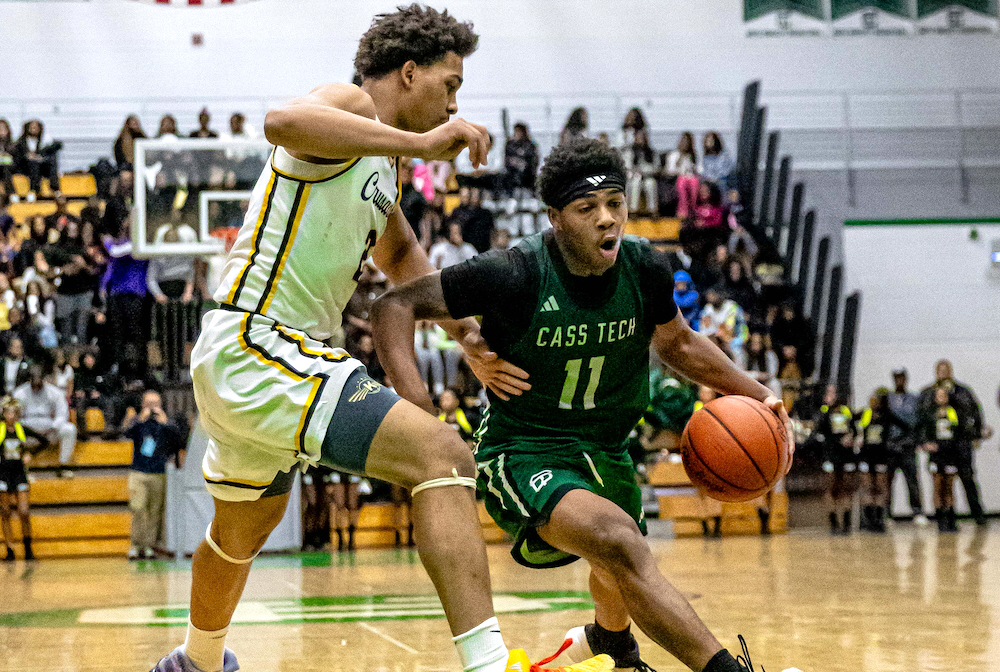
1. Detroit Cass Tech 66, Detroit Martin Luther King 23 The Technicians (18-6) avenged a pair of regular-season losses to rival King (18-6) in a big way in this Division 1 District final after previously falling by seven points Jan. 21 and then 68-63 in the Detroit Public School League Tournament championship game on Feb. 15.
2. Rockford 83, Muskegon 70 The Rams (20-3) won this Division 1 District Final matchup for the second-straight season, ending Ottawa-Kent Conference Green champion Muskegon’s run at 20-3.
3. Hudsonville Unity Christian 60, Grand Rapids South Christian 39 This Division 2 District Final pitted the champs from the O-K Black and Gold, with Unity (21-3) adding to its 17-point win over the Sailors (20-4) from Dec. 12.
4. Colon 54, Mendon 47 The Magi (20-4) had finished second to Mendon in the Southern Central Athletic Association West after losing in overtime both times they faced the Hornets (22-2) during the regular season, but got past them in regulation in this Division 4 District Final.
5. Grand Rapids Catholic Central 44, Grand Rapids Christian 41 The Cougars (18-6) had fallen to Grand Rapids Christian (17-6) by nine points just 10 days earlier to lose the O-K White title to the Eagles, but rebounded to win a Division 2 District title for the third-straight season.
Regionals at a Glance
These could be among our most competitive brackets. Host sites are in bold:
DIVISION 1
Caledonia
Grand Rapids Northview (20-4) vs. Grandville (14-10)
Holland West Ottawa (13-11) vs. East Kentwood (21-2)
Grandville and West Ottawa deserve nods for reaching this week, the Bulldogs for avenging two regular-season losses to Hudsonville with a 49-37 District Final win and the Panthers as they added to a nice streak of four wins in five games by joining Grandville, East Kentwood and Rockford as one of four District champs from the Ottawa-Kent Conference Red. But the most anticipated matchup this week would see O-K Gold co-champion Northview take on the Falcons, who won that O-K Red that also will see all six teams finish with winning records this season.
Detroit Renaissance
Bloomfield Hills Brother Rice (19-5) vs. Detroit Cass Tech (18-6)
Farmington (12-12) vs. Warren Fitzgerald (18-6)
Brother Rice and Cass Tech have been in the statewide favorites conversation most of this decade, and although neither won its league this season it wouldn’t be shocking to see either playing at Breslin with an opportunity to win it all in two weeks. Only three of Rice’s losses were to in-state opponents – East Lansing (23-1), Rockford (20-3) and Detroit Catholic Central (17-6) – and Cass Tech’s six defeats came by a combined 21 points. Farmington has emerged after finishing fifth in the Oakland Activities Association Red and defeated Redford Thurston (20-3) to advance, and Fitzgerald has won 12 of its last 15 and claimed the Macomb Area Conference White title.
Kalamazoo Loy Norrix
Jackson (18-6) vs. Kalamazoo Central (20-2)
Kalamazoo Loy Norrix (16-7) vs. East Lansing (23-1)
Reigning Division 1 champion East Lansing has been stopped only once this season, by Grand Rapids Northview on Feb. 7. The Trojans also defeated Loy Norrix 78-50 two weeks ago, and last year downed Kalamazoo Central by 35 points in the Regional Final. The Maroon Giants are among the state’s elite again this season and perhaps even a step up from a year ago, with losses to only Detroit Martin Luther King (18-6) and Bloomfield Hills Brother Rice (19-5). The focus is on those two, but Jackson has won 11 of its last 12 games, and Loy Norrix has its most wins since 2011-12.
DIVISION 2
Fowlerville
Chelsea (18-5) vs. Marshall (19-4)
Lansing Sexton (22-2) vs. Michigan Center (20-3)
All of these teams are league champions, Sexton in the Capital Area Activities Conference White, Michigan Center in the Cascades Conference East, Chelsea sharing with two others in the Southeastern Conference White and Marshall as co-champion in the Interstate 8 Athletic Conference. Marshall downed the other I8AC co-champ Battle Creek Pennfield to advance and also defeated Michigan Center 64-50 on Dec. 13. Sexton defeated Chelsea by two points last season in their Regional Final and has been even better this winter with its only losses to Division 1 East Lansing and Lansing Waverly. Michigan Center bounced back from two losses to end the regular season, and Chelsea has three defeats by one or two points and shared the SEC White title with Division 1 teams Ypsilanti Lincoln and Jackson.
Manistique
Kingsford (16-6) vs. Cheboygan (18-6)
Ludington (22-2) vs. Gladwin (23-1)
Gladwin won the Jack Pine Conference overall championship and is riding a 23-game winning streak since falling to Sanford Meridian (17-7) in its season opener. The Flying Gs take on another league champion in Ludington, which won the West Michigan Conference Lakes and has lost to only Division 1 Traverse City West (16-5) and North Muskegon (22-2). Those two will play one of the most intriguing Regional Semifinals in any division, but Kingsford or Cheboygan also will be formidable Thursday. The Flivvers made the Division 2 Semifinals a year ago, defeating Ludington by 40 in the Regional Final along the way. Cheboygan has doubled its win total this season from two years ago and got through close games with Grayling and Ogemaw Heights last week to advance.
Owosso
Flint Hamady (16-6) vs. Frankenmuth (23-1)
Freeland (21-3) vs. Portland (18-5)
This group is a complete repeat of last year’s Regional that saw Freeland advance to the Quarterfinals by defeating Portland. Heading into this year’s bracket, Frankenmuth finished first and Freeland second in the Tri-Valley Conference Red, and Freeland handed the Eagles their only loss, 54-48 on Feb. 13, after Frankenmuth had won their first meeting 47-43. Hamady won the Genesee Area Conference Blue and advanced to this week with a 17-point win over Flint Powers Catholic (16-7). Portland finished second in the CAAC White behind Lansing Sexton (22-2) and has won nine of its last 10 games.
DIVISION 3
Cass City
Reese (15-10) vs. International Academy of Flint (18-4)
Sandusky (16-7) vs. Harbor Beach (21-3)
Harbor Beach has totaled at least 20 wins the last three seasons and reached the Regional Final a year ago, but must defeat a familiar opponent for a third time to take that step again. The Pirates won the Big Thumb Conference Black and Sandusky finished third – and Sandusky also had a win over Reese just two weeks ago. The Rockets emerged by upsetting Saginaw Michigan Lutheran Seminary (19-5) in their District Final and now must take on another league champion in IAF, which won the Genesee Area Conference Red. The Phoenix bounced back from a pair of losses to end the regular season to earn their second District title over the last three years, and all of IAF’s defeats came to opponents with at least 18 wins.
Clinton
Ottawa Lake Whiteford (21-3) vs. Onsted (22-2)
Jonesville (18-6) vs. Ecorse (18-5)
Whiteford/Onsted should be another Regional Semifinal with notable statewide interest as both are league champions – in the Tri-County Conference and Lenawee County Athletic Association, respectively – with only a handful of losses between them. Whiteford actually shared the TCC title but has won 11 straight games and lost only twice to in-state opponents. Both Onsted defeats came to Division 2 teams. Ecorse also is a league champion, in the Charter School Conference Silver, and only three years removed from a run to the Division 3 Semifinals. Jonesville was the runner-up in the Cascades Conference West and reached this week with two five-point wins in its District including a triple-overtime victory over Hudson.
Kingsford
Ishpeming Westwood (23-1) vs. Menominee (20-4)
East Jordan (22-2) vs. Elk Rapids (20-3)
This is another field of four league champs, starting with Western Peninsula Athletic Conference winner Westwood, which made the Division 3 Semifinals a year ago and defeated Great Northern Conference champ Menominee 55-52 on Feb. 6. That was one of three Maroons defeats against teams still playing this week, and Menominee is only two years removed from winning a Regional title. East Jordan won the Ski Valley Conference and defeated Mancelona (21-3) for the third time this season to win their District Final. Elk Rapids won the Northern Shores Conference and has lost to only Division 1 and 2 opponents. The Elks got past Northwest Conference champion Maple City Glen Lake by three points last week to advance.
DIVISION 4
Detroit Douglass
Detroit Douglass (17-7) vs. Allen Park Inter-City Baptist (21-3)
Whitmore Lake (17-7) vs. Southfield Christian (19-5)
Inter-City Baptist defeated Douglass in a Regional Semifinal a year ago during its run to Breslin and has lost to only Division 1 and 2 teams this season that all have won at least 17 games. The host Hurricanes also have lost to only Division 1 and 2 teams, all with at least 14 wins – and Douglass nearly made the PSL championship game before falling to Cass Tech in overtime of their semifinal. Inter-City Baptist won the Michigan Independent Athletic Conference Blue and has two victories over both Whitmore Lake and Southfield Christian, which split their regular-season series with Whitmore Lake winning the first game and the Eagles taking the rematch.
Hillman
Rudyard (14-10) vs. Pickford (23-0)
Burt Lake Northern Michigan Christian (16-7) vs. Hillman (21-2)
As noted above, Northern Michigan Christian is coming off its first District championship in this sport. The Eagles also have a win over Rudyard this season and a 23-pointer over Posen – which shared the North Star League Little Dipper championship with Hillman. That adds another level of intrigue to this bracket as Hillman and Posen split and Hillman lost their second meeting – although the Tigers already avenged their other loss, to Rogers City, twice including last week. Pickford has 27 and 29-point wins over Rudyard this season and is pursuing a second-straight Regional title after missing a trip to Breslin last season with a two-point Quarterfinal loss. Rudyard has won 10 of its last 13 games and in its District Final avenged a 20-point loss to Brimley from 10 days earlier with a two-point win.
Merrill
Fowler (22-2) vs. Baldwin (20-4)
Wyoming Tri-unity Christian (22-1) vs. Saginaw Nouvel Catholic Central (16-7)
This power-packed Regional starts with Tri-unity, the reigning Division 4 champion with its only loss this season to Division 2 Fruitport (21-3) on Dec. 20. The Defenders must first take on a Nouvel team that finished second in the TVC Blue and has won eight of its last nine games including 55-50 over Mount Pleasant Sacred Heart (18-5) in their District Final. And whichever team comes out of Fowler/Baldwin will provide a major challenge as well. The Eagles also ran into Tri-unity last year – in the Division 4 championship game, won by the Defenders 49-32 – and Fowler’s only losses this winter were to Division 3 Pewamo-Westphalia (22-2). Baldwin will do its best to prevent that rematch and is plenty capable after avenging an earlier defeat to clinch the outright West Michigan D League title while riding a run of nine wins over its last 10 games.
MHSAA.com's weekly “Breslin Bound” reports are powered by MI Student Aid, a division within the Department of Lifelong Education, Advancement, and Potential (MiLEAP). MI Student Aid encourages students to pursue postsecondary education by providing access to student financial resources and information. MI Student Aid administers the state’s scholarship and grant programs that help make college Accessible, Affordable and Attainable for you. Click to connect with MI Student Aid and find more information on Facebook and X @mistudentaid.
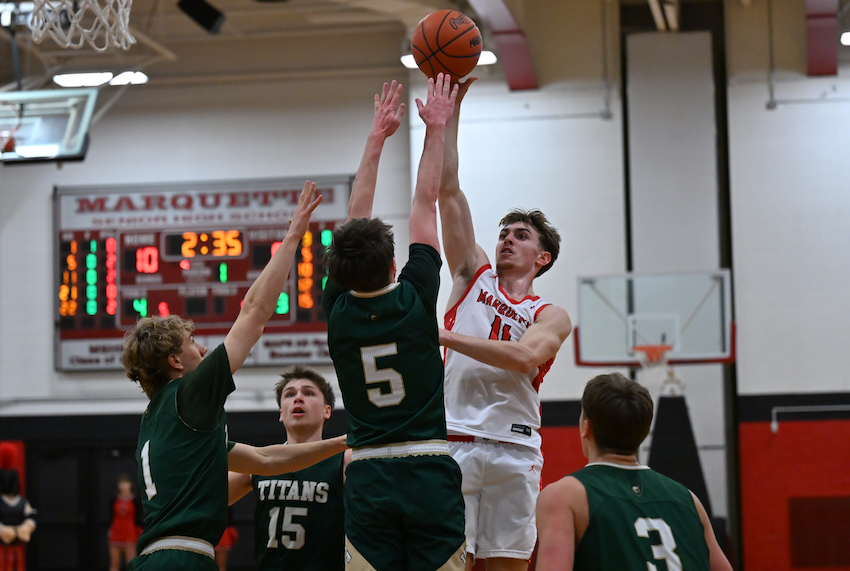
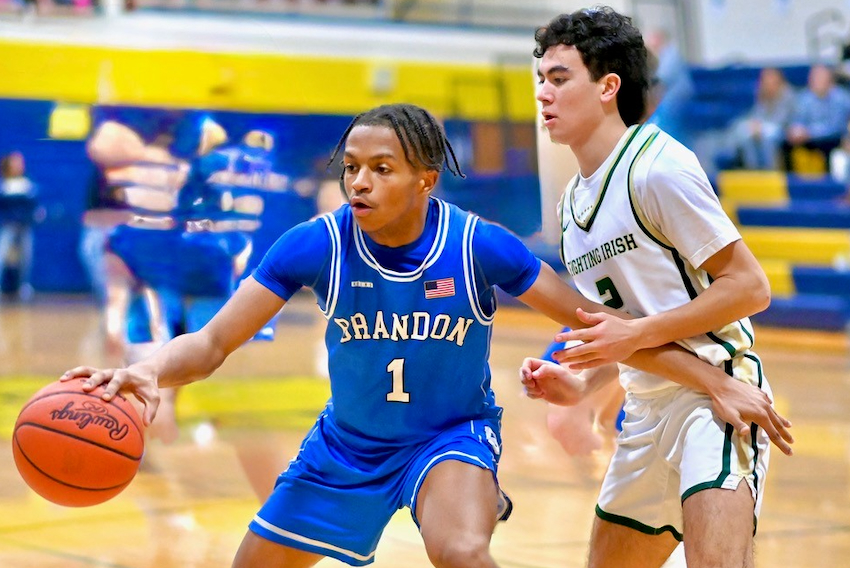
PHOTOS (Top) Detroit Cass Tech’s Amari Wash (11) makes a move toward the lane during his team’s Division 1 District Final win over Detroit Martin Luther King on Friday. (Middle) Marquette's Ford Richardson gets up a shot while surrounded by Traverse City West's Ashton Royle (15), Jacob Banish (1), Blake LaFaive (5), and Carter Grubb (3) during the Sentinels’ 69-52 Division 1 District Final win. (Below) Pontiac Notre Dame Prep and Ortonville Brandon face off in a Division 2 District opener. (Cass Tech/King photo by Olivia B. Photography. Marquette/TC West photo by Cara Kamps. Notre Dame Prep/Ortonville Brandon photo by Terry Lyons.)