


Classes Still Create Hoosier Hysteria
July 27, 2017
By Rob Kaminski
MHSAA benchmarks editor
This is the fourth part in a series on MHSAA tournament classification, past and present, that will be published over the next two weeks. This series originally ran in this spring's edition of MHSAA benchmarks.
Twenty years ago, Bloomington North High School won the Indiana High School Athletic Association boys basketball championship, defeating Delta 75-54 at the RCA Dome in Indianapolis.
The date, March 22, 1997, is at the same time revered and disdained by traditionalists in the state who saw it as the last schoolboy championship game the state would ever host.
That’s how devout the game of basketball, particularly interscholastic basketball, had become in the Hoosier state during the 87 years a state champion – one state champion, to be precise – was crowned.
Following that 1997 season, the IHSAA moved to a four-class system for its roundball tournaments, like so many of its state association counterparts had done years earlier.
It would be shocking to find more than a small percentage of current high school basketball players around the country unfamiliar with the iconic movie Hoosiers, even though the film is now more than 30 years old.
And, the storyline for that blockbuster unfolded more than 30 years prior to its release, when small-town, undermanned Milan High School defeated Muncie Central High School 32-30 in the 1954 IHSAA title game.
Perhaps it’s because of the David vs Goliath notion, or the fame of the movie that replaced Milan with the fictional Hickory and real-life star Bobby Plump with Hollywood hero Jimmy Chitwood, or the simple fact that Indiana had something other states didn’t.
Whatever the reason, plenty of opposition remains to this day to basketball classification in the state.
The fact is, the small rural schools were regularly being beaten handily by the much larger suburban and city schools as the tournament progressed each season.
Small schools also were closing at a rapid rate following the state’s School Reorganization Act in 1959, as students converged on larger, centralized county schools. From 1960 to 2000, the number of schools entering the tournament dropped from 694 to 381, and in 1997 a total of 382 schools and 4,584 athletes began competition at the Sectional level (the first level of the IHSAA Basketball Tournament).
It was at the entry level of the tournament where school administrators felt the pain of the new class system, but not necessarily for the same nostalgic reasons as the fans who either attended or boycotted the tournament.
At the Sectional round of the tournament, the IHSAA was culling just 2 percent of the revenue, with the participating schools splitting the balance. So, when Sectional attendance dropped by 14 percent in that first year of class basketball, many schools realized a financial loss. It was money they had grown to count on in prior years to help fund various aspects of the department.
Schools cumulatively received more than $900,000 from Sectional competition in 1998, but that total was down from more than $1 million in the last year of the single-class tournament.
Yet, the current format provides a great deal more opportunity and realistic chances at championship runs for schools of all enrollments.
To date, 60 additional teams have championship or runner-up trophies on display in school trophy cases around Indiana.
That was the mission in front of then-IHSAA commissioner Bob Gardner (now National Federation executive director) once the board made its decision: to give thousands more student-athletes the opportunity for once-in-a-lifetime experiences.
As any statistician knows, figures can be manipulated to tell any side of a story. Declining attendance in year one of class basketball is such a number.
The truth is tournament attendance had been on a steady downward spiral since its peak of just over 1.5 million in 1962. By the last single-class event in 1997, the total attendance was half that.
The challenge then and today, as it is for all state associations, is to find that delicate balance for those holding onto tradition, those holding onto trophies, and the number of trophies to hand out.
Editor’s Note: Stories from the Fort Wayne Journal Gazette in 1998 and from a 2007 issue of Indianapolis Monthly provided facts in this article.
Herremans' Focus on 'Dadding,' Giving Kids Similar Small-Town Childhood
By
Tom Kendra
Special for MHSAA.com
August 5, 2021
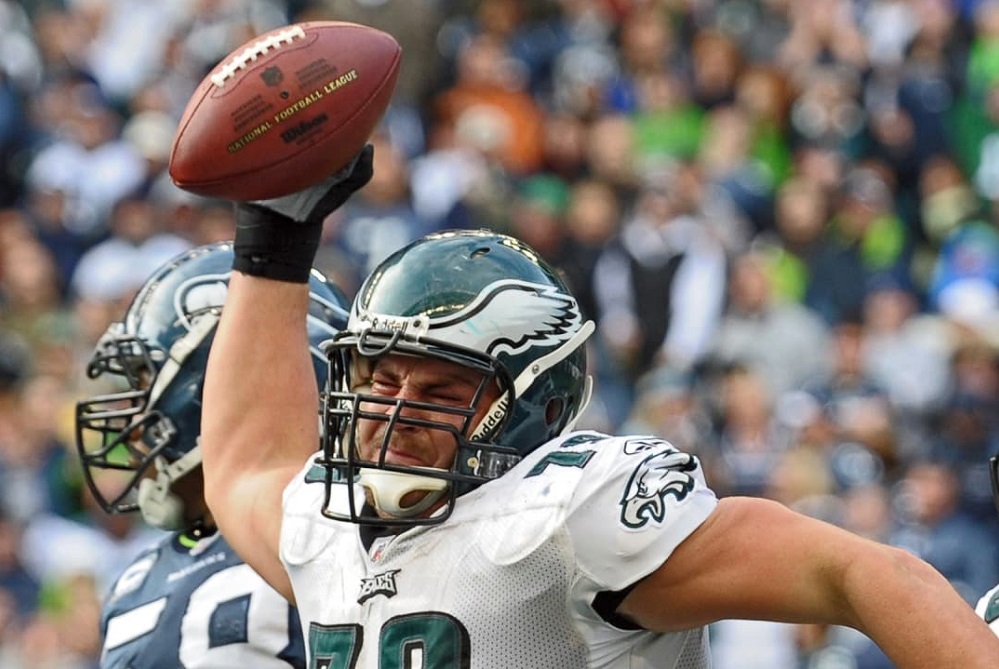
Todd Herremans played 11 seasons in the NFL, battling big-name defensive linemen every Sunday and ascending to celebrity status in Philadelphia.
 But make no mistake: He’s still a small-town, Ravenna boy at heart.
“We lived in downtown Philly for the last 10 years and then the kids came along,” said Herremans, a 2001 graduate of Ravenna High School. “I tried to make it work, but one day it just hit me that I have no idea how to raise kids in the city.”
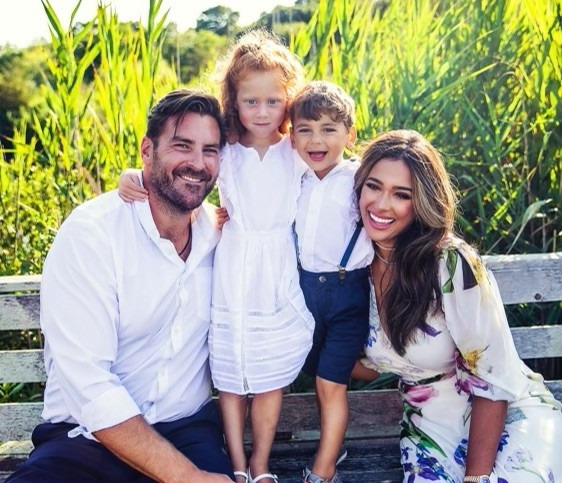
So, in a scene straight out of the 1960’s television comedy “Green Acres,” in January he loaded up his wife, Elizabeth, daughter Olivia (5) and son Jaxon (3) and moved to a farm in West Chester, a small town about 50 miles east of Philadelphia.
One of the goals of the move has been to provide his kids with a childhood something like his idyllic upbringing in Ravenna, a rural village in eastern Muskegon County with about 1,200 residents.
Herremans’ father, Paul, is approaching his 31st season as the varsity baseball coach at Ravenna, despite retiring as a math teacher in 2010. He has also coached football and basketball at Ravenna since the 1970s and, as a result, his sons John, Scott and Todd basically grew up under the bleachers.
“I remember being really little and I couldn’t wait to be old enough to be the bat boy,” said Todd Herremans, now 38, whose mother, Marilee, was also a teacher. “Then once I did that, I was itching to put on the pads and the uniforms. Then I couldn’t wait to be on the varsity.”
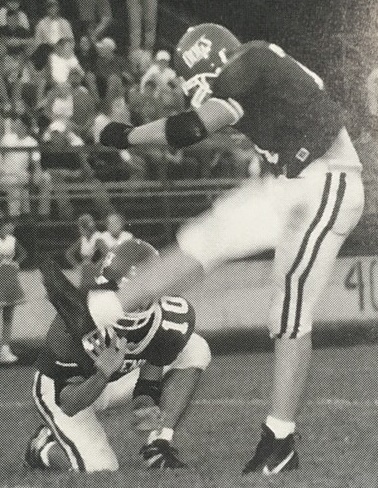
 He grew up to be a four-sport athlete at Ravenna – starring in football, basketball and baseball (along with helping out the track & field team in his senior year, throwing the discus and shot put) – and he credits playing multiple sports for helping him not only make it to the NFL, but to stay there for 11 years and remain healthy enough to start 126 of 135 career games.
“There’s no doubt playing other sports helped me make it to the NFL – the footwork I developed playing basketball and things like that,” said Herremans. “But it really helped me stay there. When you play different sports you are in different scenarios and fill different roles on each team. I think I was more adaptable than some of the other guys I played with.”
Herremans earned all-West Michigan Conference honors in football, basketball and baseball at Ravenna, but he was a late bloomer in many ways as his skill set grew into his big frame.
He went on to start for four years at Saginaw Valley State, playing in 48 games and starting 40 of them at left or right offensive tackle. During his senior year at Saginaw Valley he earned first-team Little All-America honors from The Associated Press, which put him firmly on the NFL radar.
He was selected in the fourth round of the 2005 NFL Draft, when the Eagles traded up to take him with Green Bay’s pick (126th overall). He started his first NFL game Nov. 27, 2005, and remained a fixture on the Eagles’ offensive front for the next decade.
Herremans, who played at 6-foot-6 and 323 pounds, was known for his consistency and durability, as well as his versatility – playing every interior line position for the Eagles except for center.
The versatility didn’t stop there, however, as he is one of the few interior offensive linemen in NFL history to catch two touchdown passes, one each in 2008 and 2010.
After being released by the Eagles in 2015, he was picked up right away by Indianapolis, where he started two games.
These days, Herremans spends much of his time taking care of his children at the farm in West Chester and also at his cottage on Torch Lake in northern Michigan.
“I do a lot of dadding,” he said with a laugh.
Since his retirement, Herremans and a partner started BodyChek Wellness, a company that makes hemp-based products to help with wellness, balance and recovery. He is also a member of Athletes for Care, a group that advocates for athletes on various issues of health and safety, including the use of cannabis as medicine.
He looks forward to the summer months, when he spends most of his days at his northern Michigan cottage, allowing him a perfect place and opportunity to catch up with his family and friends from both Ravenna and Saginaw Valley.
Even better is having time to watch his kids grow up, which he said would have been nearly impossible during his NFL playing days.
“I have a lot of fun being with them,” Herremans said. “Ever since we moved out to the country, my son has been obsessed with tractors and tools. I love that.”
2020-21 Made in Michigan
July 29: Loy Norrix Career Prepped Crocker for U-M Success, Law Degree Pursuit - Read
July 19: Top PGA Pro Finish Latest Greatest Highlight as Cook Continues Climb - Read
July 16: TC West Standout Renews Ties to Titans, Cheers Past Teammates' Gold Pursuit - Read
July 8: Caro Champs Find Common Ground Again as Mental Health Providers - Read
June 28: Michigan's Minor Leaguers Making Up for Lost Season - Read
PHOTOS: (Top) Past Ravenna standout Todd Herremans, here with the Philadelphia Eagles, spikes after scoring in 2008. (Middle) Herremans with wife Elizabeth and children Olivia and Jaxon. (Below) Todd’s high school memories include kicking field goals and earning the Homecoming crown. (Top photo courtesy of the Philadelphia Eagles; middle photo courtesy of the Herremans family; below photos courtesy of Ravenna High School.)