


Classes Still Create Hoosier Hysteria
July 27, 2017
By Rob Kaminski
MHSAA benchmarks editor
This is the fourth part in a series on MHSAA tournament classification, past and present, that will be published over the next two weeks. This series originally ran in this spring's edition of MHSAA benchmarks.
Twenty years ago, Bloomington North High School won the Indiana High School Athletic Association boys basketball championship, defeating Delta 75-54 at the RCA Dome in Indianapolis.
The date, March 22, 1997, is at the same time revered and disdained by traditionalists in the state who saw it as the last schoolboy championship game the state would ever host.
That’s how devout the game of basketball, particularly interscholastic basketball, had become in the Hoosier state during the 87 years a state champion – one state champion, to be precise – was crowned.
Following that 1997 season, the IHSAA moved to a four-class system for its roundball tournaments, like so many of its state association counterparts had done years earlier.
It would be shocking to find more than a small percentage of current high school basketball players around the country unfamiliar with the iconic movie Hoosiers, even though the film is now more than 30 years old.
And, the storyline for that blockbuster unfolded more than 30 years prior to its release, when small-town, undermanned Milan High School defeated Muncie Central High School 32-30 in the 1954 IHSAA title game.
Perhaps it’s because of the David vs Goliath notion, or the fame of the movie that replaced Milan with the fictional Hickory and real-life star Bobby Plump with Hollywood hero Jimmy Chitwood, or the simple fact that Indiana had something other states didn’t.
Whatever the reason, plenty of opposition remains to this day to basketball classification in the state.
The fact is, the small rural schools were regularly being beaten handily by the much larger suburban and city schools as the tournament progressed each season.
Small schools also were closing at a rapid rate following the state’s School Reorganization Act in 1959, as students converged on larger, centralized county schools. From 1960 to 2000, the number of schools entering the tournament dropped from 694 to 381, and in 1997 a total of 382 schools and 4,584 athletes began competition at the Sectional level (the first level of the IHSAA Basketball Tournament).
It was at the entry level of the tournament where school administrators felt the pain of the new class system, but not necessarily for the same nostalgic reasons as the fans who either attended or boycotted the tournament.
At the Sectional round of the tournament, the IHSAA was culling just 2 percent of the revenue, with the participating schools splitting the balance. So, when Sectional attendance dropped by 14 percent in that first year of class basketball, many schools realized a financial loss. It was money they had grown to count on in prior years to help fund various aspects of the department.
Schools cumulatively received more than $900,000 from Sectional competition in 1998, but that total was down from more than $1 million in the last year of the single-class tournament.
Yet, the current format provides a great deal more opportunity and realistic chances at championship runs for schools of all enrollments.
To date, 60 additional teams have championship or runner-up trophies on display in school trophy cases around Indiana.
That was the mission in front of then-IHSAA commissioner Bob Gardner (now National Federation executive director) once the board made its decision: to give thousands more student-athletes the opportunity for once-in-a-lifetime experiences.
As any statistician knows, figures can be manipulated to tell any side of a story. Declining attendance in year one of class basketball is such a number.
The truth is tournament attendance had been on a steady downward spiral since its peak of just over 1.5 million in 1962. By the last single-class event in 1997, the total attendance was half that.
The challenge then and today, as it is for all state associations, is to find that delicate balance for those holding onto tradition, those holding onto trophies, and the number of trophies to hand out.
Editor’s Note: Stories from the Fort Wayne Journal Gazette in 1998 and from a 2007 issue of Indianapolis Monthly provided facts in this article.
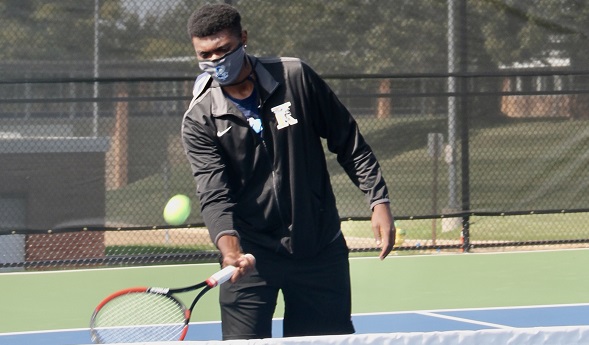
Henry Adds Coaching to K-Zoo Connection
By
Pam Shebest
Special for MHSAA.com
October 7, 2020
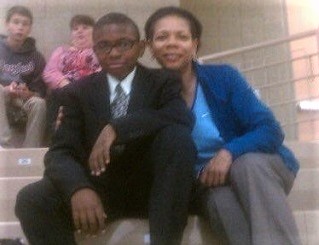
KALAMAZOO — When he was 5 years old, Daniel Henry lost his father to brain cancer.
 At age 14, he lost his mother to breast cancer.
Grieving his losses and living with his 23-year-old sister, Henry found solace in friends and high school tennis.
After skipping fourth grade, Henry was a young sophomore at Kalamazoo Central when his mother died.
“It was very difficult,” said Henry, now 21. “She’s the one who structured my day. It was my mom that planned out my activities because on the Northside (area of Kalamazoo), it’s very easy to get very distracted and do the wrong things.
“She definitely made sure that I followed the right type of people, people who were doing the right kinds of things for me. After that, it was, ‘Now what do I do?’”
Tennis indeed played a prominent role, engaging him at Central, pointing him toward the next step after graduation and bringing him back after college to share what he's learned.
Continuing a legacy
Tennis continues to give Henry a connection with his mother, Gina Rickman, who was a tennis pro at the YMCA of Greater Kalamazoo.
Continuing her legacy, he is a first-year coach of Kalamazoo Loy Norrix’s boys tennis team – quite a leap for a guy who played high school tennis at crosstown rival Kalamazoo Central.
 “I hope no one from Central sees this,” Henry said, laughing. “I actually really do like it.
“Whatever I thought of Norrix my whole time being at the rival school, it’s kind of nice now that I don’t have to have any ill will toward my rival school. My mom went (to Norrix) as well. It’s just kind of poetic.”
Graduating from Kalamazoo College this year with a degree in computer science, Henry is taking a break from his job as a legal intern at Ven Johnson Law to coach.
Portage Central tennis coach Peter Militzer worked with Rickman and has known Henry most of his life.
“Gina had a heart of gold. She did more for the game of tennis with underprivileged youth than anyone I know,” Militzer said. “She instilled that same sense of giving back to your community in both Daniel and (sister) Brittany.”
Brittany Johnson took charge of Henry when their mother died, since his uncle lived in Chicago and his beloved grandmother, June Cotton, was in a nursing home.
“Looking back, I expected her to take on the role of my mother and was disappointed at times when I feel like she didn’t quite live up to that,” Henry said of his sister.
“But now that I’m nearing 22, I couldn’t imagine having the responsibility of taking care of anyone.”
Without his mother’s guidance, “It was very hard for me to find something to do constructively other than tennis.
 ”I’m just really happy I didn’t fall into some bad habits. It could have made it much harder to get here, if not impossible.”
Henry started playing tennis at age 7, but when a coach tried to change his grip by taping his hand to the racket, he said he gave it up.
“When I got to high school, I was like, ‘OK. I played this before. I’m not really good at it right now, but I can meet some friends and play a sport in high school,’” Henry said, “because I wasn’t sure if I was going to make the basketball team.”
Militzer said that at K-Central, Daniel was almost a coach to his teammates.
“He had few players on his team who could even rally with him, but it never seemed to get him down,” he said.
“In watching his team interact, you could see how important he was to the group.”
Keeping a Kalamazoo Promise
The Kalamazoo Promise was instrumental in Henry’s college choice.
The Promise is a fund provided by anonymous donors that will pay tuition to any Michigan college for students who graduate from Kalamazoo Public Schools.
“In kindergarten, they pound (the Promise) into our heads,” Henry said. “I didn’t really know what it meant at the time.”
By his sophomore year at Central, he understood and realized he had to keep his grades up if he wanted to attend college.
“I had a 4.0 before my mom passed away,” he said. “For me to just try to hold on and keep my grades, up I didn’t really need to study very much. But it started to show my senior year when I took AP classes.
“Part of it was I’m going to college because my grandma said so, and (I need to) keep my grades up so I can go to the best college I can go to.”
 Henry said then-KPS superintendent Michael Rice – who became Michigan state superintendent of public instruction in 2019 – talked to Kalamazoo College men’s tennis coach Mark Riley about him.
“I’d been ignoring (Riley’s) emails because it was a Division III school,” Henry said. “Then I learned (Hornets tennis) was top 20 in the nation. I didn’t know much about college athletics.”
He chose Kalamazoo College, but said he was feeling burned out on school.
“Then Coach Riley said ‘No, you’re here to become a student. You’re here to learn.
“‘You’re here to get your degree and move on because tennis will only last four years, but the connections you make and things you learn will last the rest of your life.”
Norrix athletic director Andrew Laboe noted how the tennis team got a boost after football was postponed due to COVID-19 precautions earlier this year. At many schools, football players picked up other fall sports including tennis. “The telling part of that is three out of the four football players have stayed for the remainder of the season,” he said.
“Daniel is a big reason why they stayed. He has made tennis a fun experience for everyone.”
Laboe said Henry’s youth is a plus.
“He relates to the athletes well as he understands them at their level as he is young himself,” Laboe said. “They respect that he has played well at Kalamazoo College and that he is a product of Kalamazoo Public Schools and has been in our community his entire life.”
Riley said Henry is a “good listener, empathetic, caring, respectful and wants his (players) to love the sport like he does.
“He’s a proactive leader and has the ability to lead by example on the court. Daniel will thrive in life and any endeavor that he chooses.”
While Henry has his eye on attending law school in the near future, he is committed to teaching his Norrix players those same values.
“This is so fun, especially being in a team environment,” he said. “Looking at the relationship that I have with Coach Riley, he’s just hilarious and knows exactly what he’s talking about.
“If the player listens, he’s going to start winning. That’s just how it works. That’s how it worked throughout my career. The times I lost was because I wasn’t listening.”
 Pam Shebest served as a sportswriter at the Kalamazoo Gazette from 1985-2009 after 11 years part-time with the Gazette while teaching French and English at White Pigeon High School. She can be reached at [email protected] with story ideas for Calhoun, Kalamazoo and Van Buren counties.
PHOTOS: (Top) Kalamazoo Loy Norrix boys tennis coach Daniel Henry sends back a volley during a practice this fall. (2) Daniel Henry. (3) Daniel Henry and his mother Gina Rickman. (4) From left: Loy Norrix athletic director Andrew Laboe, Portage Central coach Peter Militzer, Kalamazoo College coach Mark Riley. (Action and top Henry photos by Pam Shebest. Henry and Rickman photo courtesy of Daniel Henry. Riley photo courtesy of Kalamazoo College.)